

Your day probably starts before you're ready for it. Someone can't find a shoe. Someone else needs a lunch packed. A school email gets buried under a group text. The pediatrician appointment lives in one app, soccer in another, groceries on a paper list, and dinner exists only as a vague hope.
That kind of chaos doesn't mean your family is failing. It usually means your family organization system doesn't exist yet as a system. What most families have instead is a pile of reminders, half-finished lists, and one adult carrying the plan in their head.
From Family Chaos to Organized Calm
Modern family life asks for more coordination than most homes were ever designed to handle. Work schedules shift. Kids move between school, activities, and care. Some households run with two parents in one home, some with one parent, and some across multiple homes and caregivers.
That matters because the old assumption that families can run on informal habits no longer holds. Contemporary household data show a varied picture: about 117 million U.S. households exist, 67% are family households, and among households with children, about 70% are married-couple families while 30% are one-parent families, according to this overview of the evolution of American family structure. A standardized mid-century model doesn't fit the reality most families live in now.
Why good intentions keep breaking down
Most parents don't need more effort. They need less fragmentation.
If your calendar is on your phone, chores are on a fridge note, school reminders are in email, meal planning is in your head, and toys migrate across the house, you're not disorganized. You're running five separate systems and hoping they behave like one. Even small physical resets can help reduce friction, which is why practical resources like toy room organization tips can support the bigger goal of making your home easier to manage day to day.
Here's the hard truth I give families all the time: clutter isn't the core issue. Decision scatter is. You lose calm long before you lose a clean countertop.
Practical rule: If your family can't answer “what's happening today?” from one place, your system is too weak.
What calm actually looks like
An organized home isn't silent, spotless, or rigid. It's a home where people know what to do next. It has a visible plan. It has fewer repeated questions. It has routines that catch the day before it slides off the rails.
A working family organization system creates three kinds of relief:
- Mental relief by getting plans out of one person's head.
- Operational relief by putting schedules, chores, and meals in one shared flow.
- Relational relief because fewer surprises usually means fewer arguments.
That's the shift. Calm doesn't arrive because life slows down. It shows up when your household can absorb normal chaos without collapsing.
The Blueprint for Your Family's Operating System
Families do better when they stop treating organization like decoration and start treating it like operations. A strong system doesn't begin with color-coding. It begins with structure.
Guidance on family operating systems points to three practical parts: a single source of truth, bidirectional intake, and a fixed review ritual, and warns that fragmentation across tools erodes reliability, as described in this family operating system guide.

Start with one home hub
Your home needs one place that answers the basic questions.
What is happening? Who is responsible? What changed? What needs to be done today?
That hub can be digital, paper-based, or hybrid. What matters is that everyone recognizes it as the official version of the plan. If two tools can disagree, people stop trusting both.
A single source of truth should hold at least these categories:
| Area | What belongs there |
|---|---|
| Schedule | appointments, school events, practices, pickups |
| Tasks | household jobs, errands, admin items |
| Meals | dinner plan, grocery needs, prep notes |
| Decisions | reminders, questions, follow-ups that need resolution |
Make it easy for anyone to add information
Most systems fail at intake. A parent remembers something while driving. A child mentions a project at bedtime. A co-parent gets a school update during work. If there's no simple way to capture that information, it disappears or lands in a private text thread.
Your system needs bidirectional intake. In plain language, that means information can come in from different people and still land in the same shared place.
That might include:
- Voice capture for quick reminders when hands are full
- Shared apps for adding events or grocery items on the go
- Paper capture in a visible spot, if your household uses it
If you're comparing digital options, guides that simplify household chores with apps can be useful, but don't mistake the app for the system. The tool matters less than whether your family will use it consistently.
Build around values before logistics
Many families often skip ahead at this point and regret it. They install a calendar and call it done. Then they discover they never agreed on their actual priorities.
Before you assign categories or reminders, decide what your system protects. Family dinners? Independent mornings? Less rushing? Shared responsibility? Quiet evenings? If those values aren't clear, every week turns into fresh negotiation.
A calendar tells you when. Values tell you what wins when two good things compete.
I tell families to write a few decision rules in plain language. For example:
- Health appointments go on the hub immediately.
- No one commits to a new activity without checking the family calendar.
- If a task repeats, it becomes a routine.
- The person who notices a need doesn't automatically own it forever.
Those rules prevent resentment because they turn assumptions into agreements.
Core Components Calendars Routines and Chores
A family organization system becomes real when it handles the daily load. Three components do most of that work: calendars, routines, and chores. If one is missing, the others strain to compensate.

Calendars need ownership, not just events
A family calendar isn't a scrapbook of possibilities. It's a control panel.
Every entry should answer more than date and time. It should also show who owns the event, who transports, what prep is required, and whether something must happen before it. A dentist visit without “leave school early” or “bring insurance card” is incomplete information.
Use simple standards:
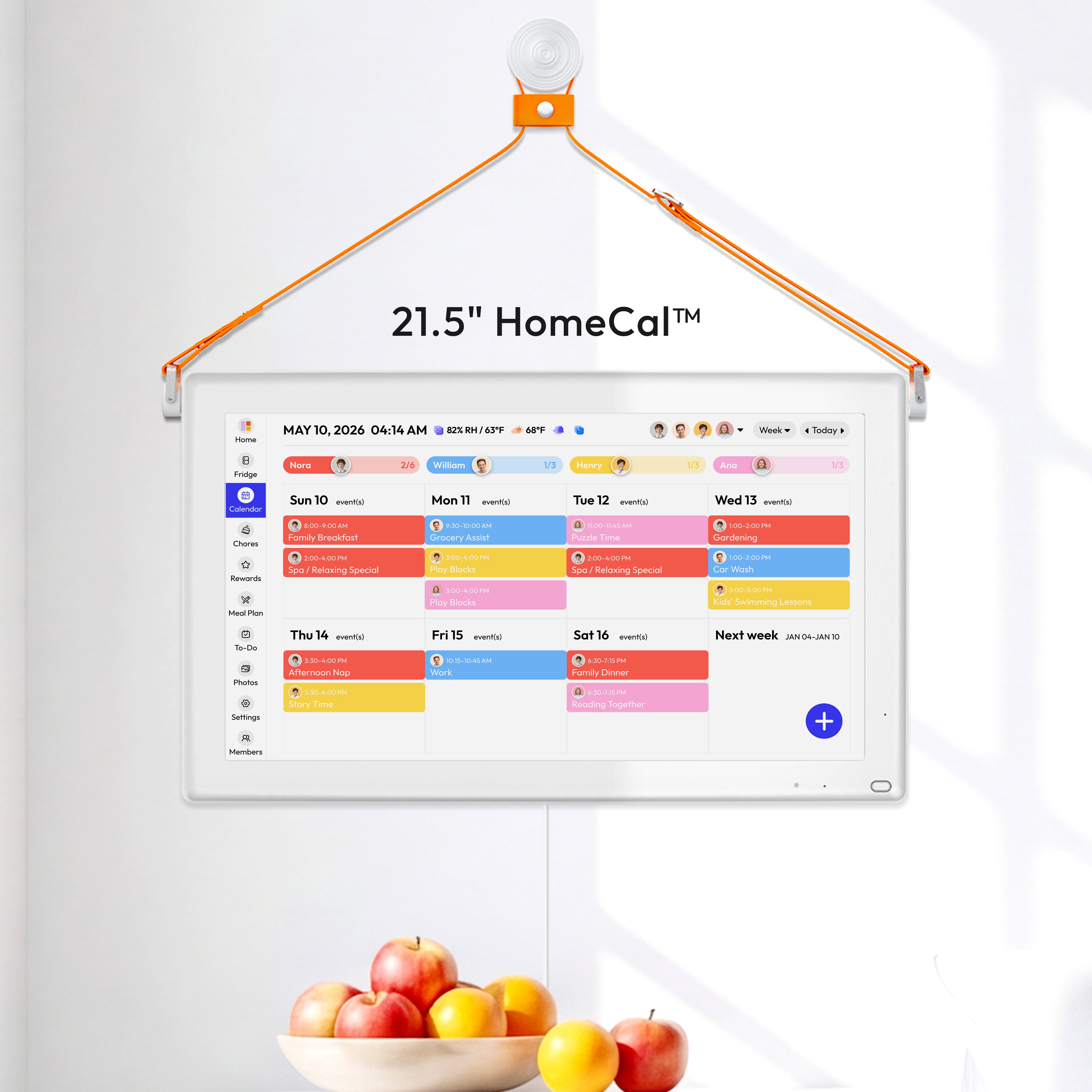
- Color by person so the week is readable at a glance.
- Tag by type such as school, health, sports, home, or work.
- Assign ownership so each event has an adult responsible for next steps.
- Add buffer notes for prep, travel, or materials.
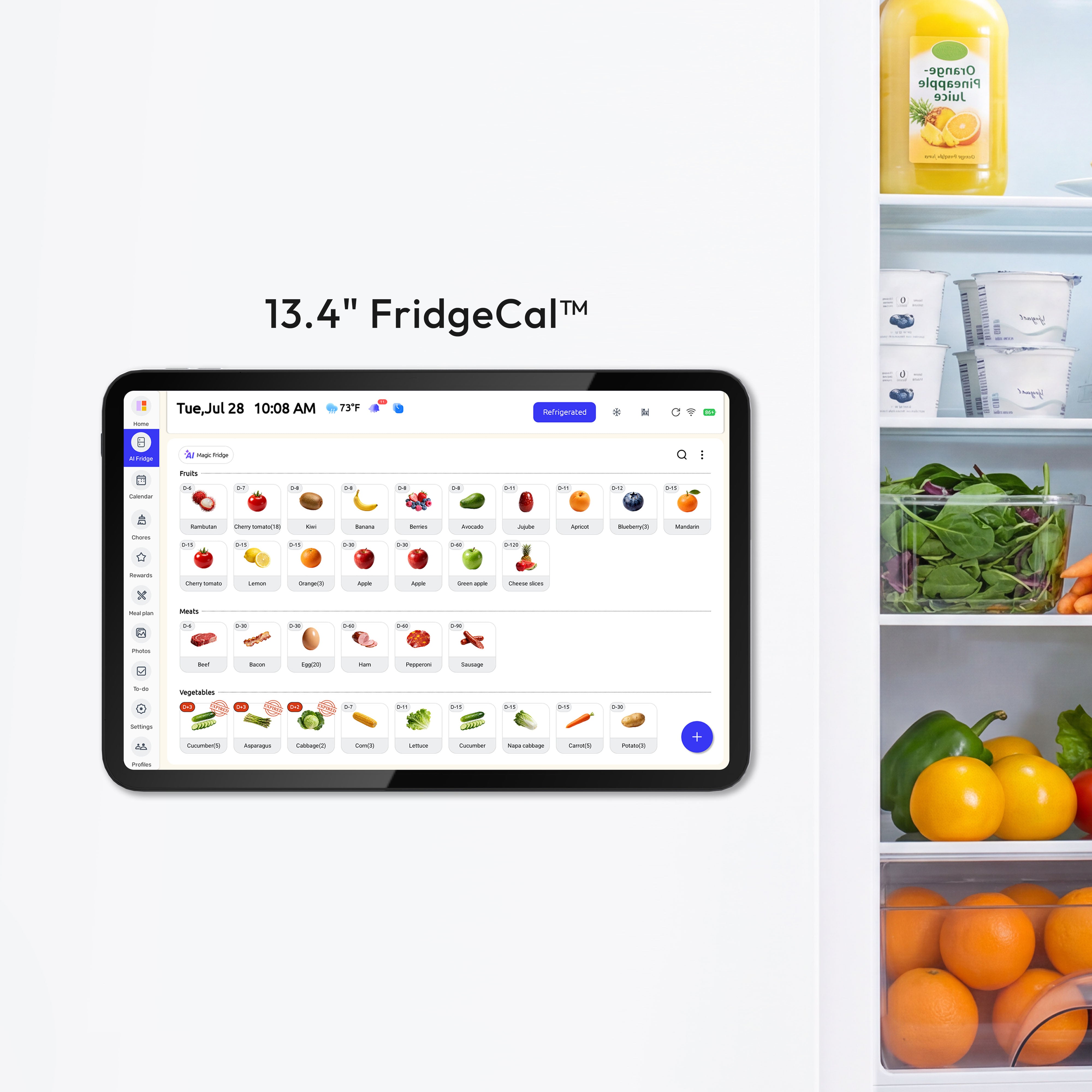
A visible family hub works well here because it removes the “I didn't know” problem. One factual example is Everblog, a digital family wall calendar that puts schedules, chores, meals, and media in one shared display, with features such as voice entry, a chore manager, a meal planner, and a collaborative grocery list. For families that want a wall-based command center instead of scattered apps, that kind of setup can reduce tool switching.
Routines do more than save time
A routine is a pre-decided sequence. That matters because the family doesn't need to renegotiate common moments every day.
A 2024 systematic review of 170 studies found that family routines are associated with positive outcomes in cognitive development, self-regulation, social-emotional skills, academic performance, and appear protective in high-stress environments, according to the review published here.
That finding is bigger than “routines help mornings go smoother.” It means repeatable family patterns support development, not just convenience.
Here's a useful way to think about routine design:
| Routine zone | What to standardize | What to keep flexible |
|---|---|---|
| Morning | wake order, dressing, breakfast flow, departure prep | exact breakfast, clothing choices |
| After school | bag drop, snack, homework start, activity check | downtime length, snack options |
| Evening | dinner window, cleanup, bath or wash-up, bedtime sequence | reading choice, quiet activity |
The best routine is the one your family can repeat on an ordinary Tuesday.
This short walkthrough can help you think visually about making those routines stick:
Chores need clarity and closure
Families often create chore charts that look good for three days and then collapse. Usually the problem isn't motivation. It's vagueness.
“Clean the kitchen” is too broad. “Unload dishwasher before school and wipe table after breakfast” is usable. Children and adults both do better when tasks are visible, specific, and attached to a clear completion point.
A practical chore setup includes:
- Named responsibilities instead of a floating list no one owns
- A completion signal such as checking off a task on the hub
- Reasonable rotation for less popular jobs
- A review habit so unfinished tasks don't vanish
If you want a simple starting format, this guide on how to create a family chore chart gives a useful framework for mapping recurring jobs by person and by frequency.
For home upkeep, keep your standards realistic. Deep cleaning standards and daily maintenance aren't the same thing. Operational housekeeping advice, like these tips for maintaining a clean Atlanta home, can help you decide which tasks should be daily resets and which belong on a less frequent rhythm.
Meal Planning and Grocery Management Made Simple
Feeding a family becomes exhausting when every dinner starts as a new decision. The problem usually isn't cooking. It's the lack of a repeatable workflow from meal idea to grocery list to execution.
Historically, family organization was often tied to property, inheritance, and built-in household roles. Comparative historical research describes nuclear, stem, and joint family structures, and notes that joint-family systems were common in East and South Asia, while Western Europe and North America showed a strong aversion to co-residence of married siblings with an elderly parent. It also explains that economic structure and inheritance shaped how support and caregiving were arranged, as discussed in this historical analysis of family systems. In practical terms, many modern nuclear households don't inherit a built-in operating structure for daily work like meal provision. They have to create one.
Build a repeatable meal loop
Most families do better with a small repeatable library than with endless novelty. Start by listing meals your household already eats without complaint. Then sort them by effort level, not by aspiration.
A useful weekly loop looks like this:
- Choose the week's meals from a family-favorite list.
- Check the calendar for late practices, work travel, or appointment days.
- Match meals to real capacity so busy nights get easier options.
- Add ingredients to one shared grocery list as gaps appear.
- Display the plan where everyone can see it.
That final step matters more than people expect. When the menu is visible, you cut down the steady drip of “what's for dinner?” and the hidden pressure that usually falls on one parent.
Connect the grocery list to the plan
A grocery list should not live separately from the meal plan. If it does, somebody has to mentally translate one into the other every single week.
Use one hub where family members can add items as they notice them. Milk runs low. Add it. Child wants fruit for lunches. Add it. You're making tacos later in the week and notice you're out of seasoning. Add it then, not during a rushed store trip.
Shared visibility transforms the process. The family sees the meals. The grocery list updates in the same flow. The kitchen stops depending on one adult remembering everything.
If you want a practical way to set that rhythm, this article on meal planning for busy families lays out a straightforward process for linking meals, shopping, and weekly prep.
Keep the system boring on purpose
Good meal planning is pleasantly repetitive. That's not a flaw.
Use theme nights if that helps. Keep a short list of backup dinners. Repeat breakfasts and lunches more often than social media would have you believe. Your goal isn't culinary theater. It's reducing daily decision fatigue while feeding your people well enough and consistently enough.
Solving the Mental Load Through Roles and Communication
The biggest failure in most family organization systems isn't the calendar. It's the assumption that if information is written down, responsibility is shared.
It isn't.
Most advice stops at lists, labels, and command centers. That misses the deeper problem. Unequal mental load breaks systems from the inside. Research and practice guidance on coordinating across homes and caregivers point to the need for shared decision rights, updates, and role clarity, and warn that when one adult becomes the sole information manager, the result is burnout and conflict, as noted in CADRE's guidance for engaging underserved families.

Task help is not ownership
A common pattern sounds like teamwork but isn't. One adult notices the school form, checks the calendar, remembers spirit day, books the appointment, tells everyone what to bring, and then asks the other adult to “help” with pickup.
That's delegation under pressure, not shared management.
Ownership means one person carries a category from start to finish. Not forever. But clearly. Categories might include medical scheduling, school communication, activities, meal planning, or household supplies. When ownership is defined, the system stops relying on one default parent to keep every thread alive.
A simple division looks like this:
| Category | Owner | What ownership includes |
|---|---|---|
| School admin | Parent A | emails, forms, calendar entry, deadline tracking |
| Activities | Parent B | registration, gear, transport planning |
| Meals | shared or assigned | weekly plan, grocery list, prep decisions |
| Home reset | rotating | daily surface reset, laundry flow, supply checks |
Decision rights reduce conflict
Families fight less when they know who gets to decide what without a committee meeting.
Set rules for common friction points:
- Scheduling rights so no one commits the family without checking the hub
- Spending thresholds for household purchases
- Escalation rules for changes, cancellations, and emergencies
- Update expectations for co-parents, grandparents, sitters, and other caregivers
This becomes even more important in separated, blended, or multi-caregiver homes. If updates live in private texts, people work from different versions of reality. A shared hub acts as a neutral source.
If one adult has to remind everyone else what matters, that adult is carrying the system, not participating in it.
Use communication protocols, not emotional guesswork
Many families don't have a communication problem. They have a format problem.
They discuss logistics at the worst possible moments. In the car. While cooking. At bedtime. Mid-argument. That guarantees dropped details and resentment.
Set communication lanes instead:
- Urgent today items go in the shared hub and get direct acknowledgment.
- Weekly planning items wait for the review ritual.
- Non-urgent suggestions go into a running family list.
- Sensitive issues happen offline, not in front of children and not mixed into task talk.
For households trying to name the invisible work before redistributing it, a structured tool like this mental load checklist can make hidden responsibilities visible enough to divide fairly.
Accountability should be visible, not personal
One reason a home hub works so well is that it reduces the parent-as-nag role. The system becomes the reminder. The calendar becomes the record. The task list becomes the agreement.
That shift matters emotionally. A spouse stops feeling micromanaged. A child stops hearing every request as a personal criticism. A co-parent sees updates without having to be chased down for them.
Shared visibility won't solve every dynamic. But it gives your family something calmer than memory and louder than assumptions.
Keeping the System Running for Long-Term Success
A strong family organization system doesn't stay strong because you built it once. It stays strong because you maintain it lightly and regularly.
The key habit is a weekly review ritual. Not a dramatic family summit. Just a recurring block where the household checks the calendar, resets chores, updates meals, and catches problems while they're still small. Guidance on family systems also suggests a second midweek check-in can help catch drift before it compounds, which matches what many families experience in real life.
What the weekly reset should include
Keep the review short and predictable. The agenda should be boring.
Use this sequence:
- Look ahead at appointments, school needs, activities, and unusual logistics.
- Review chores and reassign anything that got missed.
- Confirm meals and groceries for the next few days.
- Surface decisions that need agreement before they become emergencies.
If children are involved, keep their role concrete. They don't need a lecture on family systems. They need to know what changes this week and what they're responsible for.
When the system starts slipping
Don't scrap the whole setup because one week went sideways. Diagnose the failure point.
Ask:
- Was the hub incomplete? People can't follow a plan they can't see.
- Was the routine too rigid? Systems should support real life, not punish it.
- Was ownership unclear? Unowned work turns into resentment fast.
- Was intake too hard? If adding updates takes effort, people won't do it.
The fix is usually simpler than families think. Tighten one weak point. Don't rebuild everything at once.
A household system should evolve as children grow, schedules change, or co-parenting arrangements shift. That's not a sign the system failed. It's proof your family is alive and the structure is doing its job by adapting with it.
If your family is tired of scattered apps, fridge notes, and one person carrying the whole plan, Everblog offers a practical way to bring schedules, chores, meals, and everyday updates into one shared home hub. For families who want a clearer daily view and less fragmentation, it's worth a look.


