





Your day probably starts before anyone else notices it has started.
You’re not just getting people dressed, fed, and out the door. You’re also tracking who’s outgrown shoes, which permission slip still needs a signature, whether there’s enough milk for tomorrow, when the dentist office opens, and who said they’d handle camp registration but hasn’t done it yet. None of that looks dramatic from the outside. It just sits in your head, all day, taking up room.
A mental load checklist helps because it turns invisible coordination into shared, visible work. But a list alone isn’t enough. Families usually don’t struggle because they forgot to make a checklist. They struggle because the checklist never became a living system that people use when life gets messy.
The Invisible Job You Never Signed Up For
A lot of parents describe the same pattern. They can’t relax, even when they technically have downtime, because part of their brain is still running household operations in the background. It’s not only chores. It’s anticipation, sequencing, follow-up, and worry.

That strain is measurable. Parents spend an average of 30.4 hours per week planning and coordinating family schedules and tasks, and that invisible labor takes up about 63% of parents’ brain space on an average day, according to this overview of managing mental load with checklists and tools. In partnered households, primary caregivers report carrying 75% of the mental load, while partners estimate their own contribution at 56%.
What mental load actually looks like
The mental load usually hides inside ordinary moments:
- Morning prep: Remembering library day, snack duty, and the fact that the clean uniforms are still in the dryer.
- Admin work: Knowing when the insurance card expired, when the car needs service, and which school form is still missing.
- Social logistics: Buying the birthday gift, replying to the class text thread, and keeping track of family obligations.
- Emotional monitoring: Noticing who’s overwhelmed, who needs extra support, and what conflict is brewing before anyone says it out loud.
That’s why so many parents feel guilty for being tired. They look around and think, “I didn’t do that much today.” But they did. They carried a planning role that rarely gets counted.
The work that drains you fastest is often the work nobody sees.
This gets even sharper during major life transitions. In early parenthood, for example, the physical work is obvious, but the cognitive load can become relentless. If your household is adjusting to a new baby, practical tips for the 12-week postpartum period can help lower the pressure while routines are still unstable.
Why visibility changes the conversation
A mental load checklist doesn’t solve resentment by itself. What it does is create a common reference point. Instead of arguing about effort in the abstract, you can point to actual responsibilities, timing, and ownership.
That shift matters. Families rarely fix this by “helping more” in vague ways. They make progress when they name the work, assign the work, and build a way to review the work before one person ends up managing everyone else’s responsibilities too.
How to Conduct a Full Mental Load Audit
Most households skip the audit and go straight to assigning chores. That’s why the system feels unfair from day one. If you only list visible tasks, you miss the planning layer that makes the visible tasks happen.
A full audit should capture four distinct parts of household cognition: noticing, planning, remembering, and delegating, as outlined in the mental load workbook. That framework matters because “take kid to dentist” is not one task. Someone has to notice the checkup is due, plan the appointment, remember the forms and insurance card, and delegate any follow-up.
Start with a raw brain dump
Get everything out of your head before you organize anything. Use paper, a whiteboard, sticky notes, Google Docs, Trello, Todoist, or Microsoft To Do. The tool matters less than the rule. Capture first, sort later.
Write down tasks in messy language if you need to:
- Household basics: dishes, trash day, replacing lightbulbs, rotating kids’ clothes
- Kid logistics: school emails, activity signups, medicine refills, picture day
- Food management: meal planning, grocery tracking, lunch prep, checking what’s running low
- Admin: paying bills, insurance renewals, booking service appointments
- Social labor: birthday gifts, thank-you notes, family visits, texting other parents
- Personal maintenance: workouts, therapy appointments, sleep routines, downtime
If there’s a service that can remove recurring friction, include that in the audit too. For some families, outsourcing one category such as laundry pickup and delivery creates enough breathing room to make the rest of the system manageable.
Audit the hidden layer, not just the final action
Now go line by line and ask four questions.
-
Who notices this?
Who catches it before it becomes urgent? -
Who plans it?
Who decides timing, gathers information, and sequences the steps? -
Who remembers it?
Who keeps the date, detail, or follow-up in their head? -
Who delegates and checks back?
If someone else does the task, who still carries accountability?
That’s where households usually discover the imbalance. One person may not be physically doing every task, but they’re still acting as the project manager for most of them.
Practical rule: If you have to remind, monitor, or rescue the task, you still own part of the mental load.
Use categories so nothing gets missed
A good audit covers recurring, occasional, and seasonal work. I recommend sorting your raw list into buckets like these:
| Household area | What to capture |
|---|---|
| Daily living | meals, dishes, school prep, laundry flow, pet care |
| Weekly operations | groceries, calendar review, bill checks, cleaning resets |
| Monthly admin | prescriptions, budget reviews, car checks, school deadlines |
| Seasonal tasks | camp signups, holiday planning, clothing swaps, home maintenance |
| Emotional labor | checking in on kids, planning celebrations, maintaining family relationships |
Don’t aim for elegance yet. Aim for completeness.
Hold a short review conversation
After the brain dump, set aside at least a brief household meeting. The research-backed approach behind these tools includes a structured group discussion of at least 10 minutes to decide what needs doing and who has capacity for it, as described in the same mental load workbook. Keep the discussion practical.
Use prompts like these:
- What only exists because one person keeps remembering it?
- What tasks create the most stress when they’re late?
- What can be deleted, outsourced, or done less often?
- What are we pretending is “shared” when one person still manages it?
The result should be a complete list, not a fair one yet. Fairness comes later. First, make the work visible.
Building Your Shared Mental Load Checklist
A long audit is useful, but it isn’t usable. The next move is turning a messy inventory into a shared operating system that people can follow.

The biggest mistake here is assigning tasks too quickly. Families often divide execution while leaving conception and planning with the same person. That doesn’t reduce the mental load. It just turns one partner into the default manager.
Group tasks by domain, not by whoever complained last
Build categories that reflect how your household runs. That gives the list structure and makes ownership easier to see.
A practical set of categories usually includes:
- Home maintenance
- Meal management
- Kids’ school and activities
- Health and appointments
- Money and paperwork
- Social and family relationships
- Self-care and recovery
- Seasonal and one-off planning
If you want a useful comparison point, a professional household manager role overview shows just how much coordination work sits behind a smoothly run home. Most families are doing a version of that job without naming it.
Assign ownership at the right level
For each task, separate the work into three layers:
| Category | Example Tasks (Conceive/Plan) | Example Tasks (Execute) |
|---|---|---|
| Meal management | decide weekly meals, check pantry, build grocery list | shop, prep lunches, cook dinner |
| Kids’ school and activities | track deadlines, sign up for events, arrange transport | drive, pack gear, attend meeting |
| Health and appointments | notice checkups are due, book visits, manage paperwork | attend appointment, pick up prescription |
| Home maintenance | monitor issues, compare vendors, schedule repairs | be home for service, replace filter, tidy area |
| Finances and admin | track due dates, review statements, plan renewals | pay bill, file form, submit document |
This is the point many couples need to hear clearly: if one person always has to say what needs to happen next, ownership never really transferred.
Run a calm household meeting
Don’t open the first meeting when everyone’s hungry, late, or already irritated. Schedule it. Sit down with the list. Approach it like an operations review, not a relationship trial.
A useful meeting rhythm looks like this:
- Name what the household must support right now. School-heavy month? New baby? Travel season? Elder care?
- Mark essentials. Bills, medications, school logistics, meals.
- Identify stress hotspots. These are usually tasks with deadlines, repeated reminders, or unclear ownership.
- Assign one owner per task area. Shared awareness is fine. Shared ownership usually becomes no ownership.
- Decide review frequency. Weekly works well for most families.
If two adults both assume they’ll “keep an eye on it,” one adult usually ends up doing it.
Build in routines, not just assignments
A good mental load checklist needs timing and visibility. Add frequency to every recurring task. Daily, weekly, monthly, seasonal, or “as needed” is enough.
Then give each category a home:
- Calendar-based items go into a shared calendar.
- Repeatable tasks go into a task manager with recurrence.
- Shopping needs go into one running list.
- Loose ideas and future tasks go into a parking lot or inbox.
If you want an example of how families talk about this shift from vague help to shared responsibility, this article on sharing the load is a useful companion read.
What a workable checklist sounds like
Weak version: “Help more with school stuff.”
Usable version:
- monitor school emails on weekdays
- add all deadlines to shared calendar
- pack sports gear on practice days
- sign and return forms
- handle teacher communication unless escalated
That level of detail reduces friction because it answers the essential question. Not “who cares about this?” but “who is responsible for making sure this gets done without being managed by someone else?”
Why Most Checklists Fail And How to Make Yours Last
The hard part isn’t making the list. The hard part is keeping the list alive after the burst of motivation wears off.

That drop-off happens fast. Research on habit formation shows that up to 66% of new organizational systems are abandoned within 2 to 3 weeks if they don’t include feedback, rewards, or accountability, according to this discussion of invisible stress and mental load. In practice, that means a family can agree on a great system on Sunday and stop using it before the month ends.
Failure usually starts with one of five problems
The patterns are predictable.
- Tasks are too vague. “Handle bedtime” sounds shared until nobody knows whether that includes baths, meds, backpacks, and tomorrow’s clothes.
- Deadlines are fuzzy. If “this week” means five different things to five different people, tasks drift.
- Reviews disappear. Once no one checks the checklist, it stops being real.
- Self-care is excluded. Families fill the list with obligations and then wonder why everyone is fried.
- Status isn’t visible. If people can’t see what’s done, they repeat work or assume someone else handled it.
Those pitfalls align with practitioner guidance on what undermines mental load checklist systems over time. The issue usually isn’t effort. It’s design.
Build a system people can return to
A sustainable checklist has three qualities.
First, it has a single source of truth. Paper on the fridge can work, but only if everyone looks at it and updates it. If one person keeps a private notebook and another uses text messages, the system splits immediately.
Second, it has a capture point. Every new task needs somewhere to go the moment it appears. A shared notes app, a Trello board, a whiteboard inbox, or a digital family hub all work better than “I’ll remember later.”
Third, it has a review ritual. Weekly is the sweet spot for most households because it catches drift before resentment builds.
Non-negotiable: A checklist without a review rhythm becomes decoration.
Keep the weekly check-in short and specific
A check-in shouldn’t feel like a summit meeting. Keep it tight.
Try this agenda:
- What got done without friction
- What stalled and why
- What’s new this week
- What needs reassignment because capacity changed
- What can be removed, delayed, or outsourced
Don’t use the check-in to reopen every grievance in the relationship. Use it to repair the system.
A lot of families also benefit from comparing paper-based methods with digital tracking once they notice update lag, forgotten notes, or repeated reminders. This breakdown of why paper chore charts fail versus digital tracking captures that trade-off well.
Design for real life, not ideal behavior
Kids get sick. Work deadlines move. A grandparent needs help. Someone’s capacity crashes for a week. Your system has to absorb that without collapsing.
Three practices make a difference:
- Use a parking lot for non-urgent tasks. Not every idea belongs in the current week.
- Schedule annual and seasonal checklists. Holiday planning, maintenance, camp prep, and vehicle service are easier when the process already exists outside your memory.
- Track ownership, not moral worth. If a task slips, fix the assignment or the timing before turning it into a character judgment.
The households that stick with a mental load checklist don’t rely on perfect discipline. They rely on visibility, repetition, and a structure that still works when nobody is having their best week.
Adapting Your Checklist for Any Family Structure
Most advice about mental load assumes two adults in one home, sharing one life stage, with one set of children. A lot of families don’t look like that.
That gap matters because blended families make up about 16 to 17% of U.S. households with children, and mental load systems often fail to account for step-parents, grandparents, rotating caregivers, or co-parents across homes, as noted in this discussion of division-of-labor checklist gaps. A workable checklist has to reflect the actual structure of the household.
Blended families need role clarity
In blended homes, resentment often comes from ambiguity. A step-parent may be expected to help, but not authorized to make decisions. A biological parent may want support but still keep all planning in their own head.
Define roles by domain, not by title. One adult might own transportation logistics. Another might own medical scheduling. Another might handle school communication. Clear domains reduce the emotional charge around “who’s supposed to do what here?”
Multi-generational homes need boundaries with respect
When grandparents or other relatives are involved, families often drift into informal arrangements that feel kind but create confusion. One person cooks. Another notices supplies are low. A third assumes someone else handled the pharmacy call.
Write down recurring responsibilities and any limits around them. If Grandma does after-school pickup, does that also include snack prep, activity drop-off, and checking backpacks? If not, spell it out kindly.
Co-parenting across homes needs transfer points
A shared checklist works best when it includes handoff moments. Medication updates, school paperwork, sports gear, and schedule changes should move through a clear channel rather than scattered texts.
Useful transfer categories include:
- Calendar events that affect both homes
- Items that physically travel with the child
- School and health updates
- Costs and reimbursement tasks
- Behavioral or emotional notes that matter for continuity
Homes with caregivers need visibility, not guesswork
If a nanny, babysitter, or other caregiver helps run the household, don’t depend on verbal updates alone. Give them access to the tasks, timing, and expectations relevant to their role. At the same time, don’t offload family-level planning onto them by accident unless that is explicitly part of the arrangement.
The principle stays the same in every structure. A mental load checklist works when each adult can see what exists, what they own, what they don’t own, and what needs follow-up.
Moving Your Checklist to a Digital Family Hub
Paper is a good starting point. It’s fast, visible, and low-pressure. But once your checklist includes recurring chores, schedule changes, grocery needs, and shared accountability, paper starts creating its own work.

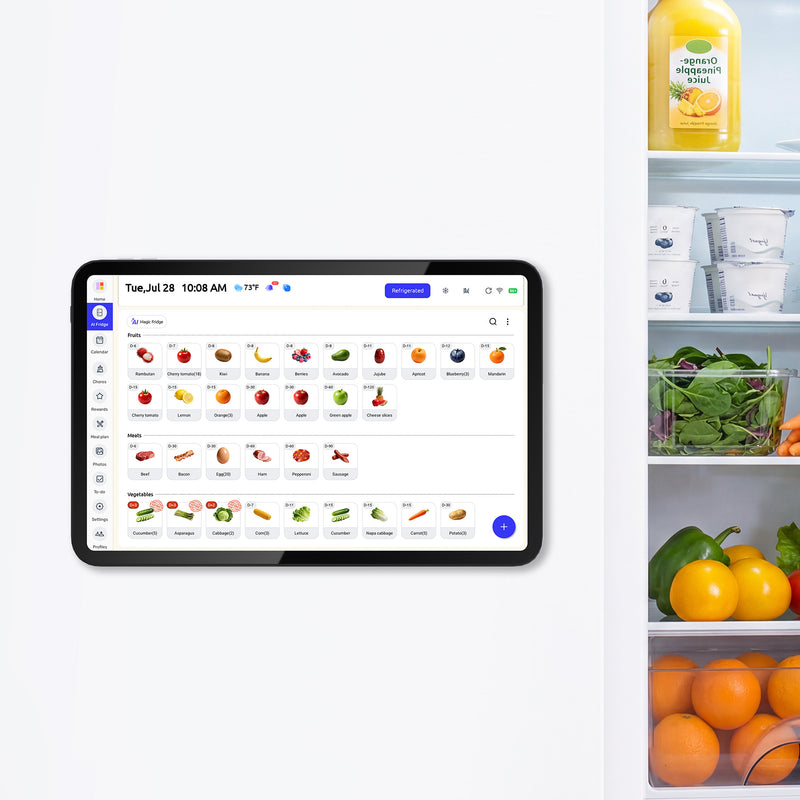
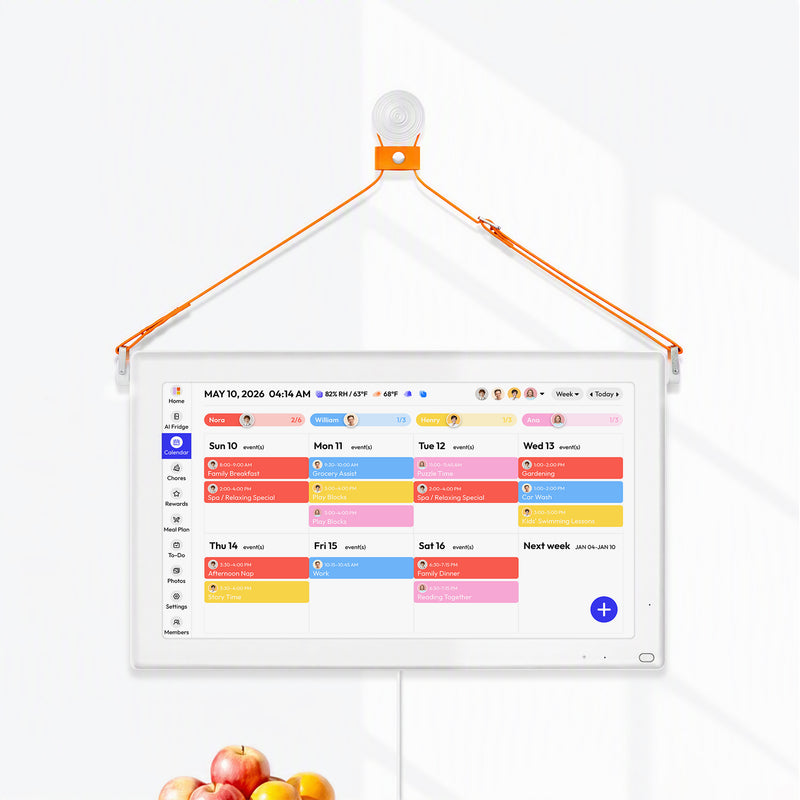
A digital hub gives the household one place to look. Calendar items, chores, meal planning, and shopping lists stop living in separate apps, text threads, and people’s memories. That matters because the less verbal coordination you need, the less one person has to act as the family switchboard.
What to move first
Start with the categories that create the most reminders:
- recurring chores
- school and appointment calendar items
- meal planning
- grocery list updates
- weekly review notes
Then make sure everyone can access the same system. A family command center only works if people can see it, update it, and trust it. For a practical example of what that setup can look like, this guide to a digital family command center is useful.
Later, if you want to see how a shared screen fits into daily routines, this walkthrough is worth watching:
Tools vary, but the criteria stay the same. You want shared visibility, recurring task support, reminders, and simple updating. For example, Everblog combines a family calendar with chore tracking, meal planning, a grocery list, and a shared display, which fits the needs of households trying to reduce reminder loops and keep one visible source of truth.
Navigating Common Issues and Communicating Effectively
A mental load checklist will expose old patterns. That’s useful, but it can also be uncomfortable. Some partners get defensive. Some shut down. Some agree in theory but keep waiting to be told what to do.
The conversation goes better when you stay concrete. Cross-institutional research found that mothers handle 71% of cognitive household tasks while fathers manage about 45%, according to this mental load report. Use data like that as context, not as a weapon. The point isn’t to win a case. The point is to stop pretending the baseline is already even.
Scripts that help
-
If your partner says “Just tell me what to do”
Say, “The problem is not only doing the task. It’s having to track and assign it.” -
If someone drops the ball
Say, “Let’s fix the system. Was the task unclear, badly timed, or assigned without enough authority?” -
If score-keeping starts
Say, “We’re not trying to prove who suffers more. We’re trying to make the household run without one person carrying the planning for everyone.”
Progress looks like fewer reminders, clearer ownership, and less tension in ordinary weeks.
Keep these rules in place
- Talk during calm moments. Don’t launch a systems conversation in the middle of a failure.
- Name the exact task. General complaints trigger defensiveness.
- Reassign openly when capacity changes. Fairness is dynamic.
- Review the checklist, not each other’s character. That keeps the discussion usable.
This work doesn’t need perfection. It needs honesty, visibility, and repetition. Once the invisible job is visible, it becomes much easier to share.
A practical mental load checklist gives families a way to stop running the household from one overworked brain. If you want one shared place for schedules, chores, meals, and reminders, Everblog is built for that kind of daily coordination.


