






Managing screen time is one of the most common battles in family life. Kids push back, parents repeat themselves, and the rules never seem to stick. The problem usually isn't the rules themselves — it's that kids can't see them. A visual, shared system changes everything.
Why Screen Time Rules Don't Stick Without a Visual Schedule
1. Kids Learn Better When They Can See the Rules
Ever notice how kids often forget what you just told them? Hearing a rule isn’t the same as seeing it. When rules only live in a parent’s head or on a phone, they feel invisible. But when kids can see the schedule on a screen or chart, it becomes part of daily life. A visible schedule gives them something clear to follow and check off, making routines smoother and less stressful.
2. Phone Reminders Don’t Work for Kids
You might think a phone reminder is enough, but for kids? Not really.
- Only parents get the notifications
- Kids don’t know when screen time is starting or ending
- Surprises can lead to arguments or pushback
- Parents have to enforce the rules every time
If your kid can’t see what’s coming up, you end up doing all the reminding, which makes life more stressful for everyone.
3. A Shared Fridge Calendar Makes Rules Clear to Everyone
Putting the schedule on the fridge changes everything. Rules stop being “mom said” and start being “the calendar says.” Kids argue less, and because the fridge is a place everyone passes by daily, the schedule is noticed naturally. No apps, notifications, or extra reminders are needed — it’s always visible, keeping everyone on the same page.
How to Set Up a Screen Time Routine on Your Family Fridge Calendar
Step 1 — Pick Screen Time Windows That Actually Work
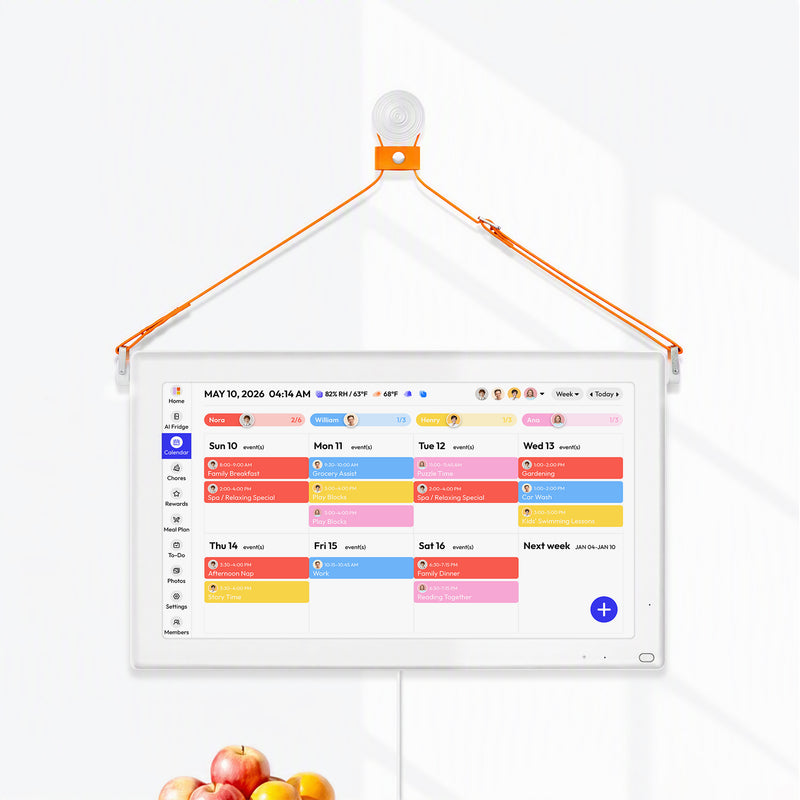
The Everblog FridgeCal Calendar makes it easy to see your schedule at a glance, so first pick the screen time slots that really match your family’s routine. Some common options:
- After school, once homework is done
- A set window before dinner (for example, 4:00–5:30 PM on weekdays)
- Weekend mornings with a clear end time
- Special blocks for family movie nights or gaming together
The trick is to be realistic. Pick times that match your real schedule, not the “perfect” one. If it’s impossible to follow on busy days, it won’t stick at all.
Step 2 — Put Screen Time on the Calendar, Not as a Reward
A lot of parents treat screen time like a bonus kids earn only if everything else goes perfectly. That actually makes it unpredictable and can lead to more arguing.
Instead, schedule it like any other activity: Tuesday 4:00–5:00 PM, screen time. It’s happening — and it stops when it stops. When kids know exactly when it starts and ends, there’s less to fight about.
Step 3 — Use Colors to Show Each Kid’s Schedule
If you have more than one child, color coding is a lifesaver. Give each kid their own color on the fridge calendar so everyone can see at a glance whose time is whose.
- Perfect for families where kids have different amounts of screen time
- Stops the “But she got more than me!” arguments
- Makes it clear and fair for everyone
The Everblog FridgeCal Calendar has a built-in Member Color Coding feature, so each family member’s schedule shows up in their color right on the 13.4-inch display on the fridge.
Step 4 — Keep Everything in Sync
Life isn’t always at home — maybe you’re out running errands or a kid is at a sleepover. The schedule still needs to work.
A fridge calendar that syncs with Google Calendar or Outlook means any changes you make on your phone show up on the fridge instantly, and vice versa. No confusion, no outdated schedules. The Everblog FridgeCal’s Calendar Auto-Sync takes care of it automatically so everyone stays on the same page.
A shared fridge calendar turns screen time from chaos into something everyone can handle. Pick your windows, give each kid a color, and keep it synced — it’s that simple. Kids start keeping track themselves, the nagging drops, and you get a little peace back in your day. It’s one of those tiny changes that really makes family life flow better.
How a Digital Fridge Calendar Helps Kids Take Ownership

1. Link Chores and Screen Time in One Place
Kids get it better when they can see the connection between what they do and the rewards they get.
- Put the chore list and screen time schedule on the same fridge calendar
- Kids check off chores as they finish them
- When the screen time block appears, they can see it coming
This way, kids understand exactly what they need to do before they get screen time. It makes the whole process more independent and less about constant reminders.
| Child | Chore Completed | Screen Time Allowed |
| Emma (7) | Make bed, feed pet | 30 minutes after chores |
| Liam (9) | Homework done, tidy room | 45 minutes after chores |
| Sophie (12) | Homework + piano practice | 1 hour after chores |
2. Turn Screen Time Into a Reward System That Actually Works
Positive reinforcement works best when it’s simple to track. A built-in digital rewards system can make it automatic.
- Tracks points for chores or achievements automatically
- Kids can see progress and celebrate milestones with small animations or emojis
- Parents don’t have to constantly remind or nag
Making screen time a visible reward instead of a negotiation keeps kids motivated and cuts down on arguments.
3. Let Kids See How Much Time Is Left
One of the most frustrating parts of screen time management is the "five more minutes" loop. Kids don't have a great internal sense of time, which makes transitions hard. If they can't see how much time is left, every ending feels sudden and unfair.
A countdown display changes that. When kids can watch the timer counting down on the fridge calendar, they're managing their own time — not being interrupted by a parent. The transition becomes predictable, and predictable transitions are smoother ones.
The Weather & Countdown feature on the Everblog FridgeCal Calendar supports exactly this kind of visible, real-time tracking so kids can self-regulate without a reminder every ten minutes.
What to Look for in a Family Fridge Calendar for Screen Time
If you're shopping for a family fridge calendar and screen time management is a priority, here's a breakdown of what actually matters:
| Feature | Why It Matters | Must-Have or Nice-to-Have |
| Shared visible display | Everyone in the family sees the same schedule | Must-have |
| Chore chart / task tracking | Links responsibilities to screen time visually | Must-have |
| Member color coding | Distinguishes each child's schedule at a glance | Must-have |
| Rewards system | Positive reinforcement without extra parent effort | Nice-to-have |
| App sync (Google / Outlook) | Parents can update schedule remotely | Nice-to-have |
| Multiple calendar views | Day / week / month flexibility for different planning needs | Nice-to-have |
| Countdown timer | Helps kids self-manage time transitions | Nice-to-have |
1. Everyone Can See the Schedule
A calendar only works if it’s visible to the whole family. Kids need to see their screen time blocks to know when it starts and ends. A fridge calendar stays in plain sight, so they don’t rely on you to repeat the rules all day.
2. Connect Chores to Screen Time
A good calendar links screen time with responsibilities. When chores and screen time appear together on the fridge, kids can see that completing tasks leads directly to their playtime. For example, after a 7-year-old finishes making the bed and feeding the dog, their screen time block shows up right on the calendar. They learn cause and effect and start managing their own time.
3. Make Each Kid’s Screen Time Easy to Spot
Color coding is a small feature that makes a huge difference. When each child has a unique color on the calendar, it’s easy to see whose screen time is next. Emma’s blocks might be blue, Liam’s green, and Sophie’s purple. The calendar removes confusion and makes fairness obvious at a glance.
4. Track Screen Time with Rewards
Some calendars include a built-in rewards system. Kids love seeing progress, and parents love not having to remind them constantly. The calendar tracks points automatically and celebrates milestones with animations. Screen time becomes a clear reward on the fridge instead of a daily negotiation.
5. Keep Screen Time Updated Anywhere
Life doesn’t stay in the kitchen, but a syncing calendar keeps everyone aligned. When the calendar updates with Google or Outlook, any change made on a phone instantly shows up on the fridge. Add a last-minute movie night or adjust a block while running errands, and the fridge calendar reflects it immediately. Kids always know what’s coming next.
6. See the Whole Screen Time Picture
Calendars with multiple views make it easy to plan screen time along with homework, sports, and family activities. A week view helps manage daily blocks, while a month view lets you schedule longer breaks, gaming sessions, or family movie nights.
7. Let Kids Manage Their Own Screen Time
Countdown timers on the calendar help kids see exactly how much time is left. They learn to finish games or shows without constant interruptions. A ten-minute countdown shows kids when to wrap up, turning screen time into a predictable, fair routine. The calendar becomes a tool for independence, not just enforcement.
Why a Fridge Calendar Works Better Than a Shared Phone App
Using a phone app for family schedules might seem convenient, but it often doesn’t work in real life. Kids rarely check it, parents can forget to update it, and it gets buried among other notifications. A dedicated fridge calendar solves all of these problems by being visible, accessible, and easy to use for the whole family.
- Always Visible: A fridge calendar is always in sight, so everyone knows what’s on the schedule without needing reminders.
- No Extra Apps Needed: There’s no login, notification, or app download required on each child’s device.
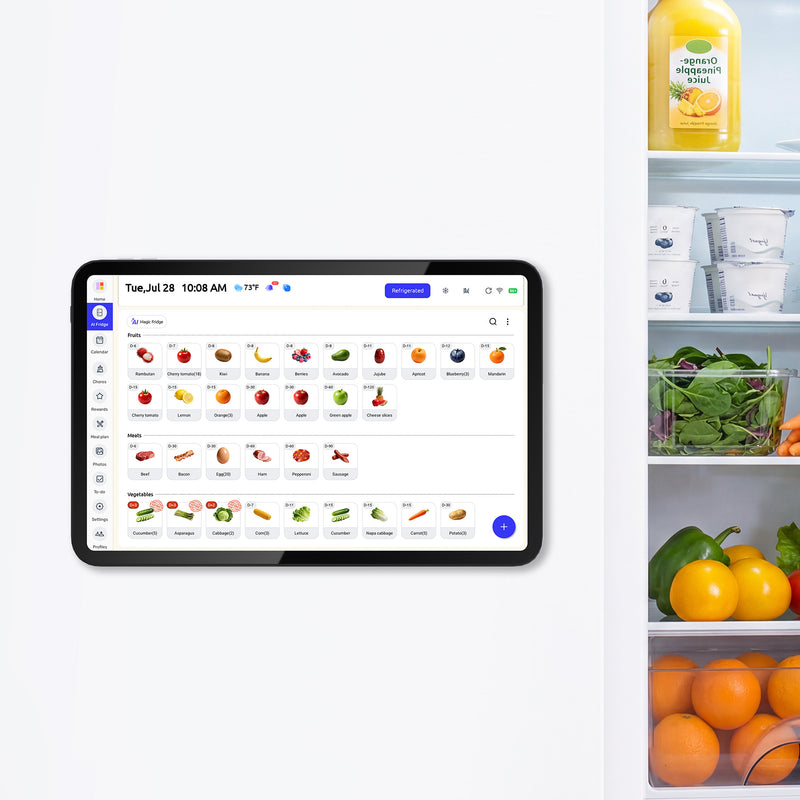
- Easy Installation: The Everblog FridgeCal Calendar mounts magnetically with no tools needed and works on almost any fridge surface.
- Long Battery Life: With an 8400mAh battery and over 72 hours of standby, the calendar stays ready even during busy kitchen days.
- No Subscription Required: Unlike many planning apps, this calendar works fully without any recurring fees.
With a fridge calendar, everyone in the family can see the schedule at a glance, and no one has to hunt through apps or reminders. It takes the stress off parents, keeps kids on track, and makes daily routines flow a lot more smoothly. Small change, big difference — once it’s up on the fridge, you’ll wonder how you ever managed without it.
Start Building Your Screen Time Routine with a Family Fridge Calendar
A screen time routine only works if every member of the family can see it, understand it, and actually follow it. Moving the schedule from a phone to a shared fridge calendar takes the weight off parents and gives kids something concrete to work with. Start with consistent time windows, add color coding, connect it to chores, and let the calendar do the enforcing. It's a small change that makes a real difference in daily family life.
Fridge Calendar FAQs: Screen Time, Schedules, and Family Routines
Q1: What is a good screen time schedule for kids by age?
The American Academy of Pediatrics recommends no screen time for children under 18–24 months (except video calls), one hour per day for kids ages 2–5, and consistent limits with context for ages 6 and up. For school-age kids, many families find that a 1–2 hour window after homework works well on weekdays, with more flexibility on weekends.
Q2: What is the 3-6-9-12 rule for kids?
The 3-6-9-12 rule is a general guideline suggesting: no video games before age 3, no personal gaming devices before 6, no internet without supervision before 9, and no smartphone before 12. It's not a clinical standard but a practical framework many parents use as a starting point for setting age-appropriate digital boundaries.
Q3: What is the 30/30/30 rule for screen time?
The 30/30/30 rule is an informal guideline: take a 30-second break every 30 minutes and look at something 30 feet away. It's primarily an eye health practice, not a screen time management strategy. For kids, it's useful as an added habit during long screen sessions, but it doesn't replace time limits.
Q4: Is 3 hours of screen time okay for a 12-year-old?
It depends. Three hours of screen time isn't automatically harmful for a 12-year-old, but the type of activity matters — passive video consumption is different from video calls with friends or educational content. Most pediatric guidelines suggest keeping recreational screen time to 1–2 hours on school days, with more room on weekends as long as sleep, homework, and physical activity aren't affected.
Q5: What are good alternatives to screen time for kids?
Practical alternatives include outdoor play, reading, drawing or crafting, board games, cooking simple meals with a parent, and organized sports or music. Building these into the family schedule — alongside designated screen time — works better than trying to eliminate screens entirely. A visible family calendar makes it easier to plan non-screen activities so kids always have something to look forward to.


