






Your phone is full of messages that all sound reasonable in the moment.
“Can you take Tuesday instead?” “I thought pickup was after practice.” “Did you pack the inhaler?” “Are we still doing Sunday night or switching this week?”
That kind of text-thread parenting is exhausting. It also puts your child in the middle of a system that changes based on memory, stress, and whoever answered last. A shared custody schedule works better when it stops being a series of exceptions and starts becoming a reliable rhythm.
What families need most isn't a clever calendar pattern. It's a plan a child can feel. They know where they're sleeping. They know who's doing school drop-off. They know what happens after soccer, on birthdays, and when school is closed. That predictability lowers friction for adults and gives kids something more important than “equal time.” It gives them stability in two homes.
This isn't a niche issue. As of 2018, there were 12.9 million custodial parents in the United States caring for 21.9 million children, and over a quarter of all children under 21 had a parent living outside their household, showing how many families need structured co-parenting plans (Modern Family Law summary).
Building Your Family's New Rhythm
A schedule usually starts as a conflict. One parent wants consistency. The other wants more frequent contact. School, work, and activities don't line up neatly, and every proposed plan can feel like a loss to somebody.
It helps to reframe the whole exercise. A shared custody schedule isn't just a legal requirement. It's the operating system for your child's week.

When the schedule is working, your child doesn't have to monitor the adults. They don't have to ask, “Whose house am I at tomorrow?” They don't have to absorb the tension of last-minute negotiation. They can focus on school, sleep, friends, and ordinary routines.
What a good rhythm looks like
The strongest schedules usually share a few traits:
- They are predictable: Exchange times, school nights, and weekend patterns stay consistent enough that the child can remember them.
- They match the child's real life: Homework load, sports, therapy, daycare, and commute times matter more than a parent's abstract idea of fairness.
- They reduce needless conflict: Fewer ambiguities mean fewer arguments about what was “supposed” to happen.
A parenting plan works when the child can live inside it without constantly waiting for the adults to renegotiate it.
That doesn't mean the plan has to be rigid. It means the default should be clear. Families can always agree to occasional adjustments, but they need a dependable baseline first.
The schedule is not the relationship
Many parents make the mistake of treating the calendar as proof of love, fairness, or status. It isn't. The schedule is a tool. A child-centered schedule asks a different question: what setup gives this child the best chance to stay connected to both parents without making daily life chaotic?
That shift matters. Once parents stop arguing over labels and start looking at transitions, sleep, school mornings, and distance between homes, better decisions usually follow.
Before the Calendar What Really Matters
Most parents start by asking which template is best. That's usually the wrong first question. Start with what your child can realistically handle and what your two households can sustain.
Start with your child's age and developmental stage
A toddler, a second grader, and a teenager don't experience transitions the same way. Younger children often need more routine around sleep, feeding, and attachment. Older children usually tolerate longer blocks of time more easily, especially when school and activities create a stable weekly structure.
For very young children, caution matters. A peer-reviewed study found that frequent overnights were significantly associated with attachment insecurity among infants, while the relationship was less clear for toddlers (PMC study). That doesn't mean one parent should disappear. It means a standard overnight-heavy 50/50 plan may not fit an infant's needs.
Build your non-negotiables before you pick a pattern
Write these down before anyone opens a calendar:
-
School and childcare reality
Who handles drop-off and pickup without making the child endure long, rushed commutes? -
Work flexibility
Which parent has predictable hours, night shifts, travel, or rotating weekends? -
Distance between homes
Close proximity supports more frequent exchanges. Long drives make frequent handoffs harder on everyone. -
Child temperament
Some kids adapt quickly. Others struggle every time they repack, leave a comfort item behind, or switch bedtime routines. -
Special needs and recurring obligations
Medical appointments, tutoring, therapy, sports, and religious commitments need to fit into the plan, not sit outside it.
Questions that keep you honest
Ask yourselves:
- Can our child manage this many transitions each week?
- Will this plan create rushed school mornings?
- Are we choosing a schedule because it works, or because the label sounds fair?
- If one parent gets sick, works late, or travels, does the system still hold?
Practical rule: If a proposed schedule only works when both adults perform perfectly every week, it isn't a durable schedule.
Money and legal structure also shape what is practical. If you're sorting through how time-sharing affects support, it can help to understand Texas 50/50 custody child support before you lock yourself into a plan that looks clean on paper but creates confusion later.
A strong shared custody schedule starts with realism. The more honest you are at this stage, the fewer revisions you'll need after school starts, someone changes jobs, or your child starts resisting transitions.
From 2-2-3 to Week-On Week-Off Finding Your Fit
Templates are useful, but they aren't interchangeable. Each schedule solves one problem and creates another. Some preserve frequent contact. Others reduce handoffs. Some fit younger children better. Others work only when the parents live close and communicate well.
Expert family-law guidance emphasizes balancing contact with stability and notes that minimizing handoffs can benefit children as they get older because they get longer, uninterrupted blocks in each home (guidance on common parenting schedules).
Common Shared Custody Schedules at a Glance
| Schedule Name | Time Split | Best For | Pros | Cons |
|---|---|---|---|---|
| 2-2-3 | Equal-time pattern | Younger children, parents who live close, parents wanting frequent contact | Child sees both parents often, easy to preserve weekday involvement | Lots of transitions, more packing, more chances for conflict |
| 3-4-4-3 | 50/50 | Parents who want equal time with a repeating pattern | Predictable, balanced, fewer handoffs than 2-2-3 | Longer blocks may be harder for some younger children |
| 4-3 | 60/40 arrangement | Families wanting substantial time for both parents without equal overnights | Simpler than many rotating plans, fewer exchanges than high-frequency schedules | Not equal-time, one parent may feel sidelined if expectations aren't clear |
| 5-2-2-5 | Equal-time pattern | Parents with fixed weekday availability | Creates consistent weekdays, can work well around school and work | Harder to explain, requires strong organization |
| Alternating weeks | Equal-time pattern | Older children, parents with low-conflict communication, homes close to school | Long uninterrupted blocks, fewer exchanges, simple to remember | A full week away may be too long for younger children |
How these schedules feel in real life
The 2-2-3 schedule often helps parents who want frequent contact, especially when children are young and both parents want regular weekday time. The downside is obvious after the second or third week. More exchanges mean more opportunities for late pickups, missing homework, forgotten shoes, and arguments over details.
The 3-4-4-3 schedule is often easier to maintain. It is described as a 50/50 plan, and many parents like the fact that it balances time while reducing some of the churn of a 2-2-3 rotation. It still requires coordination, but it gives each home longer stretches to settle into routines.
A 4-3 plan is explicitly described as a 60/40 arrangement, with one parent having four days each week and the other having three (OurFamilyWizard overview of 4-3 and 3-4-4-3 schedules). This format can work well when one parent has slightly more weekday capacity or when true equal time creates too many exchanges.
Matching the pattern to the child
Here is the practical version I use in mediation conversations:
- Very young children: Don't default to equal overnights just because it sounds balanced.
- Elementary-age children: Look for a plan that protects school-night routines and keeps transitions manageable.
- Teens: Ask where homework, sports, social life, and independence fit best. Older kids usually care less about the label and more about whether the plan respects their weekly life.
Matching the pattern to the adults
Your work life matters, but not in the way many parents think. A schedule shouldn't force a child to absorb an adult's instability. It should absorb adult realities in a way that protects the child.
One parent with rotating shifts may do better with a 4-3 or custom school-based arrangement than a true equal-time rotation. Parents with standard Monday through Friday jobs sometimes manage 5-2-2-5 well because weekdays stay predictable. Alternating weeks often work best when both homes can support school, homework, and activities without constant transfers of forgotten items.
If you want a practical look at digital planning options, this overview of a co-parenting schedule app shows how some families manage recurring custody blocks, handoff times, and school events in one place.
The right shared custody schedule is the one your child can live with and both parents can execute, not the one that looks most symmetrical in a negotiation.
Navigating Holidays and School Breaks Without Conflict
Regular weeks are only half the battle. Holiday schedules create more disputes because they carry emotion, family traditions, travel, and pressure from relatives. If you don't write these details down clearly, the regular schedule will get overridden by assumptions.

Divide holidays by category, not by mood
Start by separating special dates into groups:
- Major annual holidays: Thanksgiving, winter holidays, New Year's, religious observances
- School breaks: Summer, winter break, spring break
- Personal dates: Birthdays, Mother's Day, Father's Day, family reunions
- Floating weekends: Three-day weekends and teacher workdays
Then assign a rule to each group. Alternate some. Split others. Give some dates to the same parent every year if that serves the child and reflects meaningful traditions.
Sample wording that prevents arguments
Use plain language in the written plan:
- Holiday priority: “Holiday parenting time takes priority over the regular weekly schedule.”
- Exchange timing: “Pickup will occur at 10:00 a.m. unless both parents agree in writing to a different time.”
- Birthday contact: “If a child's birthday falls outside a parent's scheduled time, the other parent will allow a reasonable call or video call.”
- Three-day weekends: “A school holiday attached to a parent's weekend extends that parent's time through Monday evening.”
These are not glamorous details. They are the details that stop the annual fight over whether a holiday starts when school lets out, at bedtime, or the next morning.
Long-distance schedules need a different model
Parents who live far apart shouldn't force a local-style 50/50 pattern. Long-distance plans work better when they use multiple blocks of parenting time across the year, including summer, winter break, and spring break, and when they clearly address who pays for travel and how travel happens (OurFamilyWizard long-distance custody guidance).
That means spelling out questions like:
- Which airport or exchange point will be used?
- Who books the tickets?
- Who pays fees if a flight changes?
- What happens if weather disrupts travel?
- How will the child stay in contact between in-person visits?
For additional holiday-specific examples, this Florida co-parenting holiday guide offers useful ideas for discussing December traditions, family expectations, and schedule clarity.
If your child moves between households for celebrations and school breaks, a shared planning system helps. This article on holiday planning across households is useful for thinking through dates, packing, meals, and event coordination without relying on memory.
Write holiday rules as if a tired third party has to follow them without asking you what you meant.
That standard usually produces cleaner, calmer agreements.
The Secret to a Low-Stress Handoff
A well-designed schedule can still fail at the curb. Handoffs are where conflict leaks into the child's day. If the exchange is tense, late, or disorganized, the child feels that strain long after the car door closes.

Treat the exchange like a routine, not a negotiation
The best handoffs are boring. Same location. Same time. Same expectations. No revisiting old disputes, no surprise schedule changes, no emotional accounting at pickup.
Children do better when transitions are short, calm, and predictable. Parents do better when they stop trying to resolve unrelated issues during the exchange.
What actually helps
- Pick one standard exchange plan: School pickup, daycare pickup, or a neutral location. Repeating the same method reduces confusion.
- Pack before the handoff: Medications, school items, sports gear, chargers, comfort items, and homework should be ready before the child arrives at the car.
- Keep verbal updates brief: Focus on immediate needs. Medication taken, homework due, rough night, early practice. Save larger disputes for another channel.
- Use written systems for changes: Schedule swaps, reimbursement issues, and non-urgent requests should not get buried in text threads.
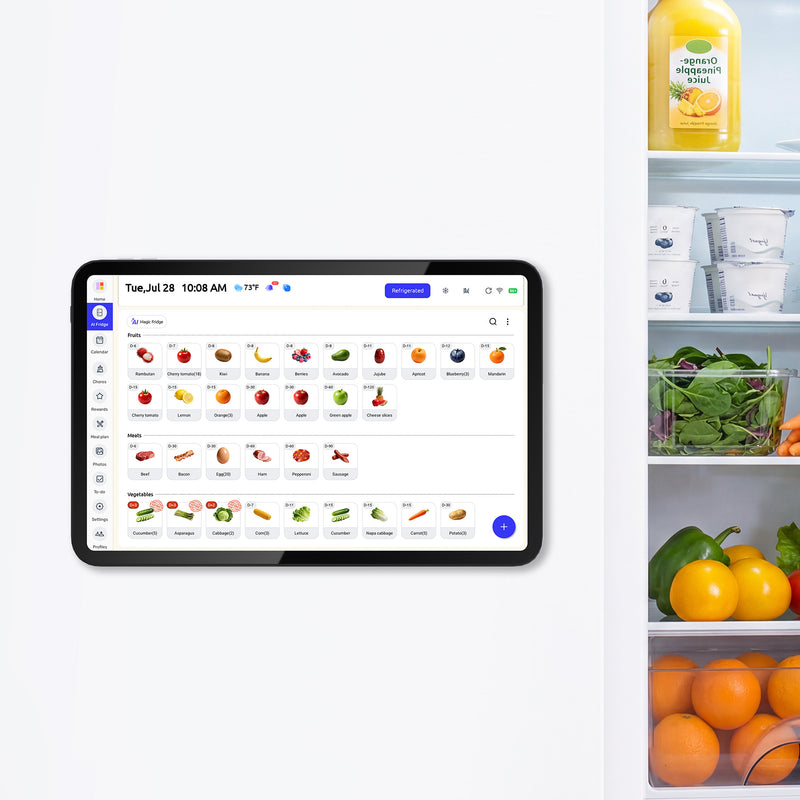
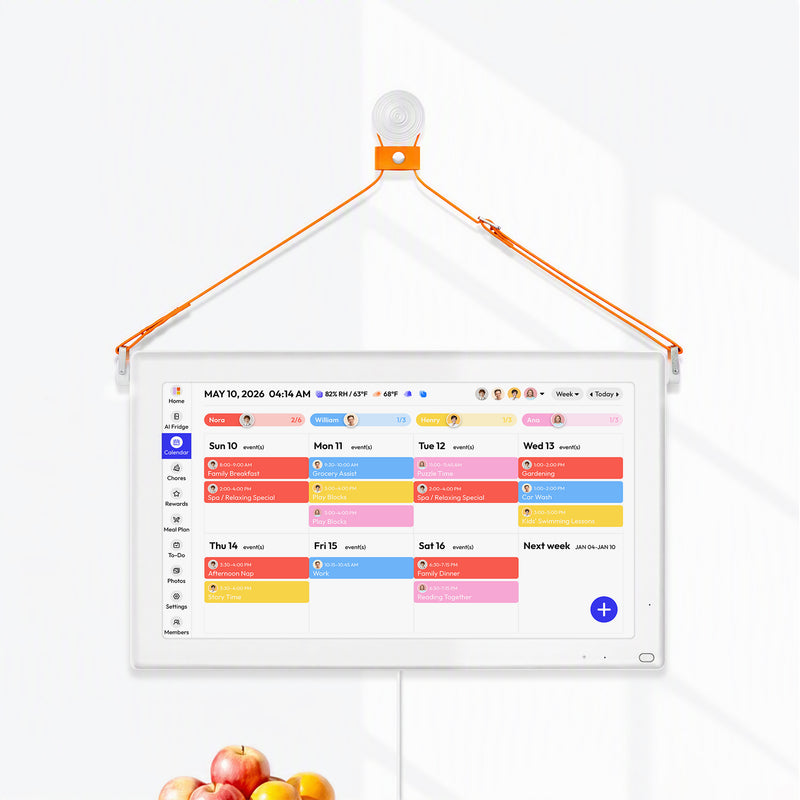
A shared digital hub can reduce a lot of friction here. Some families use co-parenting apps. Others use a dedicated family display. Everblog is one option that gives households a shared calendar, visible routines, and one place to track events and responsibilities so the schedule isn't scattered across texts, paper notes, and separate apps.
Why texts usually make this worse
Texting feels fast, but it creates three recurring problems. Messages get lost. Tone gets misread. Details end up spread across dozens of separate conversations.
That is why I often tell parents to communicate more like colleagues than ex-partners. You need a single source of truth for pickups, appointments, school events, and agreed changes.
Here's a short visual on that handoff mindset:
A handoff checklist worth using
Before every exchange, confirm:
- Time and place: No assumptions. The default should already be in the schedule.
- Health items: Medication, allergy needs, glasses, braces supplies.
- School needs: Homework, library books, instrument, uniform.
- Comfort basics: Favorite stuffed animal, sleep item, charged device if appropriate.
For a practical look at how timing and activity planning can make transitions easier, this guide on shared custody handoffs and activity timing gives useful examples.
Calm handoffs don't happen because parents suddenly feel better. They happen because the process leaves less room for friction.
Putting It on Paper and Adapting as Life Changes
A verbal agreement is better than chaos, but it isn't enough. If the plan matters, write it clearly. If it's legally binding in your case, make sure it matches the language your court or attorney expects.
What to include in the written plan
At minimum, spell out:
- Regular schedule: Exact days, exchange times, and exchange locations
- Holiday overrides: Which schedule controls when dates overlap
- Transportation rules: Who picks up, who drops off, and what happens if someone is late
- Communication expectations: How non-urgent changes will be requested and confirmed
You can also add a right of first refusal clause if both parents want it. For example: if one parent cannot personally care for the child during their scheduled time for a stated period, that parent will first offer the other parent the opportunity before arranging third-party care. This clause only works if the trigger, notice method, and response time are written clearly.
Build in review points
Children change. Jobs change. School calendars change. The schedule that worked in preschool may stop working in middle school.
A review clause can be simple: the parents will revisit the schedule at agreed intervals, before each school year, or upon a substantial change in work, residence, or the child's needs. Informal swaps may help with ordinary life, but repeated changes usually signal that the underlying plan needs formal revision.
If you're dealing with Texas terminology and legal structure, this overview of understanding Joint Managing Conservatorship can help you frame how decision-making and parenting time fit together.
When one parent repeatedly ignores the schedule, don't keep patching over the problem with texts and verbal side deals. Document what happened, follow the formal process available in your jurisdiction, and get legal guidance where needed.
Your Shared Custody Questions Answered
What if my child says they hate the schedule
Don't rewrite the plan after one hard transition. First, find the pattern. Is your child reacting to the exchange itself, missing items, bedtime differences, or too many transitions? Children often describe a process problem as a schedule problem.
Should siblings always stay on the same schedule
Usually yes, especially for younger children. Shared transitions are simpler, and siblings often help anchor each other. But there are exceptions. A teen's school and activity load may justify different practical arrangements than a much younger child's routine.
What if we agree informally but never update the written order
Use caution. Informal flexibility can help co-parents function, but it can also create conflict later if one parent claims the “real” agreement was different. Keep temporary adjustments in writing and formally update the plan if the changes become the new normal.
If you're trying to keep two households aligned without relying on scattered texts and memory, Everblog offers a shared family hub for calendars, routines, chores, and household coordination. For co-parents, that kind of visible, centralized system can make a shared custody schedule easier to follow day to day.


