


A digital fridge calendar placed in the kitchen gives every family member a shared, visible schedule for taking vitamins and supplements on time. When routines are color-coded, tied to meal times, and displayed on a screen that everyone walks past throughout the day, missed doses drop and the mental load stops falling on one person.
Why Families Miss Daily Supplements

Most households rely on tools that only work for the person who set them up. Phone alarms, private apps, and pill organizers each create information gaps that leave everyone else uninformed.
The Mental Load Falls on One Person
Research on cognitive household labor shows that one parent, most often the mother, carries a disproportionate share of tracking family health routines. One person managing everyone's vitamins means the routine depends on one person staying on top of it. When that person forgets or gets overwhelmed, the whole household routine breaks down.
Phone Notifications Get Dismissed Before Anyone Acts
A phone notification that arrives during a busy morning competes with many other notifications and tasks. Research on medication adherence consistently identifies forgetfulness as one of the leading reasons people miss doses. People dismiss most supplement reminders without acting on them because they appear at the wrong moment, on a private screen only one person sees.
Pill Organizers Don't Show Real-Time Status
A pill organizer shows whether a compartment is empty, but it does not confirm who took the dose or when. Spouses and caregivers have no way to check without asking directly. That question adds friction to an already busy morning and often goes unasked.
How a Digital Fridge Calendar Works as a Supplement Tracker

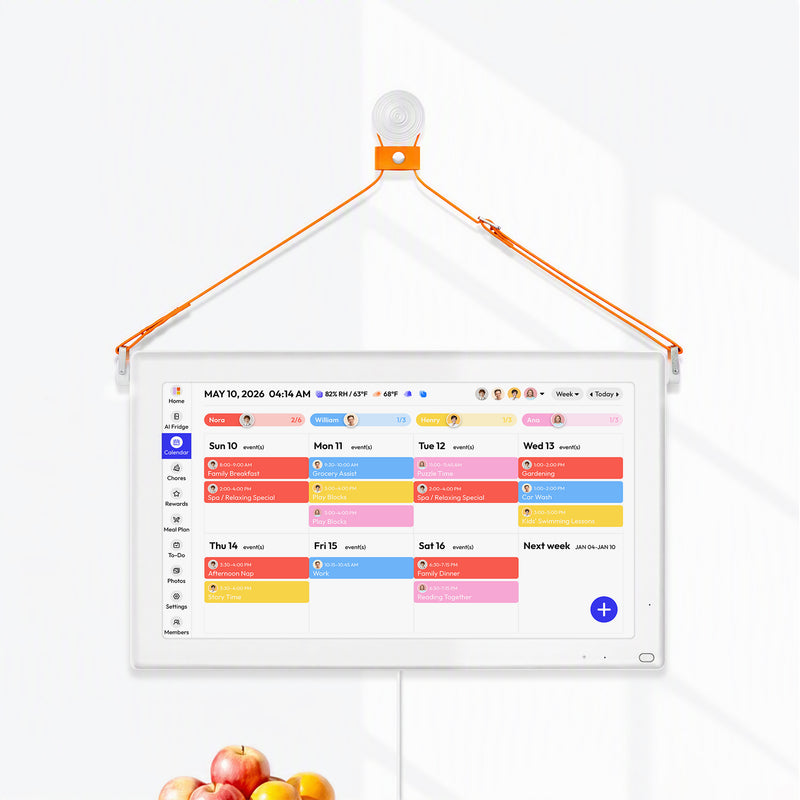
A digital fridge calendar replaces scattered notes and private apps with one shared kitchen screen in the most-used room in the home. Color coding, recurring events, and meal-timed reminders make the full household schedule visible without requiring anyone to open an app.
Color-Coded Profiles Keep Each Person's Schedule Separate
Each family member gets a distinct color so their supplement entries stand out at a glance. A child's morning multivitamin shows up in one color while a parent's evening omega-3 appears in another. This separation prevents mix-ups between similar-looking pills and removes the need for written labels.
Recurring Events Remove Daily Manual Entry
Once you set a supplement reminder as a recurring event in your synced Google or Outlook calendar, it appears automatically on the fridge display at the chosen time every day. This is particularly useful for long-term routines like daily vitamin D or prenatal vitamins that run for months.
Meal-Timed Reminders Help Match When Supplements Should Be Taken
Many vitamins require food for absorption. Scheduling a supplement reminder at the same time as a meal entry on the calendar means the alert appears during that meal, not at an arbitrary time that may fall on an empty stomach or in the middle of a commute.
How to Set Up a Vitamin Tracking Routine on Your Digital Planner

Setup takes under 30 minutes and relies on features already built into the calendar. Starting with a full inventory prevents duplicate entries and scheduling conflicts later.
Step 1: List Every Supplement per Person with Timing Notes
Write down each family member's supplements, the dose, and the preferred time window. Note any food requirements, such as taking with fat or separating from dairy. This list becomes the reference for every entry you create in the calendar.
Step 2: Add Each Entry Using the App's Photo Feature
Open the calendar app and tap the plus button. Use the Camera option to photograph a handwritten note or a card listing the timing and dose details for that person. The app extracts text and time information from the photo and builds a calendar event from it. Assign the matching color for that family member and save. (Photo-to-event capture is currently available on iOS; Android support is coming.)
Step 3: Pair Supplement Reminders with Existing Meal Times
Schedule vitamin alerts at the same time as meal slots already on the calendar. A probiotic reminder set 30 minutes before breakfast appears naturally during morning coffee prep. Recurring events sync across all connected devices, so any update shows up on the fridge display and in the app.
Step 4: Use the Chore Chart for Children's Doses
Turn a child's vitamin dose into a checklist item with a reward on completion. The child checks off the entry after taking the supplement and earns an animated emoji as confirmation. This creates a visible record without requiring a parent to ask or follow up in person.
Which Supplements Need Extra Scheduling Attention?
Some vitamins and minerals interact with food or with each other in ways that affect how well the body absorbs them. A shared digital planner makes these timing rules visible so everyone in the household follows them consistently. The suggestions below reflect general nutrition guidance and are not a substitute for personalized medical advice. Consult a healthcare provider before making changes to your supplement routine, especially if you take prescription medications or have a diagnosed condition.
Fat-Soluble Vitamins Are Often Better Taken with a Meal
Vitamins A, D, E, and K require dietary fat for absorption, so pairing them with a meal that includes fat can support better absorption. For many households, dinner is a natural fit since it tends to include more fat than other meals, but any meal with fat can work. Building this timing into a visible daily schedule on the calendar helps make the habit consistent without relying on memory alone.
Iron and Calcium Are Generally Better Taken Apart
Research generally suggests separating iron and calcium intake, as calcium can reduce how much iron the body absorbs when both are consumed at the same time. Creating separate time blocks for these two entries on the calendar makes the spacing visible and planned rather than left to chance. Placing each in a different color column makes the separation clear at a glance. Individual needs vary considerably, so consult a healthcare provider for personalized timing guidance, particularly if you are managing iron deficiency or taking other medications.
Prenatal Vitamins Often Change by Trimester
Prenatal formulas shift across trimesters, so the calendar entry needs to reflect the current phase. Set an end date for the current formula's recurring event, then add the next phase as a new entry starting the following day. The calendar shows the transition clearly for both the pregnant parent and any supporting caregiver.
Seasonal Supplements Have a Natural End Date
In many parts of the United States, the body's ability to make vitamin D from sunlight drops significantly from November through March. Setting a recurring event in your synced calendar with an end date in early spring keeps the routine current. The reminder stops appearing once the end date passes, so the schedule stays accurate without manual cleanup.
How Does a Smart Fridge Calendar Compare to Other Supplement Tracking Methods?
Different tools handle family supplement tracking in different ways. The table below compares the most common options across the factors that matter most for a multi-person household.
|
Method |
Shared Visibility |
Recurring Reminders |
Meal-Time Alerts |
No Device Needed to View |
|
Single-user phone app |
No |
Yes |
Limited |
No |
|
Paper chart |
No |
No |
No |
Yes |
|
Shared phone app |
Partial |
Yes |
Limited |
No |
|
Digital fridge calendar |
Yes |
Yes |
Yes |
Yes |
Among these options, a digital fridge calendar is the only one that places a shared, persistent display in the kitchen where supplements are typically stored and taken. Phone apps, even shared ones, still require each person to unlock a device to check the schedule. Paper charts offer no reminders and cannot update in real time.
Kitchen Placement Makes Visibility Automatic

A screen mounted on the fridge is in a space every family member passes multiple times a day. Placing the screen where supplements are stored removes the need to check a schedule somewhere else.
One Screen Works for the Whole Household
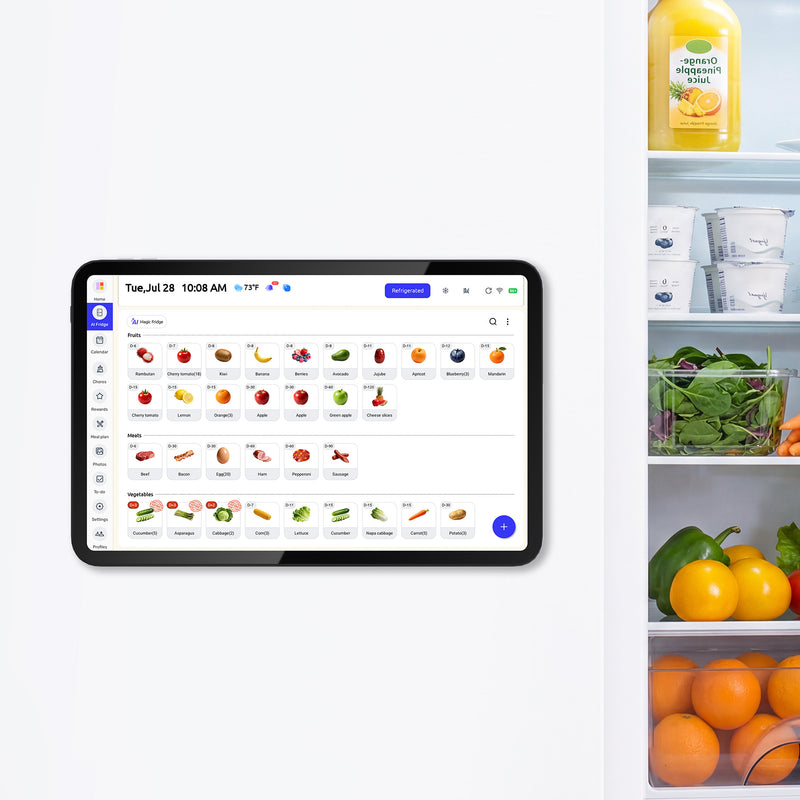
The Everblog 13.4-inch FridgeCal™ touchscreen is large enough for adults, teenagers, and young children to read clearly without unlocking a device. Teenagers can check their after-school slot on the way to the kitchen. Young children use the chore chart to mark completion themselves, which reduces the need for repeated prompts from a parent.
One Screen Reduces Scheduling Conflicts
When every family member's supplement schedule appears on the same display, overlaps become visible before they cause problems. A parent adding a new entry can see whether the timing clashes with another person's event before saving it. Private apps do not offer this household-level view.
Start Tracking Family Vitamins on a Digital Fridge Calendar
A digital fridge calendar replaces scattered phone reminders with one shared, color-coded schedule tied to real meal times. Color coding, recurring alerts, and kitchen-level visibility reduce missed doses without adding steps to anyone's daily routine. The Everblog FridgeCal™ Calendar mounts magnetically on most refrigerators, includes a built-in 8400mAh battery, and requires no subscription fee. Check the current setup and mounting options at everblog.com to see how it fits your kitchen.
FAQs About Tracking Vitamins and Supplements with a Digital Fridge Calendar
Q1. How Do I Know If I Already Took My Vitamins Today?
A visible daily checklist updates the moment someone marks a dose complete, so anyone in the household can confirm the status at a glance. This removes the guesswork and prevents accidental double-dosing without requiring family members to ask each other or rely on memory.
Q2. What Should I Do If I Miss a Daily Supplement Dose?
For most supplements, skip the missed dose and resume your regular schedule the next day. Doubling up is not advisable for fat-soluble vitamins A, D, E, and K, which can build up in the body over time. Consult a healthcare provider if you miss doses often.
Q3. How Do I Organize Supplements That Need to Be Taken at Different Times of Day?
Group supplements by time window and schedule each alongside a meal. Probiotics often work best before the first meal of the day, and water-soluble vitamins like C and B complex can generally be taken at any meal. Viewing the full day on the calendar helps confirm nothing overlaps.
Q4. Is It Safe to Take Multiple Supplements at the Same Time?
It depends on the combination. Fat-soluble and water-soluble vitamins generally do not compete with each other, but some mineral combinations reduce absorption or cause stomach discomfort. Spacing doses across two or three daily windows often helps. Ask a healthcare provider about your specific routine.
Q5. How Do I Track When to Reorder Supplements for the Whole Family?
Note the estimated run-out date on the calendar when you open a new bottle. A reminder set two weeks before that date gives enough time to reorder without disruption. Tracking each person's refill dates as separate entries prevents any supplement from running out unexpectedly.


