




The simplest way to keep family schedules visible is to use one shared planning hub that combines the calendar, meal plan, chore list, and paper drop zone in a place everyone already passes. When plans live in one spot, fewer details stay stuck in one person’s head.
If you are still answering “What time is practice?” while sorting school papers and figuring out dinner, the problem is usually not effort. Nearly 60% of parents say managing family schedules is somewhat or very difficult, and 74% wish their partner helped more with household logistics. A shared planning hub gives you a simple way to make plans visible, divide handoffs, and make the next seven days easier to run.
Why One Shared Hub Works Better Than Scattered Reminders
Visibility beats memory
A shared planning system helps because it keeps the same information in front of everyone. That matters more than most families expect. A date on one parent’s cell phone, a paper flyer on the counter, and a text buried in a thread do not work like one system. They create hidden work, and hidden work usually lands on one adult.

A family command center is useful for the same reason: it gives the household one place to look for schedules, meal plans, to-do lists, papers, and reminders. When the answer always lives in the same place, you get fewer repeated questions, fewer missed handoffs, and less last-minute scrambling at 7:30 AM.
It helps with real-life schedule pressure
For busy homes, a shared calendar is not just about seeing events. It helps prevent double-booking, cuts down on back-and-forth texting, and makes last-minute changes easier to absorb. That is especially true for shift-work families, co-parents, and households where one week never looks exactly like the next.
A visible routine also helps children know what to expect. A family schedule can reduce power struggles around homework, chores, and transitions because expectations are shown, not re-announced all day. The goal is not perfect compliance. The goal is fewer surprises and clearer handoffs.
What Your Planning Hub Should Include
Start with the core four
A good hub does not need twenty parts. Most families do well with four basics: a shared calendar, a meal plan, a chore or task list, and a paper zone. Multiple command-center examples point to the same core pieces: a visible calendar, mail or paper storage, lists, and a drop zone for the items that travel in and out of the house each day, as shown in common command center setups.

Your calendar is the anchor. Put fixed commitments on it first: school hours, work shifts, appointments, practices, therapy, pickup changes, and bedtime routines. Then add the things that usually create friction if they stay vague, like who is making dinner Tuesday, who is taking a child to the dentist Thursday, and which night the dishwasher gets emptied before an early morning.
Add only the pieces your family actually uses
A family command center can hold yearly, monthly, and weekly calendars, meal planners, bulletin boards, chore charts, and emergency contacts. That does not mean you need all of them. The better question is: what information causes trouble when it is not visible?
For one family, that may be sports schedules, backpacks, and school papers. For another, it may be rotating shifts, a grocery list, and who handles bedtime. If you have younger kids, a weekly view often works better because “Tuesday after school” means more than “the third week of the month.” If you have teens, a month view plus phone reminders may be enough.
Keep paper and digital tools working together
A shared family organizer can handle calendars, lists, and notifications across phones and computers. That is useful when adults need real-time updates during the workday. But a wall surface still matters because people follow what they can see while passing through the kitchen, mudroom, or entryway.
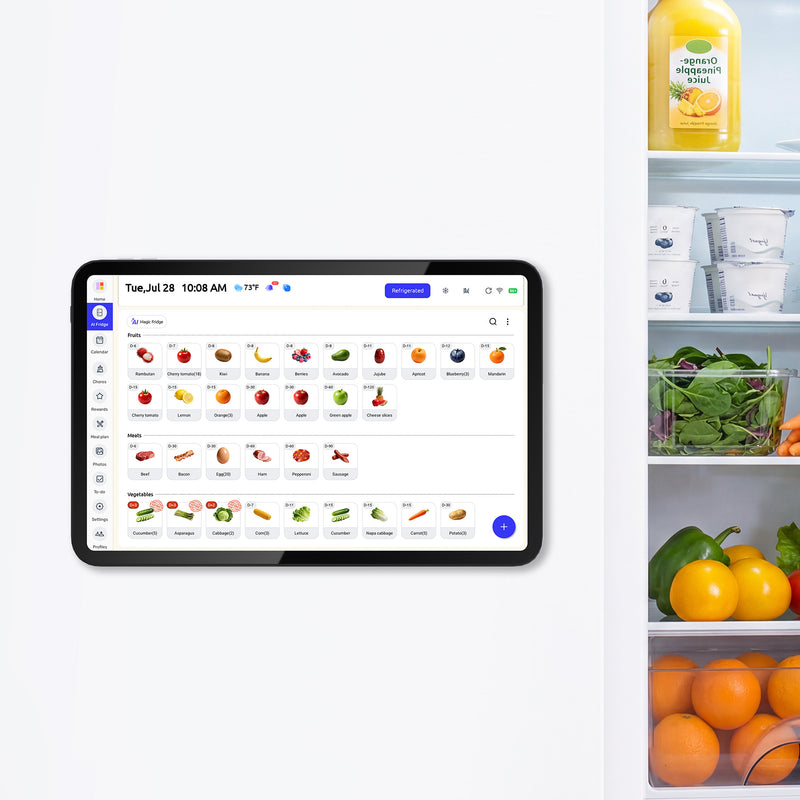
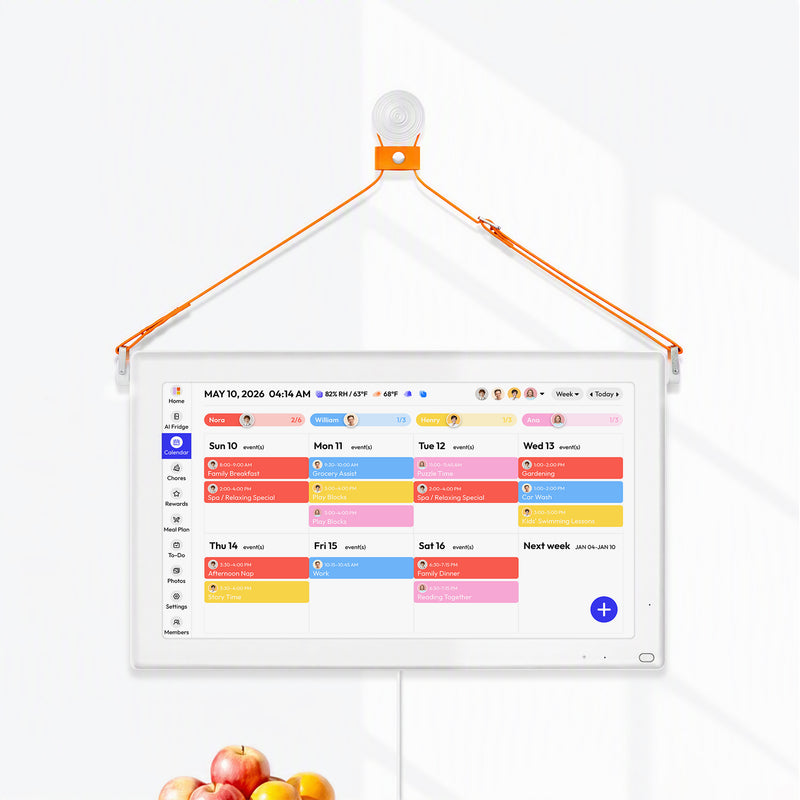
That is why many families do best with a hybrid setup: one digital source of truth plus one visible home surface. If you want that visible surface to be digital, a wall-mounted option such as the Everblog digital calendar can show shared events, chores, and plans in one place. The digital tool handles syncing and reminders. The home hub handles awareness. A quick glance should answer three questions: what is happening today, what needs to leave the house, and who is responsible.
Where to Put the Hub So People Actually Use It
Choose traffic over tidiness
The best location is the place people already pass, not the place that looks most organized. Families consistently use high-traffic areas like kitchens, entryways, garage doors, and laundry-room walls because that is where daily decisions happen.

This is one of the most common setup mistakes. A neat system tucked into a home office often fails because no one sees it during the morning rush. A smaller setup on the fridge or beside the door usually works better than a larger one hidden from view.
Test the layout before you commit
A smart low-stress move is to test your layout with paper first. One practical command center approach suggests taping printer paper to the wall and labeling where the calendar, meal planner, and bulletin board would go before drilling holes. That gives you a fast way to see whether the spacing and flow make sense.
Think in terms of reach and sequence. Hooks or cubbies should sit where backpacks naturally land. The calendar should be at adult eye level. A paper tray should be close enough that school forms do not end up drifting to the kitchen island. If your child is expected to check the schedule, place at least one part of the system where they can actually see and use it.
How to Make the System Easy to Follow
Give every person a clear role
A shared family calendar works better when everyone can add or confirm information, not when one parent becomes the unpaid dispatcher for the whole house. Color-coding by person or category helps at a glance. So does a shared “Family HQ” login if you need one place for calendar access, school portals, and reminders.
Roles should stay simple. One adult updates medical and school appointments. The other confirms work travel, pickups, or sports. Kids can own age-appropriate recurring jobs, like adding practice times they hear from a coach or checking the dinner plan before asking for takeout. Responsibility does not need to be equal to be visible, but it does need to be named.
Use routines that survive busy weeks
A planning hub only works if it has a rhythm. A Sunday-night check-in is a strong weekly reset because it lets the household review the next seven days before the Monday rush starts. Keep it short: 10 to 15 minutes is enough for most families.

Then add two tiny daily touches: a one-minute morning glance and a quick dinner check-in. Those micro-routines catch things before they become fires. “Dad has a late shift Wednesday.” “Emma needs cleats tomorrow.” “Pizza Friday moved because of the game.” That is the level of planning that keeps the system useful.
What Usually Breaks and How to Keep It Simple
Overbuilt systems fail first
A real-life chore chart example shows what many families learn the hard way: a detailed plan can look great on paper and still collapse after a day or two. Morning dishwasher tasks, long nightly lists, and rotating deep-clean jobs often fall apart when school and work pressure hit.
The better approach is to keep the repeatable basics and drop the fantasy version. In practice, that may mean just five visible evening tasks: load the dishwasher, take out the trash, reset the living room, check tomorrow’s schedule, and glance at the meal plan. If a routine cannot survive Thursday, it is too complicated.
Use visual supports carefully and practically
For some children, visual activity schedules can improve transitions and reduce problem behaviors by showing the sequence of tasks with pictures or other cues. That does not mean every child needs a chart, and it does not replace support for ADHD or other needs. It does mean that clearer visual steps can help a child move through routines with less prompting.
In family life, that can look simple: a morning card with “get dressed, brush teeth, pack backpack, shoes on,” or a bedtime strip near the bathroom mirror. The point is not to create a clinical system at home. The point is to reduce repeated verbal reminders when a visual cue would do the job better.
Choosing Paper, Digital, or Hybrid
Pick the tool that matches your friction
A shared family calendar app is helpful when schedules change during the day, caregivers use different devices, or family members split time across homes. Hands-on testing in early 2026 found that setup for some apps took under 10 minutes, and cross-device syncing was strong on phones and laptops.
A paper system still wins for instant visibility. No unlocking. No dead battery. No app fatigue. A hybrid system is usually the most realistic choice for working adults: digital for updates and reminders, physical for daily awareness and family follow-through. If you are choosing between a whiteboard and an app, the right answer is often both, but only if they point to the same plan.
Trade-offs to think through
A digital family organizer can combine a shared calendar, to-do lists, shopping lists, meal planning, and messaging in one place. That can be useful if your family already coordinates through phones and wants fewer separate tools.
But more features are not always better. If you only need one shared calendar and a grocery list, a simpler app may get used more. If your family ignores phone notifications, a visible wall calendar will probably matter more than extra premium features. Choose the lightest system that solves your actual misses: forgotten papers, double-booked evenings, unclear chores, or dinner confusion.
FAQ
Q: Should every family member have access to the same calendar?
A: Usually, yes. Adults should be able to add and update events. Kids do not need full editing access if that creates mess, but they should still be able to see the schedule clearly, either on a wall display or through a shared view on a device.
Q: What if my partner does not check the system consistently?
A: Make the system easier to notice before you assume they will change habits. Put it in a daily path, keep the weekly check-in short, and make one responsibility visible, such as confirming pickups or adding work shifts. Consistency improves when the system fits the day instead of adding one more task.
Q: Do I need a digital wall calendar or smart display?
A: No. A dry-erase calendar, a paper tray, and a few hooks can work very well. If your family manages constant schedule changes, split homes, or rotating shifts, digital syncing may be worth it. If not, start with the simpler option and upgrade only if the problem is still not solved.
Final Takeaway
A shared planning hub works when it is visible, small enough to maintain, and clear about who owns what. You do not need a perfect command center. You need one place that answers the same daily questions every time.
Try this for the next seven days:
- Put one calendar in the place your family passes most.
- Add only fixed events first: work, school, appointments, and activities.
- Add one meal plan row and one short chore list for the week.
- Create one paper zone for forms, mail, and school handouts.
- Hold a 10-minute check-in on Sunday night.
- Do a one-minute calendar glance each morning.
- Remove anything that no one used by the end of the week.
If the hub helps your family miss fewer handoffs and ask fewer repeat questions, keep it. If not, simplify it until people actually use it.


