




The week usually falls apart in the same places. A child remembers a library book at the exact moment you're backing out of the driveway. Someone asks about practice pickup after you've already committed to a work call. Dinner is still undecided at 5:12, and now everybody's hungry enough to be annoyed.
A weekly planner wipe board helps when the problem isn't laziness or lack of effort. It's lack of shared visibility. When the plan lives in one parent's head, in scattered texts, on school emails, and on sticky notes by the kettle, the family keeps reacting instead of moving together.
That shift matters. A 2022 survey found that 68% of US households with children under 12 use wipe boards for scheduling, and those households reported a 40% reduction in family coordination stress once the system was adopted. That rings true in practice. Families don't need a prettier board. They need one place everyone can check without asking, scrolling, or guessing.
Taming the Morning Rush with a Central Hub
The most useful family planner isn't the fanciest one. It's the one that answers the same questions before anyone has to ask them.
On a rough Tuesday morning, that usually means four things are colliding at once. School drop-off. Work start times. After-school activities. Dinner logistics. If none of that is visible in one place, the household starts running on verbal reminders, and verbal reminders are fragile.
A weekly planner wipe board works best as a single source of truth. It sits where people naturally pause, usually the kitchen, mudroom, or near the garage door. Everyone can glance at it and see who needs to be where, what has to leave the house, and what the evening looks like.
The board doesn't reduce stress because it's magical. It reduces stress because it removes repeat conversations.
That matters most in homes where the same questions keep draining energy. Is today the day for shin guards? Who's collecting from choir? What's for dinner? Did anyone sign the form? The board turns those from memory tasks into visible tasks.
A simple setup is enough to start:
- Top row for days so the week is visible at a glance.
- One line per person if your family needs role clarity.
- A small notes area for forms, special clothing, or pickup changes.
- A dinner row because evening confusion often starts in the afternoon.
If your household is already close to command-center territory, it's worth looking at a few family command center ideas for busy homes. Not for decoration, but for placement and visibility. A board hidden in a study won't change mornings. A board in the traffic path might.
Choosing the Right Weekly Wipe Board for Your Family
Picking the wrong board creates friction before the habit even starts. The board looks good for a week, then stains, feels cramped, or never gets used because it's mounted in the wrong place.

Material changes the daily experience
The first decision is surface type. In family use, that choice affects cleaning, marker performance, and how long the board stays readable.
| Surface | Best for | Trade-off |
|---|---|---|
| Magnetic steel | Families who want magnets for forms, invitations, and receipts | More prone to staining over time if cleaning is inconsistent |
| Tempered glass | Clean look, smoother writing feel, stronger resistance to residue | Usually less forgiving on price and mounting |
| Framed combo boards | Homes that want dry-erase plus cork in one unit | Can get visually crowded fast |
If your board has to hold school papers, steel earns its place because magnets matter in real life. If you care most about a smooth surface that stays cleaner-looking, glass usually feels better to live with. The catch is practical. Glass needs confident mounting and a committed location.
Practical rule: Buy for your household's habits, not your ideal self. If papers pile up, magnets beat minimalism.
Printed layout or blank surface
Pre-printed weekly boards help families who freeze in front of a blank space. The structure is already there, so people write faster and argue less about where things go. A blank board works better for households with changing needs, rotating custody, project weeks, or hybrid school and work patterns.
Here's the trade-off in plain terms:
- Choose pre-printed if your week repeats and you want speed.
- Choose blank if your layout keeps evolving.
- Choose a combo format if you need schedule plus loose notes in the same place.
I've seen many families outgrow tiny decorative weekly boards quickly. The layout isn't the issue. The writing space is.
Size and placement have to match family complexity
A fridge board can work beautifully for a smaller household with predictable routines. For a family with several children, split pickups, and frequent notes from school, a wall-mounted board usually wins because everybody can read it without crowding the refrigerator handle.
Use this quick test before buying:
- Count how many people need their own row or zone.
- Decide whether meals belong on the same board.
- Choose the wall first, then the board size.
- Stand where people gather and check sightlines.
A board that fits the wall but doesn't fit the week is still the wrong board.
Specific examples help. A slim magnetic board like the Realspace weekly combo style fits an apartment kitchen well when you need compact planning plus pinned notes. A larger wall board works better when the family relies on visibility from across the room. If your children are old enough to update their own activities, make sure the board sits low enough for them to reach. That one decision often determines whether the system stays parent-run or becomes shared.
Designing Your Ultimate Family Command Center
A weekly planner wipe board becomes useful when the layout matches the household. Most families don't need more sections. They need clearer ones.

The strongest family boards usually follow one rule. Separate planning by function, not by impulse. If appointments, meals, chores, and random reminders all fight for the same square, the board gets messy fast. If each type of information has a home, people trust the board.
For inspiration on overall setup, these home command center ideas for organized families are useful because they show how a planner can sit inside a broader household system rather than acting as a lonely wall object.
Weekly at a glance layout
This is the cleanest format for families whose main pain point is movement. School, work, clubs, pickups, appointments.
Set the board up with days across the top and one row per family member. Use one color per person and keep the writing style short. "Piano 4:30," not "Piano lesson after school with Mrs. Taylor."
A typical example might look like this:
| Person | Monday | Tuesday | Wednesday |
|---|---|---|---|
| Mum | Office | Work from home | Late meeting |
| Dad | Early start | Pickup | Gym |
| Ava | Choir | Library | Soccer |
| Leo | PE kit | Playdate | Dentist |
The reason this works is simple. It shows collision points early. If one parent has a late meeting and a child has sport across town, the problem becomes visible before the day goes sideways.
Use a small corner for must-bring items. That's where permission slips, instrument reminders, costumes, and packed lunches belong. Keep it separate from the schedule itself so the board stays readable.
When a family says the board "isn't working," the first thing I check is whether reminders and appointments are mixed together in the same writing space.
Meal and chore matrix
Some households aren't overwhelmed by appointments. They're worn down by domestic repetition. Dinner, dishes, laundry, bins, pet care. A weekly planner wipe board can absorb that load if you stop treating chores as background noise.
This layout works well with days across the top and two large bands below:
- Upper band for dinner
- Lower band for recurring chores
Meals should be specific enough to reduce 5 p.m. decision fatigue. "Tacos," "pasta bake," "leftovers," "breakfast-for-dinner." Grocery prompts can sit beside them if needed.
For chores, avoid writing vague expectations like "help out." Give each child or adult a visible task linked to a day. If siblings share jobs, rotate them weekly and write the initials clearly.
A practical setup might include:
- Monday dinner roast tray bake
- Tuesday dinner pasta
- Wednesday dinner slow cooker meal
- Thursday task bins out
- Friday task sports kit wash
- Sunday task prep lunches and check school bags
The board matters less than the rule around it. Chores should be checked at the same time every evening, not argued about at bedtime.
Hybrid command center
Most families need a hybrid. Appointments alone don't run a house. Meals alone don't coordinate transport. The best hybrid boards keep three zones and resist the urge to add seven.
Try this structure:
- Left side for the weekly schedule
- Bottom strip for meals
- Right column for notes, shopping, and school reminders
That right column is where the board earns its keep. Add "return book fair money," "birthday gift Saturday," "need poster board," or "coats home Thursday." These aren't events, but they drive a surprising amount of family stress.
A blended or co-parenting household can adapt this by assigning neutral labels instead of fixed assumptions. Use names, not "Mum jobs" and "Dad jobs." If handoffs happen midweek, mark those clearly in one color and keep school items in another. The point is visibility, not territory.
What not to put on the board
Overloaded boards fail because they ask a wall to do too much. Skip anything that belongs in a deeper storage system or a private conversation.
Avoid putting these on your main weekly board:
- Long to-do lists that no one will read while leaving the house
- Monthly goals that compete with urgent weekly actions
- Private notes about discipline, money, or adult logistics
- Decorative clutter that reduces writing space
A command center should reduce scanning time. If people have to hunt for the important line, the board has stopped doing its job.
Essential Setup and Maintenance for a Ghost-Free Board
A weekly planner wipe board can fail for boring reasons. Bad location. Crooked mounting. Cheap markers. No cleaning routine. Families often blame the product when the underlying issue is maintenance drift.

Install it where the family naturally stops
The best spot is not the emptiest wall. It's the place where people already pause. Near the coffee machine, between the kitchen and garage, beside the lunch-packing area, or in the mudroom.
If you're renting or you don't want to commit to screws right away, review a few damage-free wall hanging methods before mounting. That matters more with glass or framed boards, where poor support leads to wobble or avoidance.
A good install checklist is short:
- Clean the wall area first so dust doesn't interfere with adhesive hardware.
- Check the surface is flat because warped walls create tension.
- Mount at eye level for adults, but reachable for kids if they need to participate.
- Keep markers stored beside the board so updating feels frictionless.
The maintenance routine that actually works
Most ghosting starts because families erase dry, write over faint residue, and repeat that cycle for months. The fix isn't complicated. It just needs to happen every week.
According to Office Depot's weekly board guidance, to prevent 70% of long-term degradation, perform a weekly reset by erasing the board completely, cleaning it with a 70% isopropyl alcohol solution, and letting it air-dry for 5 minutes.
That weekly reset is essential if the board sees daily use.
Use this simple rhythm:
| Timing | What to do | Why it matters |
|---|---|---|
| Daily | Erase cleanly with a microfiber cloth | Removes fresh ink before it sets |
| Weekly | Full erase, 70% isopropyl alcohol clean, air-dry | Prevents residue buildup |
| Monthly | Deeper clean with a non-abrasive method | Catches staining before it becomes permanent |
Keep the cleaning supplies beside the board. If the alcohol spray lives under a sink three rooms away, the weekly reset won't happen.
If you're comparing board styles or trying to understand why some surfaces age better than others, a guide focused on the dry erase monthly board format can help you think through cleaning habits and usage patterns.
What causes ghosting fastest
A few habits shorten board life quickly:
- Using the wrong markers instead of dry-erase markers
- Leaving writing untouched for too long
- Scrubbing with rough materials
- Skipping full-board resets because the week got busy
Children's craft markers are a common culprit. So are random pens pulled from a kitchen drawer. Store the approved markers with the board and remove everything else. That one boundary saves a lot of frustration.
How to Get Your Family to Actually Use the Planner
The board itself doesn't create consistency. The family does. A beautiful planner that nobody updates becomes wall decor within two weeks.

The mistake I see most often is this. One parent buys the board, fills it out alone, and becomes the unpaid operator of the whole family system. Everyone else benefits from the visibility, but only one person carries the maintenance. That's not organization. That's hidden labor with nice markers.
A wipe board works when the household agrees on three things. Where information goes. When it gets updated. Who is responsible for checking it.
Build buy-in before you build habit
Children use systems they feel part of. Adults use systems they trust. You need both.
Start with a short weekly planning ritual. Keep it tied to something that already happens, such as Sunday dinner, lunch prep, or the first quiet stretch after the children are in pajamas. Each person contributes the week ahead. School events, work shifts, clubs, packed lunch needs, handoffs, or must-bring items.
A few low-effort ways to increase participation:
- Give each person a marker color so they can find their own information instantly.
- Let children write their own activities if they're old enough.
- Use symbols for quick reading like a football, music note, or lunchbox icon.
- Protect one section from clutter so the week's essentials stay visible.
Children especially like ownership cues. A named row. A chosen color. A chance to update the board themselves. That's not just cute. It teaches them that schedules aren't something adults mysteriously impose. They're something the household builds together.
If a child can read the board but never touch it, don't be surprised when they ignore it.
For bigger families, clarity matters more than neatness
Multi-child homes often don't struggle because they lack planning tools. They struggle because several plans overlap at once. A 2025 HomeLife Insights survey found that 68% of parents with two or more children struggle with "schedule overlaps," and that challenge has fueled a 23% rise in searches for "family command center" solutions.
That tracks with what happens in real houses. The board helps families see the overlap. It doesn't always solve the overlap on its own.
For larger households, these rules help:
| Problem | Board fix | Limit |
|---|---|---|
| Two children need transport at once | Show conflicts early in the week | Someone still has to resolve the logistics |
| Shared equipment gets forgotten | Add a must-bring zone | Only works if people check it |
| Chores get argued over | Assign visible ownership | Requires follow-through |
| Co-parent transitions get muddy | Mark handoff days clearly | Doesn't send reminders on its own |
Blended families need even tighter rules. Keep language neutral. Use names and times. Avoid shorthand that only one adult understands. If one household updates digitally and the other uses the board at home, somebody still has to reconcile those systems manually. That's where analog starts showing its limits.
A quick visual can help if you're trying to establish a family planning rhythm:
Make the board part of the day
The best family planners are checked at predictable times. Morning launch. After-school reset. Evening prep.
Try anchoring the board to these moments:
- Before leaving the house everybody checks today's line.
- After school or work one adult updates changes immediately.
- After dinner the family glances at tomorrow.
- Once a week the board gets rebuilt, not patched.
This is also where analog systems start creating extra work. If a teacher email changes pickup, someone has to update the board. If practice moves, someone has to erase and rewrite. If a co-parent adds an event from another location, the wall at home doesn't know unless a person makes it know.
That's manageable for some families. For others, especially those juggling multiple calendars, the friction becomes the whole story.
From Wipe Board to Smart Hub Knowing When to Upgrade
A weekly planner wipe board is excellent at one thing. It makes family life visible. For many households, that alone changes the tone of the week. Fewer repeated questions. Better handoffs. Clearer evenings.
But analog systems have a ceiling.
The board won't push a reminder to the parent who's out of the house. It won't sync a schedule change automatically. It won't resolve the problem where one adult updates the wall and another updates a phone. And it won't remove the maintenance burden from the person who keeps the whole family running.
Those limits become obvious in a few situations:
- Plans change often during the day
- Adults coordinate across different locations
- Children need accountability for chores, not just visibility
- Meals, shopping, and scheduling keep splitting across different tools
At that stage, the question isn't whether the wipe board failed. It didn't. It probably taught the family the discipline of shared planning. The question is whether the household has outgrown manual syncing.
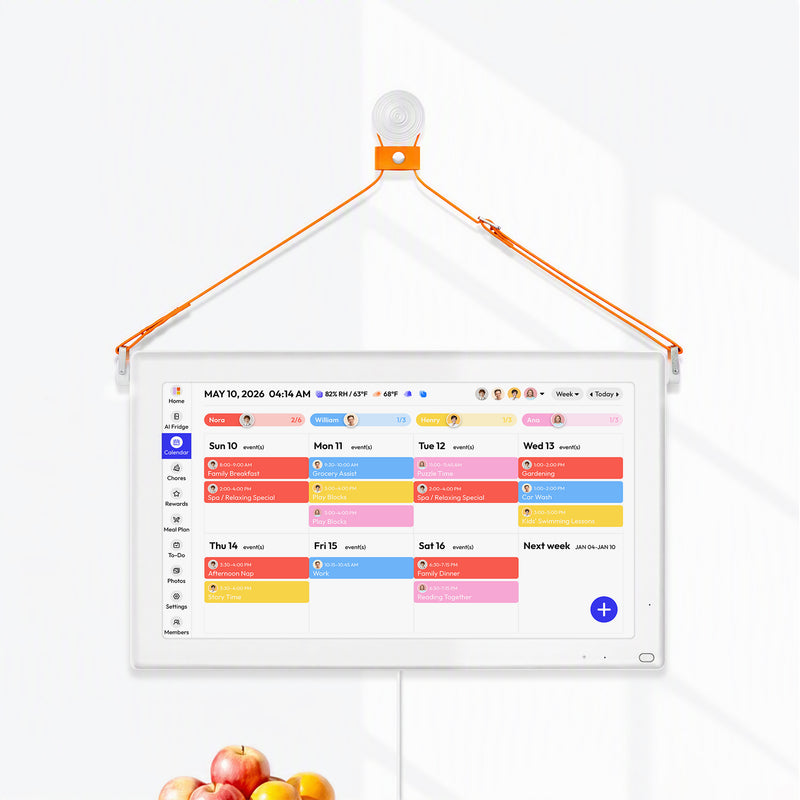
If you're weighing that transition, it helps to compare your current setup with a dedicated digital weekly planner so you can see what changes when reminders, shared access, and ongoing edits move off the wall and into a connected system.
A useful rule is this. Stay analog if your week is stable and your family reliably checks one visible place. Upgrade when the plan changes faster than one person can keep rewriting it.
That's especially true in homes where one parent has become the planner, the updater, the reminder system, and the cleanup crew. A central wall board can reduce chaos. A connected hub can reduce the mental load behind that order.
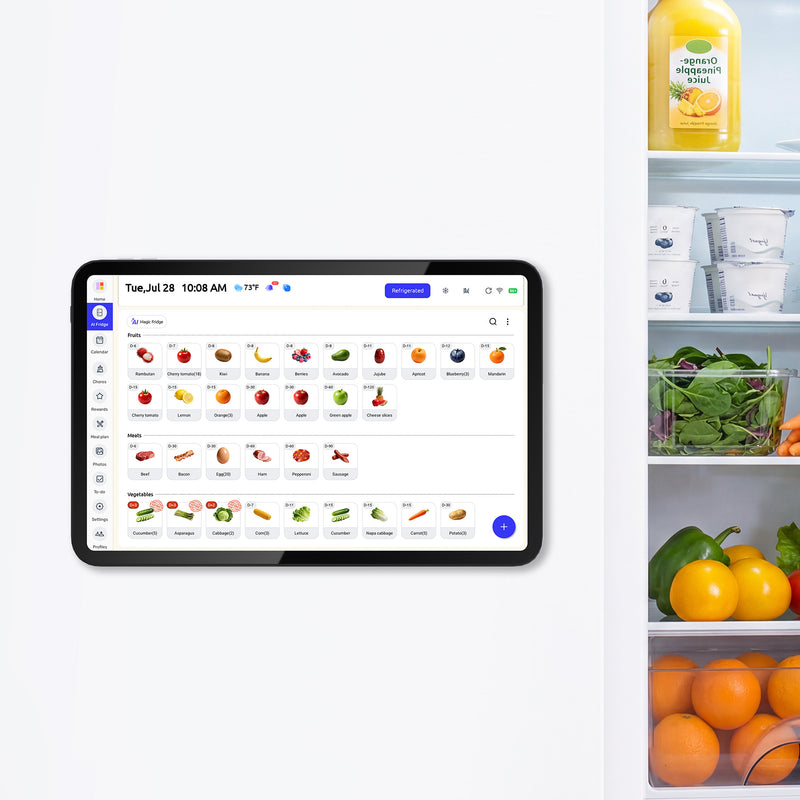
If your family is ready for more than a manual weekly planner wipe board, Everblog is worth a look. It brings schedules, chores, meals, grocery lists, and shared visibility into one digital family hub, without the constant erase-and-rewrite cycle that busy households often outgrow.


