




Some mornings unravel before breakfast.
One child can't find the library book. Another suddenly remembers a spirit day outfit. Your partner asks whether pickup changed, and you're standing in the kitchen trying to remember if the dentist appointment is this Thursday or next. The paper on the fridge has one answer, your phone has another, and someone's permission slip is still unsigned.
If that sounds familiar, you're not failing at family organization. You're dealing with a visibility problem. When plans live in too many places, people miss them. When chores, meals, school events, and rides all need attention at once, a basic calendar often isn't enough.
A wall planner calendar helps because it puts family life where everyone can see it. But the more I talk with parents, the more obvious this becomes. The key question isn't paper or screen. It's whether your planner can handle the whole job of family coordination, not just dates on a grid.
The End of Morning Chaos How a Wall Planner Tames Your Day
I know this scene well. One child is pouring cereal, another is asking where soccer cleats went, and an adult is trying to answer a work message while remembering who has early dismissal. Nobody is doing anything wrong. The house is just running without one shared view of the day.
That shared view is what a wall planner calendar is meant to create. It gives the family a single place to check before the scramble starts. Instead of asking, “What’s happening today?” five different ways, everyone can glance up and know.

Shared visibility is the real point
Wall calendars aren't a new parenting hack. Their roots go back to the 1800s, when lithographic printing on metal sheets helped move time management from private pocket diaries to shared displays the whole household could see, as described in this history of wall calendar development.
That matters because the core need hasn't changed. Families still need a clear, at-a-glance system. What's changed is the amount of information modern households juggle. School notices, rotating custody schedules, after-school clubs, grocery needs, chores, meal planning, and work calendars all compete for attention.
Practical rule: If only one person can see the plan, it isn't really a family plan.
From calendar to command center
A traditional wall planner solved one big problem. It made the month visible. That alone can calm a home because fewer things stay trapped in one parent's head.
Modern planners can take that same principle further. They can turn “What day is the field trip?” into “What day is the field trip, who packs lunch, who drives, and what needs to happen tonight so tomorrow goes smoothly?” That's a different level of support.
For parents, that's often the turning point. You stop using a calendar as a record of chaos after it happens. You start using it to prevent the chaos in the first place.
The Two Worlds of Wall Planners Paper vs Digital
A paper planner and a digital planner can both hang in the same busy kitchen, yet they solve different kinds of family stress.
Paper usually feels easier at first. You write soccer on Tuesday, a dentist visit on Friday, and everyone can see the month without opening anything. For families who want one shared view and very little setup, that simplicity is reassuring.

What paper does well
Paper is strong at visibility. It sits in one place and keeps the plan in front of everyone. Children can point to a date. A grandparent helping with pickup can glance at it. Nobody needs a login, a battery, or a tutorial.
It also feels concrete. Writing by hand can slow things down in a good way, like making a grocery list on paper instead of trying to hold five items in your head. Some families find that a paper wall planner lowers friction because it asks so little of them.
That matters.
If your household mostly needs a monthly overview, a paper wall planner calendar can still do that job well.
Where paper starts to strain
The pressure shows up once the calendar has to do more than list dates.
A family schedule is rarely only a schedule anymore. It also includes who is making dinner, whether the bins went out, which child fed the dog, what needs to be packed for Thursday, and who is covering pickup if a meeting runs late. Paper can hold some of that, but it often pushes the rest onto sticky notes, separate charts, text threads, and one parent's memory.
That is usually the breaking point.
A paper calendar shows what is happening. It does not easily connect the follow-up work around what is happening.
What digital changes
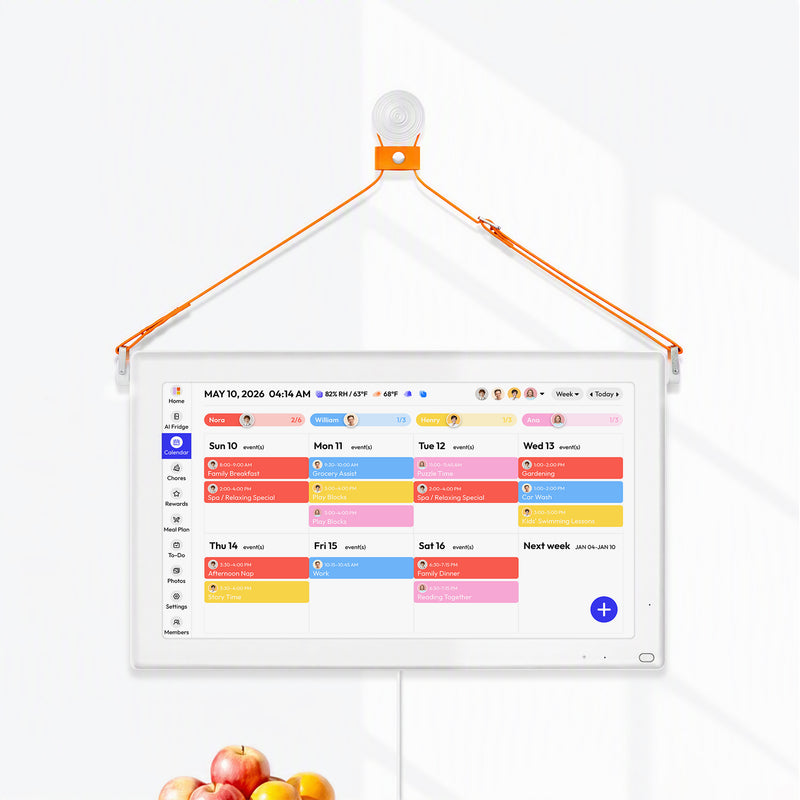
A digital wall planner keeps the shared wall view, but the information can change in real time. If a school event moves, a co-parent adds an appointment, or someone remembers at lunch that tomorrow needs a packed costume, the family display can reflect it without waiting for one person to get home and rewrite the plan.
That is the practical difference. Paper is a snapshot. Digital is a live board.
For many parents, the bigger benefit is not the calendar itself. It is the way digital tools can pull related jobs into the same place. Chores, meal plans, shopping notes, and reminders can sit beside the schedule instead of living in separate systems. A digital wall planner for family coordination shows how this category is shifting from simple date-tracking toward full household management.
| Feature | Paper wall planner | Digital wall planner |
|---|---|---|
| At-a-glance visibility | Clear in one central spot | Clear if the display is easy to read |
| Updating from outside the house | Someone updates it later by hand | Family members can update it remotely |
| Reminders | Relies on people checking the wall | Can send alerts before events |
| Chores and meal planning | Often split across other sheets or boards | Can sit inside the same system |
| Kid involvement | Easy to color, check off, and mark up | Easy if the layout is simple |
| Screen-free feel | Strong | Lower, but still more focused than phone apps |
Which one fits your home
Choose paper if your family wants a visible monthly plan, likes low-tech routines, and does not need frequent changes during the day.
Choose digital if your real problem is coordination. That includes missed handoffs, chore tracking, dinner planning, shared custody logistics, or too many details being carried in one adult's head.
The best choice is the one that reduces hidden work at home. For many families, that means asking a better question than paper or digital. Ask whether your wall planner calendar can also help run the house.
Must-Have Features for Modern Family Coordination
By Wednesday night, many family calendars are already out of date. Soccer moved. A permission slip surfaced at the bottom of a backpack. Someone used the last of the milk and forgot to mention it. The calendar may still show the week, but one parent is still carrying the rest of the household in their head.
That is a key test of a wall planner calendar. It should do more than display appointments. It should help your family follow through on the small, repeating jobs that keep home life steady.

The gap families notice after the first busy week
A plain monthly grid looks organized at first. Then real life starts pressing on it.
The problem usually is not the dentist appointment itself. It is everything attached to it. Who is driving. Whether the sibling needs a snack packed because pickup will run late. Whether dinner has to be something quick. Whether chores need to shift because the evening just changed shape.
That is why a modern planner needs to act more like a shared household board than a date box. A good family calendar display for daily home coordination helps everyone see not only where they need to be, but also what needs to happen around those events.
Features that reduce hidden work at home
The best features solve common points of friction. They lower the number of reminders, last-minute decisions, and repeated questions that tend to fall on one adult.
- Chore tracking: Kids can see what is expected without waiting to be told again. Adults can check progress without becoming the constant reminder system.
- Rewards or routine tracking: Visible progress helps children connect effort to outcomes. That matters for habits like packing lunches, feeding pets, or finishing homework before screens.
- Meal planning: Dinner shapes the rhythm of the whole evening. When meals sit beside the family schedule, you can spot the nights that need leftovers, slow cooker meals, or something simple.
- Shared grocery list: A running list in the same system cuts down on sticky notes, text threads, and the classic “I thought you were picking it up.”
- Color-coded views: Each person’s schedule stands out faster. That sounds small until you are scanning a packed Thursday at 7:10 a.m.
- Voice entry: This helps in the moments parents are least able to stop and type, like while cooking, buckling car seats, or walking in the door with full hands.
Why these features matter more than a pretty layout
A calendar can look tidy and still leave the hard work untouched.
Take a Saturday note that says "clean room." On paper, that seems clear. In practice, a parent may still need to remember the task, remind the child, check whether it happened, and decide what comes next. A stronger system lets the child mark it complete, makes progress visible, and ties that task into the routines your family is already building.
Meal planning works the same way. Writing "tacos" on Wednesday helps a little. Linking that plan to ingredients you still need helps much more. The planner starts working like a kitchen whiteboard, a chore chart, and a weekly calendar in one place.
A helpful look at how these hubs work in real homes is below.
One example of an integrated setup
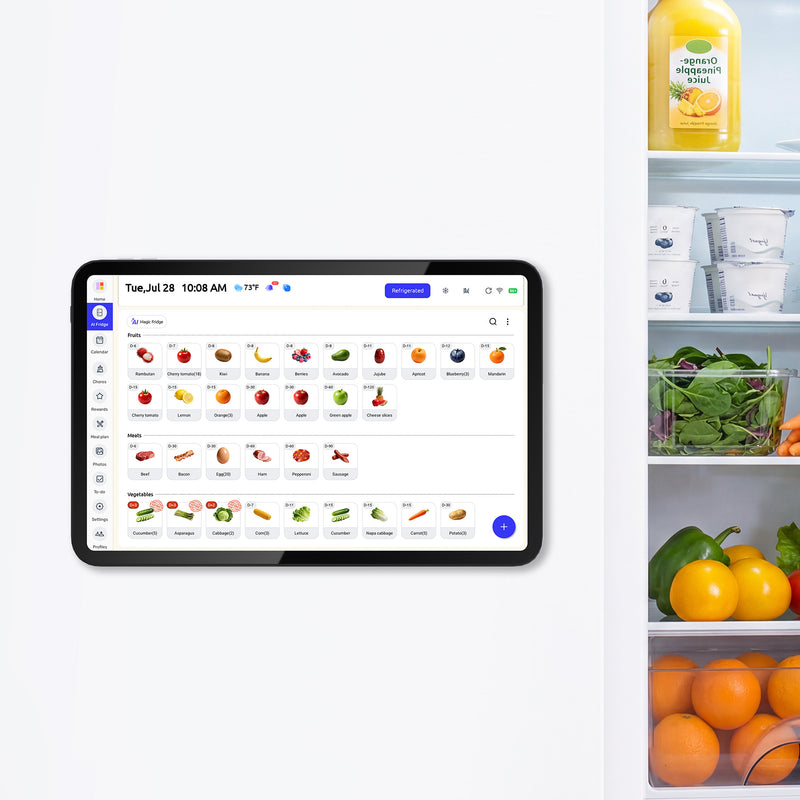
One option in this category is Everblog, a 21.5-inch digital family wall calendar that combines scheduling with a chore manager, rewards tracker, meal planner, grocery list, media hub, voice entry, over-the-air updates, and a companion app. The value is not the number of tools by itself. The value is keeping related parts of family life together so events, tasks, and dinner plans do not live in separate places.
Start with the tools your family uses every week. If your stress points are chores, meals, and missed handoffs, those are the features to prioritize.
When a wall planner calendar supports those daily systems, it stops being a place you write things down. It becomes a calmer way to run the house.
Setting Up Your Family Command Center Step by Step
A good system only helps if your family can use it on a busy Tuesday. Setup matters because complicated tools tend to get abandoned after the first enthusiastic week.
I've found it helps to think in two tracks. You can build a strong paper-based wall planner calendar. Or you can set up a digital family hub. Both can work, but they ask different things from you.
If you're using paper
Paper works best when you treat it like a shared routine, not just wall decor.
-
Pick one location everyone passes.
The kitchen, mudroom, or hallway near the exit usually works better than a home office. People need to see it naturally. -
Assign one color per person.
This sounds simple because it is. It also prevents the monthly grid from turning into one messy block of black ink. -
Keep supplies attached to the system.
Put the markers, eraser, or sticky notes right beside the calendar. If the pen is missing, updates won't happen. -
Add one small companion area.
This could be a note for groceries, meals, or school reminders. Without it, those details drift elsewhere. -
Hold a weekly reset.
Spend a few minutes checking the upcoming week. Move appointments from email or school notices onto the planner before they surprise you.
Families don't usually quit paper because they dislike paper. They quit because the maintenance quietly falls onto one person.
If you're setting up a digital display
The setup is usually faster if you do it in a practical order.
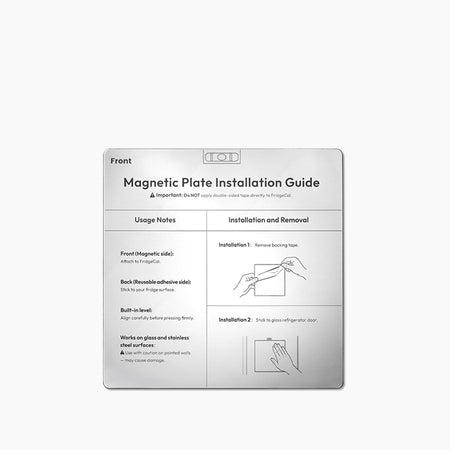
First, mount the display where people naturally pause. Eye level in the kitchen or a main hallway tends to work well. Then connect it to Wi-Fi and create the family profiles you need. Keep it simple at the start. Adults first, then children, then any shared categories.
After that, connect your outside calendars. Work, school, activities, and personal schedules are the ones most families want synced first. Such synchronization makes a dedicated family calendar display setup guide especially helpful, as it shows how to think through placement and household use, not just technical setup.
Start with only three active tools
Parents often overbuild the system on day one. That's the fastest way to make it feel like homework.
Choose three features to use for the first week:
- The main calendar for events and appointments
- A chore list for recurring responsibilities
- A meal plan for dinners or lunches
Leave extras for later. Once the family trusts the system, you can add more layers without resistance.
Make the wall the source of truth
This is the part many households skip. You need one agreed-upon rule. If it isn't on the planner, it isn't fully communicated.
That doesn't mean every detail must start there. A coach may email practice changes. A teacher may send a class note. But the shared wall should become the place where the final family version lives.
A simple launch checklist helps:
| Task | Paper system | Digital system |
|---|---|---|
| Choose a central location | Pin or hang it where traffic is high | Mount where people already gather |
| Set up family categories | Color-code by marker | Create profiles or calendars by person |
| Add recurring routines | Write them in manually | Build them once and reuse them |
| Create a weekly review habit | Sunday evening works well | Same habit, with updates pushed live |
You don't need a perfect command center. You need one your family will keep checking.
Building Routines That Stick A Week in the Life
The ultimate test of a wall planner calendar isn't how neat it looks on day one. It's whether it lowers friction by Thursday.
Think about a family with school-age kids, one working parent with meetings that shift, one parent managing pickups, and the usual pile of chores and dinner decisions. Their week gets easier not because they suddenly become more disciplined, but because the planner keeps the next step visible.

Sunday evening
The family spends a few minutes looking ahead. School events go on the planner. Practice times get checked. Dinner ideas are penciled in. One child notices a project due later in the week, which gives everyone time to gather supplies before the last minute.
This is also when the physical setup around the planner helps. If you're creating a family corner near a desk, breakfast nook, or command station, these layout ideas for a productive workspace can help you think through traffic flow, storage, and visibility.
Tuesday and Wednesday
Tuesday is where a system starts earning its keep. A schedule change comes in. Instead of relying on one adult to remember and relay it later, the family updates the shared plan. The person handling pickup can see the change, and the child knows what happens after school.
Wednesday often exposes a second weak spot. Meals. The planner helps because the family isn't just staring into the fridge at 5 p.m. wondering what's left. Dinner was already considered when the week was calmer.
A few small routines make this easier:
- Morning glance: Everyone checks the day's plan before leaving.
- After-school check-in: Kids see what's next before drifting into screens or snacks.
- Grocery additions: Household items get added when noticed, not after they're forgotten.
A planner becomes powerful when it answers the next question before someone has to ask it.
Friday and the weekend
By Friday, children can often see their own progress more clearly. They know whether chores are done. Adults know what still needs attention before the weekend gets swallowed by errands and activities.
The planner also changes the tone in the house. Parents spend less energy repeating instructions. Kids gain a little more ownership because the expectations are visible, not hidden in a parent's memory.
Why routine beats intensity
Most families don't need a stricter system. They need a gentler one they can repeat.
If the planner supports a quick weekly review, daily visibility, and shared responsibility, it starts shaping behavior. People ask fewer last-minute questions. Adults don't carry every detail alone. Children learn that the family schedule isn't mysterious. It's posted, clear, and part of everyday life.
That's when the wall planner calendar stops feeling like one more organizational project. It starts feeling like relief.
Your Buying Checklist How to Choose the Right Wall Planner
A wall planner earns its place in the kitchen or hallway by solving the problems your family has.
That sounds obvious, but it is easy to get distracted by the nice-looking options first. A planner can have a clean design and still leave you juggling school pickups in one place, chores in another, and meal ideas on scraps of paper by the toaster. The better question is simpler: what needs to become easier in your house this week?
Start there.
Ask these questions before you buy
A good wall planner works like a family dashboard. It should show what matters, not create one more thing to maintain.
-
How many moving parts are you trying to coordinate?
A household with one or two regular commitments needs something different from a family balancing school events, work shifts, sports, appointments, and custody transitions. -
What keeps getting missed?
If the main problem is remembering birthdays, dentist visits, or practice times, a clear monthly view may be enough. If the bigger problem is that chores, meals, and shopping lists live in separate places, look for a planner that brings those pieces together. -
Who needs to update it, and when?
Some families can update the planner once a week at home. Others need changes to show up after a text from school, a work schedule change, or a last-minute pickup swap. -
Can everyone read it quickly?
If children, grandparents, or tired parents need to glance up and understand the day from across the room, size and contrast matter more than fancy features. - Are you trying to reduce mental load, not just store events? That is the fundamental dividing line. A basic calendar tracks dates. A stronger family system also handles chores, meals, to-dos, and reminders, so one parent does not have to hold every detail in their head.
Match the planner to the job
Many buying guides stop too early, comparing paper and digital as if the only question is screen versus pen.
For families, the bigger issue is coordination. Your planner should match the kind of support your home needs.
| Your family situation | What usually helps |
|---|---|
| Simple monthly planning | A large paper planner in a central spot |
| Busy school and activity schedule | A highly visible planner with easy updating |
| Chores and routines need follow-through | A planner with built-in task tracking |
| Meal planning keeps slipping | A planner that includes meals and grocery coordination |
| Shared households or co-parenting | A system everyone can access and trust |
| Low-vision concerns | A large, clear, high-contrast display |
The table matters because it shifts the goal. You are not buying a calendar format. You are choosing a household coordination tool.
A paper planner can still be the right fit if your family mostly needs one shared monthly view. If that is the direction you are considering, this guide to a dry erase monthly board can help you picture how a simpler setup works in daily life.
If your pain points are deeper, like unfinished chores, repeated dinner questions, or confusion about who is handling pickup, treat those as buying criteria. In that case, integrated tools matter more than appearance. A modern wall planner calendar should help the whole household see responsibilities, not just appointments.
A simple final test
Before you choose, picture a hard Wednesday.
One child has practice. Another needs a costume for school tomorrow. Dinner has not been decided. One adult is running late. If your planner only shows that soccer starts at 5:30, it is giving you part of the answer. If it also shows the meal plan, the grocery reminder, and whose turn it is to empty the dishwasher, it is doing the fuller job families usually need.
Choose the option that makes the week easier to see, easier to update, and easier to share. That is usually the planner your family will keep using.
Frequently Asked Questions About Wall Planner Calendars
Is a digital wall planner worth it if I already use phone calendars
It can be, especially if your problem isn't storing events but sharing them clearly. Phone calendars are personal by design. A wall planner calendar makes family logistics public and easy to notice, which changes how often people act on the information.
Will a paper wall planner still work for a busy family
Yes, if your needs are straightforward and someone is willing to keep it updated. Paper works well for monthly visibility. It gets harder when schedules change often or when chores, meals, and reminders need to live alongside the calendar.
What's the biggest mistake families make when setting one up
They create a system nobody checks. The planner has to live in a place people naturally pass, and it has to become part of a small daily habit. A perfect setup hidden in a side room won't help much.
How do multiple family members keep a digital planner updated
Most digital systems use a companion app or linked calendars so adults can add or change events from wherever they are. The wall display then reflects those updates for everyone at home. That shared visibility is what makes the tool feel useful, rather than just another screen.
What if I don't want another subscription
That's a fair concern. Some families are less bothered by upfront hardware cost than by ongoing fees for basic household functions. If you're comparing options, check whether features like chores, meal planning, rewards, and updates are included or locked behind a plan. The total experience matters more than the device alone.
Are digital wall planners hard for non-tech family members to use
They don't have to be. The easier systems rely on a large display, simple icons, and a small number of repeated actions. Most families don't need every feature on day one. They need a clear schedule, a few routines, and confidence that everyone can learn the basics.
Can a digital planner survive in a busy kitchen or hallway
That's worth checking before you buy. Placement, mounting, and warranty matter more in family spaces than they do in a quiet office. Some dedicated family displays are built for daily home use and include support resources plus a 2-year warranty under normal use, which can give parents a little more peace of mind.
If you're looking for one shared place to manage schedules, chores, meals, and everyday family coordination, Everblog is worth a look. It combines a 21.5-inch wall display with built-in family tools, no subscription, voice entry, and a companion app, which makes it a practical option for households that have outgrown scattered notes and separate apps.


