





A family calendar wall becomes a real weekly reset tool when it is visible, shared, and tied to one short planning routine every week. The goal is fewer missed handoffs, fewer dinner scrambles, and less household planning stuck in one person’s head.
Ever get to Sunday night and realize the school email, grocery list, and Thursday pickup plan are all in different places? A workable family calendar system can be set up in about 30 minutes and then maintained with a 10-minute weekly review, which is much smaller than cleaning up preventable surprises all week. Here’s how to turn one wall into a reset point for schedules, meals, papers, and who is doing what.

Treat the 30-minute setup and 10-minute weekly review as experience-based starting points, not fixed benchmarks: regular, predictable and consistent routines only help if your household can actually repeat them. For one week, track how many events came in, how often the wall got checked without prompting, and how long the reset really took, then keep, shrink, or expand the system based on what your family used.
Put the wall where your family already stops
Choose traffic over looks
A company, and the best spot is usually a transition zone like a kitchen wall near the main entrance, a mudroom, or the hallway between the kitchen and garage. That matters more than appearance. If people pass the wall while grabbing keys, shoes, and backpacks, they will use it.

A company is worth doing before you hang anything permanent. Tape up a temporary calendar in two candidate spots and count how often someone naturally checks it. The better wall is the one people use without being told.
Visual cues work best when they sit where people naturally act on them, so treat the high-traffic-wall rule as a behavior test, not a decorating rule. If one spot gets more unprompted checks during the 3- to 5-day trial, use that wall even if another location looks neater.
Give each surface one job
A company, not a giant board full of sticky notes and clutter. A visible calendar, a paper sorter, key hooks, and one reminder space are enough for most families. When every piece has one clear job, the system is easier to keep up.
A company, so you do not need a remodel to make this work. A dry-erase calendar, a three-pocket sorter labeled Action Needed, Upcoming, and Reference, a row of key hooks, and a small bulletin board can cover most daily friction. That setup makes hidden work visible, especially forms, keys, and papers that usually disappear into bags or piles.
Use two layers: a wall for visibility and an app for alerts
Decide what “digital calendar” means in your house
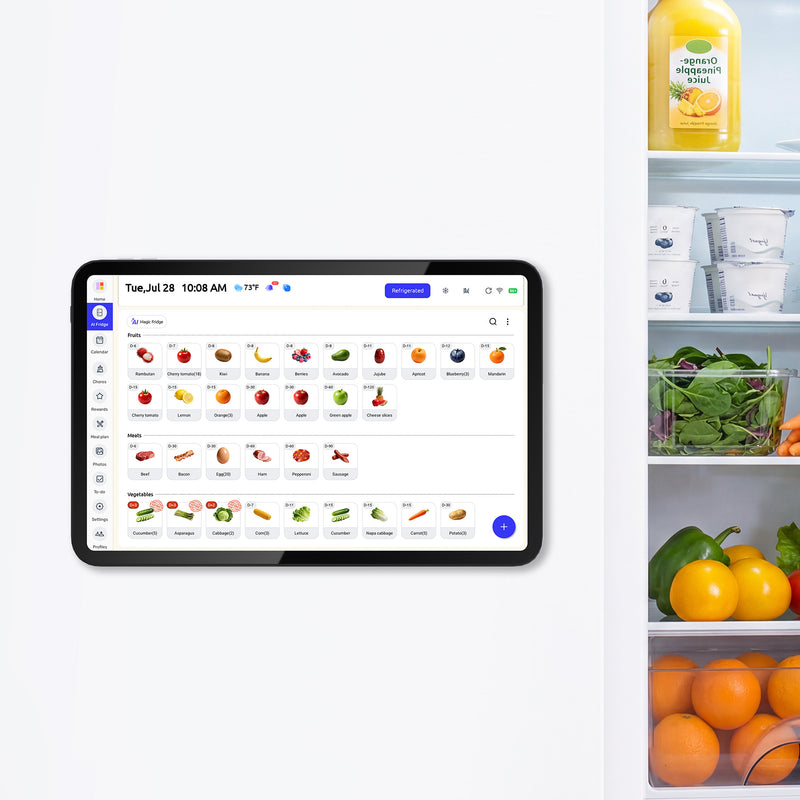
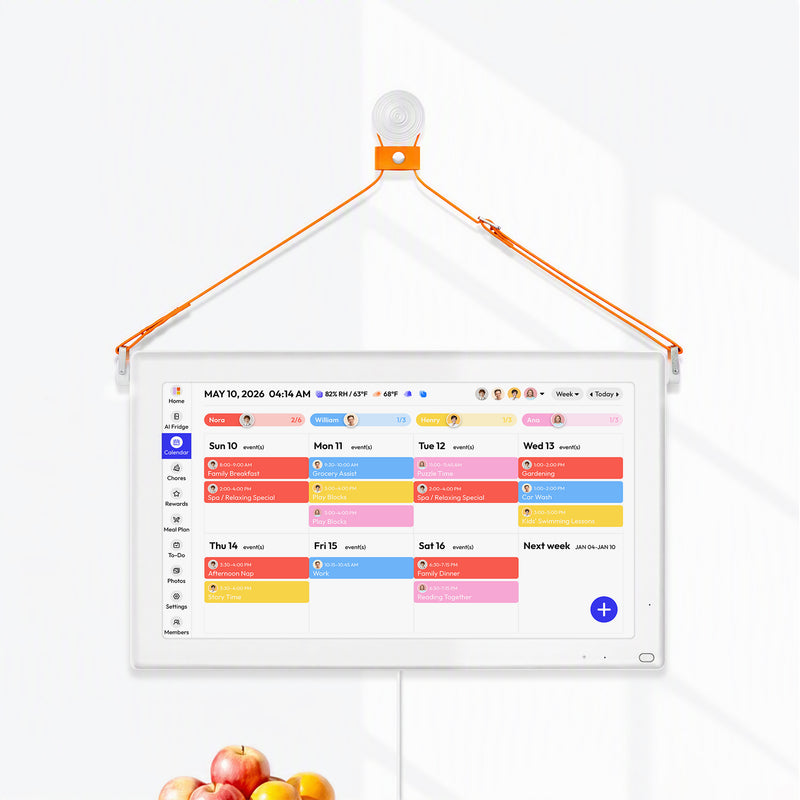
A digital family calendar can mean either a wall display or an app. Wall displays are shared screens in a common room. Apps handle scheduling, reminders, edits, and coordination across phones and computers.

Many households use both types together, and that is usually the most practical setup. The wall answers, “What is happening this week?” The app answers, “Who needs a reminder, and when?” If your family already checks the kitchen wall, keep that habit. If plans change often, let the app carry the alerts.
Match the tool to the job
Digital family calendars reduce information gaps with shared access, real-time updates, and reminders. That matters when practice times move, dentist appointments shift, or one parent is covering pickup from the road. Paper still helps, but it will not send a 30-minute warning before you need to leave.
Shared wall displays often sync with Google Calendar, Apple Calendar, and Outlook, so you usually do not need to rebuild your life from scratch to try one. If you are deciding whether a wall display is worth it, the trade-off is mostly price versus visibility. Basic models start around $99, while larger versions are easier to read across a room but cost more.
A company keeps this decision honest. Try both for seven days and notice which one family members check without prompts. Keep the format that gets used, not the one that seemed smartest in theory.
Run the weekly reset at the wall, not in your head
Start with a 10- to 15-minute calendar check
A Sunday Reset works best as preparation rather than perfection, and the calendar review is the first job. Stand at the wall, look at the whole week, and check appointments, school events, work demands, transportation, and open white space for rest or surprises. This is where you catch the Wednesday conflict before Wednesday catches you.

A weekly 10-minute review on one shared platform is enough for most families if the structure is clean. A practical setup is one shared family calendar, one calendar per child, and private work or personal calendars layered into the same view for each parent. Color coding helps, but the bigger win is getting everyone to trust one system.
Then plan meals against the real week
Spending 20 to 30 minutes planning on the weekend can prevent the usual 5:00 PM dinner scramble. Put the meal plan next to the weekly calendar so you can see dinner and logistics in the same glance. A late practice night should not also be the night you try a complicated new recipe.
The most sustainable meal plans use a repeating weekly structure, such as two family favorites, two quick meals, one new recipe, one batch-cook night, and one easy or takeout night. That gives the reset some shape without making it rigid. If Tuesday is packed, make it a quick meal. If Sunday has more breathing room, use it for cook-ahead food.
Finish the handoffs before the week starts
Pickup assignments belong in the event notes, along with gear, forms, and anything that changes who has to leave early. A good reset answers four plain questions before the week starts: who is going, who is driving, what needs to be packed, and what needs to happen the night before.
Keep the reset in the same four-step order each week because regular, predictable and consistent routines are easier to repeat: update the calendar, match meals to the real week, assign pickups and tasks, and clear papers before anyone walks away. For a seven-day trial, track three numbers only: new events added, unprompted wall checks, and total reset time.
Build roles that survive uneven follow-through
Stop the delay between hearing and entering
The biggest family calendar problem is event input, especially the short delay between receiving information and putting it into the system. That tiny gap is where permission slips, team schedules, and class parties fall through. Make one simple rule: the first adult who gets the information enters it.
Busy families often carry 40 to 60 events a month, so speed matters more than perfection. Manual entry may only take about two minutes per event, but those minutes add up during sports seasons and school-heavy months. If your family receives printed schedules or flyers, scanner tools can cut a long typing session down to about a minute, which is often enough to keep the system current.
Treat the event counts and minute-by-minute timings in this section as experience-based examples, not fixed benchmarks; the better standard is whether your family enters new information the same day and keeps the system regular, predictable and consistent enough that people trust it.
Spread the work in small pieces
Managing family schedules is a significant stress source for 65% of parents, which is one reason the wall should distribute planning instead of turning one parent into the household dispatcher. Keep roles small. One adult enters new events. The other checks paper pockets during the reset. Kids old enough to read can check tomorrow’s gear or activity before bed.
Reminder systems can use recurring and customizable alerts, which makes them useful for the parts people reliably forget. Trash night, library books, medication refills, and a 30-minute leave warning are better handled by a phone than by memory alone. The wall gives shared visibility. The reminders back up the humans.
Keep the system simple when life gets messy
Reduce decisions before they pile up
Theme nights reduce decision fatigue, especially on weekdays when everybody is tired and hungry. Taco Tuesday, Meatless Monday, or Use It Up Thursday may sound basic, but basic is useful. A visible default makes the wall easier to follow.
A rotating three-week meal plan can keep meals familiar without making them feel constant. Plan A, Plan B, and Plan C are enough for many homes. By Week 4, you are not inventing dinner from nothing. You are choosing from a short list that already fits your family’s pace.
Keep rescue options in sight
A master meal list grouped by effort gives the wall a rescue function, not just a planning function. Keep a short list of 15-minute rescues, 30-minute favorites, and slow-cooker meals near the calendar. When a late meeting or surprise errand blows up the original plan, you can swap fast.
Quick weeknight meals are supposed to stay under 30 minutes, and “cook once, eat twice” gives you breathing room later in the week. Roast chicken can become tacos. Extra rice can cover multiple dinners. A soup that makes eight servings can do dinner, two lunches, and a freezer backup without much extra work.
FAQ
Q: Should we use a paper wall calendar or a digital wall display?
A: Use the format your family naturally checks. If people already look at the kitchen wall, a paper calendar or wall display can work well. If plans change often, pair that wall with a shared app so updates and reminders still reach phones.
Q: How long should the weekly reset take?
A: For most families, 20 to 30 minutes is enough. Spend about 10 to 15 minutes on the calendar, then use the rest on meals, grocery notes, papers, laundry priorities, and the week’s trickiest handoffs.
Q: What if one parent still ends up doing most of the work?
A: Shrink the jobs until they are hard to skip. One person enters events when they receive them. One person checks papers. Kids handle one age-appropriate task, like checking tomorrow’s gear. The wall should reduce hidden work, not just display it.
Final Takeaway
A family calendar wall becomes a weekly reset tool when it does three jobs well: it shows the week in one shared place, it connects to reminders on personal devices, and it supports the same short planning routine every week. You do not need a perfect command center. You need a wall people pass every day and a reset your household can repeat next Sunday.
Action checklist
- Pick one high-traffic wall and test it for 3 to 5 days before mounting anything permanent.
- Set up one visible weekly calendar plus only 3 to 5 supporting pieces, such as paper pockets, key hooks, and a meal plan area.
- Choose one shared digital calendar and color-code it by family member or category.
- Schedule a Sunday reset with 10 to 15 minutes for the calendar and 10 to 15 minutes for meals, papers, and handoffs.
- Add pickup assignments, packing notes, and next-day prep directly to events or beside the wall calendar.
- Keep a short backup meal list with a few 15-minute rescues for nights that slip.
- Review the system after one week and remove anything nobody used.
- Predictable and consistent handoffs matter even more in shared-custody, shift-work, or grandparent-help weeks, so put exchange times, backup drivers, and overnight changes on the same weekly view.
- Use one house rule when follow-through is uneven: the first adult who learns about an event enters it right away or drops the paper into Action Needed before the day ends.
- If the wall starts getting ignored, strip it back to the calendar, one paper pocket, and one meal list, then retest the location for 3 to 5 days and keep the spot that gets the most natural checks.
- If you want a low-tech version, use the same routine with a paper calendar, labeled pockets, and simple written or picture cues; visual cues can make the next step easier to see without adding another screen.
- If your schedule spans multiple homes, caregivers, or drivers, give each person or household one color or one lane and review it together during the weekly reset; weekly time for a family meeting helps everyone hear the same handoffs.


