





A family command center should make the next seven days easier, not just look organized. The best setup is simple, visible, and tied to a few short routines so school papers, sports gear, meals, and calendar changes stop living in five different places.
A good command center does three jobs at once: it shows what is happening, catches new information before it gets lost, and makes the next action obvious. That is what reduces missed handoffs and the feeling that one adult is carrying the whole household in their head.
What a Family Command Center Should Actually Do
Think of it as a small operating system for the house. It does not need to manage everything. It needs to manage the things that regularly cause friction.
At minimum, your command center should answer these questions at a glance:
- What is happening today and this week?
- What needs a response, signature, payment, or packing step?
- What is the dinner plan, and what needs to be bought or thawed?
- Who is responsible for the next step?
- What has to leave the house tomorrow morning?
If a board or screen cannot answer those questions quickly, it is probably too complicated.
Start With One Primary Location
Put the main command center where people already pause for a few seconds every day. For most families, that is near the kitchen, garage entry, mudroom, or front door. Avoid putting it in a home office or bedroom. A system hidden from traffic turns into a private project instead of a shared household tool.
You do not need a huge wall. A strip of wall about 2 to 3 ft wide is often enough. What matters more is visibility than size.
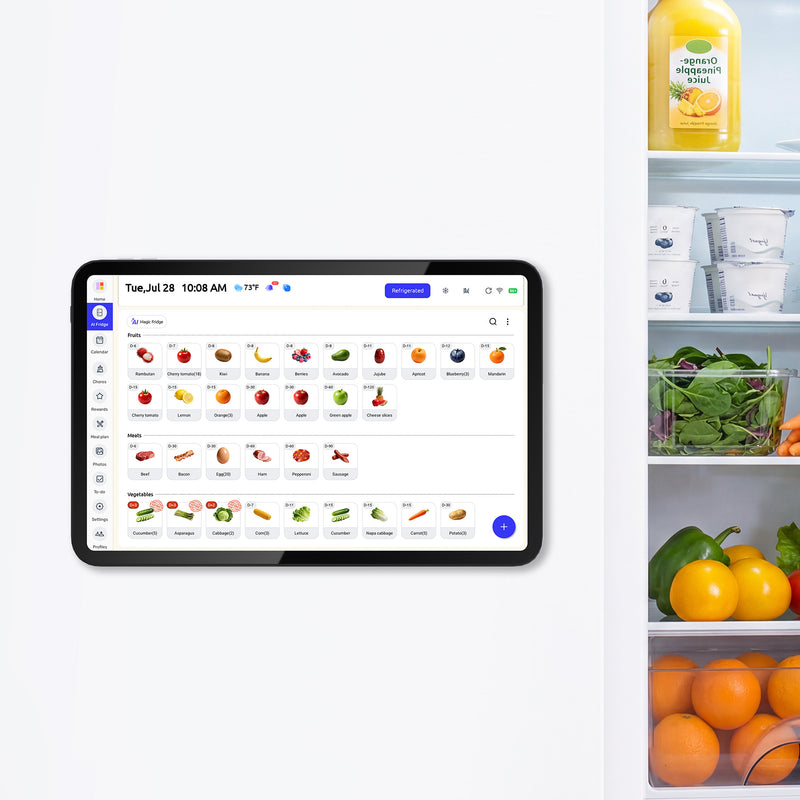
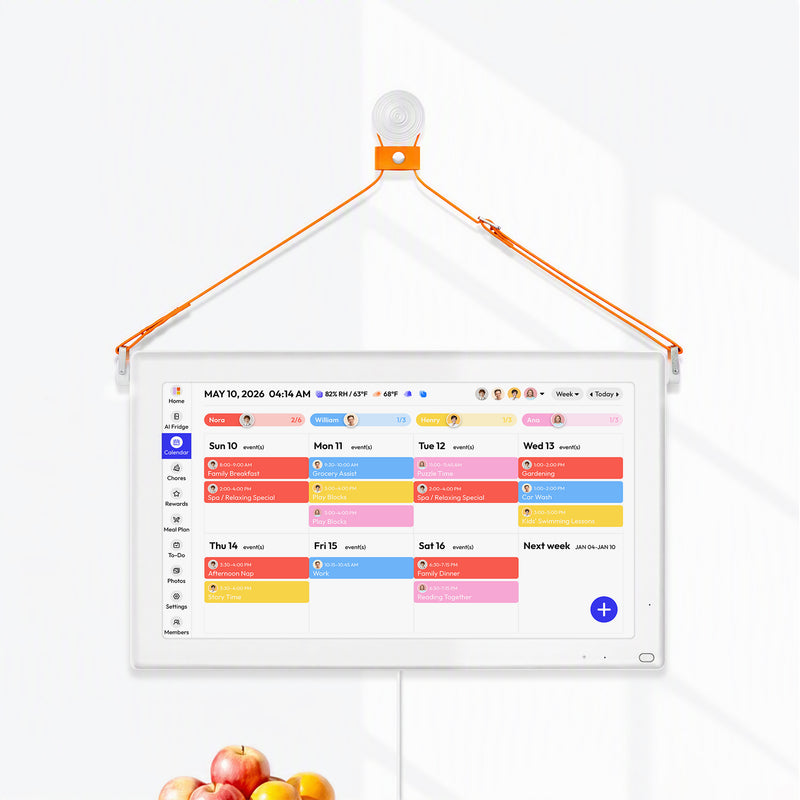
A paper setup works well if your family likes writing things down fast and changing them by hand. A digital display works well if most events already live on phones and need to sync automatically. Some families prefer a wall-mounted option like the Everblog digital display so plans, tasks, chores, and events stay visible in one shared home view. The better choice is the one people will actually check twice a day.
Build Five Simple Zones
Most busy families do better with a command center that has a few fixed zones instead of one giant calendar covered in everything.
1. Week-at-a-Glance Calendar
This is the anchor. Show the next 7 to 14 days, not the next six months.
For each event, include the detail that usually gets missed:
- departure time
- driver
- location if it changes
- special item needed
“Soccer 5:30 PM” is incomplete. “Soccer 5:30 PM, leave 4:45 PM, blue jersey, Mom drives” is useful.
Color-coding can help, but only if it stays simple. If every shade means something different, people stop reading it.
2. Incoming Paper and Action Pocket
This is where school forms, flyers, permission slips, bills, and practice schedules land first. One inbox is better than random piles.
A practical setup is:
- one tray for anything that came in today
- one folder per child if school paperwork is heavy
- one “needs action” pocket for signatures, payments, or things to return
This zone matters because it turns “I told you about that” into “it goes here every time.”
3. Meal Plan and Grocery Flow
Keep this small. Most families do not need a complicated menu board. They need a plan that answers:
- what is for dinner
- what needs to be defrosted
- what needs to be bought
- which night is leftovers or takeout
A simple weekly pattern is easier to keep than a creative one. For example:
- Monday: pasta
- Tuesday: tacos
- Wednesday: slow cooker meal
- Thursday: leftovers
- Friday: pizza or takeout
- Saturday: flexible
- Sunday: grill or batch cook
That pattern removes a lot of daily decision-making without feeling rigid.
If you use leftovers as part of the plan, label them with the date, keep the refrigerator at 40°F or below, and plan to use most cooked leftovers within 3 to 4 days.
4. Chore and Reset List
This should show recurring responsibilities, not every possible household task.
Good command-center chores are visible, repeatable, and easy to check:
- empty dishwasher
- feed pet
- take out trash
- pack lunch containers
- reset sports gear
- put laundry in hamper
- wipe counter after snack
Avoid chore charts that try to track every room in the house. Those usually collapse because they ask for too much maintenance.
5. Launch Pad
This is the physical out-the-door zone. Put it as close as possible to the exit your family uses most.

Common launch pad items:
- backpacks
- shoes
- sports bags
- instruments
- library books
- chargers
- water bottles
- return items
If the command center shows tomorrow’s plan but the gear is still scattered around the house, mornings will still feel rushed.
Build the Routine, Not Just the Board
A command center works because of rhythm, not because of markers, bins, or labels.
The routine can be very short:
- Morning check: 1 to 2 minutes
- After-school drop: 3 to 5 minutes
- Evening tomorrow check: 3 minutes
- Weekly reset: 15 to 20 minutes
This matters because routines teach children what to expect, and predictable follow-through helps home life feel more secure. The point is not to run the house like a command post. The point is to reduce surprises.
A realistic weekly rhythm looks like this:
- Sunday: review the week, add school and sports events, sketch dinners, build the grocery list
- Weekdays after school: empty backpacks, drop papers in the inbox, check tomorrow’s activities
- Each evening: confirm departure times, clothes, gear, lunches, and anything that needs signing
- Friday: clear old papers and reset the space
For families with younger kids, it can help to include bedtime or wind-down steps on the board too, because keeping a consistent sleep schedule, including on weekends, can help children sleep better.
Make Roles Visible So One Person Is Not Doing All the Thinking
A command center fails when everyone can see it, but only one person is expected to run it.

Give each part of the system an owner:
- one adult updates appointments, school dates, and schedule changes
- one adult checks the meal plan and grocery list
- each child owns age-appropriate prep, like packing a backpack or checking for practice gear
- teens can own one real household step, such as updating their work or practice schedule
The goal is not perfect equality every day. The goal is to make hidden work easier to see and easier to share.
A useful rule is this: if a task repeats every week, it should not depend on memory alone.
Design for School and Sports Logistics
This is where many command centers either become useful or become clutter.
For school, track:
- forms due
- library day
- special dress days
- lunch account reminders
- pickup changes
For sports or activities, track:
- practice time
- leave time
- driver
- uniform or equipment
- snack duty or team volunteer task
The missing piece is often leave time, not event time. That one detail can prevent a lot of last-minute scrambling.
What Usually Breaks
Most family command centers do not fail because people are lazy. They fail because the system asks for too much.
Common failure points:
- Too many capture spots. If papers sometimes go on the counter, sometimes in a bag, and sometimes into an app, things get missed.
- Too much detail. A board packed with stickers, color systems, and monthly goals becomes hard to scan.
- No update moment. Even a good setup decays fast if nobody knows when to change it.
- Adult-only ownership. If kids never interact with the system, it stays extra work for the adults.
- Unrealistic chore tracking. If the list is too long, everyone stops looking at it.
A good fix is to make the system smaller, not stricter.
Action Checklist
- Pick one high-traffic location near the kitchen or main exit.
- Set up five zones: calendar, inbox, meal plan, chores, and launch pad.
- Add only the next 7 to 14 days of real life, not every future idea.
- Choose one weekly reset time and one nightly tomorrow check.
- Give each family member one clear responsibility tied to the board.
- Remove anything people are not using after two weeks.
FAQ
Q: Should a family command center be paper or digital?
A: Use the format your household will actually check. Paper is fast, cheap, and easy to change. Digital is better when schedules already live on phones and need syncing. Visibility matters more than the format.
Q: How do I get kids to use it without nagging?
A: Give each child one small job tied to a fixed moment. For example, “check tomorrow’s backpack after dinner” works better than “be more responsible.” Keep the first jobs concrete and easy to finish.
Q: What if my partner or co-parent does not update it consistently?
A: Shrink the rule. Instead of expecting constant updates, pick one standard such as “all schedule changes go on the board by 8:30 PM.” Smaller rules are easier to keep, and consistency matters more than perfection.
A family command center does not need to be elaborate to work. If it helps your family see the week, catch incoming tasks, and prepare tomorrow before the morning rush, it is doing its job.


