
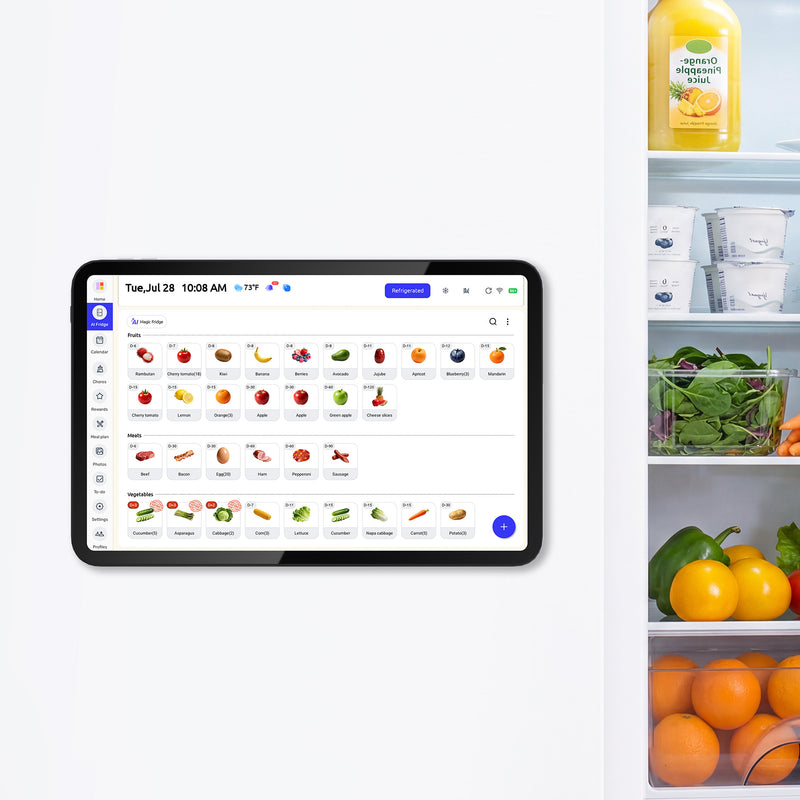


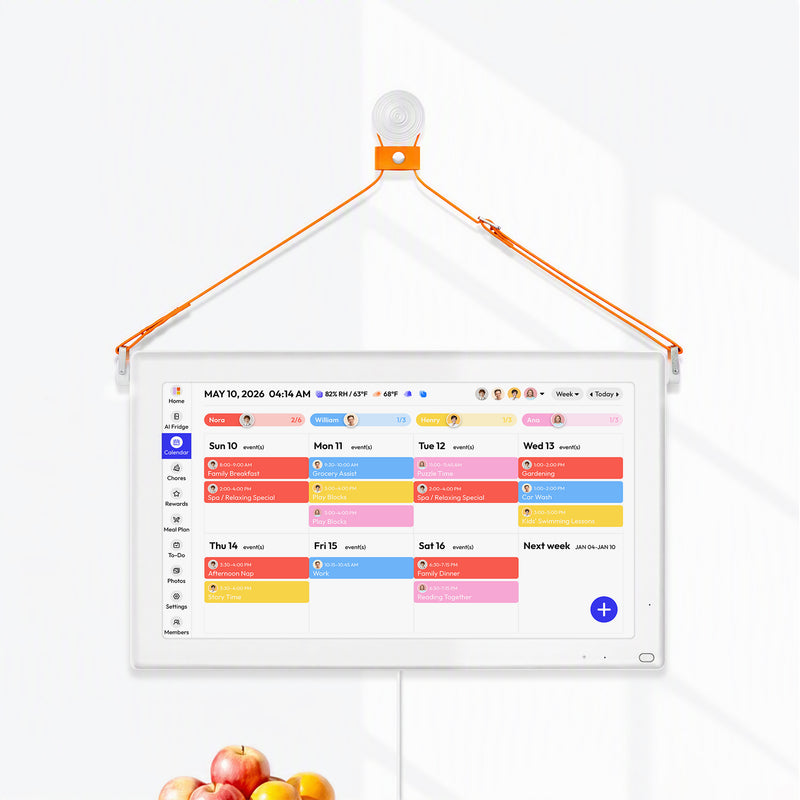



A shared screen helps by moving the family plan out of one person’s head and into a place everyone can see. That does not fix every household problem, but it often makes handoffs, reminders, and daily decisions much easier.
Do you feel like the whole day stalls when the person who “just knows” what comes next is busy, tired, or out of the house? Nearly 60% of parents say family scheduling is difficult, and many wish they had more help with household logistics. A visible planning system can turn that pressure into a clearer routine, so everyone knows what matters now and what comes next.
Why one person often ends up holding the plan
In many homes, the hard part is not doing the task. It is noticing the task, remembering it, and keeping track of what has to happen before someone else asks. That invisible work is often called the mental load, and it includes things like tracking school forms, sports times, dinner, carpools, and who is out of clean socks.

This is why a household can look “shared” on paper while one adult still acts like the control tower. One person remembers that Tuesday means library books, that Thursday needs an early dinner, and that the permission slip cannot stay buried in a backpack. When family information lives across texts, sticky notes, separate phone calendars, and memory, the person who notices first usually keeps carrying the system.
That pattern is not a character flaw. It is often a visibility problem. A private phone calendar may help the person who set it up, but it does not automatically help the child looking for tonight’s practice time or the partner trying to figure out dinner and pickup at 5:15 PM.
When this starts to feel heavier than normal
Some forgetfulness is ordinary, especially under stress or with age. Normal forgetfulness can mean a delayed recall that comes back later, not a complete loss of the information.
What matters at home is whether missed steps are starting to disrupt daily life. If someone regularly forgets newly learned information, repeats the same questions, struggles to follow directions, or depends much more on notes than before, that may be worth medical attention rather than more household systems alone. A shared screen can support memory and routine, but it is not treatment.
What a shared screen changes in daily life
A shared family calendar works best as a household coordination tool, not just a place to store appointments. The real value is that it makes the next step visible at the moment people need it. That lowers the number of “What are we doing after school?” and “Who was supposed to bring snacks?” conversations.

Visibility also improves handoffs. If the screen shows that one child has soccer at 6:00 PM, dinner is leftovers, and the trash goes out tonight, another adult can step in without asking for a full briefing. Some centralized calendar systems report fewer missed deadlines, but even without perfect numbers, the practical gain is easy to see: fewer dropped details and less last-minute scrambling.
A shared screen display also solves a basic timing problem. Phone reminders help one person at one moment. A kitchen or entryway screen helps the whole household during repeated transition points, like breakfast, after school, and the hour before bed.
Why this can help with executive function
Executive function means the brain skills that help people start tasks, switch attention, remember steps, and follow through. In plain English, it is the part that helps you move from “someone should do this” to “I am doing it now.” When those skills are stretched thin, a visible plan may help because it removes one layer of remembering.
That matters for many kinds of households, including families dealing with stress, sleep loss, uneven schedules, or ADHD-related planning friction. The screen is not a cure and should not be framed like one. It is a practical support: fewer hidden steps, clearer expectations, and less need for one person to keep prompting everyone else.
What to put on the screen so it helps instead of adding clutter
The most useful setup is usually simple. A digital family calendar should show fixed commitments first: school, work, medical visits, practices, pickups, and bedtime anchors. After that, add the things that create the most friction when forgotten, such as meal plans, chore duties, trash day, and carpools.

A good rule is to display only what answers the household’s repeated questions. If the same questions come up every week, those items belong on the screen. For many homes, that means today’s schedule, tonight’s dinner, this week’s chores, and one short list of urgent reminders.
Too much detail backfires. A crowded dashboard becomes wallpaper. Color-coding by person or category helps, but only if the categories are obvious. One color for each family member or one color for school, meals, chores, and appointments is usually enough.
A practical starter layout
Many families do well with a four-part layout:
- Today and tomorrow’s events
- Dinner plan
- Chore rotation
- One small reminder area for forms, supplies, or pickups
That setup matches how family command centers work in real homes. The point is not to display everything you could track. The point is to make the next decision easier at a glance. In homes that want a visible wall-mounted screen for that setup, a shared display such as the Everblog 21.5" Digital Calendar can serve as one place to view schedules, chores, reminders, and events.
Where a visible system works better than private calendars or paper
Paper can still work well for some homes. It is cheap, easy to scan, and often enough for stable routines. But in households with frequent changes, multiple caregivers, or several children’s activities, paper systems often break because they rely on someone remembering to rewrite everything.
A visible command center tends to work better when schedules shift fast and updates need to appear right away. Some digital displays sync in real time across major calendar platforms and other calendar tools, which means a change made on a cell phone can appear on the shared screen within seconds.
Placement matters as much as software. Household planning tools are most useful in high-traffic areas, not hidden in an office. A screen near the kitchen, mudroom, or main entry path gets seen during natural transitions, which is when reminders actually help.
Signs your current system is not visible enough
What often breaks is predictable:
- One person still answers every schedule question
- Kids do not know where to look for the plan
- Meals, rides, or school items get decided at the last minute
- Information is split across texts, apps, paper, and memory
- The calendar exists, but nobody checks it except the person who made it
If that list sounds familiar, the problem may not be effort. It may be that the system is not shared in a truly usable way.
How shared screens support meals, chores, and everyday follow-through
The fastest way to reduce friction is to connect the schedule to the work that follows it. A shared household planner can combine events, chores, meals, and lists so the family can see not only where to be, but also what needs to happen before then.
Meals are a good example. If the screen shows taco night at 6:00 PM, one child can set the table, another can check whether tortillas are on the grocery list, and a partner can see whether dinner has to happen before practice. Some systems also link meal plans to grocery lists, which cuts down on the daily “what’s for dinner?” cycle.

Chores work the same way. One simple routine described in a weekly chore rotation used three visible fridge magnets and three jobs, with each child keeping the same chore for a full week before rotating. The strength of that setup was not fancy design. It was repetition, visibility, and fewer arguments about whose turn it was.
What to make visible for children
Children usually do better with clear cues than with repeated verbal reminders. A child-friendly shared plan may include icons, short labels, or a simple “before school” and “after dinner” routine. The goal is not to create a perfect independent system overnight. It is to reduce the number of steps that depend on one adult’s memory and voice.
That can also lower tension between adults. When the system shows the work, the conversation shifts from “Why didn’t you remember?” to “What support makes this easier to see and finish?”
Practical Next Steps
If your household depends on one person to keep the next step in mind, start by making the next step visible to everyone else. A shared screen is most helpful when it reduces guessing, cuts repeated reminders, and gives the whole home one place to check before asking.
Use this checklist to build a system that is clear enough to keep using:
- Put the display in a high-traffic spot like the kitchen, mudroom, or main hallway.
- Show only the categories that drive daily friction: schedule, meals, chores, and urgent reminders.
- Add fixed commitments first, then layer in recurring household jobs.
- Use simple color-coding by person or category.
- Hold a 10-minute weekly check-in to update the screen and talk through handoffs.
- Keep the layout stable for at least two weeks before deciding it is not working.
FAQ
Q: Is a shared screen better than a shared app on a phone?
A: It depends on the problem. Phone apps are good for entering and editing information. A shared screen is better when the main problem is that other people do not see the plan unless someone tells them.
Q: What if one partner still ends up managing the system?
A: That is common at first. What may help is assigning upkeep tasks, like one person updating school events and another updating meals or chores, so the screen reflects shared ownership instead of one person’s memory.
Q: Can this help if someone struggles with memory or ADHD?
A: It may help with visibility and follow-through, because the next step is easier to see. It should not be treated as medical care, diagnosis, or treatment. If memory changes are affecting daily life in a bigger way, it is worth talking with a clinician.
Disclaimer
This article is for household planning education only. It is not a substitute for mental health care, medical advice, legal advice, or crisis support. If safety, custody orders, or a diagnosed condition are involved, work with the appropriate licensed professional.
References
- A health system: When to Be Concerned About Forgetfulness and Memory Loss
- A parenting publication: How to Create a Chore Schedule That Actually Works
- A display brand: Best Digital Wall Calendar & Family Calendar Display
- A platform: How to Create a Family Calendar and Organize It Like a Pro
- A platform: How to Meal Plan with a shared family calendar
- A parenting site: The Mental Load of Modern Parenting
- A home organization blog: Family Command Centers
- A brand: Apps to Make Your Life Easier
- A family tools app
- A family planning platform
- A calendar platform: Best Digital Family Calendar for Planning & Chores in 2026


