

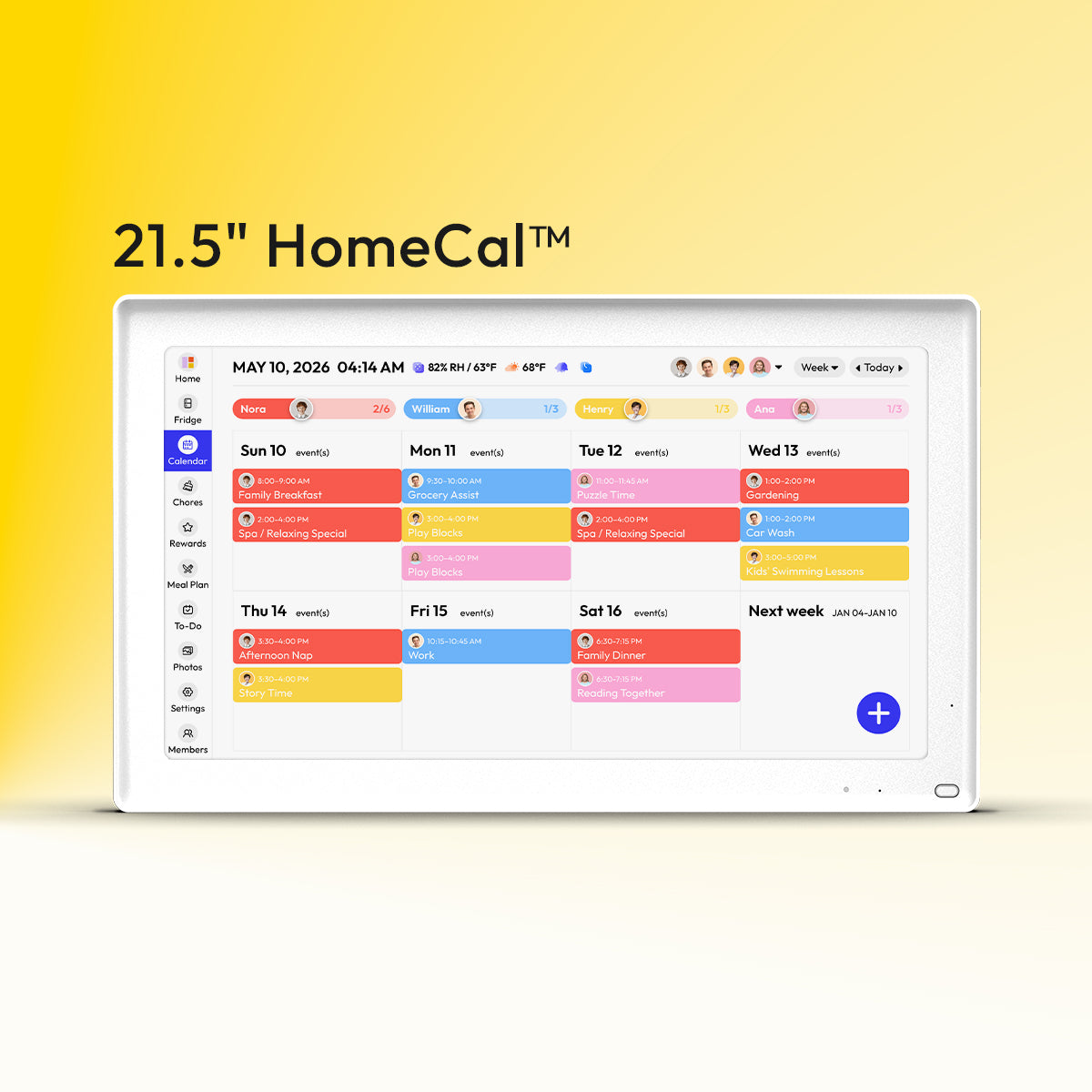


A family command center only works when the plan is easy to see, easy to update, and shared by the whole household. If the real schedule lives in one person’s head, phone, or inbox, the wall system turns into decoration instead of a working tool.
Have you ever stood in the kitchen at 7:10 AM asking who has practice, who needs lunch money, and why nobody mentioned the permission slip? Families get better follow-through when the plan is visible in one shared place, not scattered across texts, paper piles, and mental reminders. The goal is simple: make daily plans easier to spot, easier to trust, and easier for everyone to act on.
The Real Problem Is Usually Hidden Planning
Visibility fails before the wall system fails
A family command center breaks down when the plan is not clearly visible or shared. That usually means the calendar is on the wall, but the real details are still elsewhere. One parent knows the leave time. A school email still sits in someone’s inbox. The grocery list is on a cell phone nobody else opens. The board looks organized, but it does not actually run the day.

That gap creates missed handoffs. A soccer game on the calendar is not enough if nobody wrote who is driving, what time the child needs to leave, or whether cleats have to go in the car the night before. In busy homes, those missing details are often what trigger the morning scramble.
Invisible work stays invisible unless you place it on the wall
The invisible work behind household tasks is not just doing the chore. It is noticing, planning, anticipating, and following up. That is why a command center can exist and still feel unfair. One person may still be tracking school forms, snack restocks, and schedule changes mentally while everyone else waits to be told what to do.
A mental load system gets lighter when planning steps become visible. A chore chart helps only a little if the planning behind the chore still belongs to one adult. A useful command center shows not just the task, but the next action, the owner, and the timing.
A Visible Plan Has to Sit in the Right Place
Put it where people already pass, pause, and decide
A high-traffic location is more important than a perfect-looking setup. The best spots are usually near the kitchen, garage entry, mudroom, or the hallway between bedrooms and the main exit. Those are the places where backpacks land, mail piles up, and people naturally stop long enough to glance at what happens next.

Sightlines matter here. If you cannot read the calendar while packing lunch or grabbing keys, it is not visible enough. Traffic flow matters too. A narrow hallway can work, but only if people can step aside and check the board without blocking the path. A tucked-away office wall often fails because the family does not pass it during normal routines.
Small placement details change daily use
A visible family station should be easy to scan without adding clutter. That means hanging the main calendar at adult eye level, with the center of the board often landing around 57 to 60 inches from the floor. If children need to check chore cards or lunch reminders on their own, place at least one zone lower so they can reach it without asking for help.
Glare, nearby outlets, and kitchen mess matter more than people expect. If you use a screen, avoid the wall directly across from a bright window unless you know the display stays readable in morning sun. If the only outlet is behind the coffee maker, cords may end up crossing a splashy counter. If you mount near the stove, grease and steam will turn a clean-looking setup into a sticky maintenance problem. Near the fridge or garage-entry side wall is often better because it stays visible without sitting inside the messiest cooking zone.
The Plan Has to Answer the Right Questions at a Glance
One glance should cover today, this week, and tomorrow morning
A working command center should answer five questions at a glance: what is happening, what needs action, what dinner requires, who owns the next step, and what must leave the house tomorrow. If your setup does not answer those questions, people still have to ask each other, search email, or rely on memory.
That is why a monthly calendar alone is rarely enough. Most families need at least a 7- to 14-day view, one action area for papers that need attention, a meal zone, and a launch pad by the exit. A launch pad can be simple: hooks, one basket, and a short note that says “Thursday: library book, shin guards, signed form.”
Good visibility is specific, not overloaded
A paperwork system works better when active papers are sorted clearly. One basket for “action needed,” one file or pocket for “to file,” and one visible place for this week’s active papers will beat a thick stack every time. Vertical paper storage also helps because papers can be seen and grabbed, not buried in flat piles.
Too much detail is its own failure point. If every square on the calendar is packed with tiny notes, nobody will read it at speed. Use short entries with the details that matter most for handoff: leave time, driver, location change, and special item. “Dentist 3:30 PM, Dad drives, leave 2:50 PM, insurance card” is far more useful than “Dentist.”
Paper or Digital Works Only if Updates Stay Fast
Choose based on how often your family changes plans
A wall-mounted shared display can help when the whole household needs one central visible plan. It is especially helpful in homes where school updates, sports changes, and work shifts move quickly. Some families handle that with a wall-mounted shared digital calendar like the Everblog digital calendar when they want one visible screen for plans, tasks, chores, and events. A digital screen can reduce update lag because it pulls from calendars people already use on their phones.

A paper wall calendar breaks down when changes happen faster than someone rewrites the wall. That does not mean paper is bad. It means paper works best when your schedule is fairly stable or when you keep the wall board limited to the next week and update it at a fixed time. For renters or families on a budget, a dry-erase board and a simple file pocket can still work very well.
A digital screen is not a shortcut if the family never checks it
A digital wall calendar still depends on family adoption. The screen can sync calendars, chores, lists, and meal plans, but it does not solve the habit problem by itself. If one adult does all the setup and nobody else checks the display, the system stays one-sided.
For most households, the better question is not “paper or digital?” It is “Can everyone see it twice a day, and can updates happen in under a minute?” If yes, either format can work. If no, even an expensive screen will behave like a neglected bulletin board.
Meals and Chores Need the Same Visibility as Appointments
The command center should reduce repeat questions
A shared family system works best when calendars, to-do lists, and meal planning live together. Otherwise, the calendar may be visible but dinner, groceries, and chores are still hidden in separate apps or on scraps of paper. That is when a parent hears the same questions every day: “What’s for dinner?” “Did anyone feed the dog?” “Do I need my instrument today?”
A shared task view matters because ownership becomes visible. When chores are shown with a person, a due time, and a repeat pattern, other family members can act without a reminder chain. This is especially useful for older kids who do better with a concrete list than with verbal instructions yelled across the house.
A meal zone helps the whole evening run smoother
A meal plan belongs in the command center because dinner affects traffic, timing, and clutter. If taco night means defrosting meat in the morning, that should be visible before everyone leaves the house. If leftovers need to be used within a few days, the meal zone can prevent waste and last-minute takeout. Even a short weekly strip with “Mon tacos, Tue pasta, Wed leftovers” helps reduce decision fatigue.
Keep the meal area close enough to the kitchen to support real use, but not so close to cooking splatter that it becomes hard to read or clean. In many homes, the side of the fridge or a nearby wall works better than the backsplash zone. The setup should support a quick glance during breakfast and a quick edit before dinner.
Maintenance Has to Be Short, Predictable, and Shared
The system needs a routine, not good intentions
A short fixed routine keeps a command center from becoming stale. The pattern that works for many families is simple: a 1- to 2-minute morning check, a 3- to 5-minute after-school drop, a 3-minute evening check, and one weekly reset. Without a reset, old papers stay up, dinners go unwritten, and trust in the board drops fast.

A single action basket and regular paper review can stop paper clutter from swallowing the system. The rule is straightforward: only papers that still need action stay visible. Everything else gets filed, scanned, or tossed. That keeps the command center focused on what the family needs to do next, not everything the family has ever received.
Shared use matters more than perfect design
Many families assume failure means they chose the wrong tools. Usually, the problem is that the system still belongs to one adult. If the evening check is not shared, if kids are never shown how to read the board, or if one partner keeps the “real” information on a private phone calendar, the command center remains a private project.
A strong setup feels almost boring in use. People know where to look. They know what has changed. They know what belongs there. That kind of calm is usually the result of consistent visibility, not more features.
FAQ
Q: Is a family command center still worth it in a small apartment?
A: Yes, if it is visible and limited. A wall section as small as 2 to 3 feet wide can work if it covers the next 7 to 14 days, one paper action zone, and one exit reminder area. In a small apartment, the side of the fridge, a narrow hall wall, or the space by the main door often works better than trying to build a large station.
Q: Should we use a paper board or a digital display?
A: Use the one your household will update and check consistently. Paper is often enough for stable routines and tight budgets. Digital helps more when schedules change often and everyone already uses shared calendars on phones. The wrong choice is the one that creates update lag.
Q: How do we get kids to actually use it?
A: Make their part readable and reachable. Put kid-facing reminders lower on the wall, use simple labels, and keep expectations visible instead of verbal. Older kids can handle a chore or launch-pad check on their own when the next step is clear.
Practical Next Steps
A visible plan works best when it is placed where the family already moves, written in a way people can scan fast, and updated on a routine instead of by memory. The goal is not a prettier wall. The goal is fewer missed handoffs, less repeated asking, and less planning trapped in one person’s head.
Action checklist
- Pick one high-traffic spot near the kitchen, mudroom, or garage entry with clear sightlines.
- Check wall height, glare, outlet access, and whether kitchen mess will make the area hard to use.
- Limit the setup to four core zones: calendar, action papers, meal plan, and launch pad.
- Write calendar entries with handoff details like leave time, driver, and what must go out the door.
- Use one action basket only, and remove anything that no longer needs attention.
- Set a daily 3-minute evening check and one weekly reset the whole family can follow.
- Test the system for two weeks, then remove any part nobody actually uses.


