


Holiday plans fall apart when the real details live in texts, memory, and separate calendars. A shared visible plan puts the next step, the owner, and the timing in one place, so the week stops depending on repeated reminders.
Ever get to the event and find out two homes packed different side dishes, or nobody brought the charger, the gift, or the serving spoon? That is what happens when the plan is hidden. This week, the fix is to make the handoffs visible before the weekend and before the event.
Why Holiday Plans Break Down When They Stay Hidden
The first break is usually not the big event itself. It is the small handoff that nobody can see clearly until it goes wrong. A visible household plan works because it puts the task, the next action, the owner, and the timing in one place visible plan.
Hidden work is easy to miss
Holiday planning is full of invisible work. Someone has to notice the schedule change, remember who is bringing what, confirm the drive time, and follow up when a cousin arrives late or a school concert moves by 30 minutes. If that work stays in one person’s head, the rest of the household only sees the fallout.

That is why holiday conflict often sounds like a memory problem, when it is really a visibility problem. The calendar entry may say “Dinner at 5:00 PM,” but the family still needs the leave time, the driver, the location change, and the items to bring.
The first miss is usually a handoff
Across households, the failure point is often the handoff between homes, not the event itself. One home assumes the other one packed the dessert, the serving spoon, or the kid’s dress clothes. Another person assumes the ride is covered because “we talked about it last week.”
Once the plan is split across texts, phone notes, and different memories, nobody can act from the same version of the truth. That is when repeated checking starts, and the person holding the plan gets stuck doing all the mental load.
What a Visible Holiday Plan Needs
Holiday coordination gets easier when the family can see the same plan in two ways: digitally for fast updates and physically for the people who pass through the house all day. Paper-only setups tend to fall behind when school, work, meals, chores, and travel all shift in the same week digital family calendar.

One shared calendar, not several near-copies
A digital family calendar works best as the main source of truth, with synced devices so each household sees the same update. That matters when holiday plans change late in the day. A paper wall calendar can still help, but only if someone has time to rewrite it every time the week changes.
For most busy households, a 7- to 14-day view is the sweet spot. It is enough to cover school breaks, travel days, hosting duties, and delivery windows without crowding the board with the whole season.
One physical place people actually pass
Put the visible plan in a high-traffic spot such as the kitchen, mudroom, garage entry, fridge side, or main hallway family command center. The point is not decoration. The point is that people have to walk past it on the way out.
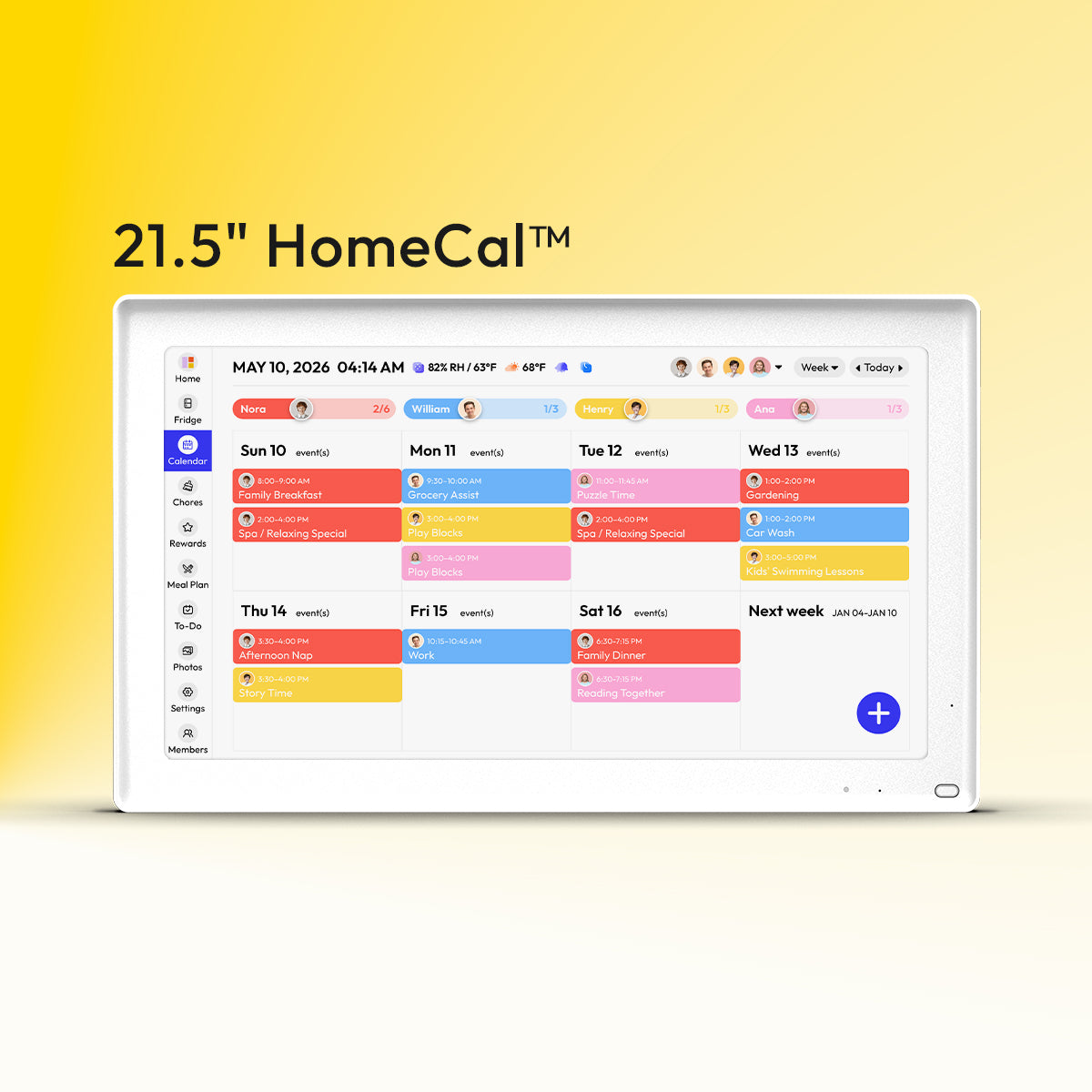
A wall-mounted shared calendar like the Everblog 21.5" Digital Calendar can serve that same role for families who want plans, tasks, chores, events, and bring-along items visible in one spot.
A family command center works best when the main calendar sits at adult eye level, around 57 to 60 inches from the floor, with kid-facing zones lower. That way the adults can scan the next few days quickly, and kids can still see what they need to grab or do before leaving.
What to Put on the Holiday Board This Week
The board should show the next seven to 14 days clearly enough that another adult can act without asking twice. A weekly chart works best when it stays beside the calendar, meal plan, grocery list, and paper inbox, because that is where holiday handoffs get decided weekly chore chart.

Meals and leftovers
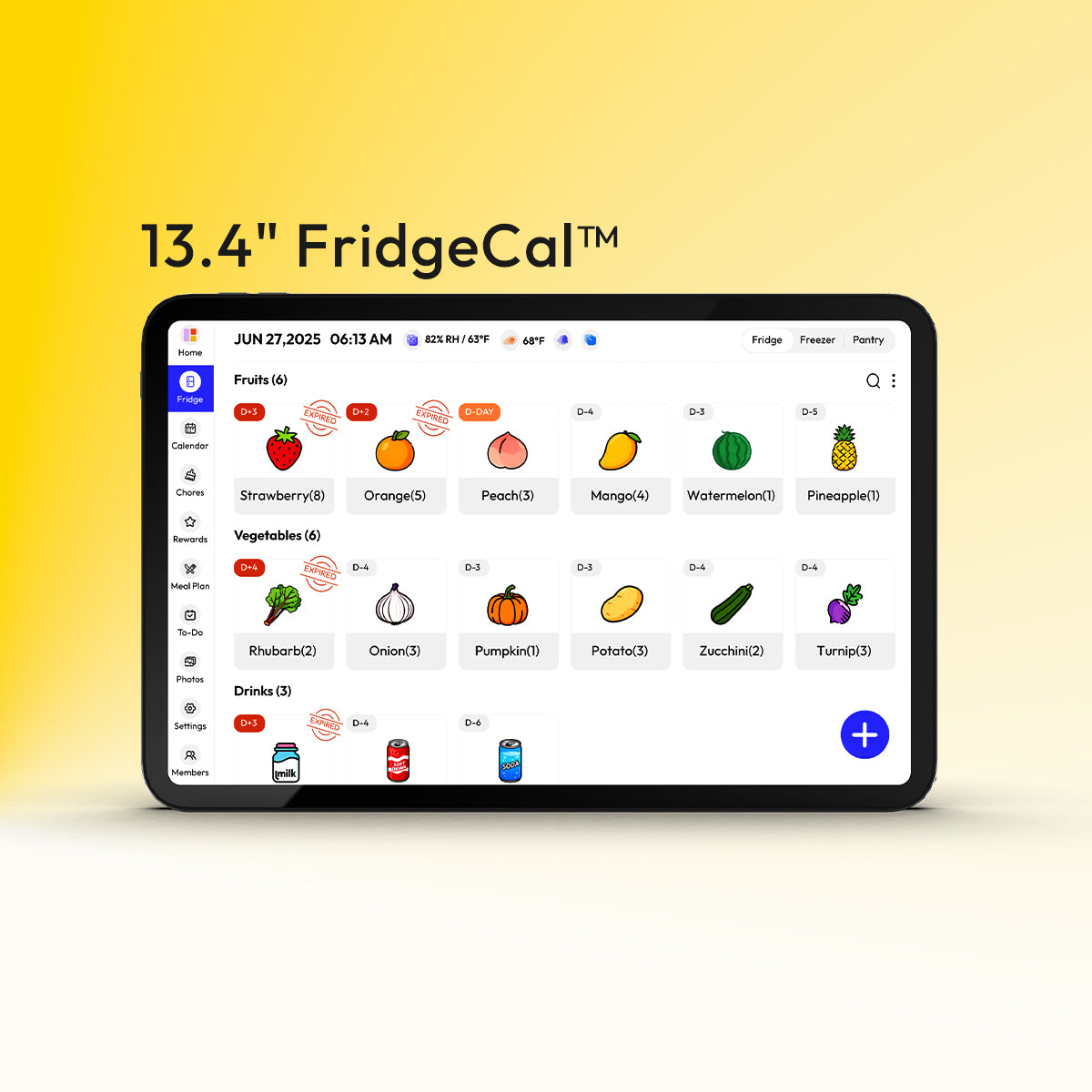
Holiday food is easier to manage when it shares the same screen or board as the rest of the week. Keep the refrigerator at 41°F or below, and plan to use or freeze most opened or cooked foods within 4 to 7 days digital family calendar. Ready-to-eat salads usually last 3 to 4 days, opened hot dogs about 1 week, opened luncheon meat 3 to 5 days, and shell eggs 3 to 5 weeks.
That sounds like food safety detail, but it also reduces stress. When the plan shows what gets used today, what gets frozen, and what gets sent home, fewer people stand around guessing what is still okay to serve.
Travel, drivers, and arrival details
Holiday handoffs get cleaner when each event card includes leave time, driver, destination, and required items. “Leave by 2:15 PM, Dad driving, bring the casserole dish and two folding chairs” is useful. “Go to Grandma’s” is not.
This is where cross-household planning usually gets messy. One home thinks the other one packed the kid’s coat. Another home thinks someone else is bringing the gift. A visible plan removes that uncertainty before it becomes a parking-lot text exchange.
Gifts and chores
Keep gift tasks and house tasks in action form, not vague reminders. “Wrap the three gifts for the Smith family,” “unload the dishwasher before school,” and “put the extra chairs in the car trunk” are all easier to finish than “help with kitchen.”
Fair assignment matters here too. Light tasks should stay under 10 minutes, medium tasks around 10 to 30 minutes, and heavy tasks over 30 minutes. That makes it easier to split holiday work across households without one person carrying all the hidden jobs.
What to Stop Doing if the Family Is Overcomplicating the Plan
Stop making one wall, one notebook, or one chat thread carry the whole season. Weekly charts work best when they show only the next seven days; monthly and seasonal jobs should live on a separate checklist so the main surface stays readable weekly chore chart.

Cut the clutter first
If the board is crowded, people stop using it. Move long-range gift ideas, extended travel notes, and next-month events off the main surface. Keep the holiday board focused on what has to happen before the weekend or before the event.
Stop writing vague tasks
“Help with food” and “handle the kids” do not tell anyone what to do next. Write the real step instead. If another adult cannot finish the task without asking you a second question, it is still too vague.
Stop relying on memory for updates
Holiday plans change. That is normal. What should not happen is a silent change that only one person knows about. Put the change on the shared calendar or the visible board as soon as it happens.
Action Checklist
- Choose one shared digital calendar as the main source of truth.
- Put a physical command center where people already pass through.
- Limit the main view to the next 7 to 14 days.
- Add leave time, driver, location, and required items to every holiday event.
- Write each task as a specific action with one owner.
- Keep meals, grocery needs, and leftovers on the same visible system.
- Do a 3-minute nightly check and a short weekly reset before the weekend.
FAQ
Q: Do we need both a digital calendar and a wall board?
A: In most busy households, yes. The digital calendar is better for updates, and the wall board is better for what people see on the way in and out of the house. Together, they reduce missed handoffs.
Q: What belongs on the holiday board and what should stay off?
A: Keep the next 7 to 14 days on the main board. Move monthly plans, seasonal gift ideas, and long-range travel notes to a separate list so the main view stays easy to read.
Q: How do we keep one person from doing all the planning?
A: Make the plan visible, assign each task to one owner, and keep the daily check short. When everyone can see the same information, the load stops living in one head.
Practical Next Steps
The goal is not a perfect holiday system. The goal is a plan that can survive two households, a grocery run, and one change of schedule.
Today, choose the one place where the plan will live. This week, put the next 7 to 14 days into that space. Before the event, check the leave times, the food labels, and the handoffs one more time, then stop rewriting the plan in side conversations.


