




A digital family calendar is a shared schedule that lives in software instead of on paper. In real life, that means one set of plans for school pickups, work shifts, dinners, chores, and reminders can stay visible across a Google Family calendar, iCloud calendar, or Outlook calendar.
What makes it useful in a busy home is not the screen itself. It is the fact that everyone can look at the same information, with updates syncing from phones, tablets, laptops, and sometimes a shared wall or fridge display.
What a digital calendar actually is
At its simplest, a digital calendar is a calendar account that can be updated from more than one place. You might add soccer practice from your phone, your partner might move a doctor visit from work, and your child might only need to see the finished schedule on a hallway screen.

That is why a digital calendar is usually two things working together:
- The calendar service, such as Google, Apple, or Microsoft.
- The viewing method, such as a phone app, tablet, laptop, smart display, or wall-mounted touchscreen.
This distinction matters. A big kitchen screen is not automatically the calendar. It is often just the most visible window into the calendar your family already uses.
How it works day to day
Most family setups follow the same basic pattern.
- Someone creates or shares a calendar. A Google family group automatically gets a calendar called “Family,” and people with access can edit events and manage sharing rules inside that calendar when permissions allow it.
- Family members connect their devices. With iCloud, calendar changes made on one device can appear on the others automatically, so the latest version follows you from phone to tablet to computer without manual re-entry.
- The calendar owner decides who can change what. In iCloud, for example, a shared calendar can be set to Allow editing or Read-Only. Outlook also lets the owner choose whether someone can view all details or edit.
- Reminders and visibility do the heavy lifting. Once the system is shared, the real benefit is simple: fewer “I didn’t know about that” moments.
In a busy family home, that can look like this: Mom adds early dismissal at 8:30 AM, Dad sees it before work, the teen notices a color-coded practice time after school, and dinner plans shift before anyone is already in the car.

Why families move from paper to digital
Paper calendars are easy to understand, but they rely on one person remembering to update them. Digital calendars reduce that problem because the update can happen wherever the change starts.
That matters more than it sounds. A family schedule usually breaks down in the gaps between places: a text from school, an email from a coach, a work meeting that runs late, a grocery trip that changes dinner, or a chore that nobody claims.
A digital setup helps because it can combine several household jobs in one place:
- Schedule visibility
- Shared reminders
- Task and chore tracking
- Grocery notes
- Meal planning
- A common “source of truth” for the week
The practical benefit is less mental load. Instead of one adult carrying the entire plan in their head, the plan sits where everyone can see it.
Common family setups
There is no single “right” digital calendar. The best version depends on where your family naturally checks information.
Phone-first shared calendar
This is the lightest setup. Everyone uses their own phone, and the shared calendar lives mostly inside Google Calendar, Apple Calendar, or Outlook.
This works well if:
- Family members already check their phones reliably
- Most scheduling changes happen away from home
- You want the least hardware
This works less well if:
- Kids do not have phones
- People ignore notifications
- You want one visible place for the whole household
Wall-mounted calendar hub
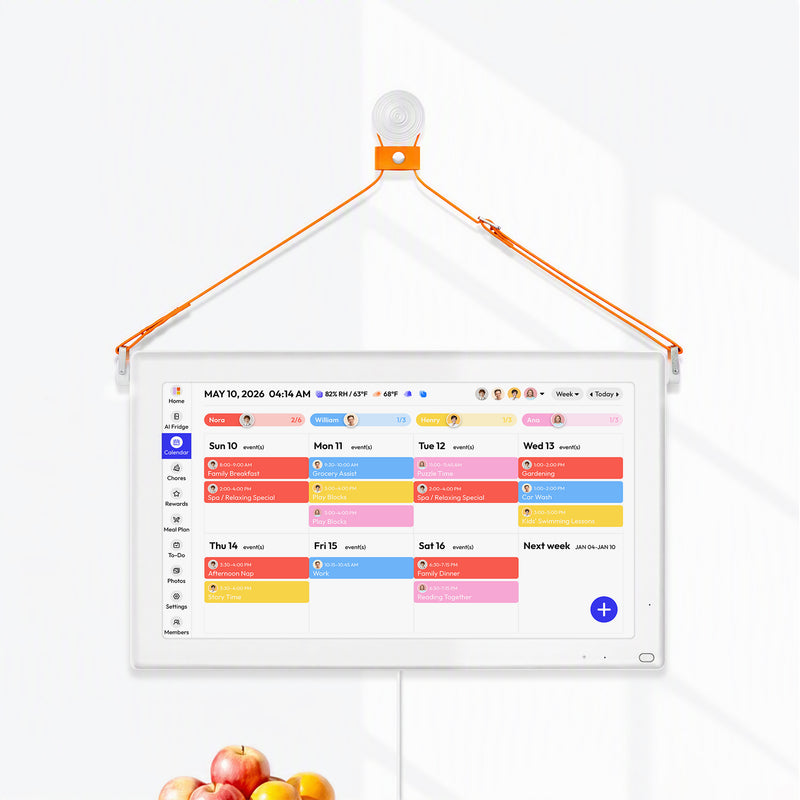
A wall display works best when the problem is not syncing, but visibility. You may already have working calendars on your phones, yet people still miss what is on them.
That is where a large shared display can help. For families that want a visible command-center style setup, something like the a company fits that role, and Everblog says its calendar system can sync with a company.

This setup makes the most sense when:
- The kitchen, hallway, or living area is the household traffic lane
- Younger kids need to see the plan without a phone
- Color-coding, chores, and one-glance schedule checks matter more than portability
Fridge-mounted kitchen calendar
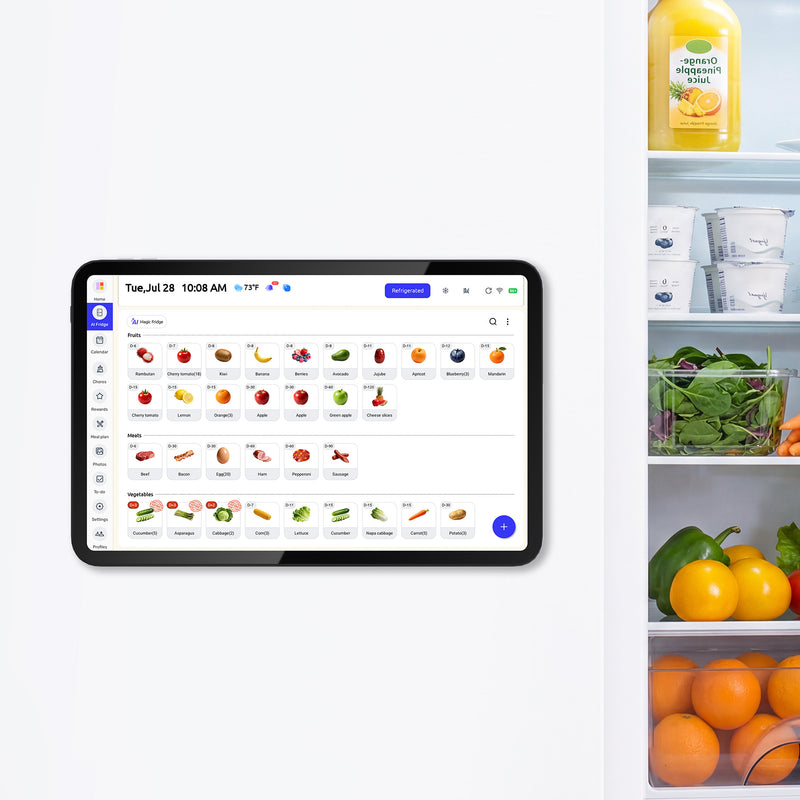
A fridge-based display is different. It is less about a whole-room schedule board and more about daily kitchen decisions.
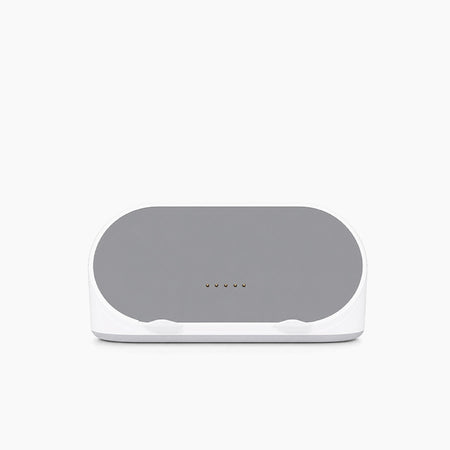
That setup is useful when the same place handles dinner planning, grocery capture, school lunch thinking, and “what needs to be used up first?” questions. A fridge-mounted option like the a company is designed around that style of use, with food tracking, expiration reminders, meal planning, and fast kitchen-side updates.
This setup makes the most sense when:
- Counter and wall space are limited
- Food planning is part of family planning
- You want reminders where groceries and leftovers are actually handled
Terms that matter, in plain English
Sync
“Sync” means a change made in one place shows up somewhere else. If your partner edits Saturday’s game time on a phone and the kitchen display updates too, that is sync.
Shared calendar
A shared calendar is one that more than one person can see. Depending on permissions, some people may only view it, while others can edit it.
Family calendar
This usually means a calendar meant for household events rather than one person’s private appointments. Google has a built-in version tied to family groups, but any shared calendar can serve this purpose.
Smart display
A smart display is the screen that shows information in a fixed place. In family-calendar language, it usually means a kitchen, fridge, or wall screen that keeps the household plan visible.
Family command center
This is home-organization language for a central place where schedules, tasks, reminders, and sometimes meal plans live together. It can be physical, digital, or both.
Subscribe vs. share
These are not the same. Sharing often means another person can interact with the calendar based on permissions. Subscribing often means they can only see it. In Outlook.com, published HTML and ICS calendar links are read-only, which is an important difference if your family expects everyone to make updates.
What actually matters when choosing a digital calendar
Ignore most marketing language and focus on five practical questions.
- Where will people actually look? A perfect calendar no one checks is useless. Pick the place your household already passes by or opens without thinking.
- Who needs edit access? Some families do best when only one or two adults can change events. Others need full shared editing because schedules move constantly.

- Do you need one big shared view or private phone access? Many families need both. The phone handles updates on the go. The shared screen handles visibility at home.
- Are chores and meal planning part of the job? If yes, a plain calendar app may not be enough. You may want a system that also supports lists, tasks, and food reminders in the same workflow.
- Will food tracking be part of the setup? If your calendar also helps with groceries or leftovers, it should support kitchen habits that match basic food safety. Perishables should be refrigerated promptly, the fridge should stay at or below 40°F, and leftovers generally need to be used within 3 to 4 days. That is why a fridge-based calendar can be more useful than a general wall display for some homes.
The bottom line
A digital calendar in a busy family home is not really about owning a screen. It is about creating one shared, visible plan that updates fast enough to keep up with real life.
If your main problem is missed events, focus on shared visibility and easy sync. If your main problem is kitchen chaos, meal planning, and forgotten leftovers, put the planning system where those decisions happen. The best setup is the one your household will actually use on an ordinary Tuesday.
FAQ
Q: Do all family members need to use the same brand of phone? A: No. Many families use a shared calendar service across different devices. The important part is whether the calendar can be shared and viewed reliably by everyone involved.
Q: Is a digital wall calendar better than using phone apps only? A: Not always. A wall calendar is better when the issue is household visibility. If your family already notices phone reminders and updates plans consistently, a shared app may be enough.
Q: Can a digital calendar replace paper completely? A: Sometimes, yes. But some families still keep a paper list for quick notes, school papers, or visual comfort. The better question is whether the digital system reduces missed plans and mental load, not whether it removes every piece of paper.
References
- Use a family calendar on Google
- Keep your calendars up to date and share them with iCloud
- Share a calendar on iCloud.com
- Share your calendar in Outlook.com
- Are You Storing Food Safely?
- Leftovers and Food Safety
- Everblog 21.5" Digital Calendar
- Everblog 13.4" FridgeCal Calendar
- Everblog Calendar Feature


