





What a Family Command Center Is and Why Location Determines Whether It Works
Picture a Tuesday morning. A permission slip was due yesterday. The car keys are somewhere under a pile of unopened mail next to the coffee maker. One child is asking what time soccer practice starts, and nobody can remember whether it was 4:00 or 4:30. The toast is burning. This is not a household in crisis — it is a household without a system.
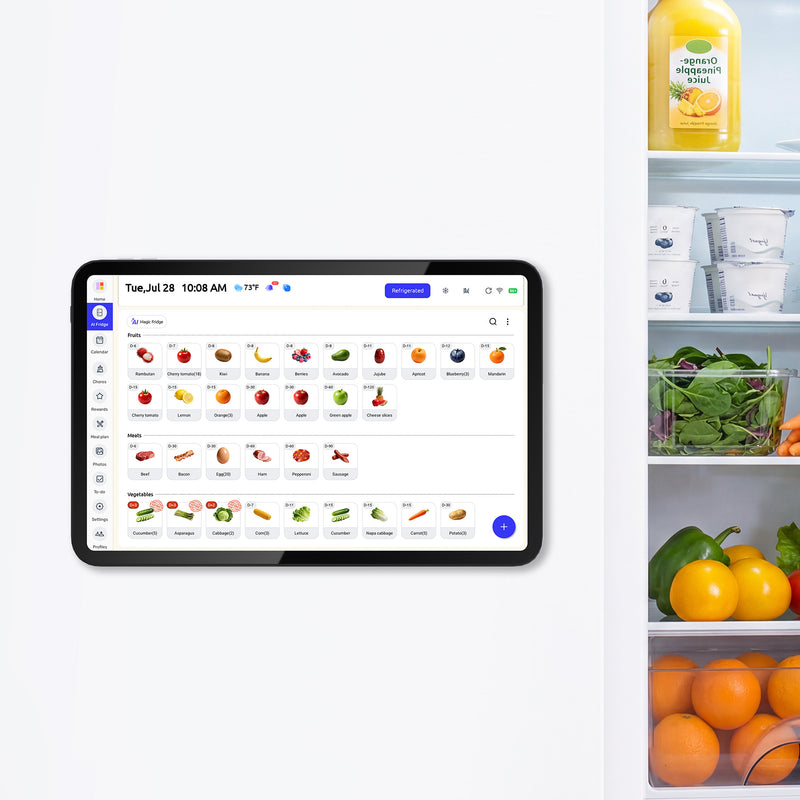
A family command center exists to prevent exactly that morning. At its core, it is a single designated spot — usually a wall, nook, or entryway area — where the most critical household information lives: schedules, calendars, mail, keys, meal plans, and reminders. Think of it as the operational hub of a home, somewhere between a bulletin board and a filing system, designed to intercept the daily flow of papers, small items, and scheduling information before they scatter across every surface in the house. The essential components of a working setup include a calendar system, a mail and paper sorting station, key hooks, and a bulletin board — though the exact combination depends on the household. A complete baseline system can be assembled for under $100; custom built-in versions with integrated storage run $300 or more. The physical footprint is modest — most setups fit within a 3-to-4-foot-wide wall area — but the operational payoff is significant. According to a 2017 survey by Pixie, the average American spends 2.5 days per year searching for misplaced items — a figure that underscores how much time household disorganization costs in aggregate (the commonly cited "10 minutes per day" figure circulates widely in productivity literature but should be treated as an illustrative estimate rather than a precisely sourced finding).
Where that system lives, however, matters as much as what it contains. One organizer built a polished gallery wall command center in her living room. It looked good in photos. But no one in her family walked past it except guests, and it gathered dust while papers accumulated elsewhere. After relocating it to the narrow hallway between the garage door and the kitchen — the path everyone traveled multiple times a day — the system began working immediately. The components had not changed. The location had.

To test placement before committing: for 3–5 days, place a sticky note or temporary hook at your intended location and a second one at an alternative high-traffic spot. Tally how many times each is touched or referenced. The location with higher natural contact is your command center site. For the physical-vs-digital calendar question, run both in parallel for one week — note which one family members consult without being prompted. Use that result, not a general recommendation, to decide your format. This is a self-diagnostic, not a guarantee of outcome.
The locations that consistently perform best are the kitchen wall near the main entrance, the mudroom or entryway, and high-traffic hallways between the kitchen and the front or garage door. These are transition zones where people already pause, set things down, and reach for keys. Environmental psychology research on habit formation suggests that systems aligned with existing movement patterns hold, while systems that require deliberate detours rarely do — Wendy Wood's work on context-cued habits provides a well-supported framework for this principle, showing that physical location cues directly activate habitual responses without requiring conscious motivation. A command center is not a decorating project. It is a behavioral intervention, and its success depends less on what it looks like than on whether it sits directly in the path of daily life.
The Core Components Every Household Command Center Needs
Building a command center that holds is less about design preference and more about component selection. The research is consistent: systems that include too many elements fail at roughly the same rate as systems that include too few. The practical target is four to six core components, each assigned a specific operational job. The question worth asking before selecting any component is direct: does this solve a problem that occurs in this house, on a typical day?
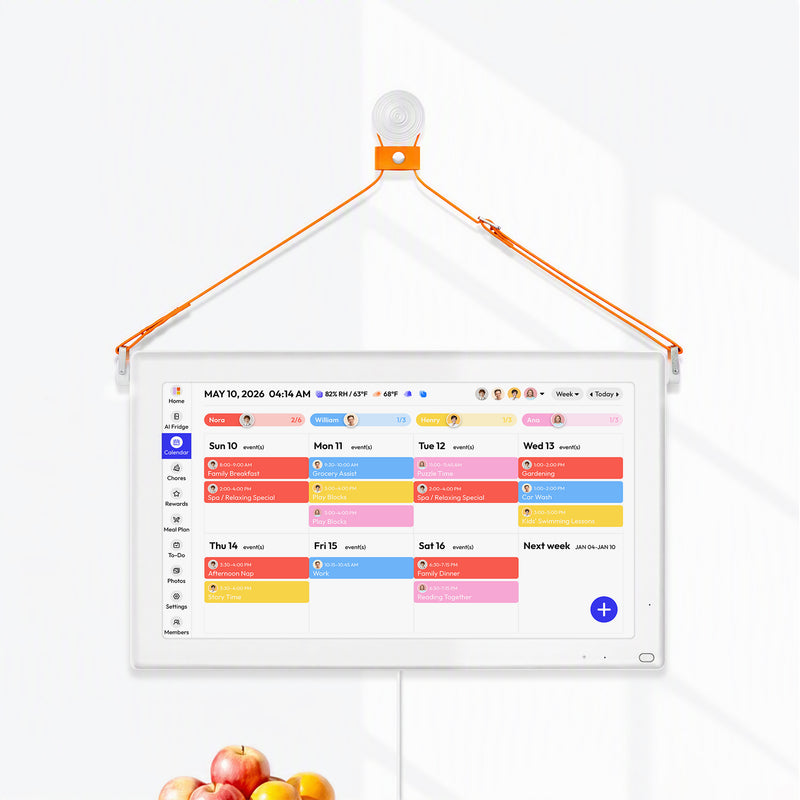
The calendar is the load-bearing element. A dry-erase monthly calendar runs 15; a large paper wall calendar 20. The format matters less than the visibility: the calendar must be readable from a standing position without approaching the wall. For households with overlapping schedules, color-coding by person — each family member assigned a distinct marker color — allows anyone to identify their commitments at a glance without reading every entry. Research in consumer psychology suggests that, in many household contexts, paper calendars can outperform digital-only solutions for plan quality and follow-through — a 2023 study in the Journal of Consumer Psychology (Huang, Yang, & Morwitz) found that paper calendar users developed higher-quality plans and were more successful in plan fulfillment than mobile calendar users, in part because paper encourages a broader planning perspective. That said, digital hybrid approaches may suit tech-integrated families better, and households where device access is uneven or screen time is a concern are likely to see the strongest benefit from a physical calendar remaining visible without requiring a device to be unlocked.
Paper management is the primary failure point of most household systems. A wall-mounted file organizer with three labeled pockets — Action Needed, Upcoming, and Reference — costs 15 and creates a decision point at the moment of entry. The sorting protocol that holds is the one that happens immediately: mail is triaged when it comes through the door, with junk going directly to recycling before it enters the house's paper flow. A paper sorter that requires a second trip to fill doesn't get filled.
Key hooks are the highest return-on-investment component in the entire setup. A set of adhesive hooks costs 8. Against that expenditure: the Pixie Lost & Found Survey found Americans collectively spend $2.7 billion annually replacing misplaced items. One hook per regular driver, labeled, mounted at the point of entry.
A bulletin board (15) handles what doesn't fit the calendar or the sorter — sports schedules, takeout menus, invitations awaiting a response. Its functional constraint is maintenance: a board that isn't cleared of outdated material monthly becomes visual noise the eye learns to skip.
Everything beyond these four components is additive, not foundational. Centralized charging stations, decorative corkboards, and dedicated homework areas consistently go unused within weeks — people return to existing habits regardless of what a command center offers. A complete baseline setup — calendar, file sorter, key hooks, bulletin board, dry-erase markers, and an optional weekly meal board — assembles for approximately $52. The components that determine whether a command center works are the first four. Everything else should be introduced only after the core system is running.
Adapting the Command Center to Your Space and Household
Not every home has a mudroom or a wide entryway hallway. The core principles hold across layouts, but the implementation needs to flex.
Renters and damage-free installations:
- Adhesive mounting strips (such as 3M Command strips) and adhesive hooks support most lightweight command center components without wall damage.
- Over-door organizers work on any interior door and require no hardware at all.
- Tension-rod systems fitted inside a closet or cabinet door keep everything contained and removable.
Small spaces and shared building entries: A compact vertical organizer — a single column of pockets, hooks, and a small calendar — can function in a narrow corridor or beside a door frame. If the building's shared lobby or hallway makes a true entryway station impractical, place the command center on the interior side of the apartment door so it is the first thing seen on arrival.
For wheelchair users or households with mixed ages and heights, mount the primary interactive elements — key hooks, the paper sorter, and the lower portion of the calendar — between approximately 15 and 48 inches from the floor, a range consistent with accessible-reach guidelines used in occupational therapy and universal design.
In multigenerational households or homes with more than one family unit sharing a space, sub-zones or color-coded sections per family unit prevent the system from becoming one person's calendar with everyone else's clutter attached.
Color-Coding, Shared Calendars, and Other Habits That Reduce the Daily Mental Load
A command center's physical components create the infrastructure. The habits layered on top determine whether that infrastructure actually reduces cognitive load — or simply relocates the chaos to a more organized-looking wall.
Why the Calendar Stops Getting Updated
The most common failure mode for household calendar systems is not neglect — it is asymmetry. One person updates the calendar; everyone else reads it. Over time, the person doing the updating recognizes that they are still carrying the full cognitive load of household scheduling, just with an additional transcription task attached. The solution is structural. A shared calendar works when every member who generates schedule entries is responsible for adding them. When one writer and her husband implemented a shared Google Calendar with equal ownership, she eventually found herself free enough from the mental load to occasionally forget to add something — and her husband was the one who noticed. That reversal is the indicator that a system has become genuinely shared.
Making the Calendar Readable at a Glance
A calendar that requires close reading to extract relevant information is a calendar that gets skipped during busy mornings. Color-coding by person is the most effective single intervention. Cognitive research confirms that color significantly enhances visual search efficiency and reduces cognitive load, particularly in environments where the volume of information is high and the need to locate specific items quickly is recurring. Assigning each family member a dedicated marker color converts the calendar from a text document into a pattern-recognition display. A child looking for their Thursday commitment scans for their color rather than reading every entry on the page. The implementation rule that makes the system hold: every entry must be written in the correct color. A partially color-coded calendar loses its retrieval advantage because the eye can no longer treat color as a reliable signal.
The Weekly Review
Even well-designed systems accumulate drift over time. The single habit that most reliably counteracts it is a brief, scheduled weekly review. a company surfaces scheduling conflicts before they become morning emergencies and processes the paper sorter before its contents become overdue. The review works best as a household activity. Involving all family members — including children old enough to report their own upcoming commitments — distributes awareness across the household and builds organizational habits early. A command center maintained by one person for everyone else remains one person's system.
How to Get Every Family Member—Including Kids—to Participate
A command center maintained by one person for everyone else is not a shared system — it is a personal system with an audience. Getting every family member to participate requires treating the command center not as a service one person provides to the household, but as shared infrastructure that everyone is responsible for operating.
The Case for Starting Kids Early
The developmental evidence for involving children in household systems is substantial. A longitudinal study of 9,971 children found that performing chores in kindergarten was positively associated with social, academic, and life satisfaction competencies by third grade, with children who rarely performed chores showing greater odds — between 1.17 and 1.27 across categories — of scoring in the bottom quintile on prosocial behavior, peer relationships, and life satisfaction. A separate study found that self-care and family-care chores significantly predicted working memory and inhibition in children aged 5 to 13 — the executive functions that govern planning, self-regulation, and the ability to follow multi-step instructions. Involving children in the command center is not an organizational preference. It is a developmentally sound practice with measurable cognitive outcomes.

Matching Participation to Developmental Stage
Child development specialists recommend assessing emotional readiness, cognitive ability, and motor skills before assigning any household responsibility. At the command center, that framework produces a clear progression:
- Ages 2–3: Returning a specific object to a specific place — a backpack to a hook — mirrors the same logic as putting away toys and wiping down surfaces, tasks already within their range.
- Ages 4–5: A child who can set the table and feed a pet understands designated places and recurring tasks. One assigned task — placing a school folder in the correct sorter slot upon arrival — is achievable and meaningful.
- Ages 6–12: Ready for genuine ownership. Children who can organize personal items and manage daily routines with decreasing reminders can update their own color-coded calendar entries and participate in the weekly review by reporting their upcoming commitments.
- Ages 13+: Capable of co-managing the system. A teenager who facilitates part of the Sunday review — clearing outdated material, flagging conflicts, updating the meal board — is practicing the executive function skills that carry into adulthood.
Making Participation Stick
The strategies that hold are structural, not motivational. Attaching command center tasks to existing daily routines — arrival home, morning preparation, the weekly review — makes them feel automatic rather than added. For children who resist, gamifying the task and tracking progress on a visible chart reduces friction without ongoing negotiation, and positive reinforcement outperforms repeated reminders in building the behavior reliably. The goal is a household where every person who generates scheduling information or upcoming commitments is also the person responsible for entering it into the system.
Practical Next Steps
The sections above have established what a command center is, what it should contain, and how to get every member of the household to use it. What remains is the sequence — ordered by impact, not complexity, and designed to prevent the most common failure modes before they occur.
Start with the path, not the wall. Before selecting a single component, map the route your household travels from the point of entry to the kitchen on a typical morning. The locations that consistently perform best are the kitchen wall near the main entrance, the mudroom or entryway, and high-traffic hallways between the kitchen and the front or garage door. The command center belongs at the point where people already pause — not where the wall is widest or the lighting is best. One organizer's system only began functioning after she moved it from a polished living room gallery wall to the narrow hallway between the garage door and the kitchen. Identify the transition zone first, then plan the components around it.
Build the core before adding anything else. The failure mode to avoid is over-building at setup. Centralized charging stations and dedicated homework areas consistently go unused within weeks when installed before the foundational system is running. Begin with four components only: a calendar, a wall-mounted file sorter, key hooks, and a bulletin board. This baseline assembles for approximately $52. Additional components belong only after the core system has run for at least 60 days and a specific gap has been identified.
Assign ownership before the first day of use. Color-code the calendar by person at setup — assigning each family member a dedicated marker color converts the calendar from a text document into a pattern-recognition display. Label one file sorter slot per child before the first school paper comes home. Assigning ownership at setup, rather than after the system is running, removes the ambiguity that causes papers to land on the counter instead of in the sorter.
Run the weekly review before deciding the system needs fixing. a company is the single habit that prevents drift from accumulating into chaos. Involving all family members — including children old enough to report their own upcoming commitments — distributes awareness across the household and keeps the system shared rather than maintained by one person for everyone else. Run that review for eight consecutive weeks before evaluating whether anything needs to change. At that point, the gaps will be visible and specific. Add components to address identified gaps — not to fill available wall space.


