


Most uneaten school lunches come down to time, stress, food familiarity, portion size, or lack of choice, not laziness or bad behavior. The fix is to make lunch easier to eat, easier to choose, and easier to predict.
Does your child come home with a full lunchbox, then ask for snacks before their backpack even hits the floor? Small changes like practicing containers, planning around the school menu, and packing one familiar “anchor food” can make lunch more eatable within a week. Here’s how to spot the real reason food is coming home and build a calmer lunch routine that works for your child and your household.
The Real Reasons Kids Skip School Lunch
A child may skip lunch because they are not hungry, but that is only one possibility. In real family routines, school lunch competes with noise, short lunch periods, social pressure, food smells, hard-to-open packaging, and the pull of recess or friends. A lunch that looks balanced at 7:00 AM can feel impossible in a loud cafeteria at 12:15 PM.

School meals themselves are not the problem by default. In the United States, school meal programs must include foods such as fruits, vegetables, and whole grains, and public health guidance notes that students who participate often have better diet quality than nonparticipants. But “nutritious” and “eaten by your specific child today” are not always the same thing.
The goal is not to win a lunchbox photo contest. The goal is a child who gets enough fuel to learn, play, regulate emotions, and arrive home less depleted.
Is the Lunch Too Hard to Eat?
One of the simplest lunch problems is also one of the easiest to miss: the food may be physically inconvenient. Yogurt tubes that need tearing, oranges that need peeling, thermos lids that stick, and snack bags that require adult-level grip strength can all turn into skipped food.
Before changing the menu, do a “lunch rehearsal” at home. Pack the lunch exactly as you would for school, then ask your child to open every container, unwrap every item, and eat a few bites while sitting at a table. If it takes four minutes just to get started, that is a big deal when schools are often working with short lunch periods.
A practical example: if lunch is 25 minutes on the schedule, but the class spends five minutes walking in and settling, three minutes waiting for help with packaging, and two minutes cleaning up, your child may have only 15 real eating minutes. That changes what you pack. Apple slices beat a whole apple for some kids. A cut sandwich may work better than a thick wrap. A wide-mouth thermos may be easier than a narrow one.

Is the Cafeteria Overwhelming?
For many children, the cafeteria is not just a room where food happens. It is loud, crowded, bright, rushed, and full of smells from many different meals. Children who are selective eaters, anxious eaters, slow eaters, or sensory-sensitive may eat well at home and barely eat at school.
This does not mean you need to lower nutrition standards. It means the lunch needs more predictability. Pack at least one familiar food your child usually eats without negotiation. Then add one supportive food that is easy to manage, such as crackers, cheese, grapes cut as appropriate for age, cucumber slices, a small muffin, or a few bites of leftover pasta.
A “safe lunch” is not a failure. It is a bridge. If your child eats turkey roll-ups, crackers, strawberries, and milk most days, that is more useful than a beautiful grain bowl that comes home untouched. Nutrition guidance on healthy lunches emphasizes that lunch can include fruits, vegetables, grains, protein, and dairy or fortified soy alternatives, while familiar foods and child involvement can also help reduce waste.
Is Your Child Getting Enough Choice?
Choice matters. Adults often underestimate how much agency affects appetite. If a child feels lunch is something done to them, resistance rises. If they help choose within boundaries, lunch becomes more predictable and less emotionally loaded.
School meal programs use required food components, but schools can still offer choices within those components. One school meals resource describes student agency as one driver of school meal consumption, especially when students can choose foods they recognize and prefer. At home, the same idea works in a simple way: you set the categories, and your child chooses within them.

Instead of asking, “What do you want for lunch?” try, “Do you want turkey, hummus, or yogurt for protein?” Then ask, “Do you want pita, rice, or crackers?” Then, “Do you want apples or carrots?” This keeps you out of short-order-cook territory while still giving your child ownership.
Packed Lunch, School Lunch, or Both?
Families often treat packed lunch and school lunch like opposing teams. They do not have to be. Some children do best buying lunch on pizza day and packing lunch on soup day. Others prefer school breakfast but packed lunch. Some need a packed snack even when they buy lunch.
Use this comparison to choose a plan that fits your child’s appetite, schedule, and school environment.
Option |
Pros |
Cons |
Best fit |
Packed lunch |
More predictable, easier for allergies or sensory needs, can match appetite |
Takes planning, can create food waste, needs safe storage |
Selective eaters or kids with short lunch periods |
School lunch |
Convenient, regulated nutrition standards, may expose kids to variety |
Menu may not match preferences, lines can reduce eating time |
Kids who like hot meals and enjoy cafeteria choices |
Hybrid plan |
Flexible, reduces pressure, lets kids practice decision-making |
Requires menu review and family coordination |
Busy families with changing schedules |
The USDA’s nutrition standards set requirements for federally supported school meals, including meal patterns and competitive food rules. That structure is helpful, but your family still needs a practical plan for what your child will actually eat on a Tuesday with gym class, a loose tooth, and seven minutes of talking to friends.
Build a Lunch Formula That Actually Gets Eaten
A balanced lunch does not need to be complicated. Think in terms of protein, grain or starch, fruit or vegetable, and drink. Add healthy fat when it fits, such as avocado, sunflower seed butter, cheese, or olive-oil-based pasta salad. Water or milk is usually the simplest beverage choice.
School nutrition guidance explains that federal nutrition standards include fruits, vegetables, low-fat or fat-free milk, whole grains, and lean protein. That same framework works at home when it stays flexible. A lunch could be chicken, brown rice, cucumber slices, and milk. It could be Greek yogurt, whole-grain crackers, berries, and water. It could be beans, tortilla chips, salsa, orange slices, and a cheese stick.
Portion size matters. If half the lunch comes home every day, your child may be overwhelmed by quantity. A smaller lunch that gets eaten is often better than a larger lunch that creates pressure. You can always strengthen breakfast or the after-school snack if lunch is naturally lighter.
Use a Family Calendar to Reduce Lunch Stress
Lunch problems often start before lunch. They start on the morning when everyone is late, the preferred fruit is gone, the thermos is in the dishwasher, and nobody checked the school menu.
Meal planning does not have to mean rigid prep containers. Nutrition guidance describes meal planning as making nourishing food more convenient and reducing decision stress, with strategies like prepping components and setting up the food environment for success through meal planning. For school lunches, that can be as simple as a visible weekly plan on the fridge.

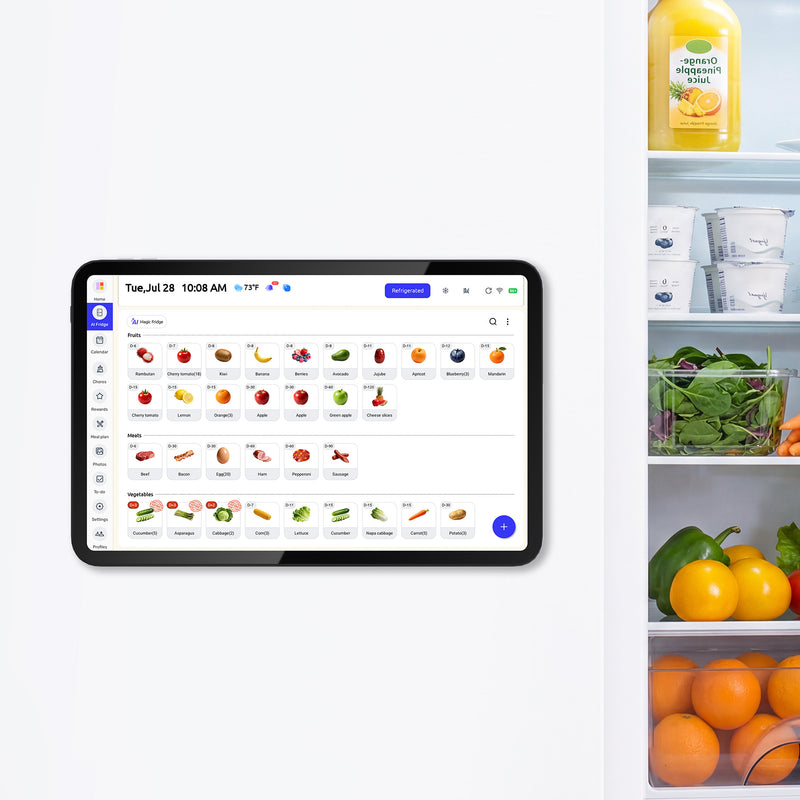
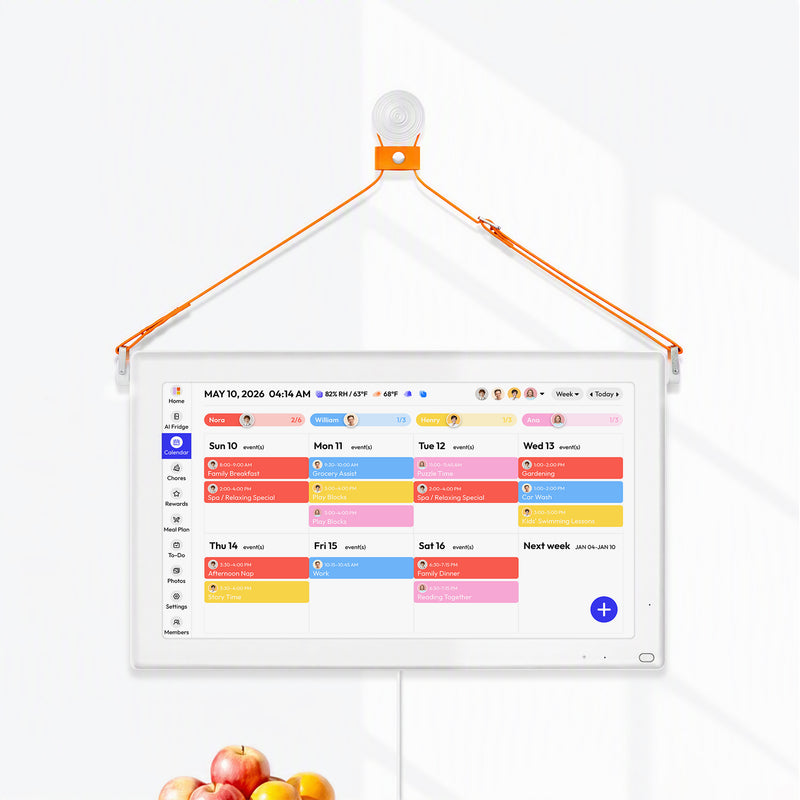
A smart fridge calendar or shared household calendar can hold the lunch rhythm where everyone sees it. Put school menu favorites on the calendar, note days when your child will buy lunch, and add reminders like “wash grapes,” “freeze ice pack,” or “pack thermos spoon.” This makes lunch less dependent on one tired parent’s memory.
A practical weekly routine might look like this: on Sunday, choose two packed lunch templates and two school lunch days; on Monday night, prep fruit and containers; by Wednesday, check what came home uneaten; on Friday, ask your child which lunch was easiest to eat. That small feedback loop is more useful than guessing for months.
When Lunch Comes Home Full, What Should You Say?
Start with curiosity, not accusation. “I noticed most of your lunch came home. Was it hard to open, not enough time, too noisy, or not what you wanted?” This gives your child language without shame.
Avoid turning every uneaten carrot into a lecture. Pressure can make lunch feel like a performance, especially for children who already feel rushed or watched. Keep the conversation short, practical, and problem-solving. If your child says the lunch line is too long, try packing on those days. If they say the sandwich gets soggy, separate the filling. If they say they are talking too much, pack foods they can eat in quick bites.
If a child consistently eats very little, loses weight, seems fatigued, has stomach pain, avoids many food textures, or shows anxiety around eating, it is time to talk with a pediatrician or registered dietitian. School lunch troubleshooting can help ordinary friction, but medical, developmental, allergy, or feeding concerns deserve individualized care.
A Simple Fix-It Plan for This Week
Choose one thing to change first. Do not overhaul the whole lunchbox on Monday. If containers are the issue, fix containers. If boredom is the issue, create two rotating lunch templates. If appetite is the issue, make lunch smaller and strengthen breakfast and after-school snack.
For example, a child who brings home a full sandwich, half an apple, and unopened milk might need a deconstructed lunch: turkey slices, crackers, apple slices, and a smaller drink. A child who buys lunch but eats only the dessert item may need to review the menu ahead of time and choose the main food before reaching the cafeteria. A child who is too hungry after school may need a planned car snack, such as milk, fruit, and a granola bar, instead of waiting until dinner chaos begins.

The calmer your system is, the calmer lunch becomes. A child who knows what is packed, can open it independently, helped choose it, and has enough time to eat is much more likely to come home fueled instead of frantic.
FAQ
Should I pack treats if my child is not eating lunch?
A small treat can fit, but it should not become the only reliable food. Pair it with foods your child already accepts, and avoid using dessert as a bargaining chip. The goal is a lunch your child can eat without feeling managed from miles away.
What if my child eats school lunch but says they are still hungry?
Check the menu together and ask what they actually ate, not just what was served. If they are skipping components, help them choose a fuller meal. If they are eating well and still hungry, plan a stronger breakfast or after-school snack.
How many foods should be in a lunchbox?
There is no magic number. A useful lunch usually includes a protein, a grain or starch, a fruit or vegetable, and a drink. For younger children or slow eaters, fewer easy-to-eat items may work better than many tiny choices.
A good school lunch routine is not about perfection. It is about noticing what your child can manage in the real school day, then building a steady plan that feeds both their body and the family’s peace.


