






Make household work legible by putting schedules, chores, meals, papers, and handoffs in one visible system, then assigning clear ownership for each recurring task. The goal is not more reminders; it is fewer private decisions living in one person’s head.
If everyone asks you where the permission slip is, what is for dinner, or whether the laundry is clean, the problem may not be effort. It may be that the work is invisible until something goes wrong. Even small changes, such as a weekly reset, a shared calendar, and task ownership by category, can make the home easier for kids, partners, and caregivers to understand without turning one adult into the permanent traffic controller.
Why Household Work Becomes Invisible
Household work is often hard to see because much of it happens before the task itself. Someone notices that the field trip form is due, remembers which kid needs a plain white shirt, checks whether there is enough gasoline for pickup, and plans dinner around soccer practice. None of that looks like a chore in the same way unloading the dishwasher does.

Researchers often separate “core housework” from other responsibilities. In one longitudinal study of 188 married couples, core housework included dishes, meals, laundry, and cleaning, and couples reported their work through daily diaries over seven years core housework. That matters because diaries capture ordinary labor that can disappear in memory, especially when both adults feel busy.
Mental Load Is the Planning Around the Task
Mental load is the remembering, deciding, checking, and following up that keeps household life moving. It is not only “doing the laundry.” It is noticing the hamper is full, knowing which uniform is needed tomorrow, starting the load early enough, moving it to the dryer, and making sure the right clothes are actually ready.
A useful way to make this fairer is to separate each recurring job into three parts: conceiving, planning, and executing. A household fairness framework uses that model to show why shared tasks can still feel unequal when one person plans and another person only completes a final step three parts. A visible system should show all three parts, not just the visible finish line.
Visibility Reduces Guessing
A child cannot help much with “get ready for school” if the real task list is hidden. A partner cannot reliably handle “dinner” if the plan includes thawing chicken, checking leftovers, knowing which kid eats before practice, and remembering that the lunch containers need washing.
Legibility means each person can answer three basic questions without asking the same adult every time: What needs to happen? Who owns it? When does it need to be done?
Decide What Belongs in the Shared System
A good household system does not need to hold every thought in your head. It needs to hold the decisions that other people must be able to see, act on, or hand off.
Start with the categories that create the most repeated friction. For many families, that means schedules, meals, chores, school papers, caregiving details, errands, and household maintenance. A family command center works best when it gives these items one known place instead of scattering them across texts, backpacks, kitchen counters, and memory one visible place.

What to Make Visible
Put the following items where the household can see them:
- Daily schedule: school, work blocks, practices, appointments, pickups, and drop-offs
- Meal plan: dinners, leftovers, grocery needs, thawing reminders, and packed-lunch notes
- Chores: what needs doing, who owns it, and what “done” means
- School needs: forms, theme days, library books, supplies, and project deadlines
- Caregiving notes: medications, allergies, bedtime routines, comfort items, and contact preferences
- Errands: returns, shipping, pharmacy pickups, gasoline, and household supplies
- Maintenance: filters, trash day, bill due dates, repairs, and seasonal tasks
This is not about making the house look more organized. It is about making the next action easier to find. “Take out trash by 7:30 AM Tuesday” is easier to act on than “help more around the house.”
What Often Breaks
Most systems fail because they become another thing one adult has to maintain alone. A wall calendar can look clear on Sunday and become stale by Wednesday when practice moves, a doctor’s office calls, or a caregiver swaps pickup days.
Paper calendars can also run out of space when one square needs to hold school deadlines, sports, work meetings, meals, chores, and reminders paper calendars. A digital family calendar helps when plans change often, but only if it is paired with a visible home display or a routine everyone actually checks.
Build a Family Command Center That People Will Use
The best command center is not the prettiest one. It is the one placed where decisions already happen. For many homes, that is the kitchen, mudroom, entryway, hallway near backpacks, or a small wall beside the refrigerator.
A practical command center usually includes a shared calendar, a drop zone, a paper-management spot, simple storage, and a high-use location working features. It can be a digital screen, a dry erase board, labeled bins, hooks, folders, or a mix. The format matters less than whether people can find and update it quickly.

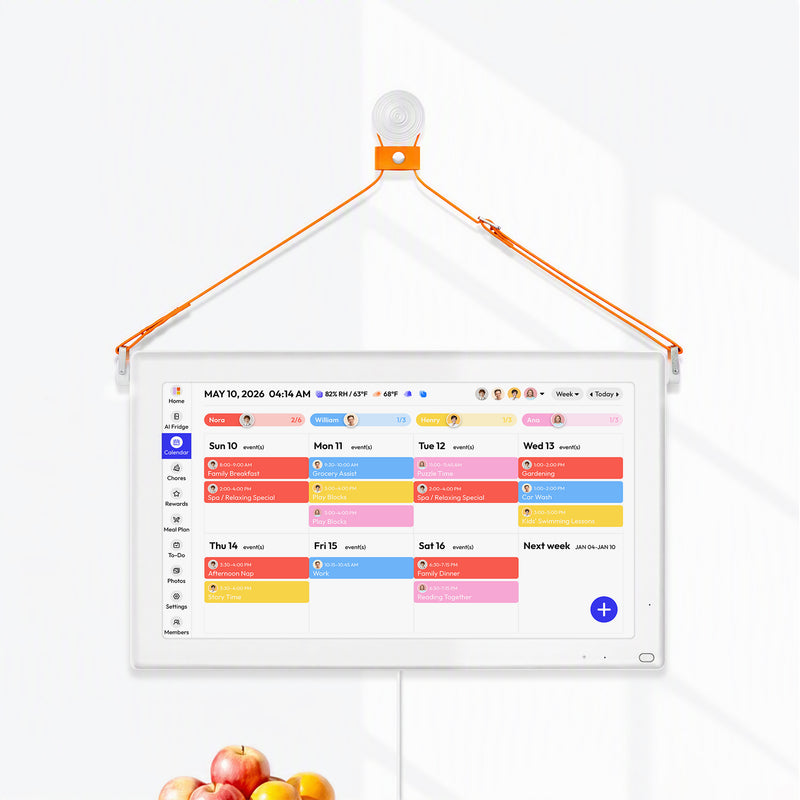
For households that want schedules, chores, and events visible on a shared wall-mounted screen, a white Everblog 21.5" Digital Calendar is one possible digital calendar option for this setup.
A Simple Setup That Works
Use one surface for time-sensitive information. This could be a digital family calendar on a kitchen screen, a fridge display, or a whiteboard that mirrors the digital calendar. Use another small area for physical items: forms to sign, library books to return, mail to process, keys, chargers, and school folders.
For a small apartment or narrow wall, the command center can be compact. A dry erase calendar, two wall files, a marker cup, and labeled bins can do the job. One budget-friendly example used a dry erase calendar, DIY wall organizers, and labeled bins for about $75 budget-friendly example.
Use Fewer Colors and Clear Labels
Color can help, but too much color becomes noise. A useful starting point is 4 to 6 fixed colors: one for each person or one for each category, such as school, work, meals, chores, and caregiving.
Labels should say the real action. “Forms to sign” is clearer than “School.” “Ready to return” is clearer than “Papers.” “Tonight’s dinner” is clearer than “Meal plan.”
Assign Ownership, Not Just Tasks
A task list can still leave one person managing the system. To reduce that, assign ownership for recurring areas of household work.
Ownership means one person is responsible for noticing, planning, and completing the task, or clearly handing it off. For example, “laundry owner” does not mean that person must wash every item forever. It means they know what laundry needs attention, when uniforms are needed, whether detergent is low, and when help should be requested.
Turn Vague Help Into Specific Agreements
Instead of saying, “Can you help with mornings?” define the morning system:
- Adult A owns breakfast setup on school days.
- Adult B owns backpacks, water bottles, and permission slips.
- Child 1 puts shoes and jacket by the door by 7:20 AM.
- Child 2 checks the lunch bin and places it in the backpack.
- The caregiver checks the shared calendar before pickup.
This removes the need for one person to narrate every step. It also makes it easier to notice which part of the system is failing.
Use Fairness and Efficiency Together
Fair does not always mean every task is split 50/50. A more useful question is whether each person’s responsibilities are visible, realistic, and acceptable enough that no one is quietly carrying the hidden planning.
Household labor often shifts with work hours, income, and job demands. The seven-year diary study found that changes in spouses’ income and work hours were linked to changes in housework allocation housework allocation. That supports a practical point: task ownership should be reviewed when work schedules, school needs, caregiving arrangements, or health demands change.
Make It Work for Kids, Partners, and Caregivers
A household system becomes useful when different people can use it without a private briefing every time. Kids need simple cues. Partners need real ownership. Caregivers need current information without digging through old texts.
For kids, use concrete, visible steps. “Clean your room” can mean too many things. “Put clothes in hamper, books on shelf, trash in bin” is easier to follow. For younger children, pictures, checkboxes, or a small morning routine strip can help. For older kids, a shared calendar reminder for practice gear or homework deadlines may work better.
Support Executive Function Without Turning It Into a Diagnosis
Executive function means the brain skills that help a person plan, start, remember, switch tasks, and finish. ADHD and other neurodivergent patterns can make those steps harder, but a household planning system should not be presented as treatment. It is a practical support.
What may help is externalizing the work. That means taking reminders out of memory and putting them into a visible calendar, checklist, timer, or labeled place. A child who forgets the same backpack item every Tuesday may not need a lecture. They may need a Tuesday checklist beside the backpack hook.
Make Caregiver Handoffs Respectful and Plain
Caregiver handoffs work best when they are specific, current, and easy to scan. This matters for grandparents, babysitters, divorced or separated co-parents, foster caregivers, and anyone else helping with a child’s day.
Strong co-parenting and caregiver communication depend on trust, clear expectations, and regular contact, especially when children are moving between homes or care settings clear expectations. Keep the system free of blame. Use plain labels like “pickup plan,” “medication note,” “bedtime routine,” and “school contact” instead of coded family shorthand only one person understands.
Create a Weekly Reset That Does Not Take Over Your Weekend
A visible system needs a maintenance rhythm. Without one, it becomes old information on a wall.
A realistic rhythm is a 20- to 30-minute weekly reset and a 3-minute nightly check. Some families can launch the basics in one week and stabilize the habit over about 14 days, especially if they keep the system simple weekly reset. The point is not perfection. It is catching the preventable surprises.

What to Review Each Week
Use the weekly reset to answer a short list of questions:
- Who has appointments, practices, early dismissals, work travel, or pickup changes?
- What meals match the real week, not the fantasy week?
- Which chores need full ownership, not last-minute reminders?
- What papers must leave the house, get signed, or come back?
- Which caregiver needs an update before the week starts?
- What supplies are low: groceries, medication, diapers, pet food, printer ink, or gasoline?
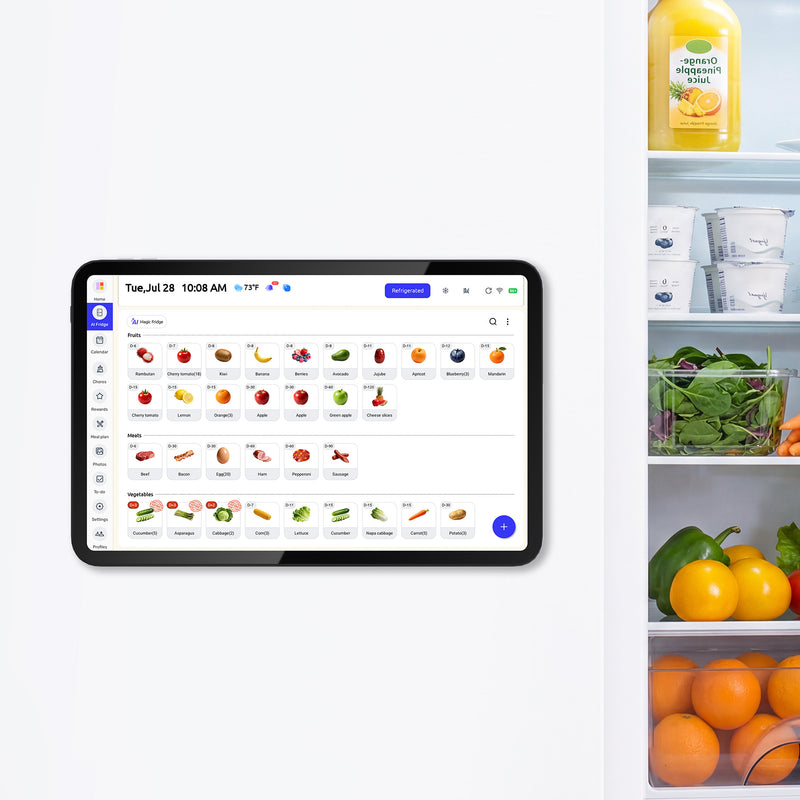
Meal planning is a good example of why visibility matters. A dinner plan is not just “tacos Tuesday.” It may include whether ground beef is thawed, whether lettuce will last, who gets home first, and whether leftovers need to be eaten before they spoil. Food safety guidance often uses fridge temperature and storage windows; one family calendar source notes keeping the refrigerator below 41°F and using or freezing many opened or cooked foods within 4 to 7 days storage windows.
Keep the Nightly Check Short
The nightly check should be brief enough that people will actually do it. Look at tomorrow only.
Ask: What time does the day start? Who needs what packed? What food needs thawing or moving? Which child needs a reminder before bed? What must be by the door?
If the check takes 20 minutes every night, the system is too complicated or too much is still living in one person’s head.
Action Checklist
Use this as a first-week setup plan.
- Choose one shared location: kitchen wall, fridge screen, entryway, or another high-traffic spot.
- Create one shared calendar for appointments, school events, work conflicts, pickups, and caregiving handoffs.
- Add one chore board with task owner, timing, and a clear definition of “done.”
- Set up one paper zone with labels such as “sign,” “return,” “file,” and “review.”
- Pick 4 to 6 colors or categories and keep them consistent.
- Schedule a 20- to 30-minute weekly reset and a 3-minute nightly check.
- Review task ownership after two weeks and adjust what is unclear, ignored, or overloaded.
FAQ
Q: How do I make household work visible without still managing everything myself?
A: Start by assigning ownership, not just reminders. If one person owns school lunches, that person tracks supplies, checks the calendar for field trips, packs or delegates the lunch, and updates the grocery list. The shared system should show the work so others can act, but the owner should not need daily prompting.
Q: Should we use a digital family calendar or a paper command center?
A: Use both if your household has frequent changes and physical papers. A digital calendar is better for updates, recurring events, reminders, and syncing with cell phones. A paper or wall-based command center is better for backpacks, forms, keys, mail, and visual cues kids can see without opening an app.
Q: What if my child or partner ignores the system?
A: Treat that as design feedback before treating it as defiance. The system may be too crowded, too hidden, too vague, or not connected to a real routine. Move it to a higher-use location, reduce the number of steps, and make the next action more concrete. For example, “Put cleats in soccer bag by 7:00 PM” is easier than “Get ready for practice.”
Practical Next Steps
The most useful household system is small enough to maintain and clear enough for someone else to use. Start with the three areas causing the most repeat questions, usually schedules, meals, and school or chore handoffs.
For the next two weeks, do not try to redesign the whole home. Put the week’s schedule in one visible place, assign full ownership for three recurring tasks, and create one paper drop zone. Then watch what still requires verbal reminders. That is where the next label, checklist, calendar event, or handoff note belongs.
Disclaimer
This article is for household planning education only. It is not a substitute for mental health care, medical advice, legal advice, or crisis support. If safety, custody orders, or a diagnosed condition are involved, work with the appropriate licensed professional.
References


