






Tasks get easier to follow when the plan is visible to the people who need to act on it. When schedules, meals, chores, and reminders live in separate phones, texts, and scraps of paper, the task may be simple but the handoff is easy to miss.
Ever realize at 7:42 AM that the library book, soccer cleats, permission slip, and dinner plan were all “handled” by someone, but not actually visible to everyone? In household calendar research, families ran into trouble when events were not captured, synced, or noticed at reminder time, even when people were trying to stay organized. The fix is not a perfect system; it is a simple shared plan that people can see, update, and review during normal home routines.
Why Simple Tasks Still Fall Apart
A task like “pack the lunch” or “take out the trash” sounds easy. The hard part is often not the task itself. It is knowing who owns it, when it needs to happen, what has already been done, and what is still waiting.

That is why verbal reminders break down so quickly. One parent says, “Can you grab snacks for tomorrow?” while walking out the door. The other parent hears it, but the grocery list is in a different app. A child knows they have band practice, but the instrument case is still in the car. Nobody is being careless on purpose. The plan is scattered.
Research on home health scheduling found that calendar failures often happened when events were not entered, were entered incorrectly, did not sync across tools, or were missed when the reminder arrived; families reduced those failures with backup reminders, texts, emails, paper notes, and shared checks of the plan calendar failures. That same pattern shows up in ordinary family life. A pickup plan, meal plan, or chore plan is only useful if it reaches the person who needs it before the moment of action.
The Hidden Work Behind “Easy” Tasks
Many household tasks include invisible steps. “Handle dinner” may mean checking the calendar, choosing a meal, thawing chicken, adding salad to the grocery list, knowing who is home at 6:00 PM, and cleaning enough counter space to cook.
“Laundry” may mean noticing the soccer uniform, starting the washer, moving clothes to the dryer, folding the right items, and making sure the uniform lands in the gym bag before school. If the only visible step is “laundry,” the person who owns the follow-through still carries the mental load.
Shared family logistics work better when tasks are visible, assigned, and reviewed in one place, because doing a task is different from owning its prep, execution, and follow-through shared family logistics. A visible plan turns “somebody should remember” into “Alex owns cleats by 6:30 PM.”
What Visibility Actually Means at Home
Visibility does not mean covering every wall with lists. It means the next important household decisions are easy to see at the point where people naturally pass through the day.
For most families, that means one shared digital calendar and one visible home surface. The digital calendar travels with adults on cell phones. The home surface helps everyone see the week without opening an app. That surface can be a wall calendar, magnetic whiteboard, smart display, framed weekly planner, or a family command center near the kitchen, mudroom, garage entry, or main hallway.

A practical family calendar setup starts by identifying the main failure first, such as missed appointments, double-booking, unclear chores, or too many separate calendars; many homes do best with one shared calendar app, one task system, and one visible home surface hybrid setup. This matters because a private reminder can help one person, but a shared surface helps the household coordinate.
Digital, Physical, or Both?
A digital calendar is best for appointments, recurring reminders, two-way syncing, and plans made away from home. It is useful when a parent books a dentist appointment from work, adds a school concert while standing in the pickup line, or checks practice times before filling the gas tank.
A physical or always-on home display is best for repeated visual exposure. It helps kids see what is coming. It helps adults notice conflicts while making coffee. It helps grandparents, babysitters, or visiting relatives understand the day without needing app access.
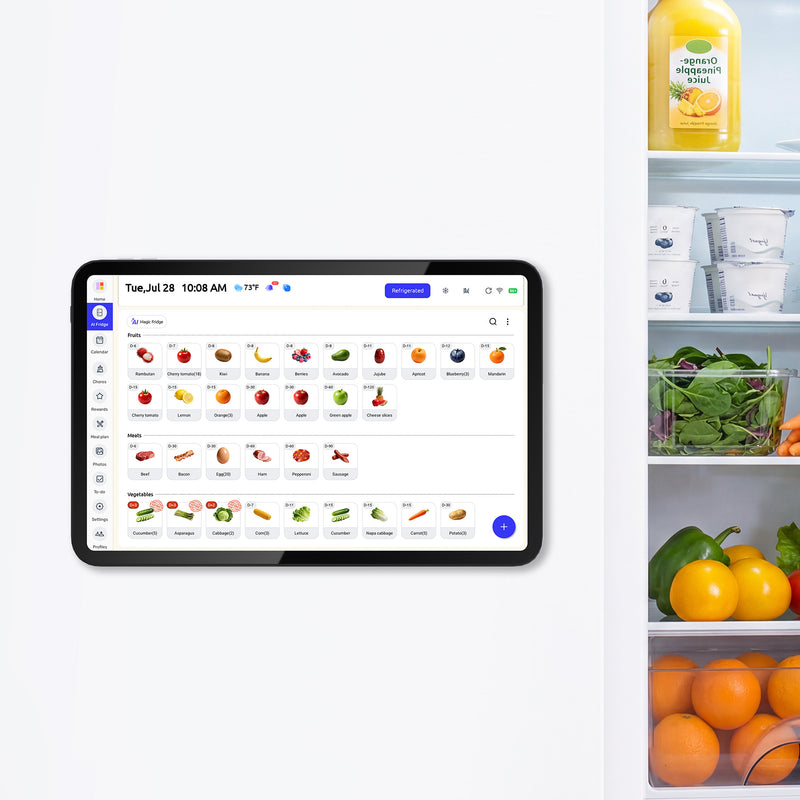
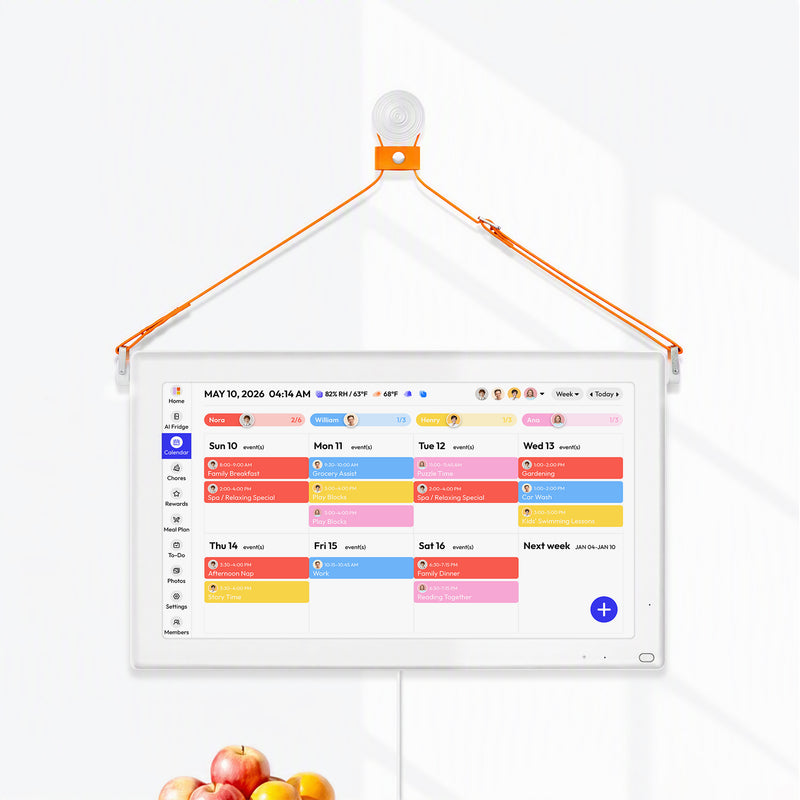
For families that want a shared home display, the Everblog 21.5" Digital Calendar is one example: a large touch display designed for wall mounting that helps families view plans, tasks, chores, and events on one screen.
Digital apps are portable, but schedules can stay hidden unless someone opens them; physical displays provide an always-on shared source of truth for the home central visibility. The best choice is usually not either/or. It is a simple bridge between the phone and the family’s daily path through the house.
The Four Parts a Visible Household Plan Needs
A visible plan works when it answers four questions fast: What is happening? Who owns it? What do we need? When will we check it again?
If your system cannot answer those questions in under a minute, it is probably too spread out. The fix is not adding more reminders. The fix is giving each type of household information a clear home.
1. Events: Put the Week Where People Can See It
Events include school deadlines, work travel, sports, appointments, birthdays, early dismissals, holidays, and anything that changes the normal routine. Use color-coding by person if it helps, but keep it readable. A calendar that looks like confetti will not help a tired parent at 9:30 PM.
For a home display, a week view is usually easier to act on than a month view. The week view shows what needs prep now. The month view is helpful for planning ahead, but it can hide Tuesday’s real problem: one parent has a late meeting, one child has practice, and dinner still needs to happen.
Display size affects how useful a digital command center feels from across the room: 10 to 13 inches works from about 3 to 4 feet, 15 to 17 inches from about 6 to 8 feet, and 21 inches or larger is better for a full-week view display size. If the calendar sits near the kitchen table, smaller may work. If it is across a busy mudroom, bigger type and fewer details matter more.
2. Meals: Make Dinner Visible Before Everyone Is Hungry
Meal planning breaks down when dinner decisions happen too late. A visible dinner plan removes one daily decision and helps the grocery list stay honest.
You do not need a full month of meals. Start with five dinners for the next seven days. Leave one night for leftovers and one night for takeout, sandwiches, or a freezer meal. Write the plan where people can see it: Monday pasta, Tuesday tacos, Wednesday rotisserie chicken and salad, Thursday leftovers, Friday pizza.
A simple meal-planning workflow is to place dinners on the calendar, turn those meals into a grocery list, and let everyone see what will be cooked meal-planning workflow. That visibility helps with small handoffs too. If a teenager sees tacos on Tuesday, they can pull tortillas from the pantry. If a parent sees chicken on Wednesday, they can add buns or salad mix before the store run.

3. Chores: Assign Ownership, Not Just Tasks
A chore list that says “clean up” is too vague. A useful chore says who does what, where, and when it is done.
For example, “Maya: empty dishwasher after breakfast” works better than “kitchen help.” “Dad: start towels Sunday by 10:00 AM” works better than “laundry.” “Jordan: trash and recycling to curb Monday after dinner” works better than “take out trash.”
Chore systems work better when tasks are concrete, visible, recurring, and easy to check off, with a weekly planning routine and a daily review chore systems. The checkoff matters. It gives the family a quick signal that the work moved, without one person having to inspect every detail out loud.
4. Notes and Supplies: Keep the “Don’t Forget” Items Close
Some plans fail because the reminder is visible, but the needed item is not. A permission slip on the kitchen counter does not help if backpacks leave through the garage. A grocery list on the fridge does not help if the person shopping only checks their cell phone.
Place notes and supplies near the place where the action happens. School forms go near backpacks. Library books go in a return bin by the door. Sports gear goes in a labeled bag or shelf. Grocery needs go into the shared list as soon as someone uses the last item.
Simple home organization systems work best when they support existing household routines and reduce friction, which means fewer extra decisions and fewer steps between noticing and acting existing household routines. If shoes always land by the garage entry, start there. Put the shoe bin, return basket, and weekly plan where the habit already happens.
A Weekly Rhythm That Keeps the Plan Alive
A visible system still needs a rhythm. Without one, the board becomes old news, and the app becomes another place where forgotten plans go to sit.
The rhythm should be short enough that the family will actually do it. A 15-minute weekly reset can include 3 minutes reviewing last week, 5 minutes syncing schedules, 3 minutes assigning chores, 3 minutes planning dinners, and 1 minute for reminders 15-minute weekly reset. Sunday evening works for many families, but Friday after dinner or Monday morning may be better if weekends are packed.
The 15-Minute Reset
Use a timer. Keep it practical. The goal is not to solve every household problem. The goal is to make the next seven days easier to see.
Start with the shared calendar. Add school events, work travel, appointments, practices, pickup changes, and anything that affects dinner or bedtime. Then assign the few chores that matter most this week. Then write five dinners. Finish by naming the one or two handoffs most likely to fail.
A real reset might sound like this: “Tuesday is the hard day. I have a late call, Sam has soccer at 5:30 PM, and Ava needs her science board. Dinner is leftovers. Chris owns pickup. Ava puts the science board by the garage door Monday night.” That is simple, visible, and specific.

The Daily Two-Minute Check
A weekly reset is not enough by itself. Add a short daily check near a natural routine, such as breakfast, after school, or after dinner.
Ask three questions:
- What changes tomorrow?
- What needs to leave the house?
- Who owns the first handoff?
This check is especially helpful for families with kids, rotating work schedules, shared custody, caregiving duties, or uneven follow-through. It does not assume everyone remembers the same way. It gives the household a repeated moment to notice what is coming.
What Usually Breaks and How to Keep It Simple
Most household planning systems do not fail because families choose the wrong marker color or calendar app. They fail because the setup asks for too much upkeep.
If the system takes 30 minutes a day, someone will quit. If every task has 12 labels, people will ignore it. If the board is pretty but not placed where life actually happens, it becomes decoration.
Too Many Places to Check
One adult uses a work calendar. Another uses texts. A teacher sends emails. A coach uses an app. A child brings home paper. That is normal. The key is deciding where those inputs land.
Choose one master calendar for events. Choose one grocery list. Choose one chore surface. Other tools can feed into those places, but they should not compete with them. The master calendar should let both adults add, change, and manage family events without needing permission master calendar. If one person is the only gatekeeper, the plan is shared in name only.
Private Reminders Doing Shared Jobs
Private reminders are useful for private tasks. A cell phone alert that says “leave for dentist” helps the person driving. But shared household jobs need shared visibility.
If one parent has all school deadlines in their phone, the other parent cannot easily step in. If a child’s chore reminder only lives in a parent’s head, the child never sees ownership. If dinner is planned in one person’s notes app, everyone else still asks, “What’s for dinner?”
A shared calendar is often described as a central command center for schedules, chores, meal plans, and family details in one visible place central command center. The point is not the label. The point is that the information needed for shared action is available to the people doing the action.
No Clear Decision Rights
Families can borrow one useful idea from larger family systems: plans work better when decision rights are clear before the pressure hits. In business families, hidden tensions can weaken continuity when relationships, responsibilities, and decisions are not openly managed hidden tensions. At home, the stakes are smaller, but the pattern is familiar.
If nobody knows who can change the dinner plan, book the appointment, approve a sleepover, or move chore day, the household loses time negotiating in the moment. Decide a few rules ahead of time.
For example: either adult can add appointments to the family calendar. The person who changes pickup must update the calendar and text the other adult. Kids can swap chores if both chores still get done by Sunday at 5:00 PM. Dinner can move, but the grocery list must be updated.
A Practical Setup for the Next Seven Days
Do not redesign your whole home. Pick one visible place, one shared calendar, and one weekly reset. Then test it for two weeks.
Start where the household already gathers or passes through. A kitchen wall may work for one family. A mudroom board may work for another. An apartment may need a narrow magnetic board near the entry. The best location is the one people see without making a special trip.
Use this checklist to build a simple version:
- Choose one master calendar for appointments, school events, work travel, practices, and pickup changes.
- Put one visible weekly view in a high-traffic spot, such as the kitchen, mudroom, garage entry, or hallway.
- Assign chores by person, deadline, and done signal, such as “check when finished.”
- Add five dinners to the week, plus one leftovers night and one flexible night.
- Create one launch spot for items that must leave the house, such as forms, sports gear, returns, and library books.
- Hold a 15-minute weekly reset and a two-minute daily check for tomorrow’s changes.
- After two weeks, remove anything nobody uses and keep the parts that helped.
Starting small matters. A system that helps three handoffs this week is better than a detailed planner nobody updates after Wednesday.
FAQ
Q: Is a digital family calendar better than a wall calendar?
A: A digital calendar is better for syncing, reminders, recurring events, and updates made away from home. A wall calendar or home display is better for quick shared visibility. Many families do best with both: the digital calendar as the master record and the visible home surface as the daily reference point.
Q: What should go on the family command center?
A: Put only the information people need to act on this week. That usually means the weekly schedule, dinner plan, assigned chores, grocery list, school forms, and a small spot for items leaving the house. If the board becomes crowded, remove anything that does not change behavior.
Q: How do we make kids use the system without constant reminders?
A: Give kids visible ownership, not vague instructions. Use short task names, predictable timing, and a clear done signal. For example, “Eli: backpack packed by 7:30 PM, place by door” is easier to follow than “get ready for school.” Review the board at the same time each day so checking it becomes part of the routine.
Key Takeaways
A household plan breaks down when it is hidden, scattered, or owned by only one person. Making tasks easier to follow starts with making the plan easier to see.
For the next seven days, focus on four basics: one shared calendar, one visible weekly view, clear task ownership, and a short reset rhythm. Keep the system close to where life already happens. If the plan helps people notice tomorrow’s handoffs before bedtime, it is doing its job.


