



Different commutes do not require a perfectly equal split; they require a visible, predictable handoff plan. The most reliable system names a primary driver, a backup, and a short transition routine your child can count on.
The smoothest handoff is usually the one decided before the week starts, visible to everyone, and calm enough that your child does not have to absorb the adults' time pressure. When commutes differ, the goal is not perfect symmetry; it is a reliable system that makes mornings and evenings predictable.
If your day is already off track by 8:10 AM because one parent is racing toward the highway while the other is still guessing who can make pickup, the problem is usually not effort. Families often improve quickly when the handoff moves from "we'll figure it out later" to one visible plan, one backup plan, and one short transition routine. That approach reduces child stress and keeps a commute mismatch from turning into a daily argument.

Why the Handoff Feels So Hard
In a dual-income household, "the handoff" is the moment responsibility shifts from one adult to another, whether that happens at home, at school, at aftercare, or in the car line. The stress comes from two problems at once: the adults are managing work constraints, and the child is managing transition. If either part is vague, the whole exchange gets shaky.
A single source of truth matters because scattered texts, sticky notes, and verbal reminders are exactly how pickup mistakes happen. In practice, the families that struggle most are not always the busiest. They are usually the ones relying on memory, goodwill, and last-minute texting to manage a schedule that really needs a shared system.
Different commutes make this sharper. One parent may have the shorter school route but the less flexible office arrival time. The other may have a longer drive but better afternoon control. That means "fair" does not always mean "equal." It often means one parent owns more morning driving while the other owns more evening recovery, calendar updates, dinner coverage, or the backup pickup plan.
Start With the Real Constraint, Not the Ideal Split
A parenting schedule that works is built around the child's needs and the family's real situation, not a generic 50/50 formula. For dual-income parents with different commutes, the first useful question is simple: who can do this run with the least risk of lateness, resentment, or scrambling?
That sounds obvious, but many couples skip it and default to alternating every day. Alternating can look fair on paper and still fail in real life. If one parent crosses town and loses 45 minutes to traffic after every drop-off while the other passes the school on the way to work, the "equal" schedule may be the least stable one. A better system is often a weighted split: one parent does most morning drop-offs, the other does most pickups, and both agree on what happens when meetings move or traffic locks up.
Think of the weekly handoff like a route plan, not a favor. If Parent A leaves home at 7:10 AM and passes the school at 7:35 AM, while Parent B needs to reverse direction and add 18 miles, the efficient choice is clear. The balance can be restored elsewhere, such as bedtime duty, meal prep, or the Friday activity run.
Build a Visible Household Command Center
A digital wall calendar works best when it is front and center in a high-traffic spot, especially near the kitchen where everyone naturally checks in. That visibility is the real advantage. A schedule that lives only on individual phones is easy to miss when everyone is moving fast.
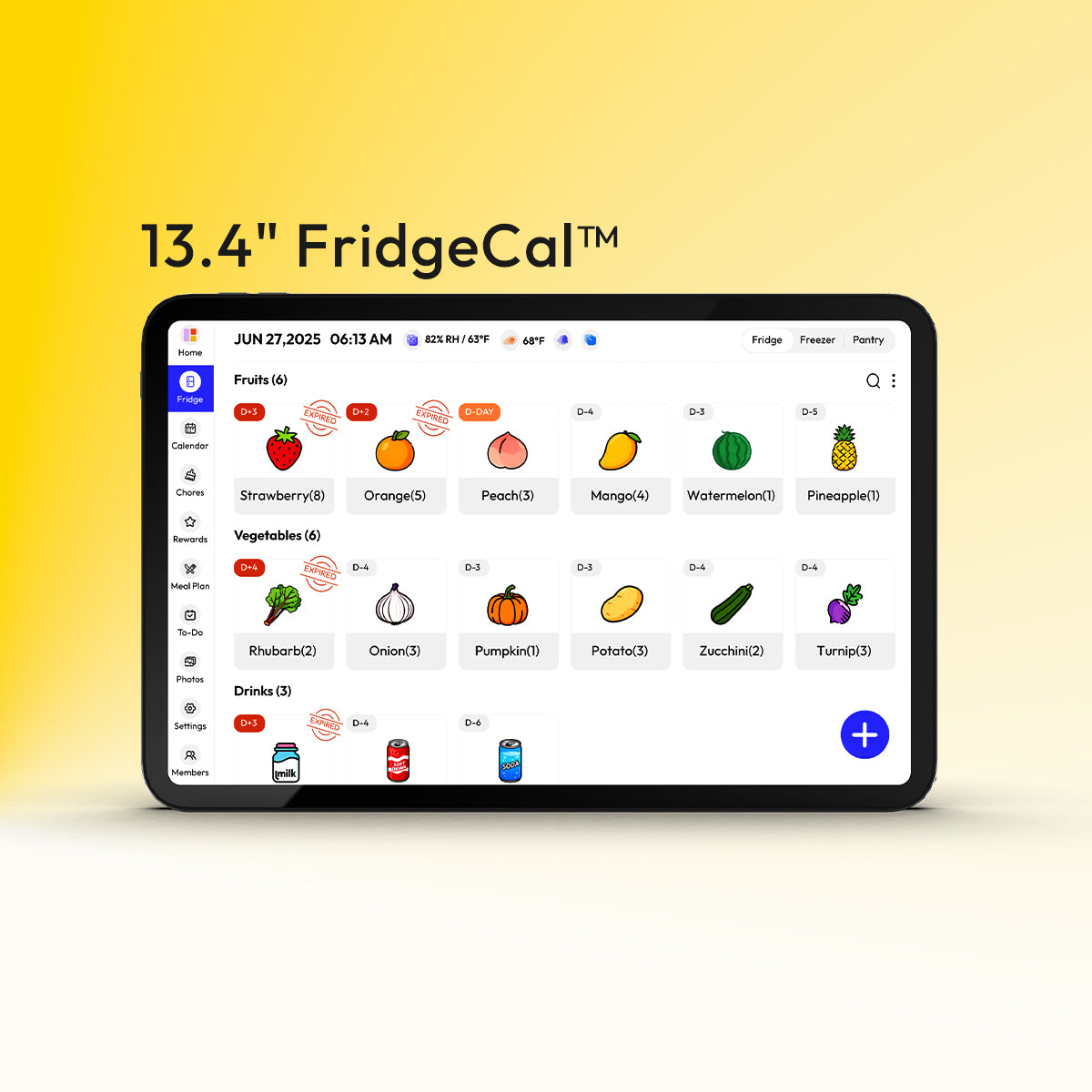
A smart digital fridge calendar or family display can help because it turns the handoff into a household routine instead of a private app habit. The practical benefit is not the screen itself. It is that both adults, and often older children, can see the same answer without unlocking a phone, searching a text thread, or asking again. When the morning plan says "Dad drop-off, Mom pickup, Grandma backup after 5:30 PM," ambiguity drops immediately.

The tradeoff is worth stating clearly. A shared family calendar display improves visibility and can combine schedules, chores, and routines, but it costs more than a paper calendar and only works if the family updates it. Independent product testing points to the same issue indirectly: placement and household habits matter as much as the device. If you do not want another gadget, a shared phone calendar plus a printed weekly view near the door can still work. The principle matters more than the platform.
The Best Handoff Plan Has a Primary Driver and a Backup Driver
A weekly sync is one of the highest-value habits for busy families because it catches schedule conflicts before they become school or office emergencies. Keep it short. Sunday evening works well for many households because you can review commute-heavy days, early meetings, sports, aftercare changes, and who is on call if something slips.
During that check-in, decide three things for every weekday. First, who owns drop-off. Second, who owns pickup. Third, what time the backup plan activates. That third piece is what saves the week. If the rule is "If I am not in the school zone by 5:15 PM, I text 'red' and you trigger the backup," no one has to decode vague messages at 4:52 PM.
This is also where mental load becomes visible. One parent may not be driving that day but may still be responsible for packing cleats, confirming aftercare, or moving the dentist appointment. In dual-income homes, resentment grows when only the driving is counted and the planning disappears into the background. A practical system names both.
Make the Child's Transition Short, Clear, and Predictable
A clear and brief goodbye helps children feel more secure than a drawn-out exit or a parent who disappears without warning. This matters even more when one parent is doing the drop-off and the other is doing the pickup, because your child is navigating two transitions in one day.
The handoff routine does not need to be elaborate. It needs to be consistent. Many children settle better when they know the order: backpack out, hug, one phrase, one wave, then the day starts. One parenting resource recommends a repeatable goodbye ritual, and another notes that adult calm shapes the child's emotional state during transitions. Those two ideas fit everyday family logistics surprisingly well. The routine is not just for toddlers. Kindergarteners and even older grade-school children often do better when the exchange feels familiar instead of rushed and emotionally noisy.

A useful plain-language script is simple: "Dad is dropping you off. Mom is picking you up after art." For younger children, that "after art" cue can work better than a clock time. The goal is to remove uncertainty, not add more words.
Keep the Exchange Child-Focused, Not Commute-Focused
A short, positive exchange reduces tension during transitions because children read adult body language long before they understand adult scheduling logic. Even in a two-parent household that is not dealing with separation, the same principle applies. The child does not need to witness a live debate about traffic, late meetings, or whose turn it "really" is.
This is where many working parents accidentally make the handoff heavier than it needs to be. They start logistics talk in front of the child, drag out the goodbye, or correct each other in the doorway. The cleaner approach is to settle adult logistics before the transition point whenever possible. If something changes, use the calendar and a short text, then keep the in-person moment warm and brief.
Some parenting sources focus on separated households, while household-organization sources focus on intact family systems. The advice overlaps more than it conflicts. Transition guidance stresses brevity, predictability, and calm at the moment of exchange, while family-organization guidance stresses visibility and planning beforehand. Taken together, that means the best handoff is both emotionally steady and operationally boring.
Pros and Cons of Common Handoff Setups
Different families need different setups, and no single arrangement wins every week. The table below shows how the most common patterns usually behave in real life.
Setup |
Best Fit |
Main Benefit |
Main Drawback |
One parent usually drops off, the other usually picks up |
Different commute strengths |
Highly predictable and efficient |
Can feel uneven if other duties are not rebalanced |
Alternating days |
Similar commutes and flexible jobs |
Feels fair and easy to remember |
Breaks down fast when one route is much harder |
School-based handoff |
Parents crossing paths at school or aftercare |
Fewer home-to-home transitions |
Less flexible when school schedules change |
Backup-caregiver model |
Families with a grandparent, sitter, or other caregiver support |
Strong safety net for work disruptions |
Requires a clear shared system and trust |
A shared household system works best when the method matches the family's actual habits, not the family they wish they were. If one parent always checks the fridge display and the other always checks a phone calendar, use both. A hybrid system is often more resilient than a "pure" one.
When to Adjust the Plan
A simple system that the whole family will actually use is more durable than a beautiful plan that collapses by Wednesday. If the same problem repeats for two weeks, the system needs adjustment, not more effort.
Watch for obvious signs. If pickup confusion keeps happening on meeting-heavy days, assign those days permanently to the parent with more afternoon flexibility. If your child melts down every Monday handoff, add 10 minutes of buffer and a more predictable reunion routine. If one parent feels trapped as the default driver, rebalance invisible work, not just steering-wheel time.
The most stable families treat the handoff as a living routine. They review it, simplify it, and protect it from last-minute improvisation. That does more for family harmony than another round of "just text me if you're running late."
A calm handoff is less about perfect time management and more about making sure nobody has to guess. When the plan is visible, the backup is named, and the child knows what happens next, the whole household breathes easier.


