







A planner parent and a reactive parent usually need a shared system, not more reminders, because role overload and mixed expectations make home life harder to coordinate an extension service.
Does one of you keep the whole week in your head while the other only reacts once something is urgent? One example digital setup took about 20 minutes to switch over and settled into a usable rhythm within 14 days, which is a realistic benchmark for a busy home that needs less arguing and fewer missed handoffs a digital family calendar comparison. Here is how to split ownership, make the right things visible, and keep the system flexible when the week changes.
What This Dynamic Is Really About
Different defaults, not different commitment
A planner parent usually lives a few steps ahead. They notice the school form, the birthday gift, the lunch supplies, the dentist reminder, and the fact that tomorrow’s soccer practice needs clean uniforms. A reactive parent may be just as committed, but they tend to work better with immediate cues, clear requests, and a concrete next step.

That mismatch is where conflict starts. When one adult becomes the default memory for the household, the pressure can turn into role conflict, role overload, and role ambiguity, which are the plain-English ways families get stuck trying to do too many jobs at once with too little clarity an extension service.
Mental load in plain English
Mental load is the invisible work of noticing, planning, remembering, and following up. It is not just doing the dishes or driving to practice. It is remembering that the dishes exist, that practice needs a ride, and that someone still has to buy the snacks.
That is why a shared calendar alone is not enough if the rest of the system lives in one person’s head. If executive function is part of the picture, think of it as the brain work that helps a person start tasks, switch between them, and keep track of what comes next. The goal is not to label either parent. The goal is to make the next step easier to see.
What to Make Visible
One shared calendar, one source of truth
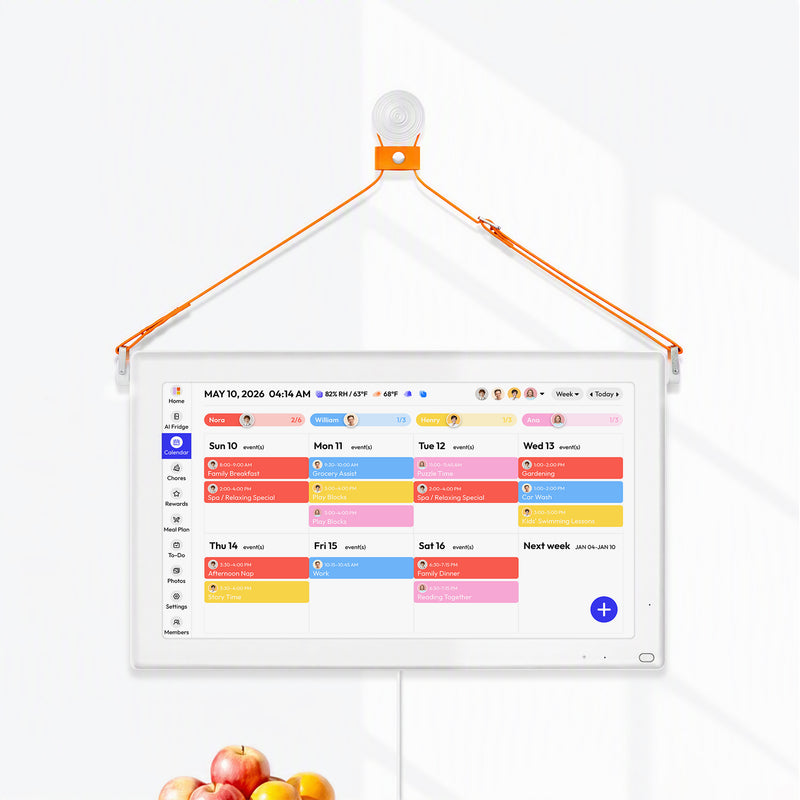
A shared digital family calendar works best when it holds real commitments: pickups, school events, appointments, games, travel, guests, closures, and bill due dates a family planning guide. If a thing changes the day, time, place, or who has to show up, it belongs there.
Chats are still useful, but they should carry conversation, not serve as the only copy of the plan. If an event only lives in a text thread, it is easy for the planner parent to become the human backup system and for the reactive parent to miss the update entirely.
One command center, one visible home spot
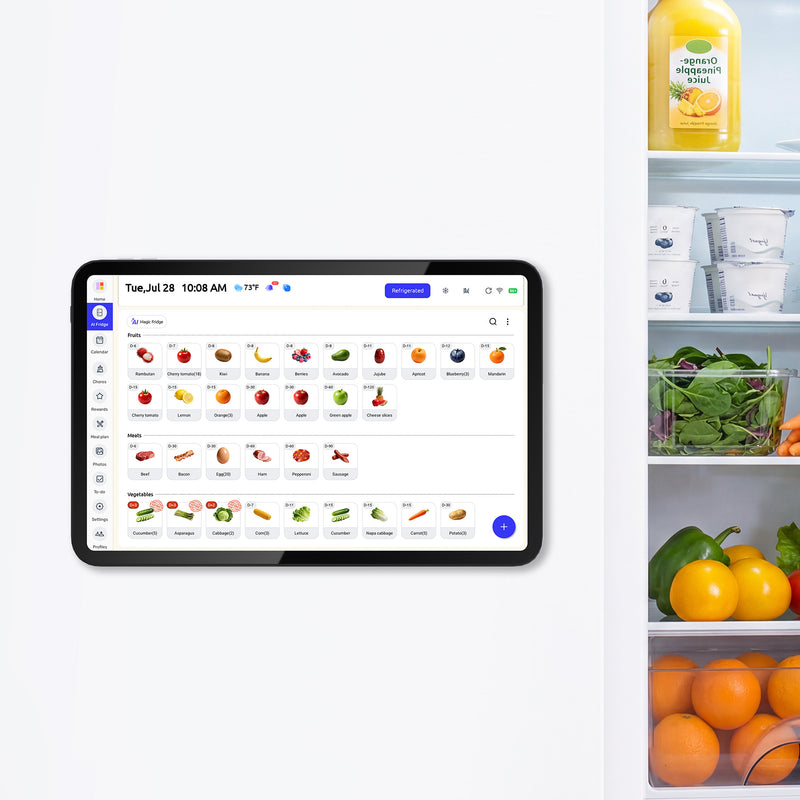
A home command center gives the family one place to look for paper forms, meal plans, homework notes, and quick updates. It does not need to be fancy. A narrow wall, a cabinet door, a small desk area, or the side of the fridge can work as long as it is in a high-traffic spot a home organization publication. For some households, a wall-mounted display like the Everblog 21.5" Digital Calendar can serve as one shared screen for plans, chores, and events when a paper calendar or phone-only setup is not visible enough.
Tool |
Best for |
What usually breaks if you overload it |
Shared calendar |
Dates, times, pickups, appointments, and deadlines |
It turns into a message board |
Command center |
Papers, forms, menus, and visible reminders |
It gets ignored if it is hidden |
Routine household jobs and ownership |
It becomes a reminder list instead of a responsibility list |

A calm system uses each tool for one job. That is what keeps the planner parent from becoming the default sorter of every note, text, and paper that comes home.
How to Divide Ownership Fairly
Start with the full list, not the obvious list
Unequal chore division often leaves one partner carrying most of the household labor, which can create resentment and stress a public radio outlet. To avoid that, list every chore and errand together in one shared place for an hour or two. Include the visible jobs, like dishes and school drop-offs, and the less visible work, like carpools, thank-you notes, and the follow-up after an appointment.
Then narrow the list to what actually matters to your household. Not every chore deserves equal attention. If a task does not matter much to the family, cut it. If it does matter, define what “done” means so one parent is not constantly guessing how much is enough.
Give each category one owner
Fair division is usually better than equal division, because chores are not interchangeable one-for-one. A good split uses categories, not random one-off tasks. One adult can own meals, another can own school logistics, and another can own bills or pets, as long as the ownership includes planning, execution, and follow-up a parenting publication.

That last part matters. Ownership means the person in charge handles the reminder, the backup plan, and the cleanup after the task is done. It does not mean the other parent quietly manages everything from the sidelines and then gets annoyed when the owner forgets something.
Build a Routine Both Parents Can Keep
Use one short weekly reset
A weekly check-in works better than a string of urgent reminders. Many families do well with a 15- to 30-minute meeting to review the next seven days, assign owners, and name backup plans for the things most likely to go wrong a family planning guide. One simple version splits the time into schedule, food and supplies, and chores and exceptions.
For meals, a short Sunday reset can be enough. A 10- to 15-minute meal plan with three or four dinners on deck gives both parents a clearer target and reduces the number of “What’s for dinner?” decisions that happen under pressure a household planning article. The point is not to plan every bite. It is to keep food from becoming another invisible crisis.
Make daily checks small enough to stick
A useful system does not need constant redesign. It needs repeatable touchpoints. A quick nightly scan, a same-day update for real changes, and a family habit of checking the calendar before asking someone else what is happening can do more than a pile of reminders ever will.
If the reactive parent misses updates, reduce the number of places they have to check. If the planner parent keeps re-explaining the same week, the system is probably too fragmented. Fewer tools, clearer ownership, and one visible planning spot usually work better than a lot of disconnected notes a household planning article.
What Usually Breaks First
Paper lag and alert fatigue
Paper calendars can work in low-change homes. They tend to break down when one surface has to track school, work, meals, chores, and appointments, because the page becomes outdated unless someone keeps rewriting it a digital family calendar comparison. That is why digital calendars usually help more when the week changes often.

At the same time, too many alerts can be its own problem. Keep notifications for real commitments. If every text, note, and reminder becomes a task, the planner parent still ends up sorting everything. A better rule is simple: one calendar for time, one visible spot for household paper, and one review habit to catch what changed.
When the planner parent becomes the manager
If one adult is still handling the thinking for everyone, do a one-week record of how time is actually spent on paid work, housework, childcare, travel, schoolwork, and leisure an extension service. That record is not a scorecard. It is a way to see whether the household is assigning work by interest, skill, and equity or just by habit.
Once the pattern is visible, adjust the ownership rules. If a task belongs to one person, that person owns the planning, reminders, and follow-through. The other adult can support it, but should not have to manage it from the outside. That is usually the change that lowers resentment fastest.
Practical Next Steps
- Pick one shared digital calendar and make it the source of truth for all real commitments.
- Set up one visible home planning spot for paper, forms, menus, and quick notes.
- List every chore and errand, including the invisible ones, in a shared place.
- Assign each category one owner, with planning, execution, and follow-through included.
- Hold a 15- to 30-minute weekly reset and keep it on the calendar.
- Do a short nightly check so changes do not live only in someone’s memory.
- Revisit the system after two weeks and simplify anything that is still causing confusion.
FAQ
Q: What if the planner parent is just better at planning?
A: That may be true, but “better at it” does not mean “should do all of it.” A fair system gives the planner parent fewer invisible jobs and gives the reactive parent clear ownership with visible follow-through.
Q: What should go in the calendar versus the command center?
A: Put anything with a date, time, place, or deadline in the calendar. Put paper forms, menus, homework notes, rotating chores, and quick visible reminders in the command center.
Q: Is a paper calendar enough for a busy family?
A: Usually only if the home is low-change and someone is willing to rewrite it often. In a busier household, paper tends to lag behind real life, which is why a digital calendar plus one visible home spot usually works better.
Key Takeaways
The planner parent and the reactive parent do not need to become the same kind of thinker. They need a shared system that makes time, ownership, and follow-through visible.
The simplest version is easy to remember: one calendar, one command center, one weekly reset, and one owner for each category of work. When those pieces are clear, the household runs with less friction and fewer last-minute rescues.
Disclaimer
This article is for household planning education only. It is not a substitute for mental health care, medical advice, legal advice, or crisis support. If safety, custody orders, or a diagnosed condition are involved, work with the appropriate licensed professional.
References
- Cornell Cooperative Extension: Balancing Work and Family
- NPR Life Kit: How to split up chores fairly with your spouse or roommate
- Split Family Planning: A Couple's Guide to Less Conflict
- Calm Family Planning: A Guide to Soft-Productivity
- Why a Digital Family Calendar Beats a Paper Wall Calendar
- Mother.ly: Tetris family calendars emotional load
- The Spruce: Smart Family Command Center Ideas


