







Parents want a family calendar that behaves like part of the home: visible in the kitchen, simple for kids, and useful for meals, chores, pickups, and appointments. Office calendars can track time, but they often miss the daily household context that keeps a family moving.
If dinner plans live in one text thread, soccer pickup is in another, and the school spirit day note is buried in a backpack, the calendar is not really helping. A strong family setup usually brings three things into view at once: schedules, meals, and chores, so fewer questions have to run through one parent. Here is how to choose a calendar style that fits your household, your space, and the way your family actually communicates.
Why Office Calendars Feel Wrong at Home
They Organize Meetings, Not Mornings
Most workplace calendars are built around meetings, deadlines, and availability. That makes sense at work. At home, the day is less tidy.
A parent may need to know that Ava has library day, dinner is tacos, the recycling goes out tonight, Grandma is picking up after piano, and the permission slip is due Friday. Those are not just “events.” They are tiny handoffs that keep the household from stalling.
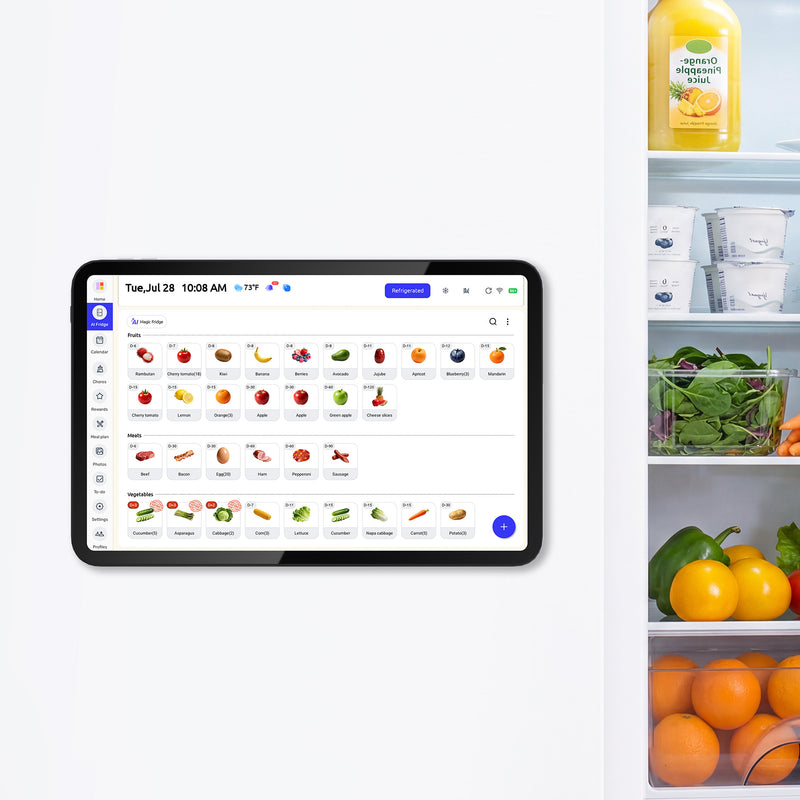
This is why many families outgrow a basic personal calendar. A household calendar has to carry context. A kitchen command center can hold schedules, meals, chores, reminders, and to-do lists in one visible place, which turns the calendar into a working home system instead of a private planning file kitchen command center.

They Can Make Planning Feel Like One Person’s Job
A regular digital calendar often lives on one parent’s cell phone. Everyone benefits from the planning, but only one person can see the full map.
That is where tension starts. A child asks what is for dinner. A partner asks who is driving to practice. A caregiver misses the note about early dismissal. None of these are major failures on their own, but they pile up by Thursday night.
A shared family calendar helps because it makes planning visible to the household, not just the person doing the planning. When children can see meals, chores, events, and reminders in one place, they can learn to check the system before asking the same question again planning visible.
They Do Not Always Match the Mood of Home
This part matters more than people admit. A family calendar sits near backpacks, coffee mugs, lunch boxes, art projects, and grocery lists. If it looks and feels like an office tool, people may treat it like one: useful, but not inviting.
“Home tech” does not have to mean decorative or expensive. It means the system belongs in the room. It is easy to glance at while pouring cereal. It is clear enough for a 9-year-old to understand. It helps a babysitter know the plan without scrolling through private messages.
The goal is not to make family life look perfect. The goal is to make the next ordinary step easier to see.
What Makes a Calendar Feel Like Home Tech
It Lives Where Family Questions Happen
The best family calendar is usually not hidden in an app folder. It belongs in a high-traffic spot: the kitchen wall, fridge, entryway, mudroom, or a tablet near backpacks and shoes.
That placement matters because timing is everything. Mornings, meals, homework, and bedtime are when families ask the most practical questions. A visible calendar in those zones can answer “Do I need my cleats?” or “Who is picking me up?” before the parent has to stop what they are doing.
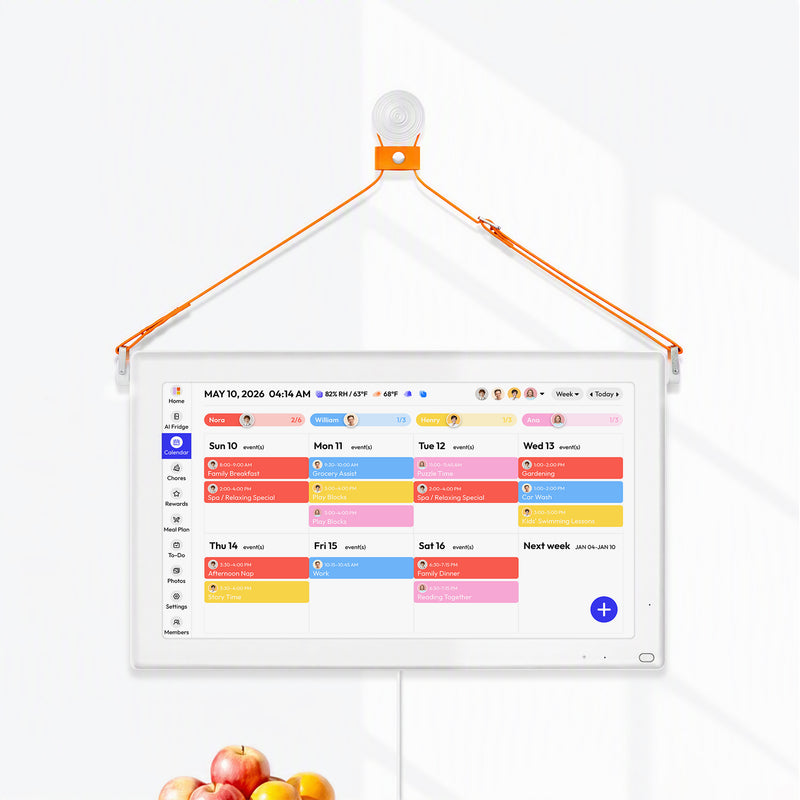
For a household that wants that information on the wall, a large touch display designed for wall mounting, such as the Everblog 21.5" Digital Calendar, can work as a shared kitchen view for schedules, chores, and meal plans instead of leaving those details buried on one phone.

A shared wall or digital calendar can create one visible source of truth, which helps reduce missed appointments, meal confusion, and last-minute surprises single visible source. That does not mean every detail belongs on the wall. It means the details that affect the household should be easy to find.
It Uses Visual Cues, Not Long Instructions
A family calendar should be skimmable. Color coding by person, simple icons, checkboxes, and short labels work better than long notes.
For example, a blue dot could mean one child, green could mean another, and red could mean “needs an adult.” Dinner can be written as “pasta + salad,” not a full recipe. A chore can say “trash out” instead of “remember to collect upstairs bathroom trash before pickup day.”
This is especially helpful for children. Visible, repeated information is often easier for kids to understand than a long spoken explanation, especially during rushed parts of the day visible repeated information. For some households, this also reduces the emotional load of repeating the same reminder four times.
It Connects Schedules to Meals and Chores
A work calendar asks, “When is the meeting?” A family calendar has to ask, “What does this change about dinner, driving, homework, and bedtime?”
If there is a 6:30 PM baseball game, dinner may need to be sandwiches at 5:15 PM. If a parent has a late work call, the chore chart may need to shift. If Thursday is trash night, someone needs to know before pajamas.
That is why the strongest family systems often include three lanes: calendar items, meal information, and chores or home tasks three main lanes. This is not about adding more structure for its own sake. It is about putting related decisions next to each other.
Choosing Between Paper, Shared Apps, and Wall Displays
Paper Works When Touch Matters
Paper calendars and whiteboards still work well for many families. They are tactile, cheap, easy to glance at, and friendly for younger kids who like stickers, magnets, or checkmarks.
A paper system can be especially good for a family with small children. A 6-year-old may not need app access, but they can move a magnet from “to do” to “done.” A child can see that Friday is pizza night or that library books go back on Wednesday.
The trade-off is maintenance. Paper gets messy when plans change. If practice moves from 4:00 PM to 5:30 PM, someone has to update the board. If the same update also needs to reach a co-parent, grandparent, or babysitter, the paper calendar alone may not be enough.
Shared Apps Work When Plans Change Often
A shared digital calendar is helpful when your family schedule changes during the day. If a parent’s meeting runs late, a coach cancels practice, or a child gets sick at school, everyone with access can see the update.
Digital systems are also useful when planning happens away from home. A parent can add a dentist appointment while standing at the front desk. Another caregiver can check pickup time without calling. Some digital kitchen calendars also connect meals, grocery lists, chore charts, reminders, and phones or tablets real-time syncing.
The risk is that an app can become another place to ignore. If notifications are too frequent, people tune them out. If the setup requires too many taps, no one uses it. For a family app to work, the main view should answer the top questions fast: what is happening today, what are we eating, who is responsible, and what changed?
Wall Displays Work When Visibility Is the Missing Piece
A dedicated wall display or home hub can bridge the gap between paper and phone-based planning. It gives the family a shared screen in a shared space, while still allowing live updates from devices.
This can be useful in households with older kids, multiple caregivers, split schedules, or a lot of after-school movement. It can also help when one parent is tired of being the only person who knows the plan.
Cost is the obvious trade-off. Family planning tools range from free shared calendars to dedicated wall screens that cost about $169.99 to $599 wall screens. A paid device may be worth it if visibility is the real problem. It is probably not worth it if the family has not agreed on what information belongs there.

How a Family Calendar Reduces Daily Friction
It Gives Children a Place to Look First
A good family calendar does not just help parents. It teaches children where household information lives.
That does not mean handing a child the whole system at once. Start with one age-appropriate job. A younger child can check whether it is library day. An older child can watch for trash night, pack sports gear, or help update the meal note after plans change.
This works best when the responsibility is specific. “Help with the calendar” is too vague. “Check the board after breakfast and put your folder by the door on music day” is clear. Over time, the calendar becomes part of how the family communicates.
It Lowers the Number of Repeat Questions
Many repeat questions happen because the answer is hidden. “What’s for dinner?” “Do I have practice?” “Is Dad picking me up?” “When is the birthday party?”
When the answer is visible, the parent can say, “Check the calendar,” without sounding dismissive. The child learns the route to the answer.
Shared calendars can reduce repeated questions by teaching children and adults to check the same place for dinner, pickup, events, and chores reduce repeated questions. The practical benefit is not silence. It is fewer interruptions that require one parent to reload the whole week in their head.
It Makes Changes Less Personal
Schedule changes can feel emotional, especially in busy households or co-parenting situations. A late pickup, swapped weekend, or missed school event may feel like a personal failure even when the cause is weather, illness, work, or traffic.
A shared calendar cannot remove every conflict. It can create a clearer record of what changed and when. Written updates through texts or shared calendars are often recommended because they confirm schedule changes and reduce misunderstandings written updates.
For separated or divorced parents, this can matter even more. A March 10, 2026 family law article notes that schedule tension often reflects broader family-transition stress, not the calendar itself schedule tension. The calendar is not a cure-all, but it can make communication more direct and less dependent on memory.
Setting Up a Calendar That Fits Your Home
Start With the Room, Not the App
Before choosing a tool, watch where confusion happens. Is it at the kitchen counter before school? Near the door after practice? At bedtime when someone remembers a form? That location tells you where the family calendar should live.
For many homes, the kitchen works because it is already part of morning routines, meals, homework, and evening cleanup. A calendar near the fridge can catch the parent making lunches, the child grabbing water, and the caregiver checking pickup details.
If the entryway is where the chaos happens, put the command center there instead. The best location is not the prettiest wall. It is the place where people naturally pause with keys, shoes, backpacks, or snacks.
Decide What Deserves to Be Visible
Not every detail belongs on a shared display. A family calendar should protect attention, not clutter it.
Good visible items include school events, practices, appointments, meal plans, trash night, chore rotation, travel, early dismissal, and caregiver pickups. Less useful items include every minor adult task, private work meetings, or vague reminders that only one person understands.
A simple rule helps: if the information changes what someone eats, wears, brings, does, or expects, it probably belongs on the family calendar. If it only matters to one adult and does not affect the household, keep it private.
Use Simple Categories
Start with three to five categories. More than that can make the calendar hard to read.
A practical setup might use these:
- School and activities
- Meals
- Chores and home tasks
- Appointments
- Pickup and caregiver notes
Color can help, but it should not carry all the meaning. If a grandparent, babysitter, or color-blind family member cannot understand the calendar without the color key, add short labels too.
Common Trade-Offs Families Should Consider
Visibility vs. Flexibility
Paper and wall boards are highly visible. Phones and apps are flexible. A wall display can do both, but it costs more and may require setup.
If your biggest problem is “No one sees the plan,” choose visibility first. If your biggest problem is “Plans change after everyone leaves the house,” choose live syncing first. If both are true, a shared digital calendar shown on a kitchen screen may be the better fit.
The broader market reflects this mix of old and new habits. The desk and wall calendar market is projected to reach $2.72 billion in 2025, while the smart kitchen market is projected to grow from $21.8 billion in 2025 to $37.2 billion by 2030 calendar market. Families are not simply abandoning physical planning. They are looking for systems that combine presence and updates.

Detail vs. Calm
A family calendar can become too full. When everything is urgent, nothing is easy to read.
Keep the main view calm. Use the calendar for the next 7 to 14 days, not every possible obligation. Put deeper details in the app note, school email, or shared document if needed.
For example, the wall calendar can say “Field trip Friday: lunch + sneakers.” The full packing list can stay in the school message. The visible calendar should cue the action, not hold every sentence.
Parent Control vs. Shared Ownership
At first, one adult may need to build the system. That is normal. But if the calendar stays fully parent-owned, it may not solve the family problem.
Give each person a small role. One child checks the lunch menu. Another checks sports gear. A partner updates pickup changes. A caregiver confirms appointments. These small habits turn the calendar from a display into a shared routine.
This is also where tone matters. The calendar should not become a wall of corrections. It should show what is happening and what needs doing, without turning the kitchen into a performance review.
Practical Next Steps
A family calendar that feels like home tech is not just a prettier calendar. It is a shared household tool that makes the next step visible: dinner, pickup, chores, school needs, and schedule changes.
Use this short checklist to test your setup before buying anything new:
- Pick one high-traffic spot where family questions already happen.
- Choose three main lanes: schedule, meals, and chores or home tasks.
- Add only the items that affect what someone eats, wears, brings, does, or expects.
- Use color coding or icons, but keep short text labels for clarity.
- Give each child one age-appropriate planning responsibility.
- Review the calendar at one natural time each day, such as breakfast or after dinner.
- After two weeks, remove anything people ignore and add only what prevents real confusion.
The best family calendar is the one your household will actually look at. If it sits where life happens, uses plain labels, and connects time with meals and responsibilities, it starts to feel less like office tech and more like part of the home.


