




The easiest way to reduce food waste at home is to put meals, groceries, leftovers, and food-related chores in one shared place that everyone can see. A simple family calendar or kitchen command center helps stop duplicate buying, forgotten leftovers, and last-minute meals that leave good food behind.
Ever open the fridge at 6:15 PM and find three half-used containers, two soft vegetables, and no clear dinner plan? The average U.S. household throws out about one in four bags of groceries, worth about $1,866 a year, so even small planning changes can matter. Here is how to build a shared planning hub that helps your household use what you already bought before it goes bad.
Why Food Waste Happens When Planning Is Scattered
Food waste at home is rarely caused by one big mistake. It usually comes from small missed handoffs: someone buys more lettuce because they did not know there was already a head in the crisper, leftovers get pushed behind milk, or nobody remembers that soccer practice means dinner needs to be fast.

The scale is bigger than most families expect. Estimates from a government agency, shared by a university extension service, say that 30-40% of U.S. food is thrown out, and common household causes include buying too much, cooking too much, storing food poorly, and discarding leftovers too soon. Those are not character flaws. They are planning gaps.
A shared planning hub works because it makes food decisions visible before money is spent and before food spoils. Instead of one person carrying the whole mental list, the household can see what needs to be eaten, what needs to be bought, who is cooking, and which nights need an easier plan.
What Usually Breaks
Most family food systems break in four places:
- The grocery list is separate from the meal plan.
- The meal plan ignores the real calendar.
- Leftovers have no owner or deadline.
- Cleanup and storage chores are treated as “whoever notices.”
A better hub connects those pieces. Dinner plans should sit next to practices, late meetings, school events, and weekend travel. The grocery list should come from the plan, not from memory. Leftovers should have a visible next use, such as “Tuesday lunch” or “Thursday fried rice.”
What a Shared Planning Hub Should Track
A useful hub does not need to be fancy. It can be a digital family calendar, a whiteboard on the fridge, a paper planner, or a mix of a shared app and a visible kitchen board. The important part is that the system has one trusted place for food decisions.
Start with four planning surfaces: a weekly meal calendar, a shared grocery list, an “eat first” list, and a short food chore list. A sustainability nonprofit recommends reducing surplus food first through meal planning, smart shopping, date-label understanding, storage, and an “eat first” fridge setup before turning to compost or other backup options.

Your hub should answer these questions at a glance:
- What meals are planned for the next 3-5 days?
- Which nights are too busy for cooking?
- What ingredients do we already have?
- What leftovers need to be used first?
- Who is shopping, cooking, packing lunches, or freezing extras?
- What food needs to be prepped before it gets forgotten?
The Four Core Pieces
The meal calendar keeps dinner realistic. A family with two working adults, a school concert, and a late soccer practice does not need five from-scratch dinners. It may need two cooked meals, one leftover night, one freezer meal, and one flexible “eggs, sandwiches, or soup” night.
The grocery list keeps shopping tied to the plan. A university extension service recommends checking kitchen inventory, making a list, listing quantities, accounting for meals eaten out, and avoiding bulk deals that exceed what the household can use. That means “apples, 6” is better than “fruit,” and “yogurt for 4 lunches” is better than grabbing the largest tub because it looks cheaper.
The “eat first” list is the part most households skip. Put it where people actually look: on the fridge door, inside a shared notes app, or at the top of the digital meal plan. Examples: “Use spinach by Wednesday,” “leftover chicken for wraps,” “cut melon for lunches,” “freeze soup by Friday.”
The food chore list closes the loop. Food waste prevention includes small jobs like washing berries, moving meat to the freezer, packing leftovers, wiping produce drawers, and checking lunch containers. If those jobs are invisible, they usually fall to one person or do not happen.
Set Up the Hub Without Making It a Big Project
You can set up a working version in about 30 minutes. Do not start by reorganizing the whole pantry. Start by choosing where the family will look every day.
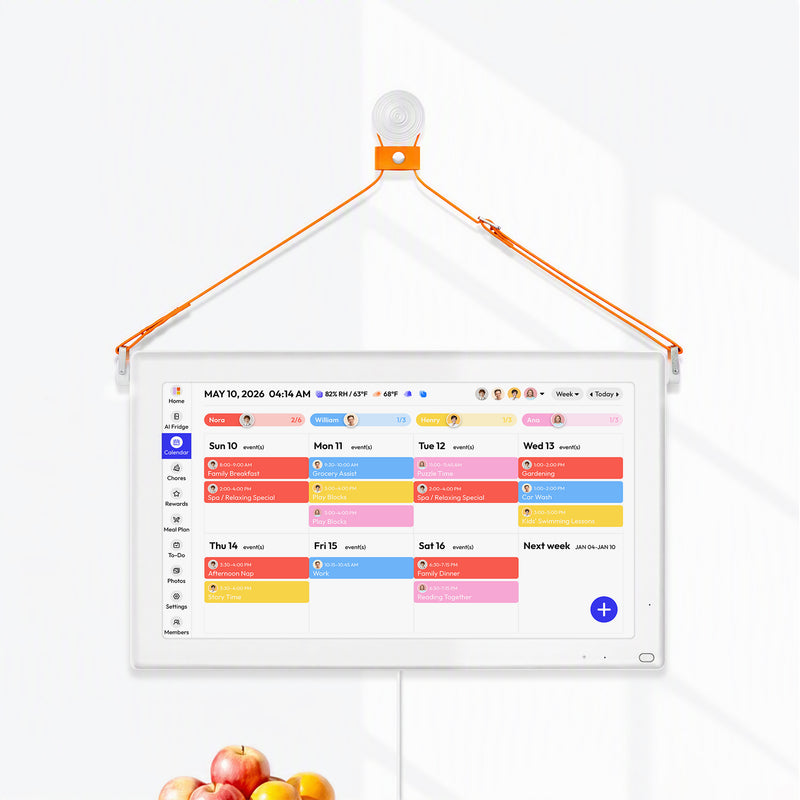
A digital calendar is helpful for shared schedules because everyone can see changes from a cell phone. A kitchen whiteboard is helpful because it catches people when they are standing in front of the fridge. Many households do best with both: the digital calendar holds the schedule, and the fridge board holds the food that needs attention.
Pick One Home Base
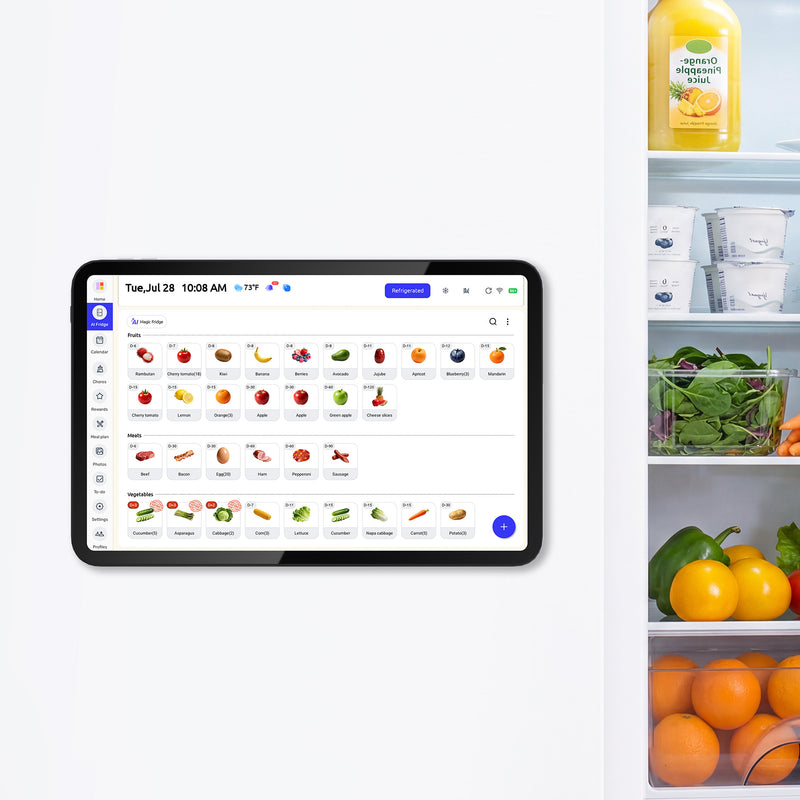
Choose one main home base for decisions. If adults already use a shared digital calendar, add meals there. If the household lives out of the kitchen, use a fridge board. If kids need to participate, make at least part of the system visible at their eye level. A fridge-door option such as the Everblog 13.4" fridge calendar can work when the household wants the meal plan, grocery list, and freshness reminders visible where food decisions happen.
Keep the categories simple:
Hub Area |
What It Tracks |
Example |
Calendar |
Meal plan and busy nights |
“Tuesday: tacos before 5:30 PM practice” |
Grocery list |
Needed items and quantities |
“Tortillas, 1 pack; apples, 6” |
Eat first |
Food to use soon |
“Spinach, cooked rice, berries” |
Leftovers |
Owner and next use |
“Soup: Wednesday lunch or freeze” |
Chores |
Food jobs |
“Wash grapes, label freezer bags, clean crisper” |
This is enough. More tabs, colors, and categories often create upkeep work without making dinner easier.
Use Plain Labels
Labels help only if they are easy to read and quick to make. For freezer food, a food-waste prevention resource recommends labeling with owner, contents, and date, or keeping a list on the freezer door or lid. For a family, that might look like “Maya - chili - 5/28” or “Chicken stock - 2 cups - 5/30.”
For leftovers in the fridge, use a simpler version: “eat by Thursday” or “lunches.” You do not need perfect tracking. You need just enough information that someone else can safely and confidently use the food.
Build a Weekly Rhythm That Matches Real Life
The weekly rhythm matters more than the tool. A planning hub that gets updated once and then ignored will not reduce waste for long. The goal is a short repeatable reset, not a perfect menu.
One practical example from a household routine uses Sunday meal planning for 3-4 meals, with the rest covered by leftovers, spontaneous meals, or eating out; the plan takes about 10-15 minutes and can repeat meals on a 3-week cycle in a shared calendar platform. That is a realistic model for busy families because it leaves room for uneven weeks.

The 15-Minute Weekly Reset
Try this once a week, ideally before grocery shopping:
- Check the calendar for late nights, school events, work travel, and appointments.
- Look in the fridge, freezer, and pantry before writing the grocery list.
- Choose 3-4 planned meals, not seven.
- Mark one leftover night.
- Put 3-5 “eat first” items on the hub.
- Assign one person to shop and one person to handle leftovers.
- Move anything unlikely to be eaten into the freezer.
This reset works because it starts with reality. If Wednesday is packed, Wednesday should not depend on chopping vegetables at 6:00 PM. If you already have cooked rice, eggs, and vegetables, fried rice or rice bowls may be a better plan than buying ingredients for a brand-new recipe.
Plan for the Nights That Usually Fail
Most households have predictable failure points. Monday may be too tired. Thursday may be leftover pileup day. Sunday may be when produce from the last grocery run starts looking sad.
Use the hub to name those patterns. For example:
- Monday: “easy dinner from freezer”
- Tuesday: “cook double protein”
- Wednesday: “leftovers for lunch”
- Thursday: “use soft produce in soup, omelets, or pasta”
- Friday: “no new groceries until eat-first list is checked”
This keeps the system from depending on motivation. The plan carries the reminder before the food disappears to the back of the fridge.
Make Leftovers Visible, Assigned, and Easy to Use
Leftovers reduce waste only when someone knows they exist and has a plan for them. A container with no label and no next use is not really a meal. It is a future fridge cleanout.
Household food waste often comes from discarding leftovers and cooking too much, and a university extension service lists both as common reasons food gets thrown away at home. The fix is not to cook tiny portions every night. The fix is to give extra food a job before it cools down.
Use the “Next Use” Rule
When dinner is over, write the next use before the food goes into the fridge:
- “Chicken -> Thursday quesadillas”
- “Rice -> lunch bowls”
- “Roasted vegetables -> omelet”
- “Pasta -> school lunch”
- “Soup -> freeze 2 portions”
This takes less than a minute. It also makes the next meal easier because part of the decision is already made.
For kids and teens, use clear zones instead of long instructions. A fridge shelf labeled “Lunches” or “Eat First” is easier to follow than a reminder shouted during the morning rush. A food-waste prevention resource suggests setting up a shared shelf so people know which food is available to use; the same idea works well for families when snacks, lunch items, or leftovers need to be fair game.

Know What Date Labels Mean
Date labels confuse many households, and confusion can lead to good food being tossed too early. A university extension service explains that most “sell by,” “best by,” and “use by” labels are about food quality rather than safety, with infant formula as an important exception. Your hub can help by tracking when food was opened or cooked, which is often more useful than staring at a package date.
Keep the wording simple. Use “opened Monday,” “cook by Wednesday,” or “freeze today.” If anyone in the home is pregnant, immunocompromised, elderly, or very young, be more cautious and follow food safety guidance for higher-risk foods.
Connect Food Planning With Chores
Meal planning and chore planning belong together because food has to be handled, not just bought. Groceries need to be put away correctly. Produce may need washing or trimming. Leftovers need cooling, packing, labeling, and freezing. Trash, recycling, and compost need a clear place in the routine.
A household routine works better when cleaning and meal tasks are small and regular. One home example shifted away from weekend deep cleaning and used daily habits like keeping dishes out of the sink, putting items away continually, and doing a 10-minute pickup before bed. That same idea applies to food waste: short daily resets beat a painful fridge rescue every two weeks.
Assign Roles, Not Blame
Use roles that rotate or fit people’s real capacity. The point is to make work visible, not to create a scoreboard.
Useful food roles include:
- Inventory checker: looks through the fridge and pantry before shopping.
- List keeper: updates the shared grocery list with quantities.
- Leftover lead: labels leftovers and adds them to the eat-first list.
- Freezer lead: freezes food that will not be eaten in time.
- Lunch packer: uses planned leftovers for school or work lunches.
- Compost or trash checker: notices what keeps getting thrown away.
Kids can help with simple jobs. A younger child can move yogurt cups to the front of the fridge. An older child can pack fruit that needs to be eaten first. A teen can add “out of milk” to the shared grocery list instead of mentioning it when no adult can write it down.
Review What Keeps Getting Tossed
Do a quick waste check once a week. You do not need to weigh scraps or keep a spreadsheet unless that motivates your household. Just ask, “What did we throw out, and why?”
If the answer is “bagged salad again,” buy less or plan salad earlier in the week. If it is “leftover pasta,” cook a smaller amount or pack lunches before putting dinner away. If it is “fruit,” move it to a clear bowl or cut it up sooner. A state environmental agency’s food waste resources frame prevention as part of a broader effort to reduce waste and greenhouse gases, with a state goal to cut food waste by 50% by 2030, but the household version starts with noticing one repeat pattern.
Use Backup Plans Before Food Becomes Waste
Even a good planning hub will not catch everything. Plans change. Kids reject meals they liked last month. Someone works late. The goal is not zero mistakes. The goal is to have a next step before food goes into the trash.
The food recovery order is simple: prevent extra food first, feed people next, then look for other responsible options for what remains. A sustainability nonprofit describes a similar approach: reduce surplus first, then share usable food when appropriate, then consider animal feed, reuse, or composting for unavoidable scraps.
Build a Small Rescue Menu
A rescue menu is a short list of meals that can absorb odds and ends. Keep it on the hub so nobody has to invent dinner from scratch.

Good rescue meals include:
- Omelets or scrambled eggs with vegetables
- Fried rice with leftover protein
- Soup with soft vegetables and broth
- Quesadillas with cooked meat, beans, or greens
- Pasta with roasted vegetables
- Sheet-pan hash with potatoes and leftovers
- Smoothies with ripe fruit
This is where a shared planning hub earns its space. “Use spinach” becomes “spinach omelets Wednesday.” “Cooked chicken” becomes “lunch wraps.” “Too many carrots” becomes “soup before the weekend.”
Share or Freeze Earlier
If your household cannot use something in time, make the decision early. Offer unopened extras to a neighbor, a local neighborhood sharing group, or a friend who can use them. For prepared meals, use your own judgment and local food safety rules.
Community food recovery programs show how much prepared food can be redirected when there is a system. A Kansas City community food recovery organization expected to redirect over 150,000 lb of food in 2024, equal to 125,000 meals. A family kitchen is much smaller, but the lesson is the same: food moves when there is a clear process and a person responsible for the handoff.
FAQ
Q: Do we need a digital family calendar, or is a fridge board enough?
A: A fridge board is enough if everyone sees it daily and someone updates it. A digital family calendar is better when schedules change during the day, adults shop from different places, or teens need access from their cell phones. Many families use both: the digital calendar for events and meals, the fridge board for leftovers and eat-first foods.
Q: How many meals should we plan at once?
A: Plan 3-4 meals for the week, then leave space for leftovers, simple backup meals, or eating out. Planning seven full dinners often looks organized but can create waste when real life changes. A shorter plan is easier to keep and easier to adjust.
Q: What if one person still does most of the planning?
A: Start by sharing visibility before sharing every task. Put the grocery list, eat-first foods, and meal plan where others can see them. Then assign small roles, such as adding empty items to the list, packing leftovers, or choosing one dinner from ingredients already in the house.
Practical Next Steps
You do not need to rebuild your kitchen system this week. Pick one visible hub, connect it to your real calendar, and use it to save the food most likely to be forgotten.
Use this checklist for the next seven days:
- Choose one shared place for food planning: a digital calendar, fridge board, shared notes app, or kitchen command center.
- Add the next 3-4 dinners, including one leftover night and one easy backup meal.
- Check the fridge, freezer, and pantry before shopping.
- Write grocery quantities, not just item names.
- Create an “eat first” list with 3-5 foods that need attention.
- Label leftovers with the next use, such as “lunch,” “freeze,” or “Thursday dinner.”
- Spend 5 minutes at the end of the week asking what got tossed and what should change.
The best shared planning hub is the one your household will actually check. Keep it visible, keep it short, and let it answer the daily question that prevents the most waste: “What do we already have, and when are we going to use it?”


