






The calmest family command center uses one shared digital calendar and one visible home spot for the few things the household needs to act on this week.
If your days feel stitched together from texts, sticky notes, and half-remembered pickups, you do not need a louder system. You need one that keeps the real plan in one place and leaves the noise out. That kind of setup makes a busy home feel less reactive, and the rest of this article shows how to build it without turning your wall into a bulletin board.
Why Calm Beats Constant Alerts
A family planning setup works best when it treats the digital calendar as the master schedule and the home board as a quick-reading action zone. Appointments, school events, sports, trips, and long-range dates belong in the calendar; today’s papers, this week’s meals, current chores, and one grocery list belong where the family can actually see them.

That matters because family logistics are often spread across phones, inboxes, memory, and paper piles. A calm family planning system is designed to reduce that scatter. One overview citing a study of 3,000 U.S. parents reported mothers handling 71% of household mental-load tasks, which is a useful reminder that the problem is not only time. It is also the strain of remembering everything for everyone.
A calm system lowers that strain by making the plan visible. It also makes it easier for the rest of the household to help, because they can see what is happening without asking one person to translate the week every time.
What the Best Low-Noise System Includes
One shared digital calendar
The calendar should hold real commitments only. Think pickups, games, appointments, school deadlines, travel, guests, and major schedule changes. If a reminder does not affect the family’s day, it does not need to live there.
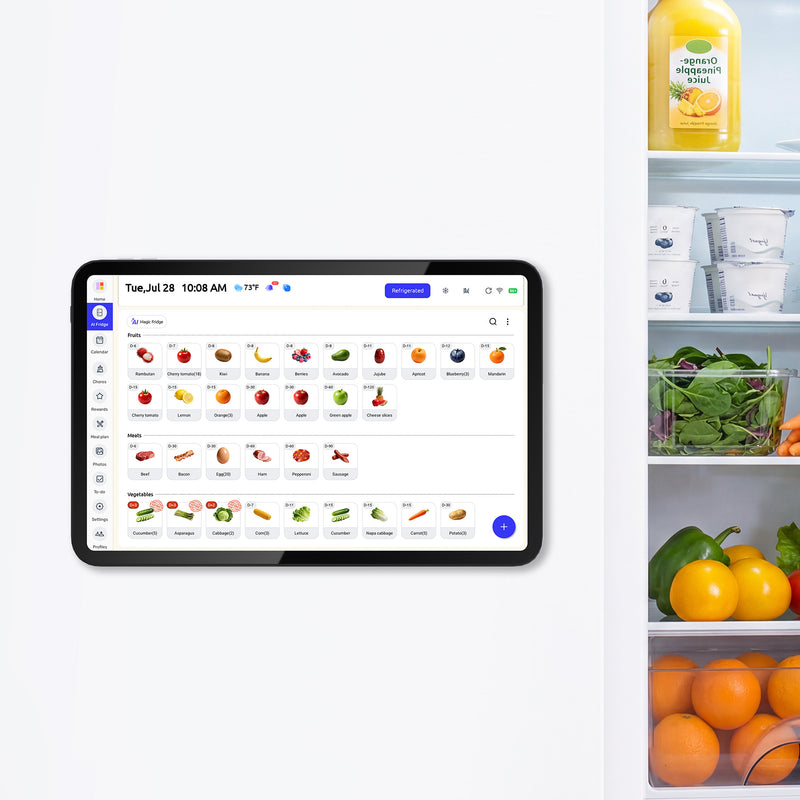
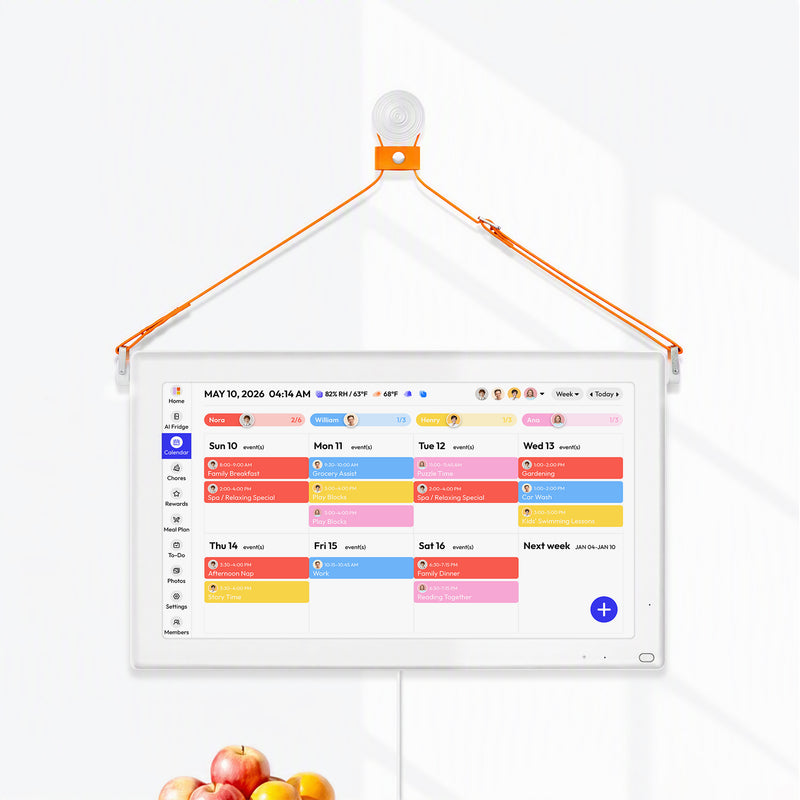
The point is not to track every thought. The point is to keep the schedule stable enough that everyone can trust it. A family that checks one shared calendar before making plans will usually have fewer double-bookings and fewer “I thought you were handling that” moments. For households that want the calendar to live on the wall, a large touch display such as the Everblog 21.5" Digital Calendar can keep appointments, chores, and household events visible on one screen.
One visible action zone
The visible part of the system should be small and easy to scan. A wall calendar, a whiteboard, a corkboard, a file folder, or a narrow shelf with baskets can all work. Simple tools like labels, clips, baskets, and hooks show up again and again in family command center ideas because they make sorting easy at a glance.

If the household has multiple children, give each person a labeled folder or bin so papers do not blur together. Keep the home station focused on the current week only: the meal plan, the grocery list, current chores, and one place for papers that need action.
What the station should answer
A good setup should answer five everyday questions without extra talking: what is happening, what needs action, what dinner requires, who owns the next step, and what must leave the house tomorrow.
That is the real test. If the board or screen cannot answer those five questions fast, it is carrying too much. Calm does not come from more surfaces. It comes from fewer, clearer ones.
Where to Put It So People Actually Use It
The best location is usually the path the household already crosses on the way in or out. That might be the kitchen wall, a mudroom shelf, the breakfast area, or the route from the garage to the counter. A visible plan fails when it is tucked into a corner nobody checks unless they are already looking for trouble.

Placement details matter more than people expect. If you are mounting a screen, adult eye level is usually easier to read than a low shelf, and one source places the center around 57 to 60 inches from the floor. Also check glare, outlet access, mounting stability, and whether the spot sits too close to steam, grease, or sink splash.
There is also a simple trade-off to make. A tabletop display is easier to move and may work well in a small apartment or rental. A wall-mounted setup clears counter space and is often easier for the whole family to read at a glance. Pick the one that fits the traffic pattern in your home, not the one that looks neat in a photo.
How to Keep Chores and Meals Simple
Give each person one repeating job
One of the cleanest chore systems is very simple: one main weekly job per child, then rotate it the next week. In one example, the recurring jobs were emptying the dishwasher, feeding and watering pets, and taking out the trash. Large red refrigerator magnets showed each child’s name, while black magnets showed the assigned chore.
That kind of system works because it avoids daily reinvention. The family does not need to negotiate a new list every morning. It also keeps chores in the realm of shared household work instead of turning them into a constant bargaining session about allowance. Extra paid jobs can still exist, but they should stay separate from the basic responsibility list.
A short shared work window helps too. One family routine used about 10 minutes before school and 10 minutes after dinner so everyone touched the same system at the same time. That is long enough to keep the house moving and short enough that kids do not tune out before it starts.
Keep dinner planning small
Meal planning does not need to be a weekly production. A small Sunday reset can cover three or four dinners in about 10 to 15 minutes, with leftovers, repeat meals, and one flexible night built in. That leaves room for real life, which is usually the part that blows up the plan.
This is also where the command center earns its keep. One meal list and one grocery list beat three people remembering three different versions of Tuesday. If lunch prep is a recurring pain point, narrow it with fixed categories, like one protein, two fruit or vegetable servings, and one easy snack item. The less the family has to decide at 7:00 AM, the calmer the morning feels.
The Weekly Rhythm That Keeps It Calm
A calm household system needs short, ordinary check-ins, not a long weekly reset that nobody wants to repeat. One practical rhythm is a 1- to 2-minute morning check, a 3- to 5-minute after-school drop, a 3-minute evening check, and a 10- to 15-minute Sunday reset. That is enough to keep the calendar current, update rides and meals, and clear papers before they pile up.

The other half of maintenance is subtraction. If nobody checks a section, move it out. If a basket stays empty, remove it. If a chore note is too detailed to remember at a glance, simplify it. A good system should feel lighter after a week of use, not heavier.
Paper clutter deserves special care because paper can look urgent even when it is not. Use the calendar for due dates and timing, then let the paper area hold only the items that truly need action. A folder, clip, or basket is enough if it keeps forms, permission slips, and school notes from drifting into every flat surface.
Practical Next Steps
- Pick one shared digital calendar and make it the master schedule.
- Place one visible command center in the kitchen, mudroom, or garage entry.
- Keep only this week’s meals, current chores, one grocery list, and active papers on display.
- Give each person one main weekly chore and rotate it every seven days.
- Run a short Sunday reset and a quick morning and evening check.
- Remove any board section, basket, or note that nobody uses after two weeks.
The best family command center is not the busiest one. It is the one that gives a tired household one clear place to look, one clear place to leave things, and one clear next step. If it helps your family move through the week with fewer pings and less guessing, it is doing exactly what it should.


