
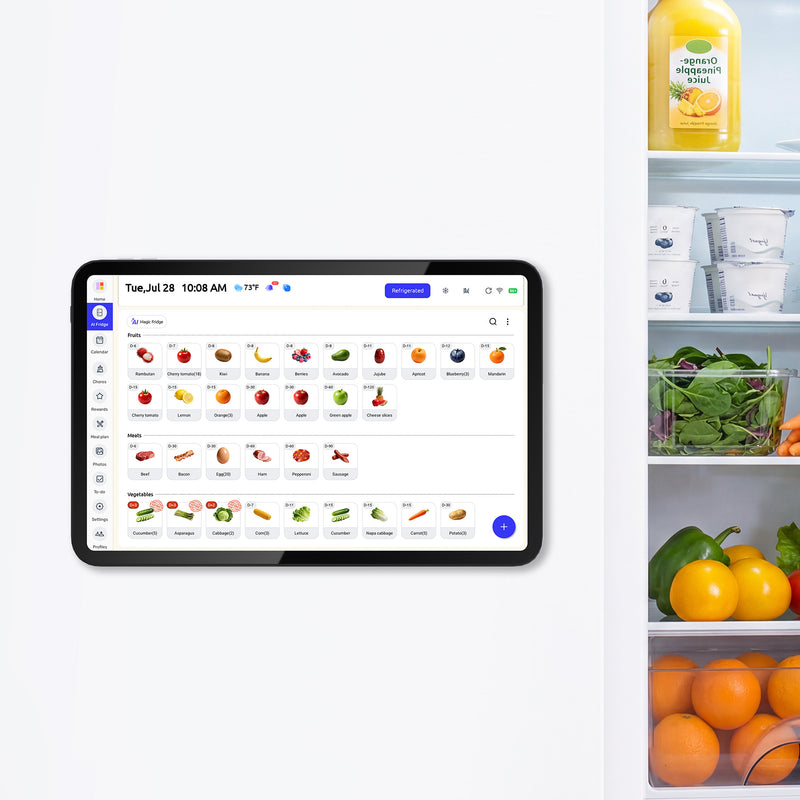

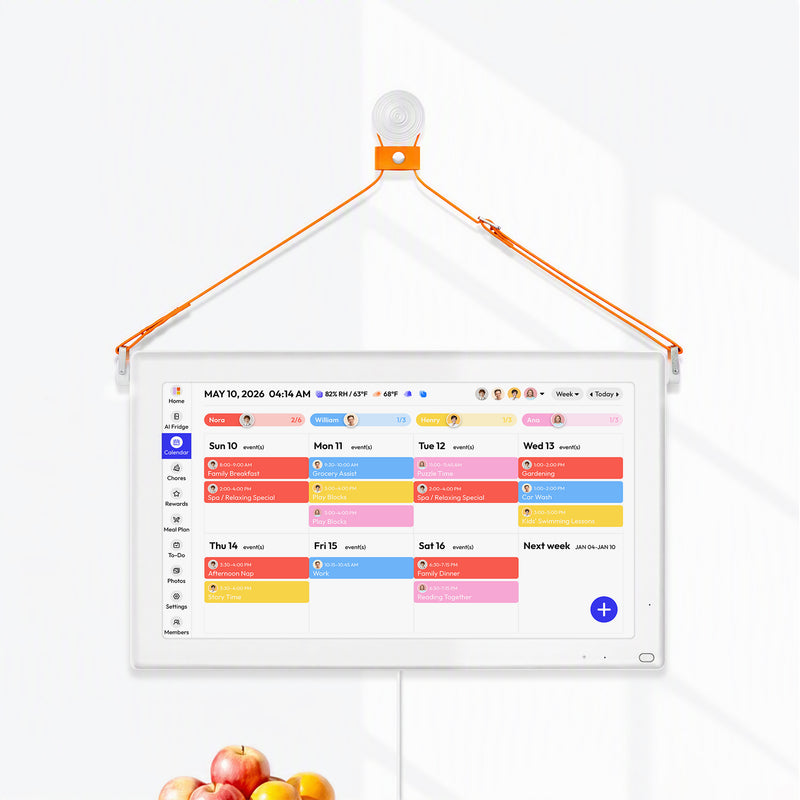



A touchscreen calendar is a shared digital calendar shown on a touch display that stays in a central spot at home. In plain English, it turns your family schedule into something everyone can see, tap, and update without digging through separate phones.
What a touchscreen calendar actually is
A touchscreen calendar is usually a wall-mounted or counter-mounted screen that shows a shared family schedule in day, week, or month view. You might also hear it called a digital wall calendar, family planning hub, smart family calendar, or family command center.
The basic idea is simple: instead of one parent mentally carrying school pickups, practice times, dinner plans, chore reminders, and doctor visits, the information lives on one visible screen. Anyone walking by can check what is happening today, what is coming up next, and who is responsible for what.
That visibility is the real point. A touchscreen calendar is not just a bigger phone calendar. It is a shared household display that keeps plans in sight during normal family traffic: breakfast, backpack checks, after-school chaos, and the “what’s for dinner?” hour. Dedicated options such as the Everblog 21.5" Digital Calendar fit this category, using a large touch display designed for wall mounting to help families view plans, tasks, chores, and events on one screen.

How it works
Most touchscreen calendars have four moving parts:
- The display
- The calendar software
- The accounts it connects to
- The sharing rules behind those accounts
The display works like a large tablet. You tap an event to open it, swipe to move between dates, or check off tasks directly on the screen. The touch layer is just the input method. The more important part is what data the screen is showing.
In many homes, the actual calendar data still lives in services the family already uses, such as a calendar platform, a cloud calendar service, or another calendar platform. The touchscreen device signs in to those services over Wi-Fi and pulls the events into one view. That means a soccer practice added on a parent’s phone can also appear on the kitchen screen a short time later.

Sharing permissions matter more than many families expect. In a calendar platform, the calendar owner can give anything from free/busy visibility to full control. In a web-based calendar platform, you can also choose view or edit access, and published ICS calendars are read-only. That difference affects real life: a teen may be able to see the schedule but not change it, while two parents may both have edit rights.
If your household uses devices from a company, a cloud calendar service can keep calendar changes updated across devices and show collaborator edits in real time. But there is an important limit for mixed-device families: private calendar sharing on that platform may require invitees to have an account from that company and use that service. In practice, that can matter if one parent uses devices from one company and another relies mostly on tools from another company.
Some touchscreen calendars do more than show events. They may also include chores, meal plans, grocery lists, or reminders. Those extras can be useful, but they are not always part of your main calendar account. Often, the device is combining true calendar sync with separate built-in planning tools.
What it looks like in daily family life
In a busy home, a touchscreen calendar usually works less like a gadget and more like a shared dashboard.
A normal weekday example might look like this:
Mom adds an early staff meeting from her phone. Dad sees it later on the wall screen and realizes he needs to handle school drop-off. A child’s dentist visit is already there in blue. Soccer practice is in green. Dinner is written on the same screen, and a chore list shows that the trash still needs to go out before 7:00 PM.

Nothing about that is especially high-tech. The value comes from putting the information where the household can actually use it.
This is why many families prefer a dedicated touchscreen calendar over a regular tablet that gets moved from room to room. A fixed screen stays visible. It does not disappear into a backpack, end up on a couch cushion, or go dead because no one charged it.
What matters more than the marketing
If you are trying to understand or choose a touchscreen calendar, a few details matter more than flashy feature lists.
Sync compatibility
First, check which calendar systems it can connect to. A screen is only helpful if it can show the calendars your family already uses. For many households, that means a calendar platform, a cloud calendar service, another calendar platform, or some combination of them.
Edit rights versus read-only feeds
Not every connected calendar can be edited from every device. A shared calendar with full permissions behaves differently from a subscribed calendar feed. If a school or sports organization sends an ICS subscription, it may show up on the screen but still behave as read-only, which is how a web-based calendar platform handles ICS publishing and subscription links.
Readability across the room
A family screen is meant to be glanced at, not studied up close. That means layout matters more than raw specs. Clear week views, strong color coding, and enough screen space to read names and times from a few feet away are usually more important than advanced settings most families never touch.
Shared planning beyond events
Some families want only scheduling. Others want chores, meal planning, and household lists on the same screen. That is not automatically better. It depends on whether your family prefers one combined system or wants the calendar to stay simple.
A good rule is to separate “must-haves” from “nice extras.” If your main pain point is missed pickups and double-booked evenings, calendar sync and visibility matter most. If your bigger problem is getting everyone to see dinner plans, chore rotation, and grocery reminders, the extra planning tools may matter just as much.
Placement and power
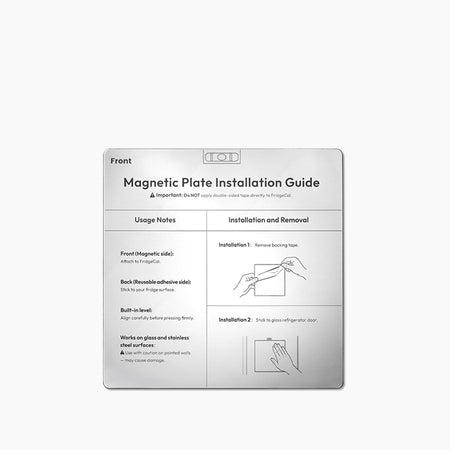
A touchscreen calendar works best in a space people already pass several times a day, such as the kitchen, mudroom, or main hallway. If it is hidden in a home office, it stops being a family tool and becomes just another screen.
Power also matters. A wall calendar that needs to stay on all day should be easy to plug in without creating a messy setup. That sounds minor, but it affects whether the device feels like part of the home or part of a tech project.
Common limits to know before you buy
A touchscreen calendar does not fix a messy schedule by itself. It only makes the schedule more visible.
If the family never updates the source calendars, the wall display will just show outdated information more clearly. If everyone keeps separate schedules but refuses to share them, the device will still have gaps. And if one parent wants strict privacy while another wants full household visibility, permissions become a family rule issue, not a hardware issue.
Mixed ecosystems can also cause friction. A household that uses tools from several companies together can usually make something work, but it may take a little more setup, especially when private sharing rules differ between services.
The other common misunderstanding is that all family-planning features sync everywhere in the same way. Often they do not. Calendar events may come from a calendar platform or a cloud calendar service, while chores or grocery lists live inside the device’s own app. That is not necessarily bad, but it is worth knowing before you assume everything will behave like one universal system.
FAQ
Q: Is a touchscreen calendar different from a regular shared calendar on a phone?
A: The core calendar data may be the same, but the use is different. A touchscreen calendar makes the schedule visible in a shared space, so the whole household can see it at once without asking one person to relay everything.
Q: Does each family member need a separate calendar?
A: Not always, but separate calendars or color-coded entries usually make the screen easier to read. It is often simpler to spot school, work, sports, and personal appointments when each person has a clear visual lane.
Q: Can a touchscreen calendar replace paper planners and fridge notes?
A: For many families, yes, at least partly. It can combine schedule viewing, reminders, and sometimes chores or meal notes, but it works best when the household is willing to keep the digital system updated consistently.
References


