
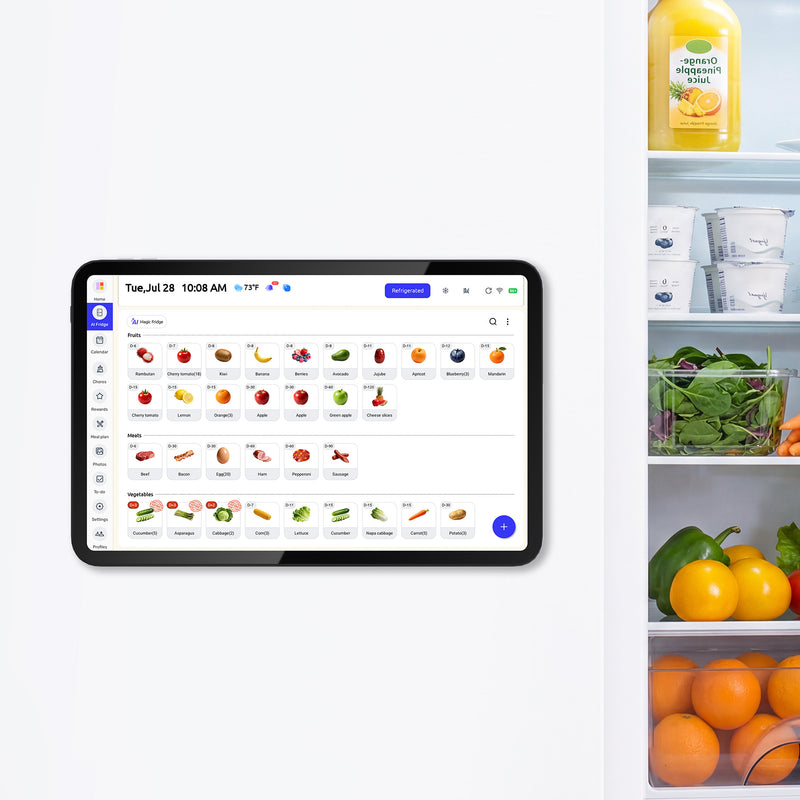


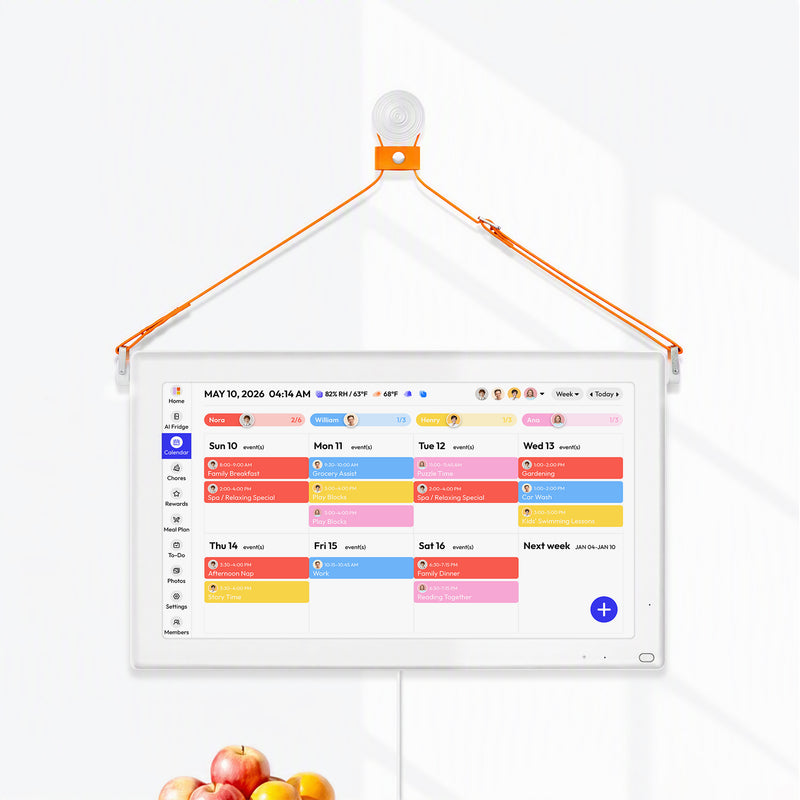



Before- and after-school routines break down when the plan lives in one person’s head, phone, inbox, or paper pile. A visible family calendar plus a simple home command center gives everyone the same answer about what happens next, who owns it, and what must leave the house.
If your morning sounds like “Where are my shoes?” and “Who is picking up today?” while someone is already late, the routine may not be the real problem. A school-week plan that can answer the day’s schedule, departure items, pickup owner, and backup plan in about 30 seconds is much easier to use under pressure. The goal is not a perfect household system; it is a visible plan your family can actually follow for the next seven days.
The Real Failure Point: The Plan Is Hidden
A before-school routine often looks broken at the surface. The lunch is missing, the folder is unsigned, the backpack is not packed, and no one knows where the soccer cleats are. But the deeper issue is usually that the real plan was never shared in a place everyone could see.
Family routines work best when they show who does what, when, in what order, and how often. That clear structure helps children feel more secure and helps adults stop carrying every detail alone, especially on school mornings when the clock is not forgiving. Family routines also help children build practical skills like responsibility, independence, and time management.
What Breaks First
The first things to fail are usually handoffs. One parent knows there is an early pickup, but the other parent does not. A permission slip came home, but it is still in the backpack. A child has band, practice, or a special dress day, but the item needed for it is not by the door.
When plans are scattered across texts, school emails, reminder apps, paper notes, and memory, the household starts depending on one person to translate everything in real time. A shared planning hub helps because it puts calendars, meals, chores, school paperwork, bills, grocery lists, and reminders in one place instead of splitting them across counters and devices. Scattered planning tools are a common reason families deal with repeated morning questions, missed practices, duplicate grocery runs, unsigned forms, and unplanned dinners.

Why Kids Need More Than Verbal Reminders
Children can follow routines more easily when the next step is predictable and visible. A child who can look at the board and see “pack lunch,” “bring library book,” and “bus at 7:35 AM” has a better chance of acting without waiting for an adult to repeat the whole plan.
Routines are not only about getting out the door. A medical organization notes that routines create connection and structure, and that children may feel anxious when they do not know what to expect. Routines create connection while giving children a clearer sense of what is coming next.
A Visible Plan Must Answer the Right Questions
A visible plan is not just a pretty calendar. It should answer the questions your family asks when time is short. If it only shows “soccer” but not the driver, leave time, uniform, snack, or field location, the work is still hidden.
A useful family command center should show the next action, the owner, and the timing behind each task. A visible plan should help the family see what is happening, what needs action, what dinner requires, who owns the next step, and what must leave tomorrow.
The Five Questions to Put on the Wall
A school-day planning surface should answer these questions at a glance:
- What is happening today?
- What needs to leave the house?
- Who owns drop-off, pickup, or the next handoff?
- What does dinner require?
- What changes tomorrow?
These questions matter because school routines are full of small dependencies. If dinner is tacos, someone needs tortillas. If pickup is at 4:15 PM instead of 3:10 PM, someone needs to know before the school day starts. If tomorrow is library day, the book needs to leave the bedroom tonight.
Make the Plan Specific Enough to Use
A weak plan says, “Pack up.” A usable plan says, “Backpack, lunch, water bottle, violin, signed math form.” A weak plan says, “Practice.” A usable plan says, “Practice at 5:30 PM, leave at 5:05 PM, Dad drives, cleats by the garage door.”
This is where visible planning reduces reminders. The adult is no longer the only source of truth. The child, partner, grandparent, sitter, or carpool parent can check the same surface and see what needs to happen next.

Choose the Right Surfaces: Digital, Wall, and Paper
Most families do not need one perfect tool. They need the right job assigned to the right surface. A shared digital calendar is best for changing commitments. A wall calendar or digital family display is best for daily visibility. A paper zone is best for items that must be signed, carried, returned, or handled.
Digital tools work well for appointments, practices, grocery items, task updates, dinner planning, and changes from multiple adults. Paper tools work better for school forms, mail, coupons, and short-term “do not forget” reminders that need to move through the house. Digital tools and paper tools solve different problems, so a hybrid setup is often more realistic than trying to force everything into one format.
Use a Shared Digital Calendar for Commitments
The digital calendar should hold real commitments: school events, pickup times, practices, appointments, work travel, guests, early dismissals, and deadlines. If two adults coordinate school logistics, both should be able to add and edit events.
A shared family calendar reduces the chance that one person becomes the household memory bank. In one study of 3,000 US parents, mothers reported handling 71% of household mental-load tasks, which is why shared visibility matters for fairness as well as logistics. One shared calendar can help keep pickups, games, appointments, school deadlines, travel, and guests from getting buried in separate places.
Use a Home Command Center for Daily Scanning
The command center should live where the family already passes several times a day. Good locations include the kitchen, mudroom, hallway near the main exit, garage entry, refrigerator side, cabinet door, or a narrow wall near backpacks.
A wall-mounted digital calendar such as the Everblog 21.5" Digital Calendar can fit that role when a family wants events, tasks, and chores visible on one screen.
Placement matters more than design. A command center placed too far away from daily traffic often stops being used. A family command center works best when everyone knows where to look for schedules, tasks, papers, mail, homework, shopping lists, and to-do items.
For adult-readable calendars, place the center of the main calendar around 57 to 60 inches from the floor. For kid-facing chores, hooks, or backpack cues, use a lower zone around 42 to 48 inches. Test the spot for glare, outlet access, traffic flow, and kitchen mess before mounting anything permanent.
Keep Paper From Becoming a Second Hidden Plan
School papers need a visible action area, not a pile. Use one tray, wall pocket, or clipboard labeled by action: “Sign,” “Return,” or “File.” If you use a folder system, keep it simple enough that a tired adult can use it at 9:30 PM.
The rule is plain: if a paper affects tomorrow, it belongs in the visible zone tonight. That includes field trip forms, medication notes, lunch menus, spirit-day flyers, picture day envelopes, and anything that must leave the house.
Build Around the Two Hardest Handoffs
Morning departure and after-school pickup are the two school-day handoffs most likely to fail. They involve time pressure, tired people, missing objects, and changing adult availability. A visible plan should be built around those moments first.
Back-to-school planning works better when the family starts with one visible seven-day plan that includes pickup times, forms, practices, meals, and handoff responsibilities. One visible seven-day plan should quickly answer what happens today, what must leave the house, who does pickup, and what happens if someone is late.

Before School: Reduce Decisions Before Breakfast
A morning routine should not depend on fresh decision-making. The night-before setup should carry most of the load. Put the backpack, lunch box, water bottle, shoes, jacket, instrument, sports bag, and signed forms in one launch area near the exit.
For a simple morning board, use three zones:
- Today: school time, bus time, or leave time
- Bring: items that must leave the house
- Owner: who handles drop-off, bus walk, or carpool
This gives the family one place to check before anyone starts calling out reminders. It also lets older kids take more ownership because the list is visible, not hidden in an adult’s head.
After School: Create a Drop and Reset Routine
After school is not just “come home.” It is a handoff from school mode to home mode. Backpacks, lunch boxes, papers, sports gear, homework, snacks, and emotions all arrive at once.
A 3- to 5-minute after-school drop can prevent evening stress. The child puts the lunch box by the sink, papers in the action tray, homework in the work spot, and activity gear by the launch area. The adult checks only the visible zones instead of digging through every backpack pocket.
For many families, a short reset works better than a long chore list. Try “snack, unpack, papers, gear” before homework or screen time. If your child needs a decompression window first, write that into the routine so it is expected rather than argued about daily.
Keep the System Simple Enough for Wednesday
Many family routines work on Monday and fall apart by Wednesday. The reason is not laziness. It is accumulated friction: laundry is behind, someone slept badly, a dinner ingredient is missing, and the calendar has changed twice.
Rigid routines break faster than flexible ones. A better approach is to use anchor habits with flexible execution. Anchor habits are the non-negotiable points, such as checking backpacks before bed or putting lunch boxes by the sink, while the exact timing can shift.
Use an Ideal Plan and a Minimum Plan
Your ideal plan might include a full breakfast, packed lunch, backpack check, teeth, shoes, hair, and a calm departure. Your minimum plan might be breakfast bar, water bottle, backpack, shoes, and out the door.
Write both versions where adults can see them. This helps the family make a realistic call on hard mornings. It also prevents one rough day from turning into “the whole routine failed.”
A practical rule is to design the baseline routine for your Wednesday capacity, not your Sunday-night optimism. If a checklist has 14 steps and your family can only manage 8 when tired, the checklist is too large.
Build Small Reset Points Into the Day
A visible system stays useful when it has tiny reset points. You do not need a long family meeting every day. You need short checks that happen at predictable times.
A workable rhythm might look like this:
- Morning check: 1 to 2 minutes at the calendar before leaving
- After-school drop: 3 to 5 minutes for papers, lunch boxes, and gear
- Evening check: 3 minutes to confirm tomorrow’s bring list and pickup owner
- Weekly reset: 10 to 15 minutes on Sunday to review meals, rides, activities, and forms

Meal planning should stay small. Planning three or four dinners, one leftover night, and one flexible night is often enough for a school week. That keeps dinner from becoming another hidden planning job.
A Simple Visible Routine Setup
Start with the smallest setup that removes the most confusion. You can upgrade later, but the first version should be easy to read, easy to update, and placed where the family already moves.
Seven-Day Family Planning Checklist
- Choose one shared calendar for real commitments, including school events, appointments, practices, pickups, early dismissals, and deadlines.
- Pick one visible home spot near daily traffic, such as the kitchen, mudroom, garage entry, hallway, refrigerator side, or cabinet door.
- Create four simple zones: Today, Bring, Papers, and Meals.
- Add owners to handoffs, not just events. Write “Mom pickup,” “Grandma pickup,” “Carpool,” or “Bus.”
- Set up a launch area by the exit for backpacks, shoes, sports bags, instruments, jackets, and forms.
- Do a 3-minute evening check for tomorrow’s schedule, bring list, pickup owner, and dinner needs.
- Review the system every Sunday for 10 to 15 minutes and remove anything outdated.
Example: One School Day on a Visible Board
Here is what a simple Tuesday plan might show:
Zone |
What It Shows |
Today |
School 8:00 AM, chess club 3:15 PM, pickup 4:00 PM |
Bring |
Library book, lunch, water bottle, signed field trip form |
Owner |
Dad drop-off, Mom pickup, neighbor backup |
Meals |
Chicken wraps, use lettuce before it wilts |
Papers |
Sign permission slip, return by Friday |
This does not require a complicated system. It requires one place where the household can see the same facts before the day starts.
FAQ
Q: Is a digital family calendar enough?
A: A digital calendar is enough for commitments, but it is usually not enough for school-day execution. It can show that practice starts at 5:30 PM, but the visible home plan should also show who drives, when to leave, where the cleats are, and whether dinner needs to be started before practice.
Q: What if my family ignores the command center?
A: First check placement and complexity. If the board is in a low-traffic room or has too many categories, people will skip it. Move it near the exit, kitchen, mudroom, or garage entry, then reduce it to the four most useful zones: Today, Bring, Papers, and Meals.
Q: How do I make this work with kids who struggle with attention or transitions?
A: Keep the plan visible, short, and predictable. Use fewer steps, clear owners, and the same check times each day. This does not diagnose or solve attention challenges, but it does reduce hidden instructions and repeated verbal reminders, which can make transitions easier for many kids.
Practical Next Steps
Do not redesign the whole household this week. Fix the next seven days. Put the real school schedule, pickup owners, bring list, papers, and dinner plan in one visible place, then check it morning, after school, and evening.
The system is working when fewer details depend on one person’s memory. A good before- and after-school routine is not just a list of tasks. It is a shared view of the day that helps adults and kids know what comes next, what they own, and what has to leave the house tomorrow.


