
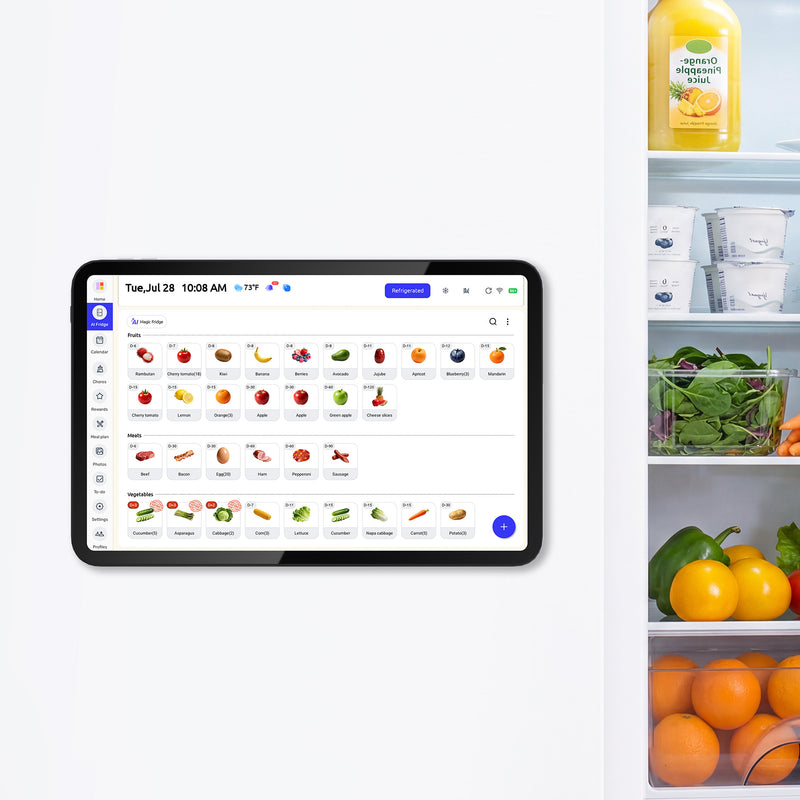



A digital fridge calendar placed at the center of your kitchen keeps allergen information, expiration alerts, and safe meal plans visible to every caregiver at the exact moment food decisions happen. Families managing food allergies need more than phone apps or paper notes. They need a shared, always-on display that every adult in the household can read without unlocking a screen. This approach reduces the communication gaps that lead to accidental exposure during meal prep and caregiver handoffs.
What Are the Nine Major Food Allergens U.S. Families Track?
Before setting up any allergy safety system in your kitchen, you need a clear list of the allergens your household monitors. The FDA's current official list is the right starting point.
The FDA's Recognized Allergens
The U.S. FDA identifies nine major food allergens: milk, egg, fish, Crustacean shellfish (such as shrimp, crab, and lobster), tree nuts, peanuts, wheat, soybeans, and sesame. Sesame was added as the ninth allergen effective January 1, 2023, under the FASTER Act.
International Allergens That Expand the List
The EU requires labeling for 14 allergens. Beyond the U.S. list, the EU separately includes mustard, celery, lupin, molluscan shellfish, and sulfur dioxide (sulphites), as well as cereals containing gluten such as rye and barley. If your family follows international dietary guidelines or has members with sensitivities beyond the FDA's nine, these additional categories are worth tracking.
Why a Written Allergen List Is the Starting Point
A documented allergen list removes guesswork from every grocery trip and every recipe decision. Once you have this list, every caregiver in the household has a consistent reference point rather than relying on verbal briefings during a rushed morning.
Why Phone Apps and Paper Lists Fall Short for Allergy Families

Most families start with a phone app or a handwritten sheet on the fridge. Both methods break down quickly when multiple caregivers share kitchen duties.
Phone Notifications Get Buried
A phone receives dozens of alerts per day. Allergy-related reminders compete with texts, email, and social media. By the time a babysitter or grandparent locates the right app, the meal is already being prepared.
Paper Lists Go Stale
A printed allergen card cannot update itself. When a new sensitivity is confirmed or a previously safe brand changes its formula, the paper version stays frozen until someone remembers to rewrite it.
Verbal Handoffs Miss Details
Telling a caregiver "no peanuts, watch for tree nuts too" during a rushed drop-off leaves room for error. Caregivers who arrive later may never receive that update at all.
What Makes a Digital Fridge Calendar Different From Other Tools?

A dedicated kitchen display solves the core problem: visibility at the point of action. Here is how a digital fridge calendar compares to the alternatives for a household managing food allergies.
Digital Fridge Calendar vs. Shared Phone App vs. Paper List
|
Feature |
Digital Fridge Calendar |
Shared Phone App |
Paper List |
|
Visible without unlocking a device |
Yes |
No |
Yes (if posted) |
|
Updates in real time across caregivers |
Yes |
Yes (if all use the same app) |
No |
|
Shows allergen information at meal prep spot |
Yes |
No (phone may be elsewhere) |
Partially (static only) |
|
Tracks food inventory and expiration dates |
Yes |
Depends on the app |
No |
|
Accessible to caregivers unfamiliar with the household |
Yes (on-screen display) |
Requires app install and login |
Limited to what is written |
A fridge-mounted display is strongest on two factors: constant visibility and zero barrier to access. A caregiver walking into your kitchen sees allergen information and today's meal plan without downloading anything or asking for a password.
Always Present at the Point of Meal Preparation
FARE (Food Allergy Research and Education) recommends keeping your emergency care plan in a place where others can find it. A digital fridge calendar gives that plan a permanent, visible home on a screen everyone passes multiple times per day.
Real-Time Sync Across Family Members
When a parent updates allergen notes or removes an expired item from the inventory, the change appears on the kitchen display and the synced phone app at the same time. No caregiver works from an outdated list.
How to Set Up a Digital Fridge Calendar for Food Allergy Safety
Four steps move your household's allergy information from scattered notes onto a single visible display.
Step 1: Create Individual Profiles for Each Family Member
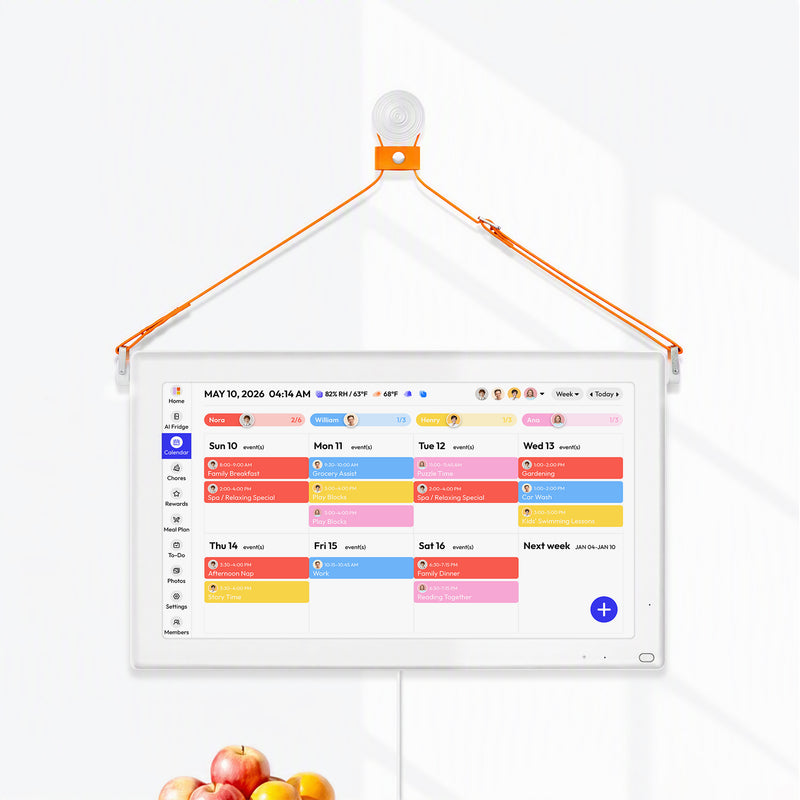
Add a profile for every household member and manually list their specific allergens. Assign each person a distinct color using the color-coding feature so their restrictions appear separately on the shared screen. This visual shorthand helps any caregiver identify who can eat what at a glance.
Step 2: Use the Meal Planner to Map Weekly Dinners in Advance
Plan your week's meals using the meal planning tool. Reviewing ingredients as part of weekly planning, rather than at the stove, gives you time to catch potential conflicts before cooking starts. The AI recipe feature can suggest meals based on what you already have in the fridge.
Step 3: Build a Grocery List With Your Family's Chosen Brands
Create a recurring list that includes only the brands your household has already confirmed safe for each person's restrictions. Sync the list to phones so whoever does the shopping works from the same items, reducing the chance of rushed substitutions with unfamiliar products.
Step 4: Track Your Fridge Inventory Regularly With Smart Fridge Manager
Log your current fridge and pantry items using the Smart Fridge Manager. The tool tracks what you have and sends alerts before items expire, helping you catch forgotten products and maintain separate storage zones to limit cross-contact risk.
How a Digital Fridge Calendar Supports Allergy Safety Day to Day
A kitchen display keeps allergy information in plain view during the moments when it matters most.
Morning Meal Checks Before School and Work
The display shows the day's meal plan as soon as the kitchen is active. Everyone confirms the plan before leaving the house, catching last-minute swaps that could introduce an allergen.
Sharing Allergy Information With Babysitters and Grandparents
A new caregiver glances at the fridge screen and sees current allergen notes and the week's meal plan. The synced phone app lets them check the same information remotely, replacing rushed verbal handoffs that often leave out key details.
Who Benefits Most From a Digital Fridge Calendar for Allergy Safety?
A digital fridge calendar is most practical for households where multiple caregivers share kitchen duties and information gaps create real risk.
Families With Multiple Children Who Have Different Restrictions
When one child avoids dairy and another avoids tree nuts, the kitchen requires careful coordination. Color-coded profiles on a shared screen give every caregiver a clear, consistent reference.
Households With Rotating Caregivers
When babysitters, grandparents, or nannies regularly handle meal prep, a visible kitchen display means everyone follows the same information. No one relies on a verbal briefing from days ago.
Parents Preparing for School Events and Playdates
When a child with a food allergy visits your home, you can pull up relevant notes on the kitchen display and review the snack plan before food is served. The same approach works for packing allergy-safe items for school parties.
Use a Digital Fridge Calendar to Strengthen Your Family's Allergy Routine
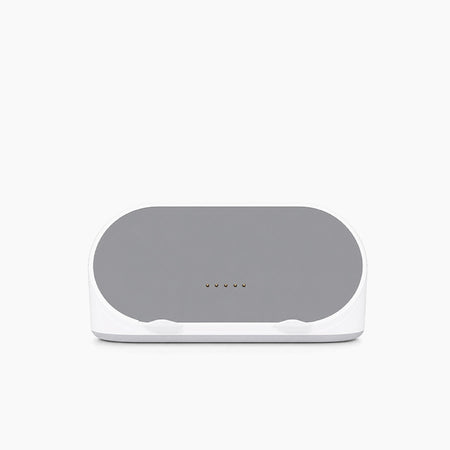
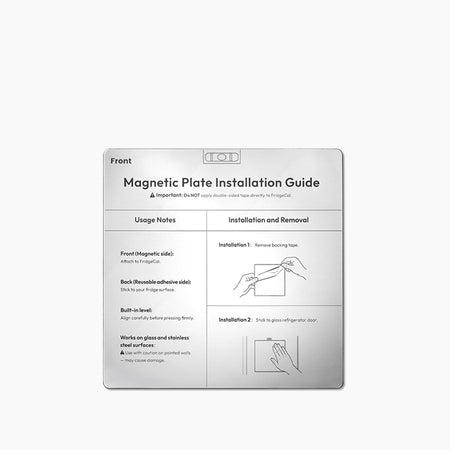
Keeping allergen notes, expiration alerts, and meal plans in one place reduces the decisions your household makes under pressure. It reduces information gaps during caregiver handoffs and daily cooking. Pair it with consistent label reading and physical ingredient checks for the strongest protection. The Everblog FridgeCal™ Calendar is built for exactly this kind of household coordination. Its 13.4-inch touchscreen mounts magnetically on your fridge with no tools required, Smart Fridge Manager tracks your inventory and sends expiration alerts before food goes unnoticed, family color coding keeps each person's restrictions visible at a glance, and real-time sync means every caregiver works from the same information with no subscription fees.
FAQs About Managing Food Allergies With a Digital Fridge Calendar
Q1: Can a Digital Calendar Replace a Written Food Allergy Action Plan?
No. A digital calendar supports your written plan by keeping it visible and current. You still need a physician-signed emergency care plan reviewed by your allergist. A fridge display ensures that the plan is in plain sight during food preparation, not buried in a drawer.
Q2: What Should I Tell a Babysitter About My Child's Food Allergy?
Give them a written list of your child's allergens, safe brands, and emergency contacts before they cook. A kitchen display showing that information provides a clear on-screen reference. A synced phone app lets them check the same details even if they step away from the fridge.
Q3: How Often Should I Update My Family's Allergy Information?
Update after every allergist appointment or any time a new sensitivity is identified. A quarterly review is a reasonable minimum. Use that same review to check your fridge inventory for expired or newly restricted items.
Q4: What Is the Difference Between a Food Allergy and a Food Intolerance?
A food allergy triggers an immune system response that can be life-threatening, even from trace amounts. A food intolerance causes digestive discomfort but does not involve the immune system and is not typically life-threatening. Allergy diagnosis requires confirmation from a board-certified allergist.


