




Somewhere between breakfast dishes, school bags, sports gear, and the sock pile that keeps reappearing on the stairs, most families hit the same wall. The house runs on reminders. One adult becomes the memory system. Everyone else waits to be told what to do.
That setup wears people down fast. It also makes chores feel personal. Instead of “this is how our home works,” the message becomes “Mom asked again” or “Dad is on my case.” A monthly chore chart works better when it stops being a list of commands and becomes a family contribution system that repeats, rotates, and stays visible.
Beyond the Nagging Why a Monthly Chore System Works
Monday starts with good intentions. By Wednesday, someone forgot to empty the dishwasher, one child insists they “didn’t know,” and another argues that they already cleaned their room last week. The adult carrying the mental load starts tracking everything in their head, which is exactly what makes home life feel heavier than it needs to.

The workload is real. According to the U.S. Bureau of Labor Statistics American Time Use Survey, Americans aged 15 and over spend an average of 2.01 hours per day on all household activities. That’s why a chore system matters. We’re not organizing a tiny side task. We’re organizing a meaningful part of daily life.
What changes when chores become contributions
A monthly chore chart does something a daily verbal reminder never can. It turns repeating work into a shared agreement.
That shift matters because families don’t need more yelling. They need:
- Clear ownership: Everyone can see what belongs to them.
- Predictable rhythm: Daily, weekly, and monthly jobs stop feeling random.
- Less arguing: The chart becomes the reference point instead of the parent’s memory.
- More fairness: Jobs can rotate instead of sticking to one person forever.
Practical rule: If a chore only exists in your head, it will keep turning into conflict.
Why monthly works better than “just do your part”
A monthly view helps families plan beyond today’s mess. It leaves room for both routine work, like dishes or tidying, and bigger reset tasks, like wiping baseboards or organizing the entryway. It also gives kids and teens a better sense of progress because they can see a full cycle, not just one more instruction.
A good system doesn’t just get the trash out. It teaches that everyone who lives in the home helps maintain it. That’s the difference between a nagging loop and a household rhythm.
Designing Your Monthly Chore Chart Foundation
Most chore charts fail before anyone misses a single task. The problem usually isn’t attitude. It’s design. If the chart is vague, overloaded, or unfair, people stop trusting it.
A strong monthly chore chart starts with structure that matches real life, not fantasy life.

Start with frequency, not with names
Before you assign anything, sort chores into three buckets:
- Daily chores such as dishes, quick floor pickup, pet care, lunch cleanup
- Weekly chores such as bathroom wipe-down, laundry, vacuuming, trash
- Monthly chores such as appliance wipe-downs, closet reset, mail sorting, deeper cleaning
Families often treat everything like an everyday emergency, though it typically isn't. Some tasks require daily attention; others merely need a home on the monthly chart to avoid being forgotten.
If your weekdays already run tight, it can help to pair your chart with a broader home rhythm. A practical resource like this cleaning schedule for working moms can help you map chore expectations around work hours instead of fighting them.
Write chores so nobody can “misunderstand”
“Clean the kitchen” is not a usable chore. It invites debate.
“Wipe counters, sweep floor, load or unload dishwasher, and clear the table” is usable because everyone can tell whether it’s done. Successful monthly chore charts work better when chores are categorized by frequency, written with non-ambiguous descriptions, and rotated clearly. That approach can reduce errors by up to 70% and help families reach 80 to 90% completion rates, according to this guide on building a chore chart that works.
The more precise the task, the less emotional energy you waste checking it.
Choose a layout that supports your family’s pace
Different homes need different layouts. These are the ones I see work most often:
| Layout | Works well for | Watch out for |
|---|---|---|
| Monthly grid | Families who want a full view of recurring chores | Can feel rigid if schedules change often |
| Zone list | Homes that divide chores by room or area | One zone can become the “bad zone” |
| Rotation board | Siblings or partners sharing the same core tasks | Needs a clear handoff day |
A monthly grid works well when your family likes predictability. A rotation board works better when fairness is the bigger issue.
Build in rotation on purpose
If one child always clears dishes and another always handles laundry, resentment builds. Rotations prevent that. They also teach broader life skills.
A simple system works:
- Switch weekly: Good for dishes, trash, pet duties
- Switch biweekly: Better for jobs with a learning curve
- Switch monthly: Useful for bigger zones like bathrooms or kitchen support
Color-coding helps too. Assign each person a color, then move the color block instead of rewriting the whole chart every week.
Keep the first version smaller than you think
The chart should solve friction, not create more of it. If you start with every possible task, the family will experience the system as pressure.
Begin with your essential recurring chores. Add deeper monthly tasks only after the basics hold for a few weeks. The foundation of a monthly chore chart is durability. If it can’t survive a rushed Tuesday, it isn’t finished.
Assigning Fair and Age-Appropriate Chores
Fair doesn’t mean identical. A preschooler and a teenager shouldn’t carry the same kind of work, and younger kids shouldn’t get a pass on contributing just because their help is slower. The goal is to match the task to the child’s stage, attention span, and actual ability.
That’s where many chore systems drift off course. Parents either assign too little and keep doing everything themselves, or assign too much and conclude the child is “not responsible.” Usually, the job was just a poor fit.
Match the load to the child
Family management systems recommend assigning children 1 to 5 initial jobs, scaling to 10 jobs by the teen years. When rewards are paired with the system, completion rates can rise by 25 to 40%, as described in this article on teaching money habits through chores.
That doesn’t mean every child needs a packed chart. It means responsibility grows in layers.
Age-appropriate chore ideas
| Age Group | Daily Chores (1-2) | Weekly Chores (1-3) |
|---|---|---|
| Ages 3-5 | Put toys away, place clothes in hamper | Help make bed, wipe low surfaces, sort books |
| Ages 6-8 | Clear table, feed pets | Fold simple laundry, sweep small areas, tidy bedroom floor |
| Ages 9-12 | Unload dishwasher, pack school items | Vacuum room, help with laundry, wipe bathroom counters |
| Ages 13+ | Kitchen reset, manage own laundry flow | Clean bathroom, prep simple meals, take out trash and recycling |
If you’re working with elementary-age kids and want examples that fit that stage, this guide to a chore chart for 8 year old children is a helpful reference point.
Replace vague labels with finished-task language
A child can’t succeed on a chore that’s open to interpretation. This is one of the biggest fixes you can make immediately.
Use this pattern:
- Instead of “clean your room” say “make your bed, put dirty clothes in the hamper, put books on the shelf, and clear the floor”
- Instead of “help with dinner” say “set the table, fill water glasses, and wipe the table after the meal”
- Instead of “do laundry” say “move clothes from washer to dryer, fold, and place folded clothes in the right room”
Kids usually don’t resist clarity. They resist being held to a standard that was never explained.
What fair assignment actually looks like
Fair chore assignment takes three things into account:
- Age and skill: Can they do the task safely and consistently?
- Time demand: Does this fit around school, sports, and homework?
- Household value: Is this a real contribution, not a made-up busy task?
A teenager may handle fewer chores than a younger sibling on paper, but the chores may be heavier and more independent. That can still be fair. What matters is whether each person’s load feels understandable, visible, and connected to daily family life.
When families get this right, kids don’t just complete tasks. They start seeing how a household runs. That’s the long-term win.
Creating a Reward System That Actually Motivates
A reward system can help, but only if it supports the habit instead of replacing it. If every task turns into a negotiation, the chart stops working. If there’s no acknowledgment at all, some kids lose interest before the routine becomes automatic.
The sweet spot is simple. We want kids to understand that contributing is part of family life, while still giving them something concrete that makes consistency feel worthwhile.

Don’t pay for every basic responsibility
I’m careful about tying every single chore to money. Tasks like putting laundry in the hamper, clearing dinner dishes, or making a bed fit better under “this is what we all do here.” Reserve bigger rewards for consistency, initiative, or jobs that go beyond baseline family contribution.
That keeps the monthly chore chart from becoming a vending machine.
Rewards that work longer than cash
You’ll usually get better results from rewards that are visible, earned over time, and connected to family life.
Try options like these:
- Privilege rewards: Later bedtime on weekends, extra screen time, choosing dessert, picking the family movie
- Experience rewards: One-on-one time, choosing a Saturday activity, using points toward fun family game night ideas
- Progress rewards: Stickers, stars, point totals, level-ups, milestone badges
- Team rewards: A family outing or special dinner after a full week of shared follow-through
A structured tracker provides assistance for such needs. A digital chore chart reward system can make the connection between effort and reward easier to see without turning parents into scorekeepers all day.
Rewards work best when they recognize consistency, not when they rescue a weak system.
Keep standards attached to the reward
If kids can rush through chores and still collect the reward, the system teaches speed instead of responsibility. Tie rewards to a clear definition of done.
That means:
- The bed is made, not just the blanket pulled up.
- The table is wiped, not just the dishes removed.
- Laundry is folded and put away, not left in a basket.
A visual explanation can help if your family is just starting to build this rhythm:
Use rewards to build independence, not dependence
The reward system should become less central over time. In the beginning, stars, points, and privileges can carry momentum. Later, the monthly routine itself should do more of the work.
You’ll know the system is maturing when your child starts completing a task because it’s Tuesday and that’s their job, not because they’re asking what they get for it.
From Paper to Pixels Choosing the Right Tools
The tool matters because visibility matters. A beautiful chart in a drawer is useless. So is an app that nobody opens.
Families usually land in one of three camps. Paper, digital, or hybrid. Each has strengths. Each has failure points.

Where paper still wins
Paper charts and whiteboards are easy to understand at a glance. They don’t require logins, charging, or app training. Younger kids often respond well to seeing their chores on the fridge or a wall board because the system stays in front of them.
Paper also feels concrete. Crossing something off by hand has its own kind of momentum.
The downside is maintenance. You have to rewrite tasks, update rotations manually, and remember to communicate changes. Paper works best in homes where the schedule is stable and one adult doesn’t mind updating it consistently.
Where digital tools help
Digital systems solve a different set of problems. They’re easier to update, easier to share, and better for reminders. They also handle changing schedules better than static printables do.
Still, digital-only systems have a weakness. According to this comparison of digital chore chart systems, digital-only setups can see a 25% drop in compliance because of poor visibility, while hybrid systems that combine a physical wall hub with digital features achieve 85 to 95% monthly adherence in busy families.
That lines up with what many parents experience. If the chart lives only on a phone, younger kids forget it exists.
The hybrid setup most families stick with
A hybrid setup gives you the best parts of both:
| Tool type | What it does well | Where it struggles |
|---|---|---|
| Printed chart | High visibility, simple for kids | Hard to update and share |
| Phone app | Flexible, portable, easy reminders | Easy to ignore |
| Wall hub plus digital features | Shared visibility with easy updates | Requires setup and a consistent home base |
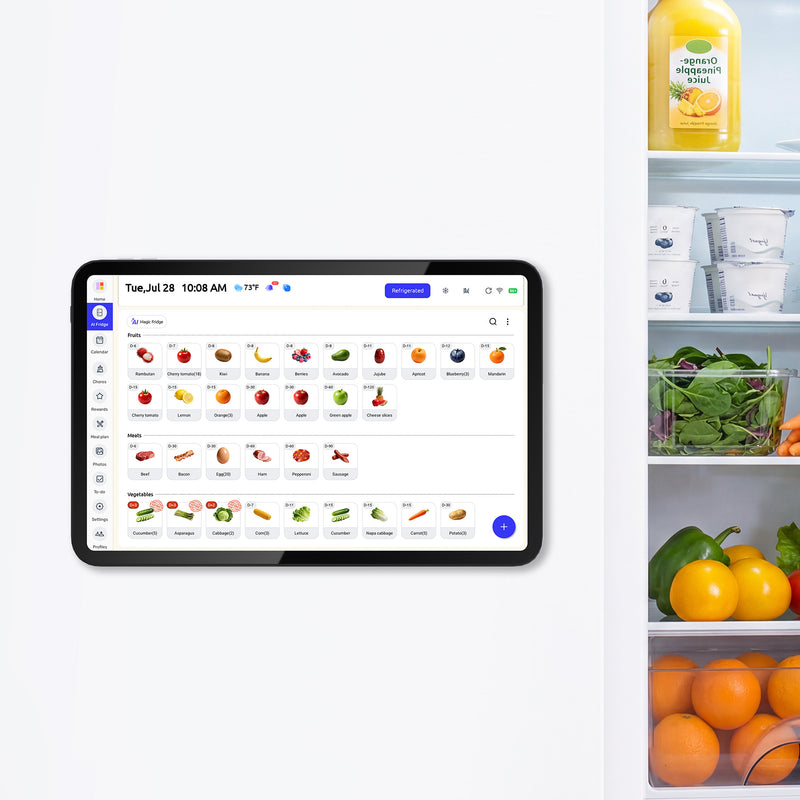
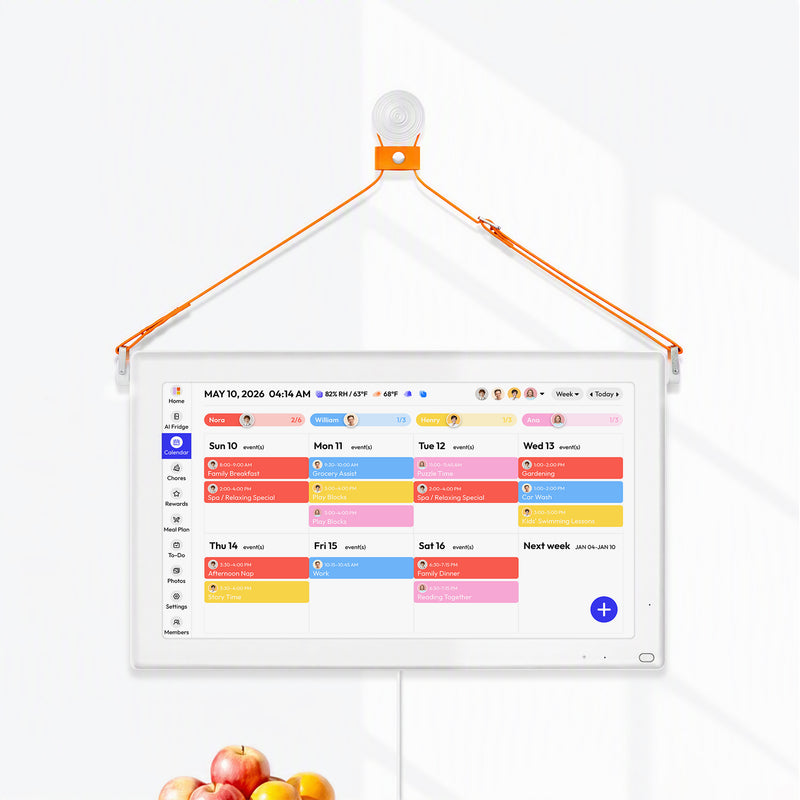
For families who want a single shared display, an electronic chore chart can bridge that gap. One example is Everblog, a 21.5-inch digital family wall calendar that includes a Chore Manager, a Rewards Tracker, voice entry, and syncing through a companion app. That kind of setup makes sense when you want chores visible in the home but editable without rewriting the whole system.
Choose based on friction, not trend
The right tool is the one your family will keep using after the first motivated weekend.
Choose paper if your home thrives on simplicity. Choose digital if your family changes plans often and needs updates fast. Choose hybrid if you want both visibility and flexibility.
What you’re really picking is not a format. You’re picking the easiest path to follow-through.
Troubleshooting and Adapting Your Chore System
Even a solid monthly chore chart will wobble once real life hits it. Kids get tired. Parents get busy. One sibling starts doing a rushed version of the job, and someone else decides that if the system isn’t perfect, they’re not participating.
That doesn’t mean the chart failed. It means the chart is now in the stage where most families either refine it or abandon it.
Fix resistance by reducing friction
When a child pushes back, look at the design before you assume laziness. Resistance usually comes from one of four places:
- The task is too vague
- The load feels unfair
- The timing is bad
- The payoff is too delayed
A simple reset often works better than a lecture. Shorten the list. Clarify the task. Move the deadline. Then watch whether the resistance drops.
If the system requires your full emotional energy every day, the system needs adjusting.
Retrain sloppy work without starting a fight
Poorly done chores need correction, but not drama. If a child “cleans” the bathroom sink and toothpaste is still on the counter, don’t absorb the job and redo it without comment. Walk them back through the standard.
Use a calm script:
- Show what’s incomplete
- Restate the finished version
- Have them do the missed part now
- Check once, then move on
That protects the standard without turning the moment into a character judgment.
Use short family check-ins
A monthly system runs better with a weekly check-in. Keep it brief. Look at what’s working, what feels lopsided, and what needs to rotate.
Ask questions like:
- Which chore keeps getting skipped?
- Does anyone’s list feel too heavy this week?
- Is a task unclear or too big?
- Do we need to swap anything because of activities or custody changes?
Those small course corrections are what keep the system alive.
Adapt for co-parenting and blended households
Many printable systems often break down in this context. Co-parenting homes need a chore system that can travel across households without depending on one refrigerator door.
In co-parenting scenarios, rigid monthly grids often fail. Flexible digital trackers can boost compliance by 35% because they allow real-time updates and notifications across households, which matters for the 16 million U.S. children in blended families, as noted in this discussion of monthly chore chart templates and co-parenting needs.
What works better in practice:
- Assign location-based chores: Keep some jobs tied to Mom’s house and some to Dad’s house
- Use shared language: “Kitchen reset” should mean the same thing in both homes
- Track completion in real time: Don’t rely on a child to verbally transfer the record
- Avoid double-loading transition days: Handover days already carry enough friction
A chore system for two homes has to be flexible first and tidy second. If the structure is too rigid, the child ends up carrying the confusion.
Quick Answers to Common Chore Chart Questions
What if my teenager says chores are childish
Stop calling the work childish. Teenagers respond better when chores are framed as life skills and household contribution. Give them real jobs with real independence, like managing laundry, cleaning a bathroom, or helping with meal prep. The more adult the responsibility feels, the less likely they are to dismiss it.
What’s a fair consequence for a missed chore
A fair consequence is immediate, calm, and tied to the task. Start with completion before privileges. If the kitchen reset isn’t done, the next preferred activity waits until it is. Avoid huge punishments for small misses because that usually turns one skipped chore into a power struggle.
How often should I change the monthly chore chart
Refresh it when the chart starts feeling invisible, unfair, or stale. That might mean rotating jobs, renaming vague tasks, or changing rewards. You don’t need a total redesign every month. You do need enough movement that people keep seeing the chart as current.
What if one child always does more than the other
Look at task weight, not just task count. One child may have fewer chores but more demanding ones. If the imbalance is real, adjust openly. Kids notice fairness faster than adults think.
Should adults be on the chart too
Yes. A family contribution system works better when children can see that everyone participates. Adults don’t need sticker rewards, but visible ownership matters. It reinforces that the chart is a household system, not a punishment tool for kids.
If you want one shared place to manage schedules and chores without bouncing between paper notes and scattered apps, Everblog is worth a look. Its digital family wall calendar brings chores, rewards, meals, and schedules into a single visible hub, which can make a monthly chore chart easier to keep current and easier for the whole family to follow.


