

By 4:30 p.m., a lot of families are already losing the screen time battle. One child wants “just ten more minutes.” Another says homework requires the tablet, even though a game is open in the background. A parent is trying to finish work, start dinner, answer a school message, and remember whether screens were already used up before practice. Then bedtime arrives, and everyone feels like the bad guy.
That cycle wears people down because the problem usually isn't a lack of rules. It's a lack of a system. Most parents already know screens shouldn't take over meals, sleep, homework, and family time. What breaks down is enforcement. One parent says yes, the other says no. One child gets extra time because the day was hard. Another argues the rules aren't fair. Soon the whole thing depends on constant negotiation.
The Daily Screen Time Struggle Is Real
If your house feels like it runs on device requests, you're not overreacting. Screen use is baked into school, entertainment, friendships, and downtime now. That means screen time management isn't a niche concern for strict parents. It's a daily operating challenge for ordinary families.
The scale of it matters. 50.4% of teenagers ages 12–17 had 4 hours or more of daily screen time during July 2021 through December 2023, while only 3.0% reported less than 1 hour per day, according to the CDC's screen time data brief. The American Academy of Child and Adolescent Psychiatry also notes that children ages 8–18 spend about 7.5 hours per day on screens on average, as summarized in that same CDC-linked benchmark.
That helps explain why parents feel like they're trying to manage a flood with a paper towel. You're not dealing with a small habit. You're trying to shape one of the biggest blocks of time in your child's day.
Rules fail when memory becomes the system
A lot of homes run screen limits from memory.
- Parents keep the rules in their heads and repeat them all day.
- Kids test boundaries constantly because the boundaries move.
- Exceptions pile up until no one remembers what the rule is.
- Screens become the bargaining chip for every rough transition.
That setup creates conflict even when the rules themselves are reasonable. Families need something visible, repeatable, and shared. A planning tool can help, but only if it makes the rules easier to follow than to debate. A practical example is a time management approach for kids that makes routines visible, so the parent isn't the only one carrying the schedule.
The real win isn't stricter limits. It's fewer arguments because everyone already knows what happens next.
If screen use has started to crowd out movement, sleep, or emotional regulation, it's also worth reading about understanding child mental health and screen exposure. The most useful takeaway for parents is simple. This isn't about winning a debate over minutes. It's about protecting the shape of family life.
Establishing Your Family's Screen Time Philosophy
Before you set timers, decide what you're trying to protect. Families usually do better when screen rules come from a clear philosophy instead of a string of random restrictions. Kids may not love every limit, but they handle limits better when the rules feel logical.

Start with age-based guardrails
A strong starting point is the American Academy of Pediatrics guidance summarized by the American Academy of Child and Adolescent Psychiatry. It advises no screens for children under 18 months except video chat, co-viewed educational content for ages 18 to 24 months, about 1 hour per day for ages 2 to 5, and consistent limits for children 6 and older that don't interfere with sleep, exercise, or family time, according to AACAP's family guidance on children and screens.
That last part is where many families get stuck. Older kids don't fit neatly into one number. You need household standards that account for timing, purpose, and impact.
Separate useful screen use from empty screen use
Not all screen use does the same thing in a family. If you lump everything together, your rules will feel unfair and your child will keep arguing with some justification.
A workable family philosophy usually separates screen use into categories like these:
| Type of screen use | How to treat it at home |
|---|---|
| School and homework | Allowed when it supports a real task and stays focused |
| Creative use | Usually more flexible if the child is making, building, or learning |
| Social connection | Allowed with boundaries, especially when it replaces in-person drift rather than family time |
| Passive entertainment | Tighter limits because it expands easily and crowds out other activities |
A child doing digital art isn't doing the same thing as a child autoplaying videos. A teen on a video call with grandparents isn't doing the same thing as endless scrolling. Your rules should reflect that.
Write the values before the limits
This is an often-skipped part. Put the family values in plain language first.
For example:
- Sleep comes first. No screen habit is allowed to wreck bedtime.
- Meals stay shared. Devices don't sit at the table.
- School work gets protected time. Entertainment doesn't run beside homework.
- Screens are a tool, not the default. Boredom isn't an emergency.
Practical rule: If a screen activity regularly causes fights at shutoff, spills into bedtime, or derails homework, it needs a firmer boundary regardless of whether the content is “good.”
Build one plan for the whole house
Parents often make separate rules for each child and then wonder why enforcement feels impossible. You do need age differences, but the house should still run on one logic.
A simple family media philosophy might include:
- Common zones where screens are allowed.
- Protected zones such as bedrooms at night and the dinner table.
- Priority order for the day, like school, chores, outside time, then entertainment.
- Shutoff rules that don't depend on parental mood.
When kids understand the logic, limits stop feeling random. They may still complain. That's normal. But they'll know the rule isn't changing just because they argued longer.
Building Predictable Routines with a Central Calendar
Good intentions collapse during transitions. That's why the most reliable form of screen time management is a visible routine. If kids can see when screens are allowed, when they're off-limits, and what comes before them, you remove a lot of the bargaining from the day.

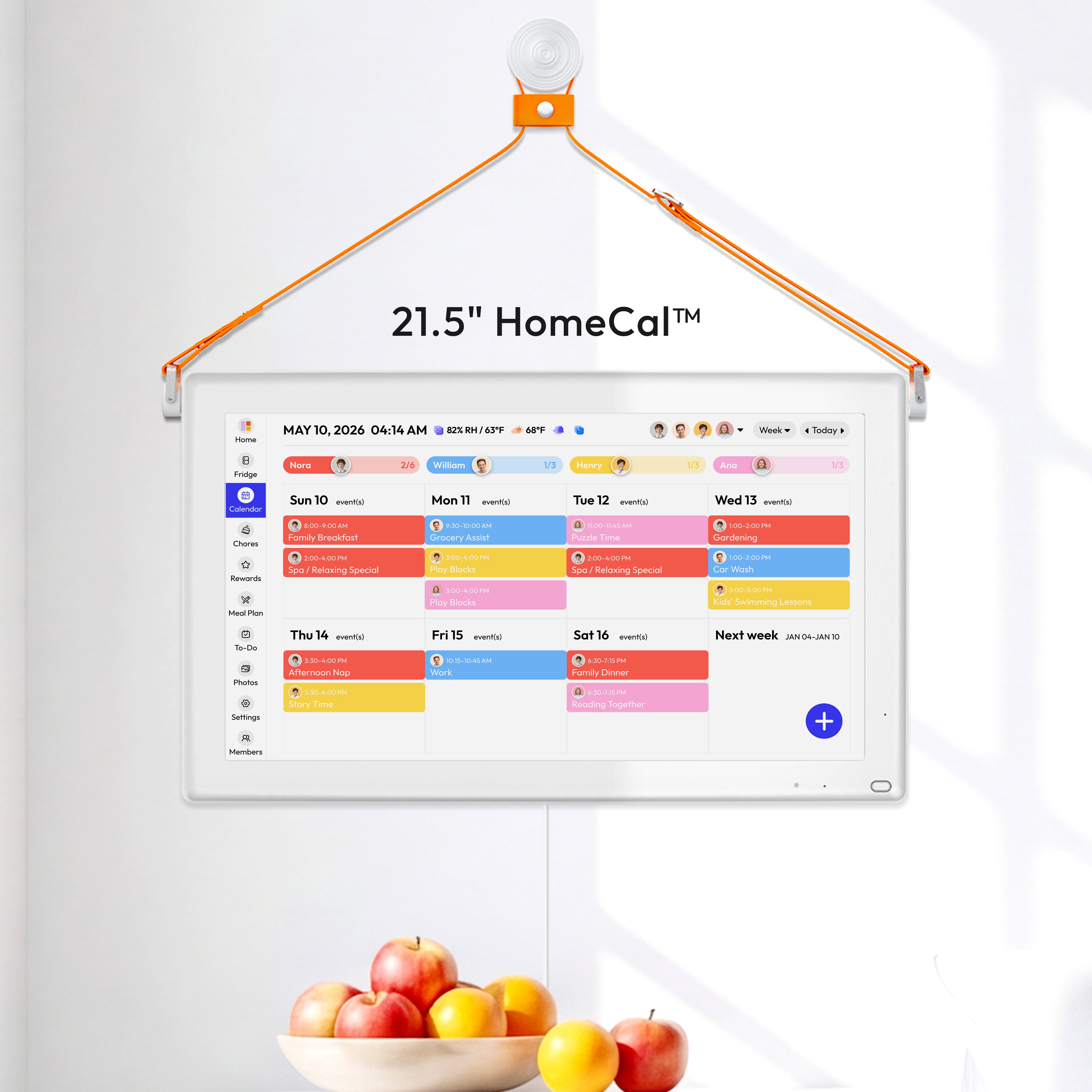
Put screen rules on the family schedule
Most families already schedule school, sports, pickups, and appointments. Screens should live on that same map. Once you do that, children stop treating device time like an unlimited background activity and start seeing it as one part of the day.
A central calendar works best when it marks two kinds of time:
- Green time for screens allowed under the rules
- Red time for no screens, such as meals, focused homework, morning routines, and wind-down before bed
The point isn't rigidity. The point is predictability. A child who knows there is a defined screen window after homework will push less than a child who has to ask every day and hope for a different answer.
Make transitions visible before they become fights
The hardest moments are rarely the middle of screen use. They're the handoffs. Off to dinner. Off to practice. Off to shower. Off to bed.
A visible calendar handles those handoffs better than spoken reminders because it externalizes the rule. The schedule says what happens next. The parent isn't inventing a consequence in real time.
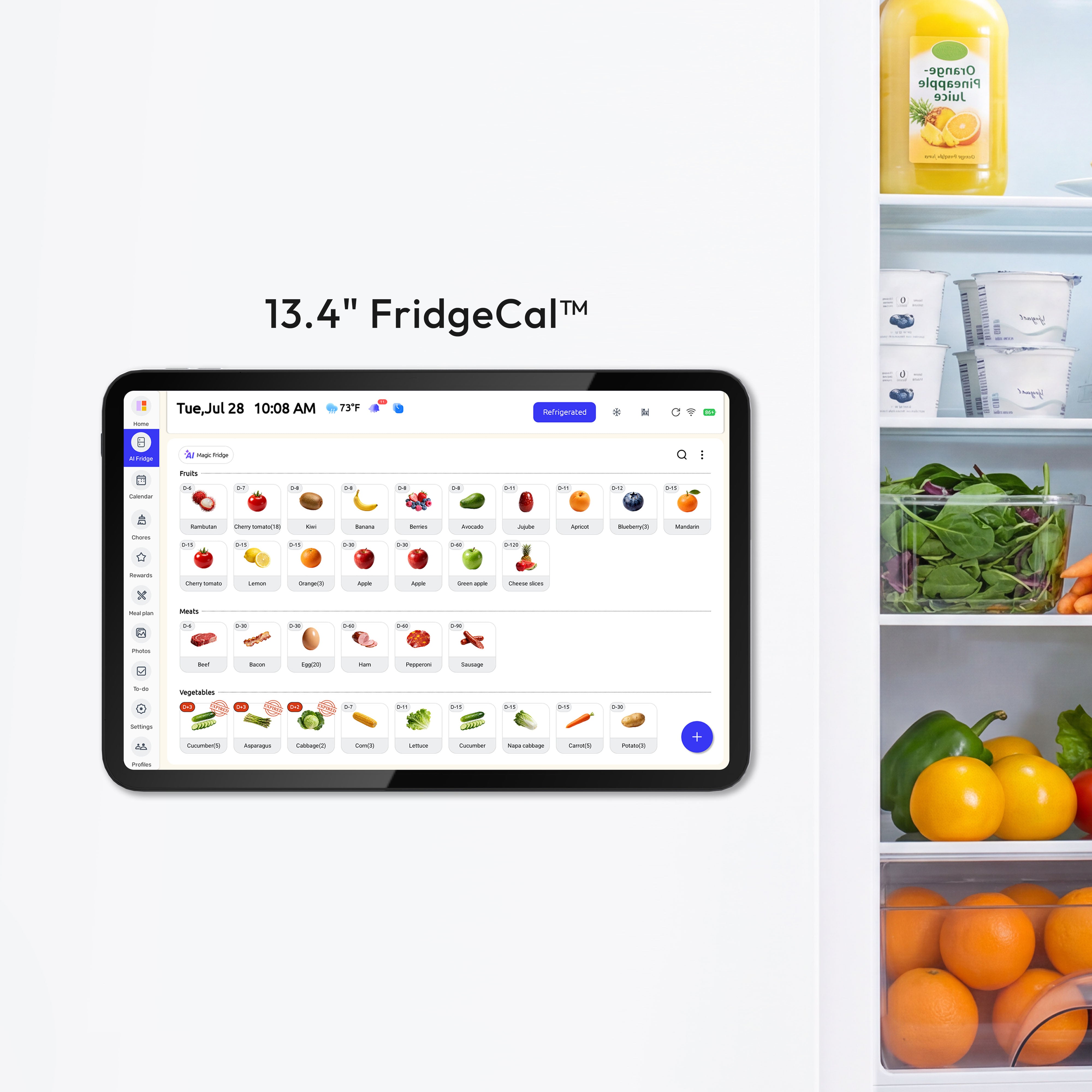
This is one place where Everblog can fit cleanly into family operations. Its shared wall display puts schedules, chores, and routines in one visible place, which is useful when screen windows need to line up with homework, meals, and activities instead of living in a separate app no one checks consistently.
A simple weekly setup that reduces negotiation
If you want this to work, keep the structure plain.
| Daily block | What kids should know |
|---|---|
| Before school | Screens are off unless there's a specific need |
| After school reset | Snack, decompress, check the plan |
| Homework block | School screens only, entertainment closed |
| Screen window | Starts only after required tasks are done |
| Evening wind-down | Devices leave common areas before bedtime routine |
If a child asks for screens outside the window, the answer should point back to the schedule, not launch a new debate.
Let the system carry some of the authority
Parents burn out when every screen decision requires a live ruling. A visible household calendar lowers that burden because everyone can check the same source of truth.
That matters even more in co-parenting or multi-child households. When one adult is cooking and another is handling pickups, nobody has to reconstruct the day from memory. The routine is already posted. Kids don't get a loophole just because they asked the less informed adult.
The best screen routines don't feel like surveillance. They feel boring. That's exactly why they work.
Earning Screen Time Through Chores and Contributions
Some families make screen time a default reward for existing. That setup creates constant pressure because kids learn to expect entertainment first and responsibility later. A sturdier model is to treat recreational screen use as something that follows contribution, not something that interrupts it.

Research on children under five points in the same direction. Parental modeling, consistent limit-setting, and the overall home environment are key drivers of children's screen use, according to this review of under-five screen use research. In plain terms, kids don't build better habits because of speeches. They build them because the household routine keeps pointing them there.
Why an earn-it model works better than constant denial
When kids hear “no screen time” all day, the parent becomes the obstacle. When kids learn “screen time follows responsibilities,” the structure becomes the teacher.
That shift matters for three reasons:
- It reduces entitlement because access isn't assumed.
- It teaches sequence because fun comes after responsibilities.
- It lowers emotional heat because you're enforcing a standing rule, not improvising punishments.
This doesn't mean every chore buys entertainment like a vending machine. It means the family is clear about order. Homework, basic responsibilities, and agreed household contributions happen first. Recreation happens after.
Build a screen economy that your child can understand
Keep it simple enough that a tired parent can still enforce it at 7:15 p.m.
A practical system often includes:
- Non-negotiables such as homework, hygiene, and basic room reset. These are expected and don't automatically earn bonus time.
- Contributing tasks such as emptying the dishwasher, folding laundry, feeding a pet, or helping with dinner cleanup. These can open or extend recreational screen windows.
- Behavior rules such as no arguing at shutoff and no sneaking devices. Breaking these affects access.
The key is visibility. If you want a good example of how to make that concrete, this screen time token system with chores before games shows how families can tie responsibilities to privileges without turning every day into a negotiation.
What to say when you introduce the system
Kids read tone before they process logic. If you present a new system like punishment, they'll fight it harder. State it as a household reset.
You can say:
“Screens aren't the first thing we do after school. In this house, we handle what needs to be done, then we enjoy what's left.”
Or:
“You don't lose screen time because I'm in a bad mood, and you don't get extra because you argued. The plan decides.”
That kind of script helps because it sounds calm, not personal.
A quick walkthrough can help if you want to see how another family command setup handles routines, rewards, and consistency:
Model the same logic yourself
An earn-it model falls apart if adults expect kids to delay gratification while they don't. If the parent scrolls through dinner prep, checks messages during conversations, or watches videos while telling a child to “go do something productive,” the child sees the contradiction immediately.
That doesn't mean parents need a perfect digital life. It means the household should show one consistent message. Screens are useful. They are enjoyable. They do not outrank sleep, work, chores, or human interaction.
The families who hold the line well usually aren't louder. They're steadier.
Troubleshooting Common Screen Time Management Hurdles
Even strong routines get tested. Children get tired, compare themselves to friends, and push for exceptions at exactly the moments parents have the least bandwidth. What helps most isn't a more dramatic consequence. It's changing the environment so the hard choice comes up less often.

A useful principle from expert guidance is behavioral architecture. Removing phones from bedrooms and setting a device curfew at least 1 hour before sleep works better than relying on willpower alone, as discussed in Time's expert-backed piece on how much screen time is too much.
When your child says I'm bored
Don't rush to solve that one. Boredom is often the moment when a child learns how to start something instead of waiting to be entertained.
Try responses like:
- “You can be bored for a bit.” This keeps you from treating boredom as a crisis.
- “Check your choices list.” Keep offline options visible somewhere easy.
- “Screens open later.” Short, calm, not defensive.
If every bored moment gets filled with a device, screens become the default regulator for discomfort.
When they say everyone else gets more
This argument is common because it puts parents on defense. Don't debate other households.
A steadier reply sounds like this:
| Pushback | Calm response |
|---|---|
| “Everyone else gets more screen time.” | “Different homes have different rules. These are ours.” |
| “But I already did one chore.” | “One task doesn't cancel the rest of the routine.” |
| “I need my phone in my room.” | “Phones charge outside bedrooms at night.” |
Those responses work because they don't invite a trial. They restate the rule and move on.
When turn-off triggers a meltdown
During these moments, weak systems usually crack. If parents extend time to avoid the tantrum, kids learn the tantrum is part of the shutdown ritual.
Use a short sequence instead:
- Give a warning before the transition.
- Name the next step clearly.
- End access when the time ends.
- Stay calm through the protest.
“The device goes off now. You can be upset, but the rule isn't changing.”
That line matters because it separates emotion from enforcement. Kids are allowed to dislike the limit. They are not allowed to negotiate the limit through escalation.
Change the room, not just the speech
The most effective fixes are often physical.
- Charge devices outside bedrooms so late-night use doesn't depend on self-control.
- Keep screens out of meals so family conversation doesn't compete with alerts and autoplay.
- Turn off nonessential notifications because constant cues pull kids and adults back in.
- Use shared charging spots so missing devices become obvious fast.
If a child keeps sneaking extra time, don't start with a lecture on trust. Start by changing access. Put the tablet away. Move the charger. Log out of entertainment apps after the allowed window. Reduce the opportunity, then rebuild responsibility.
The more your environment supports the rule, the less often you need a showdown.
Creating a Healthier Digital Life for Your Family
A calmer home doesn't come from one perfect rule. It comes from a repeatable structure that everyone can see and follow. That's the essential shift in screen time management. You stop treating screens as a daily argument and start treating them as one part of a well-run household.
The families who get traction usually do a few things at once. They decide what screens are for. They protect certain times and spaces. They make responsibilities visible. They stop improvising every answer under pressure.
What lasting progress actually looks like
You know the system is working when:
- Kids ask less often because the schedule is already clear.
- Parents repeat themselves less because the rules live outside their heads.
- Bedtime gets smoother because devices don't drift into the night.
- Conflict drops because screens no longer run the emotional temperature of the house.
That doesn't mean children suddenly love limits. It means the household stops orbiting around negotiations.
For families trying to fill the space that opens up when screens aren't the automatic fallback, resources like Ocodile's guide to natural play can help you build more inviting offline options without overcomplicating it. And if you're also trying to teach the bigger habits around devices, this guide on teaching kids tech hygiene fits naturally alongside a stronger screen routine.
What matters most is consistency. Kids can live with firm rules. What they struggle with is unpredictable rules. Once the home runs on a visible system instead of repeated debates, screen time management becomes less about policing and more about rhythm, responsibility, and peace.
If you're trying to run schedules, chores, meals, and screen routines from scattered apps and sticky notes, take a look at Everblog. A shared family hub can make the rules visible, reduce handoff confusion between adults, and give kids one clear place to see what comes next.


