

The problem usually doesn’t start with one big disaster. It starts with five small misses before 8 a.m.
A lunchbox gets left on the counter. Someone remembers the dentist appointment while backing out of the driveway. A child asks about spirit day when everyone is already late. The grocery list is somewhere, but nobody knows where. By dinner, the whole house feels like it spent the day catching up.
That’s why a weekly fridge planner works so well as a first fix. It doesn’t ask your family to learn a new app, remember passwords, or open another notification. It puts the week in the one place everyone already looks. The fridge becomes the household checkpoint.
Your Guide to a Calmer More Organized Family Week
Most families don’t need a prettier planner first. They need a planning surface that people see.
The kitchen is where school schedules, meal decisions, rides, chores, and reminders collide. A weekly fridge planner turns that traffic into one visible plan. That’s a practical reason these planners have become common household tools. Walmart lists over 413 distinct products in the category, which tells you this isn’t a niche system for stationery lovers. It’s a mainstream solution for busy homes dealing with real coordination problems (Walmart weekly fridge planner listings).

What changes first
The first improvement usually isn’t better time management. It’s less guessing.
When the plan is on the fridge, nobody has to ask three times what’s for dinner, when practice starts, or whose turn it is to take the trash out. A lot of family tension comes from hidden information. The planner fixes that by making the week public.
You’ll also notice fewer loose reminders floating around the house. Sticky notes on the counter. Texts nobody reads. School papers buried under mail. A fridge planner gives all of that a home.
Practical rule: If an event affects more than one person, it belongs on the fridge, not just in one person’s head.
Why this simple system sticks
Paper systems fail when they live in a drawer. Digital systems fail when only one person checks them. The fridge planner survives because it lives in the path of everyday life.
It’s also forgiving. You can write in soccer, erase a changed pickup time, add taco night, and hand a marker to your child for chore check-offs. That kind of low-friction use matters more than perfect formatting.
For many families, this is the first moment organization feels visible. Not theoretical. Not buried in a phone. Visible. That changes the tone of the week.
Find the Right Fridge Planner for Your Family
Not every weekly fridge planner earns its space. Some are too small. Some look clean online and become cramped by Tuesday. Some are great for meals but weak for family schedules.
The right choice depends less on style and more on how your household makes decisions.

Match the planner to the job
Here’s the simplest way to choose.
| Planner type | Works best for | Watch out for |
|---|---|---|
| Magnetic dry-erase | Families who update plans often | Cheap surfaces can ghost over time |
| Acrylic planner | Households that want a cleaner visual look | Some layouts prioritize appearance over writing room |
| Printable paper planner | People testing a system before buying hardware | Needs replacing every week |
| Chalkboard style | Families who like a decorative kitchen setup | Harder to read quickly in a rush |
Some modern boards are built for heavier use. Certain models offer 50% more daily writing space than standard boards, which matters if you’re planning for multiple children, split custody logistics, or a packed after-school schedule (HM Magnets weekly planners).
What matters more than style
Start with these filters:
- Writing space: If you need meals, appointments, and chores on one board, don’t buy a minimalist layout with tiny boxes.
- Magnetic strength: Weak boards slide or curl, and people stop trusting them.
- Layout logic: Some families need seven equal day columns. Others need a notes block, meal section, and grocery strip.
- Erase quality: If a board stains after repeated use, the planner starts looking messy even when your plan is solid.
A family with younger kids often does well with a board that includes simple check spaces and bold categories. A co-parenting household usually needs stronger day-by-day visibility with room for handoffs, school notices, and activity pickups. A couple focused on meal prep may prefer a planner that gives meals and groceries equal space.
A useful test before you buy
Tape a sheet of paper to the fridge and sketch your ideal week. Add school runs, dinners, one-off appointments, and a task list. If the page feels crowded, a small board won’t work either.
This is also where kitchen aesthetics matter in a practical way. If your family ignores cluttered visual surfaces, choose a cleaner design. Some households even pair the planner with a kitchen label system or a custom vinyl wall decal nearby to define a dedicated family command area rather than scattering reminders across cabinets and counters.
If you want examples of layouts that are built specifically for fridge use, this guide to a magnetic whiteboard calendar for fridge is a useful reference point.
The best planner isn’t the prettiest one. It’s the one your household can read in five seconds.
How to Build Your Weekly Plan Without the Overwhelm
A blank board can feel judgmental. That’s why many families buy a weekly fridge planner, use it once, and then leave it half-erased under a takeout menu.
What works is a repeatable routine. Keep it short. Keep it visible. Keep it collaborative.

Start with a Sunday reset
I like a quick Sunday evening reset because it catches the week before it starts drifting. This isn’t a family meeting with speeches. It’s a short review at the fridge.
Use this order:
- Add fixed events first. School deadlines, work meetings, practices, appointments, pickups.
- Add recurring anchors. Library day, laundry day, activity nights, shared calls with grandparents.
- Block meals next. Not gourmet plans. Just realistic dinners for the week.
- Leave one flex space. A blank slot protects you when the week changes.
- Write one holding area. Use a notes box for tasks that matter but don’t belong to a day yet.
That sequence matters. If you start with chores or wish-list tasks, the board gets crowded before the week’s real commitments are visible.
Plan for the week you actually have
A weekly plan gets stronger when you include obstacles, not just intentions. A study on weekly planning found that structured planning with obstacle anticipation led to a 56% increase in time-management efficacy and a 107% improvement in contingency planning (weekly planning study in PMC).
In plain language, families do better when they ask, “What might throw this off?”
That means writing things like:
- Late practice Tuesday
- Need packed lunch Wednesday
- Grandparent pickup Friday
- Dinner must be fast Thursday
If a day looks tight on the board, simplify dinner before the day arrives.
Use color only if it helps
Color-coding works when it reduces scanning time. It fails when it turns the planner into a craft project.
A simple version is enough:
- one color for each child
- one for adults
- one neutral color for meals and household tasks
If your kids are young, add symbols instead. A soccer ball icon or music note often gets read faster than words.
Give the planner jobs, not just dates
The most useful weekly fridge planner does more than track where people need to be. It also carries small operational details.
Try adding:
- a “needs prep” note for school items
- a “defrost tonight” reminder under tomorrow’s dinner
- a parking lot for errands
- one short family priority for the week
Later in the week, a visual walk-through helps catch what got missed.
Keep midweek corrections normal
A good plan doesn’t stay untouched. Wednesday is where most families either recover or give up.
Erase openly. Adjust openly. If Thursday became impossible, move the plan. The board is a tool, not a scorecard.
That’s why families stick with this method. It creates structure without pretending the week won’t change.
Beyond Schedules Integrating Chores Meals and Groceries
A weekly fridge planner becomes far more useful when it stops acting like a calendar alone. The win comes when the board connects time, food, and household work in one place.
That’s where mental load starts to drop.
Build one loop from dinner to shopping
Meal planning fails when it’s separate from the grocery list. The plan says “pasta bake,” but nobody notices you’re out of cheese until 5:40 p.m.
A tighter setup works better:
- write dinners directly on the planner
- keep a grocery section beside the meal area
- add ingredients the moment a meal hits the board
- check the fridge before finalizing the list
Strategic meal planning paired with proper fridge zoning can reduce household food waste by up to 25 to 30%, which is one of the strongest practical arguments for using the planner daily. Better visibility changes what you buy, cook, and use before it spoils.
Use fridge zones to support the planner
The planner and the fridge interior should support each other.
Keep ready-to-eat items visible. Group ingredients for planned meals. Store produce where it belongs so it survives long enough to be used. When the board says “stir-fry Wednesday,” you should be able to open the fridge and spot the vegetables for it quickly.
That’s especially helpful for families trying to reduce random takeout nights. If Friday is your intentional easier meal, having a standing fallback like pizza on the plan can be smarter than pretending every evening will support a full cooked dinner.
A realistic meal plan beats an aspirational one every time.
Put chores where the week already lives
Families often create a separate chore chart, then forget to look at it. That’s why I prefer folding chores into the weekly fridge planner itself.
A few examples work well:
- For younger kids: Add one or two visual tasks tied to the day, like feeding a pet or putting shoes away.
- For older kids: Use check boxes for jobs that need completion before activities or screen time.
- For shared adult tasks: Write them where schedule pressure is visible. “Trash out” belongs on the night before pickup, not on a generic household list.
The key is not to overbuild it. If every square becomes a dense task dump, nobody reads it.
A companion system can help here too. If you want a dedicated format for shopping that still lives in the same kitchen workflow, this guide to a magnetic grocery list for fridge is useful.
Keep the board decision-focused
The planner should answer these questions at a glance:
- What’s happening today
- What are we eating
- What do we need to buy
- Who is responsible for what
If it does those four jobs, the rest of the house runs better. Not perfectly. Just with fewer last-minute decisions.
Is It Time to Go Digital Moving Beyond the Magnet
A physical weekly fridge planner is a strong starting point. It builds the habit of shared visibility. It gives the family one reference point. It reduces the daily “nobody told me” problem.
Then life gets busier.
The board can’t update itself while you’re in the car. It can’t notify the other parent when pickup changes. It can’t add an appointment when your hands are full in the grocery store. That’s where many families hit the ceiling of a fridge-only system.

What breaks first in a physical-only setup
Usually, one person becomes the board manager. That person updates the planner, remembers the forms, rewrites changed times, and translates text messages into household action.
That’s workable for a while. It’s not scalable.
A physical planner also has location limits. It works beautifully in the kitchen and almost nowhere else. If a change happens at work, at school pickup, or during practice, the plan on the fridge becomes outdated until someone gets home and fixes it.
Why hybrid systems make sense
This is why the next step for many families isn’t abandoning the weekly fridge planner habit. It’s moving that shared-visibility habit into a system that also travels.
As of early 2026, 42% of US households had adopted smart displays, yet many family-planning guides still stop at static physical tools instead of addressing voice entry, syncing, and automatic updates (Etsy custom weekly fridge planner reference).
A hybrid or digital wall calendar solves practical friction points:
- Remote updates: Add or edit plans away from home.
- Shared access: Everyone sees the same version.
- Reminders: The system doesn’t rely on somebody remembering to remind everyone else.
- Task tracking: Chores and lists can be updated without erasing a board.
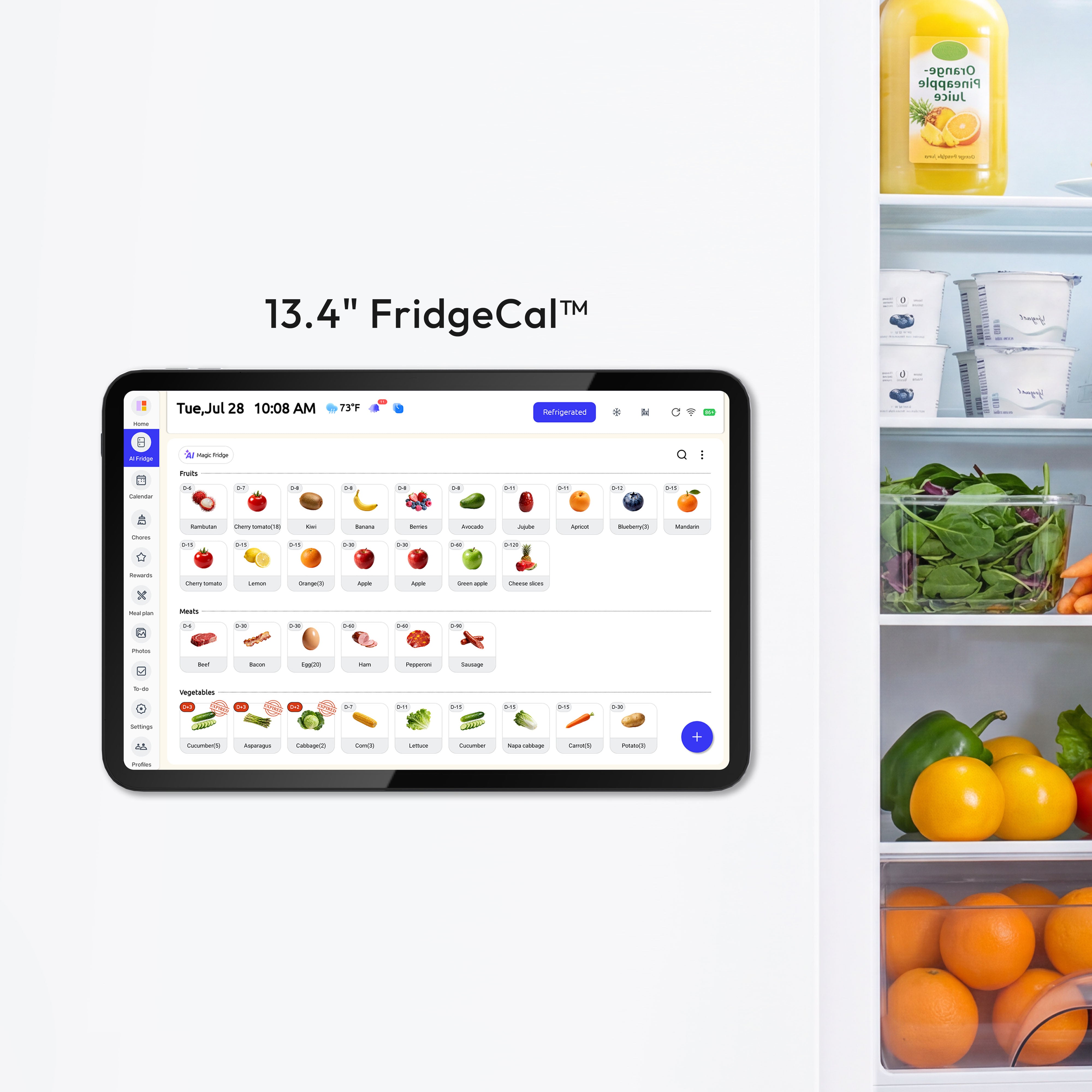
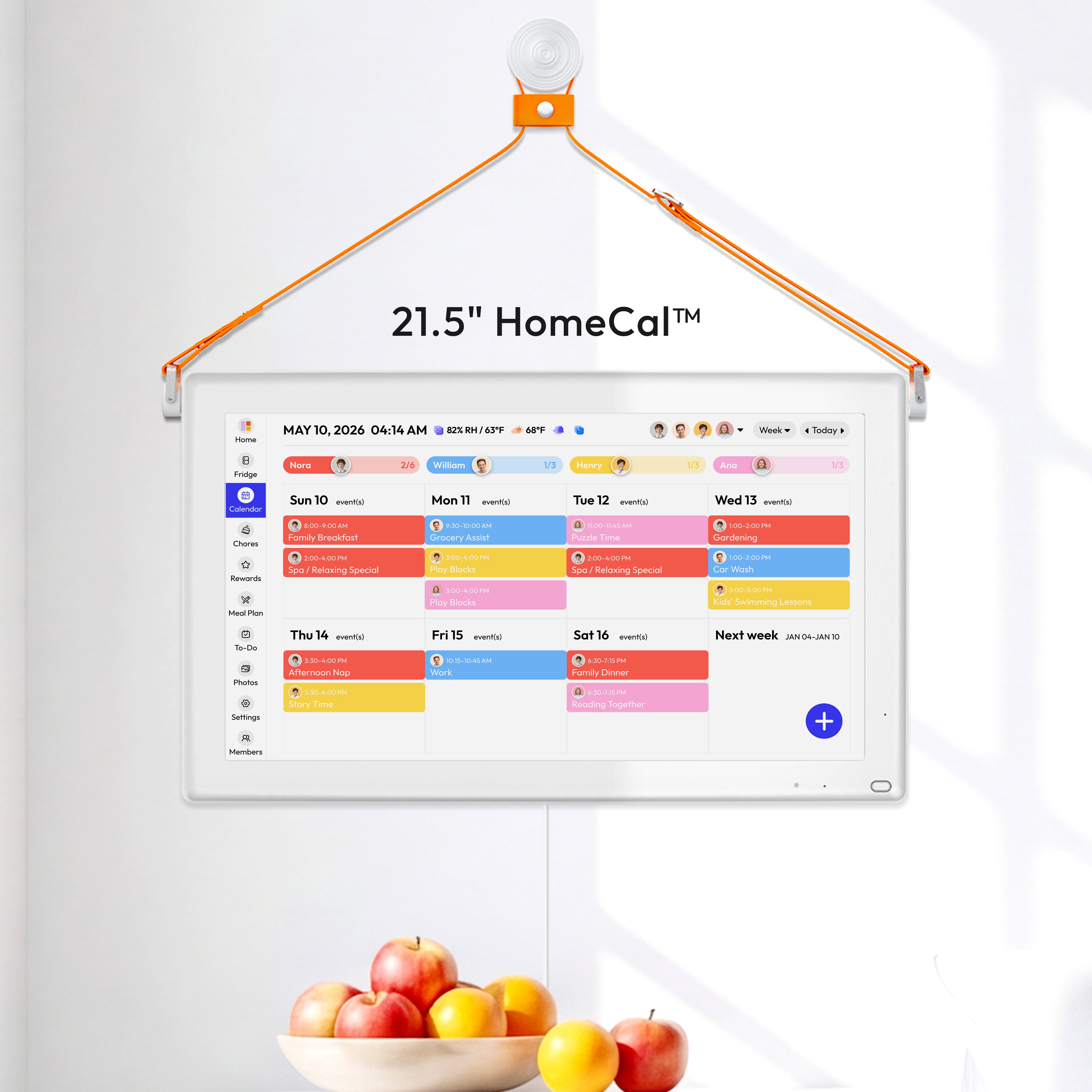
One option in this category is Everblog, a digital family wall calendar that combines shared scheduling, chores, meal planning, grocery lists, voice entry, and mobile updates in one display. If you’re comparing how a digital setup differs from a magnetic board, this overview of a digital family calendar is a useful starting point.
Keep the lesson from the fridge planner
The smartest upgrade isn’t “go fully digital because paper is outdated.” That misses the true reason the fridge planner worked.
It worked because it was visible, shared, and easy to understand.
So if you move beyond the magnet, keep those same standards. Don’t replace one neglected whiteboard with three ignored apps. Choose one shared system that still gives your family a single view of the day.
The goal isn’t more tools. It’s fewer places to check.
From Scattered Notes to a Synchronized Home
A weekly fridge planner is a small tool with a surprisingly big effect. It turns memory into visibility. It turns repeated questions into a shared reference. It turns the kitchen into a command center instead of a paper pile.
That matters because household organization rarely improves through willpower alone. It improves when the right information shows up in the right place at the right time.
What a good planning system actually does
A good system doesn’t demand perfection. It supports recovery.
When the week changes, the plan can change. When dinner needs to simplify, the board can show it. When chores slip, the household can see that too. The value isn’t in making family life rigid. It’s in making it legible.
Start simple and let the system grow
For many families, the physical planner is the right first step. It builds the habit of checking one shared place. It makes schedules, meals, and tasks visible without much resistance.
After that, the next move becomes clearer. Some households stay with a magnetic board and a stronger routine. Others reach the point where syncing, reminders, and mobile updates solve problems the board can’t.
Either path is fine if the result is the same. Fewer forgotten details. Less one-person mental load. More shared ownership of the week.
A calmer home usually doesn’t come from doing more. It comes from centralizing what matters and making it easy for everyone to follow.
If your family is ready to move from a fridge-only routine to one shared hub for schedules, chores, meals, grocery lists, and on-the-go updates, take a look at Everblog. It’s a practical next step for households that want the visibility of a weekly planner without the limits of a marker board.


