


A digital calendar is a schedule that lives on a phone, tablet, or home display instead of on paper. In a busy family home, it works as one shared place to see appointments, school pickups, meal plans, chores, and reminders without relying on one person to hold everything in their head.
In plain English, it is the modern version of the wall calendar on the fridge, but faster to update and easier to share. If a soccer practice changes, a doctor visit gets added, or dinner needs to move, everyone can see the update right away.
What a digital calendar actually means at home
In family use, a digital calendar is usually one of three things:
- A shared calendar inside an app people already use, like Google Calendar, Apple Calendar, or Outlook
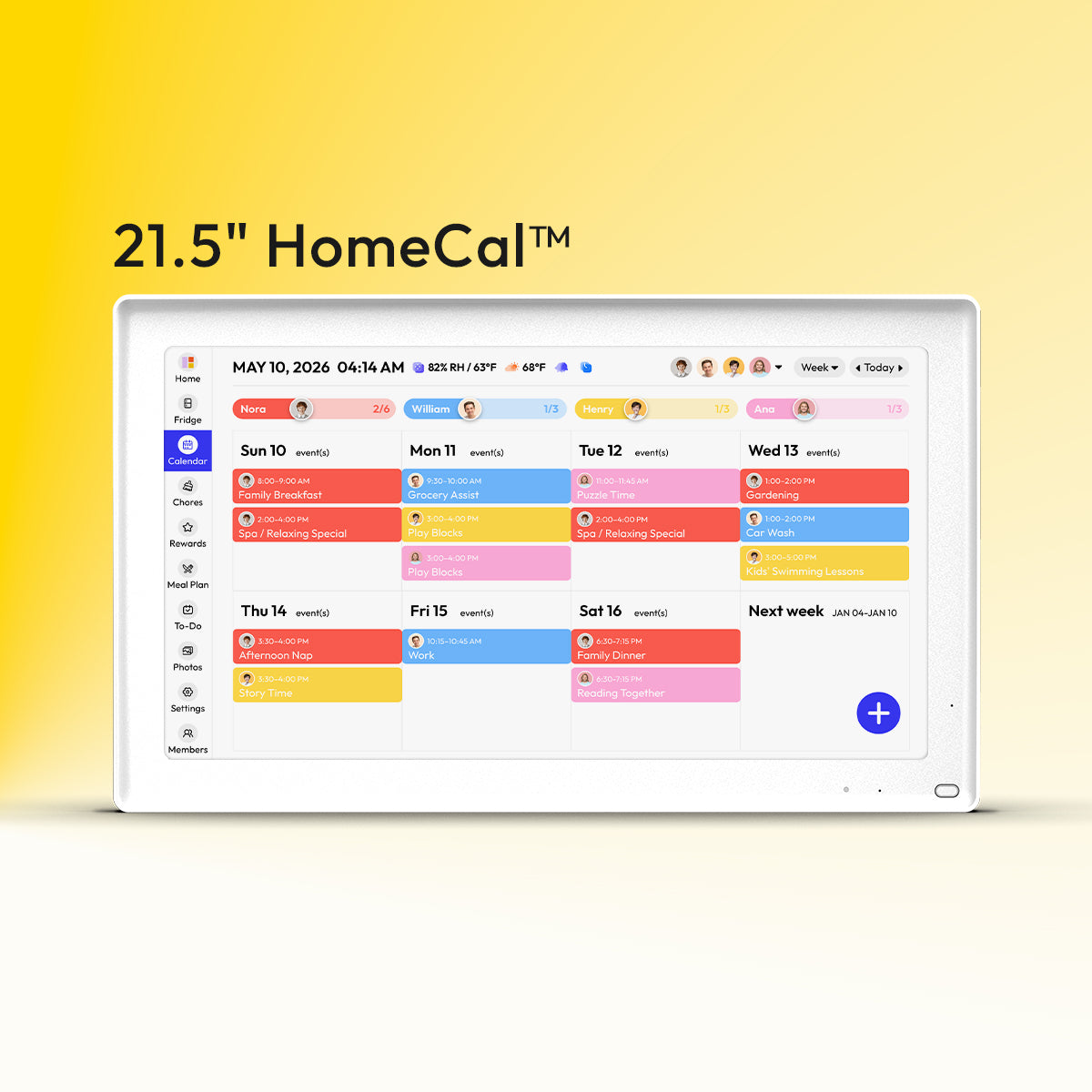
- A tablet or touchscreen that shows the family schedule in one visible spot
- A larger “family command center” that combines calendar events with tasks, chores, grocery notes, or meal planning

You may also see terms like “digital wall calendar,” “planning hub,” or “smart family display.” Most of the time, those are just different ways of describing a shared household screen that keeps everyday plans visible.
The big difference from a paper calendar is that a digital one is live. It can update automatically, repeat events, send reminders, and let more than one person add or edit plans.
How it works
Most digital calendars start with the calendar accounts your family already uses. For example, Google creates a Family calendar when you set up a family group, iCloud calendars can be shared privately with editing or read-only access, and Outlook lets you share a calendar and choose permission levels.
From there, the basic flow usually looks like this:
- Each person connects their calendar account or accepts access to a shared calendar.
- Events sync through the calendar service’s cloud system.
- A phone app, tablet, or wall display pulls that information into one view.
- Family members add new events, edit times, or check details from their own devices or the shared screen.
- Reminders appear as notifications, on-screen alerts, or both.
That word “sync” matters. It simply means the same event updates in more than one place. If a parent changes a school pickup from 3:00 PM to 4:00 PM on their phone, the shared calendar should reflect that change on the home display too.
A digital calendar is not magic, though. It only shows what gets entered and shared. If half the family uses it and half still texts plans at the last minute, the system will feel incomplete.
Why families use one
The practical reason is not technology. It is visibility.
Busy homes tend to break down at handoff points:
- Who is doing pickup
- Which kid needs to be where
- Whether dinner has a plan
- What needs to be bought
- Which chores are still open
A digital calendar helps because it turns private information into shared information. Instead of one parent keeping appointments in a personal phone calendar and trying to relay them by memory, the household gets one visible source of truth.
That is especially useful for recurring routines. Think of weekday school drop-offs, alternating custody schedules, weekly trash day, piano lessons, grocery restocks, or “take chicken out to thaw” reminders. These are small tasks, but they create a lot of mental load when they are scattered across texts, sticky notes, and separate apps.
What a shared home display adds
A phone calendar is useful, but it is still personal. A wall or fridge display changes the system because it is always visible.
That visibility does a few things:
- It reduces the need to ask the same scheduling question twice
- It helps kids and partners check the plan without needing access to someone else’s phone
- It makes chores, meal plans, and upcoming events feel like household information, not one person’s job
- It supports quick “in passing” planning, like adding a reminder while unpacking groceries or walking through the kitchen

For families that need a larger shared schedule view, a wall screen such as the Everblog 21.5" Digital Calendar can sync Google, Apple, and Outlook calendars and show tasks, chores, and events in a central family space.
What features matter in real life
Many digital calendar products list long feature tables. In daily family use, only a few details usually make a real difference.
1. Sync with the calendars you already use
This is the first filter. If your household already runs on Google, Apple, or Outlook calendars, the new system should work with those instead of forcing everyone into a separate scheduling app.
Otherwise, you create more admin work, not less.
2. Clear permissions
Some family members should be able to edit events. Others may only need to view them. That matters for grandparents, babysitters, older kids, or co-parents. Shared calendars work better when people can see exactly what they are allowed to change.
3. Fast input
A digital calendar only works if it is easy to update. If adding “dentist at 2:30 PM” takes too many taps, people stop doing it. Good systems make quick entry simple from a phone and from the home screen itself.
4. Visibility from where life happens
Placement matters more than flashy hardware. A hallway screen works well for departures. A kitchen screen works well for dinners, shopping lists, and after-school handoffs. A bedroom office display may be less useful if the rest of the family never sees it.
5. Color and grouping
Color-coding sounds minor, but it helps at a glance. One child’s activities in blue, another’s in green, work in gray, household tasks in red. The goal is instant reading, not a perfect system.
6. Reminders that help, not nag
A useful reminder is “leave for orthodontist at 3:40 PM.” An unhelpful one is a flood of alerts people begin ignoring. Families usually do better with a small number of clear reminders tied to real handoff moments.
Where meal planning and chores fit in
A family digital calendar often grows beyond events. That is normal.
Once a shared screen is already in the kitchen or hallway, people start using it for:
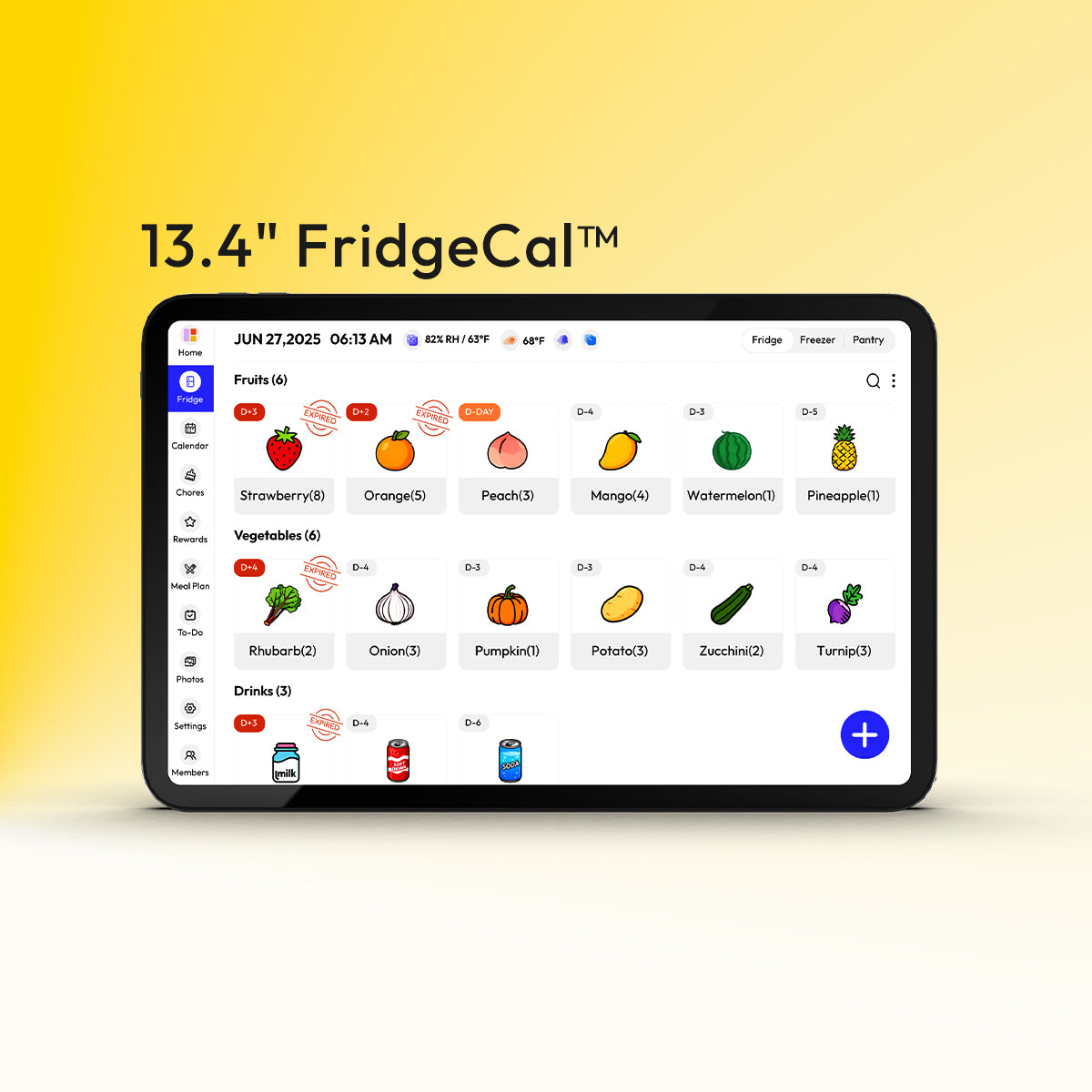
- Weekly dinners
- Grocery lists
- Expiration reminders
- Chore assignments
- School forms and packing reminders
- Countdown events like birthdays or trips

This is where a digital calendar becomes more of a household coordination tool than a strict calendar. That can be useful, as long as the screen still does the basic calendar job well.
The test is simple: does it make the next action obvious? If you can glance at the screen and know today’s pickups, tonight’s dinner, and which chores are still open, the system is doing its job.
What is mostly marketing noise
Some product descriptions make digital calendars sound smarter than they are. A few claims matter less than they seem.
A giant list of apps is less important than reliable calendar sync. Fancy screen specs matter less than whether the display is in the right place. “Smart home” language matters less than whether a tired parent can walk by, look once, and know what happens next.
For most families, the core value is still basic:
- one shared view
- fewer missed handoffs
- easier updates
- less mental load on one person
If a device also shows photos, music, or recipes, that may be nice. It is not the main reason the calendar works.
Who benefits most
A digital calendar is especially useful when:
- Two adults are coordinating pickups, work schedules, or shared custody
- Kids are old enough to check a schedule on their own
- Meals, groceries, and chores need to stay visible
- One parent has become the default memory system for the whole house
- The family already uses digital calendars, but the information is buried on separate phones
It may be less useful if nobody is willing to update it, or if the household schedule changes so little that a paper planner already works well.
FAQ
Q: Is a digital calendar the same thing as a smart display?
A: Not exactly. A digital calendar is the scheduling system itself. A smart display is one possible screen for showing it. Some smart displays do much more than calendar work, while some digital calendars live only on phones or laptops.
Q: Do all family members need to use the same calendar service?
A: Not always. Some households share one service, while others combine different calendars and display them together. What matters is that the events are actually shared and permissions are set correctly.
Q: Can a digital calendar replace a paper wall calendar?
A: For many families, yes. It usually works better when schedules change often or more than one person needs to update plans. Some homes still keep a paper backup for young kids, guests, or quick handwritten notes.
References


