



Yes, one screen can replace most of the fridge magnet chaos, but only if it works like a visible family hub, not like another app people forget to open. The best setup moves schedules, meals, chores, and reminders onto one shared display while keeping a small place for photos, kid art, and papers that still need to be touched.
Does your fridge hold three school flyers, a soccer schedule, two grocery notes, a birthday invitation, and a drawing that keeps sliding under the ice dispenser? A better kitchen command center can make the day easier to scan without stripping away the family warmth that made the fridge useful in the first place. Here is how to choose what belongs on the screen, what should stay physical, and where the whole setup should live.
Why the Fridge Became the Family Hub
The fridge became the default command center because it sits in the middle of daily life. People pass it before breakfast, after school, while packing lunches, and during dinner cleanup. That makes it better than a planner hidden in a bag or a calendar buried in a phone.
A good family command center is simply a designated place for schedules, tasks, papers, mail, homework, shopping lists, and to-do lists. Common versions include a calendar, whiteboard, file folders, menu plan, key hooks, charging area, and a family binder, and they work best when they are visible and placed where the family already gathers family command center.
The problem is not that magnets are bad. The problem is that the fridge has to hold too many jobs at once. It becomes a calendar, art gallery, school inbox, coupon pile, grocery list, lunch menu, permission slip holder, and reminder wall. By Thursday, the important note is often hidden behind the cute one.

What the Fridge Still Does Well
The fridge is still good for small, emotional things. A preschool drawing, a photo from a family holiday, a note that says “Good luck at tryouts,” or one paper that must leave the house tomorrow morning all make sense there.
Those items do not need automation. They need to be seen and felt. That is the part of the kitchen you do not want a screen to erase.
Where Magnets Start to Break Down
Magnets struggle when information changes often. Practice moved from 5:30 PM to 6:15 PM. The school pickup person changed. Dinner shifted because someone has a late meeting. A paper calendar or flyer may not reflect the update.
They also fail when the same information has to reach several people. If one parent updates a cell phone calendar, one kid checks the fridge, and another person relies on a group text, the household does not have one shared version of the week.
What a Screen Should Replace, and What It Should Leave Alone
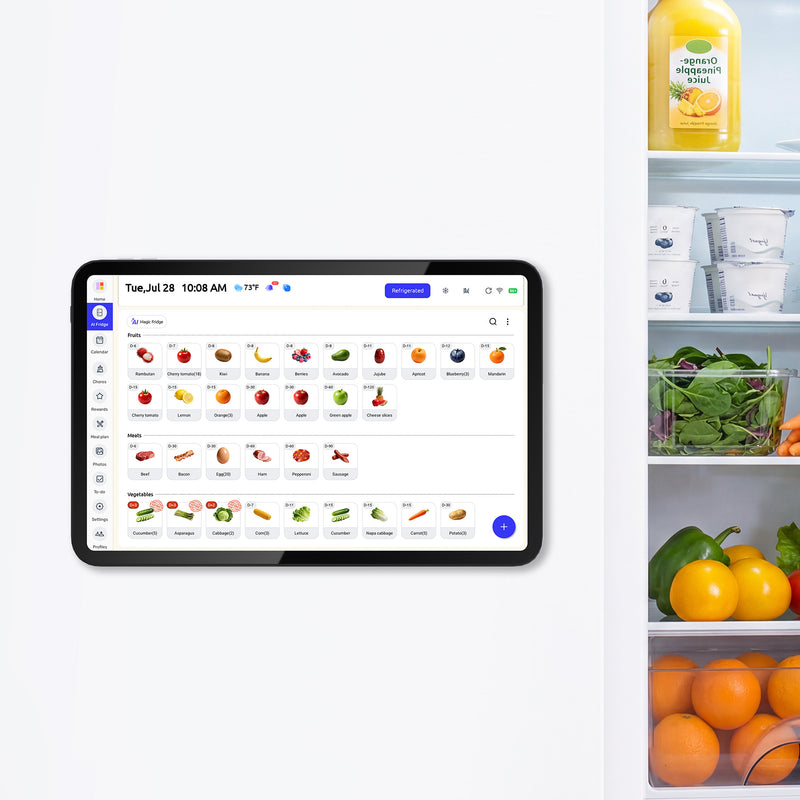
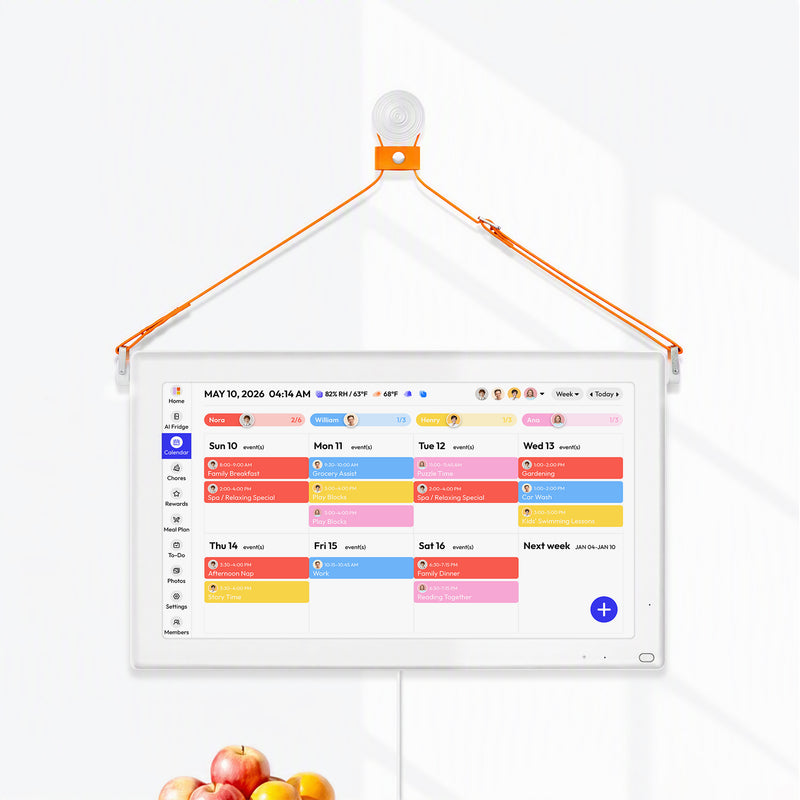
A digital family command center is strongest when it handles moving information. That includes the shared calendar, dinner plan, chore rotation, school reminders, sports practices, recurring bills, appointments, and quick household notes.

A physical zone is still better for things that are physical by nature. Mail, forms to sign, library books, keys, backpacks, and papers that must go back to school need a landing spot. A strong setup often combines a digital core with simple physical tools such as wall files, a magnetic board, labeled trays, chore charts, and artwork clips digital core.
Think of the screen as the family’s live schedule board. Think of the nearby wall, bin, or tray as the place for items that still need hands.
Best Jobs for the Screen
The screen should take over information that people ask about again and again. “Who has pickup?” “What’s for dinner?” “When is the dentist?” “Did anyone feed the dog?” “Is tomorrow pajama day?”
A shared screen can show the day, the next few days, or the whole week. It can also update quickly when plans change, which is where magnets and old flyers lose ground. If your family has multiple adults, older kids, or a changing activity schedule, this is where a digital calendar earns its place.
For example, a wall-mounted digital calendar such as the Everblog 21.5" Digital Calendar uses a large touch display to help families view plans, tasks, chores, and events in one shared place.
Good screen content usually includes:
- Today’s schedule, including school, work, appointments, practices, and pickup changes
- The weekly meal plan, even if it is simple meals like tacos, leftovers, pasta, and freezer pizza
- Chores that rotate, such as trash, dishes, pet food, laundry, and lunchbox cleanup
- Reminders that do not need paper, such as “Bring library book” or “Wear team shirt”
- A short grocery list or “running low” list
- A family note area for birthdays, visitors, or weekend plans
Best Jobs for Paper, Bins, and Clips
Paper should keep the jobs that paper is good at. Permission slips need a signature. A school picture form may need payment. A birthday invitation may need a gift note or RSVP date. A kid’s drawing may simply deserve a spot.
Use one small paper zone instead of letting every paper fight for fridge space. For example, one wall file labeled “Needs Action” and one clip rail for current kid art can protect the screen from clutter while keeping the kitchen personal.
How to Choose the Right Kitchen Location
Placement matters more than the device itself. A screen that no one sees will become wall decor. A screen in the wrong spot will annoy people, collect splatter, or glare during breakfast.
Start by watching your kitchen for one weekday morning and one weekday evening. Notice where people naturally pause. Common spots include the wall between the kitchen and mudroom, the side of a pantry cabinet, the garage-entry wall, a narrow hallway near the kitchen, or a small desk area beside the main traffic path.

A command center works best in a high-traffic area used daily, especially a kitchen, mudroom, entryway, or main hallway high-traffic areas. That does not mean it should sit in the busiest pinch point. It should be easy to glance at without blocking the person carrying groceries, opening the dishwasher, or helping a child with shoes.
Sightlines and Traffic Flow
Sightlines are the views people naturally have as they move through the room. A good screen can be seen from the breakfast table, the lunch-packing counter, or the path from bedrooms to the door. It should not require everyone to stand in front of it to read the basics.
Traffic flow is the path people take through the kitchen. Keep the screen near that path, but not inside a narrow bottleneck. If two people already bump into each other near the fridge, do not mount the command center there. A side wall near the pantry may work better.
A practical test is simple: stand where backpacks land, where coffee is made, and where lunches are packed. If you can read the date, first appointment, and dinner plan from at least one of those places, the screen is in the right neighborhood.
Wall Height, Glare, Outlets, and Kitchen Mess
Mount the screen at a height that works for the people who will use it. For many homes, the center of the display lands around 54 to 60 inches from the floor. If kids need to check chores or tap off tasks, go lower or add a small non-slip step only if it does not create a trip hazard.
Check glare before mounting anything. A screen facing a bright window may look fine at night and unreadable at 7:30 AM. Test the spot with a cell phone or tablet held against the wall during the times your family actually uses the kitchen.
Nearby outlets matter. A screen with a cord stretched across a counter will look messy and invite problems. Choose a spot near power, or plan a clean cord cover that does not run through a wet prep area.
Kitchen mess also matters. Avoid the wall directly above the stove, next to the sink splash zone, or above the spot where the blender throws smoothie drops. If the device must live near food prep, give it breathing room and keep it out of direct splatter range.
How to Keep the Heart of the Kitchen
A screen should reduce confusion, not make the kitchen feel like an office. The easiest way to avoid that cold feeling is to keep a small “human layer” beside the digital system.

That may be a narrow cork strip for one current school paper, two photo magnets, a clip for the newest drawing, and a small tray for forms. It may be a whiteboard where a child writes “pizza Friday” or a sticky note that says “Grandma visits Saturday.” The point is to limit the clutter without banning the warmth.
A useful command center can include a family calendar, dry erase board, bulletin board, hooks, bins or cubbies, magnetic board, and clock starter items. The screen does not have to replace every one of these. It can replace the parts that change often and sit beside the parts that make the space feel lived in.
Build a Small Personal Zone
Give personal items a boundary. For example, use one 12-inch-wide magnetic strip, one cork tile, or one framed clip rail. When it fills up, rotate items instead of expanding the clutter.
This helps children, too. They can still see their drawing or spelling test on display, but the calendar remains readable. The kitchen keeps its personality without turning every surface into storage.
Add a Family Ritual, Not Another Rule
The screen will only work if the household builds a light routine around it. Keep it small enough to survive busy weeks.
Try a 5-minute Sunday evening check. Review the week, add school events, choose easy dinners, and confirm who handles pickup. Then do a 60-second morning glance before backpacks leave the house.
This routine does not need to be perfect. If Monday’s dinner changes from chicken to sandwiches, update the screen and move on. The point is a shared source of truth, not a flawless household plan.
Digital, Paper, or Hybrid: The Real Trade-Offs
Digital calendars are convenient because they update fast and can sync across devices. Paper calendars often help people see the big picture. A kitchen screen sits between those two strengths: it gives the household a visible shared view while still allowing updates from a phone.
The paper-versus-digital question is not imaginary. A 2018 survey cited by a research center found that 70% of adults relied mainly on mobile or desktop calendars, while 28% relied on paper calendars 70% of adults. The same article describes studies where paper-calendar users were more likely to complete planned activities and reported a stronger big-picture view than regular mobile-calendar users.
That does not mean every family should go back to a paper-only system. It does suggest that visibility and big-picture scanning matter. If a digital screen shows the week clearly, stays in a daily path, and is easy for the household to read, it can borrow some of the strengths people like about paper while keeping the flexibility of digital updates.
Setup |
Works Best For |
Main Weakness |
Practical Fix |
Fridge magnets and paper |
Small households, simple weeks, personal notes |
Gets crowded and outdated |
Keep only urgent papers and family keepsakes |
Paper wall calendar |
Big-picture planning and quick visual scanning |
Hard to update from away from home |
Use it for weekly overview, not every detail |
Phone-only calendar |
Adults who already check devices often |
Kids and visitors may not see it |
Mirror key items on a kitchen screen |
Digital kitchen screen |
Shared schedules, meals, chores, reminders |
Can feel impersonal or ignored |
Add a small paper/photo zone and a daily glance habit |
Hybrid command center |
Busy families with papers and changing plans |
Needs boundaries |
Assign each zone one job |
A Note for Different Attention Styles
Some people need reminders where they can see them. Others tune out a busy wall after a few days. That is not a character flaw; it is a design issue.
If someone in the home is easily overwhelmed by visual clutter, keep the screen view simple. Show today, tomorrow, and dinner instead of a packed month view. If someone forgets tasks that are not visible, put the chore list on the main screen instead of inside a menu.
Avoid treating one system as the “right” system for every brain. The best command center is the one your actual household can use on a school morning.
A Simple Setup Plan for Renters and Imperfect Kitchens
You do not need a remodeled mudroom or custom cabinets. A useful setup can fit on a narrow wall, a pantry side panel, an apartment entry wall, or the end of a kitchen counter. Some command centers are built from modular wall systems, budget stations, narrow-wall setups, corner stations, entryway stations, desk stations, closet stations, chalkboard walls, or printable systems command center layouts.
Start by naming the problems before buying anything. Pick the top 3 to 5 pain points, such as paper clutter, chore disputes, meal planning stress, activity scheduling, or missed school reminders top 3 to 5 pain points. This keeps the setup from becoming a pretty wall that does not solve the real mess.
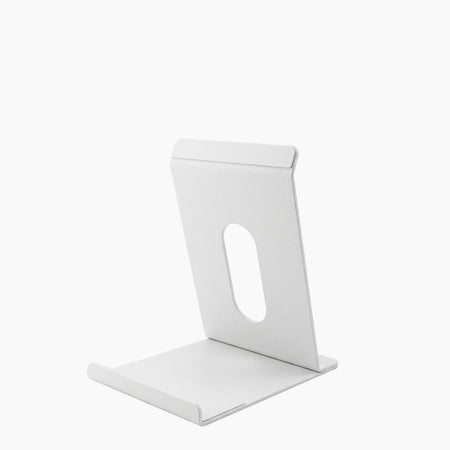
For renters, use removable mounting strips rated for the weight, a countertop tablet stand, a narrow rolling cart, or an over-the-door organizer near the kitchen. Keep power access in mind from the start. A screen that has to be unplugged every time someone uses the toaster will not last as a habit.
Action Checklist
- Choose the main problem first: missed events, paper clutter, meal stress, chore confusion, or repeated schedule questions.
- Pick one visible location near daily traffic, but away from sink splatter, stove heat, and tight walkways.
- Test sightlines by holding a tablet or printed calendar on the wall during breakfast and evening cleanup.
- Check glare at the time of day the kitchen is brightest.
- Confirm a nearby outlet or plan a clean cord route before mounting the screen.
- Create one small physical zone for mail, school forms, keys, or kid art.
- Set one weekly reset time and one daily glance habit so the screen does not become background noise.
A Practical Example
A family with two working adults and two school-age kids might place a wall-mounted screen on the pantry side wall, 58 inches from the floor. From the breakfast table, they can read the day’s first appointment, the dinner plan, and who has pickup.
Below it, they add two wall files: “Needs Signature” and “Return to School.” Beside it, they place one clip rail for kid art and one hook strip for keys. The fridge keeps a few family photos, but not the whole household schedule.
That setup does not make the kitchen sterile. It simply gives each item a job.
Common Mistakes That Make a Screen Feel Like Clutter
The first mistake is showing too much. A packed month view, weather widget, news feed, rotating photos, task list, and grocery list may look impressive for one day. Then people stop reading it.
Keep the main view boring in the best way. Today’s schedule, tomorrow’s reminders, dinner, and a short chore list are enough for most weekdays. Use deeper views only when someone needs them.
The second mistake is putting the screen where only one adult sees it. If it lives in a home office, it is not a family command center. If it is tucked behind the fridge door swing, kids will not use it. If it sits on a crowded counter beside dishes and snack wrappers, it will blend into the mess.
The third mistake is skipping ownership. Someone has to keep the system current. That does not mean one person carries the mental load forever. It means the household needs clear jobs: one adult handles appointments, another updates meals, kids check off chores, and everyone adds school notes before Sunday night.
FAQ
Q: Will a digital family calendar make the kitchen feel cold?
A: It can, if it replaces every personal touch. Keep a small area for photos, kid art, notes, and urgent papers. Let the screen handle changing information, and let the physical zone carry the warmth.
Q: Should the screen replace our paper calendar completely?
A: Not always. Paper calendars can help with big-picture thinking, and research summarized by a source found paper-calendar users in several studies were more likely to complete planned activities than mobile-calendar users paper-calendar users. A good compromise is to use the screen for live updates and keep a simple weekly paper view if your family plans better that way.
Q: Where should a kitchen command center go in a small apartment?
A: Use the most visible low-mess spot near the kitchen path. Good options include the side of a pantry cabinet, a wall by the entry, a narrow hallway, or a small counter stand near an outlet. Avoid the stove, sink splash zone, and any spot where the cord crosses a walkway.
Practical Next Steps
A digital family command center can replace fridge magnet chaos if it respects why the fridge mattered in the first place. The goal is not to remove family life from the kitchen. The goal is to make the important parts easier to see.
Start small. Move the shared calendar, meals, and recurring chores onto the screen. Add one paper tray and one personal display spot nearby. Then watch what your family actually checks for two weeks.
If the screen answers the daily questions faster, reduces missed tasks, and keeps the fridge from swallowing important papers, it is doing its job. The heart of the kitchen stays in the people, the routines, the notes, the photos, and the small moments around the plan.


