







Fair does not always mean everyone gets the same support. In a family, fairness means every child gets what helps them participate, feel safe, and grow.
Does one child ask, “Why does he get a picture schedule and I don’t?” right when you are trying to get everyone out the door? A shared visual system on the fridge can turn that argument into a calmer family routine because everyone can see what is happening, what comes next, and where they fit. This article offers simple language, practical examples, and household tools for explaining visual supports without making any child feel less important.
Fairness vs. Equity in Everyday Family Life
Children often understand fairness as sameness: the same bedtime, the same snack, the same number of turns, or the same amount of help. Equity means each person gets the kind of support they need to succeed. In a neurodiverse family, that distinction matters because one child may need visual reminders, transition warnings, or a First/Then board, while another child can follow spoken instructions more easily.

A helpful family phrase is, “Same love, different tools.” This keeps the focus on care instead of comparison. One child may wear glasses, another may need allergy medicine, and another may need a visual schedule near the fridge. The tool is not a prize. It is a support.
The home-based visual supports intervention for autistic children and children with related needs found that families used objects, photos, picture symbols, schedules, and guides to support communication, predictability, routines, social expectations, and anxiety reduction. That gives parents a grounded way to explain the issue: visual supports are not special treatment; they are communication tools.
What Visual Supports Are, in Sibling-Friendly Language
Visual supports are pictures, icons, written words, objects, checklists, schedules, or visual reminders that help a child understand expectations and routines. The visual supports used in homes and classrooms can help children understand rules, transitions, communication needs, feelings, and daily activities.
For a sibling, skip clinical explanations at first. Try: “Your brother’s brain understands the morning better when he can see it. Your brain may understand it when I say it. Both are okay.”
A fridge calendar works especially well because the kitchen is already a shared family space. A visual morning routine might show wake-up, bathroom, clothes, breakfast, backpack, shoes, and car. A sibling who does not “need” the schedule may still benefit from seeing the plan, especially on busy school mornings.

Why Neurotypical Siblings May Feel It Is Unfair
A neurotypical sibling may not be upset about the visual schedule itself. They may be worried about attention, rules, or responsibility. The real question underneath “Why does she get that?” may be “Do you care about me just as much?”
That is why the explanation needs both emotional reassurance and practical clarity. Say, “You are not getting less. She is getting a tool that helps her do the same family routine.” Then add something concrete: “You can use the family calendar too, and your soccer practice is on it in your color.”
Family rules posted at home should be realistic, age-appropriate, specific, and visible. The same principle applies here. When expectations are visible, children are less likely to assume that support equals favoritism.
A Simple Script for Explaining Equity
Use calm, ordinary language before the conflict gets heated. A good explanation might sound like this: “In our family, everyone gets help in the way that works for them. You might need help reading a hard word, Dad might need reminders on his phone, and your sister needs pictures to help her move through the morning. Fair means we help each person do their best.”
For older children, add a little more detail: “Equal would mean everyone gets the exact same thing. Equitable means everyone gets what helps them meet the same expectation. The expectation is still getting ready, joining dinner, or leaving for school. The support may look different.”
When a sibling says, “But I want one too,” consider saying yes when it is reasonable. Shared visual tools can reduce resentment. A child can have a checklist for homework, a color on the digital fridge calendar, or a bedtime card that shows reading, pajamas, teeth, and lights out.
Pros and Cons of Shared Visual Supports
Approach |
What Helps |
What Can Be Hard |
One child has individualized visual supports |
The support can match that child’s needs closely |
Siblings may see it as special treatment if it is not explained |
Everyone can use the family visual calendar |
The tool feels shared and normal |
The display can get crowded if every detail is added |
A digital fridge calendar |
Updates can sync and stay visible in a high-traffic space |
Devices can be expensive, and placement matters |
Paper or laminated cards |
Low-cost, tactile, and easy for young children |
Someone must update, replace, and organize the cards |
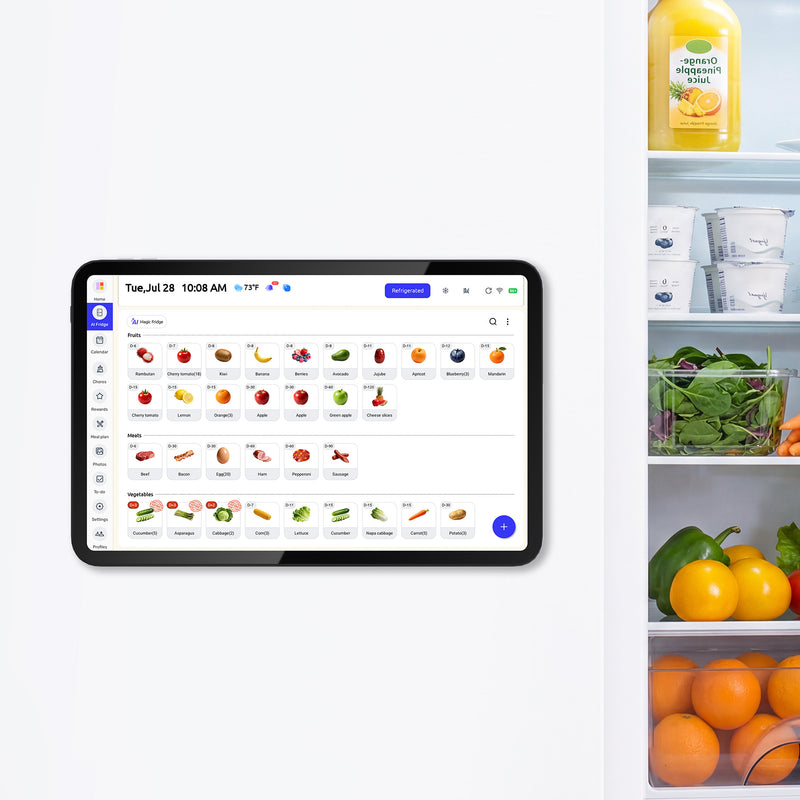
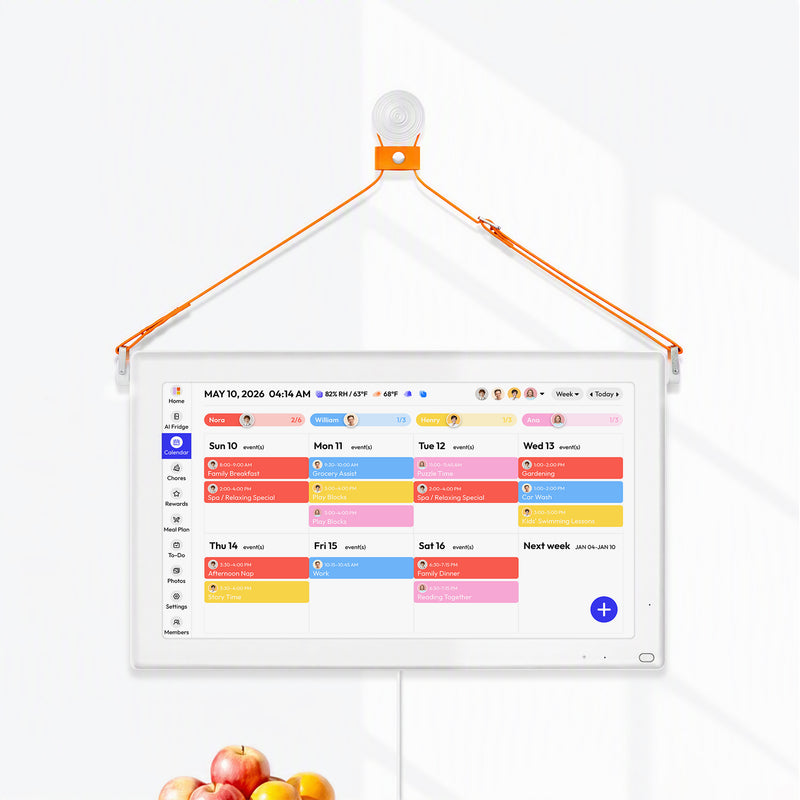
A digital wall calendar can make family schedule planning easier by putting everyone’s calendar information on one visible screen. The key is not buying the most advanced device; it is choosing a system children will actually see and use.
How to Use a Smart Fridge Calendar Without Creating Sibling Tension
Start with the whole family schedule, not only the child who needs support. Put school, work, practices, therapy, medication reminders, dinner plans, chores, and family time in one visible place. Use colors for each person so siblings can quickly see that everyone belongs on the calendar.

The family calendar can also help children understand days, months, sequencing, vocabulary, and early math concepts. That makes it more than a behavior tool. It becomes a shared learning and connection point.
For example, a Sunday evening fridge-calendar check-in might take 5 to 10 minutes. You can say, “Monday is blue for Dad’s late meeting, green for Maya’s soccer, and yellow for Leo’s speech session. Dinner is tacos. The hard part is Tuesday morning, so we’re adding a picture reminder for backpack and shoes.” This keeps the child with support needs from becoming the “reason” for the calendar. The calendar belongs to the family.
Keep Rules Equal, Adjust the Support
One common mistake is mixing up expectations and support. The family rule may be the same: speak kindly, keep hands to yourself, put shoes away, come to the table. The support may differ: one child gets a verbal reminder, another gets a picture card, and another gets a timer.
The family schedule should fit each family’s needs and stay visible, accessible, and understandable to children. That means visual supports should not become a secret system used only during hard moments. They work better when they are part of the everyday rhythm.
Try this at dinner: “Everyone helps clear the table. Sam has a picture card because it helps him remember plate, cup, napkin. Ava, you can read the chore list. Both of you are helping.”
When to Give Siblings Their Own Supports
Sometimes the best way to reduce comparison is to offer every child an age-appropriate planning tool. A neurotypical sibling may want a homework tracker, sports bag checklist, sleepover packing list, or birthday countdown. That does not dilute the support for the child who needs visuals. It teaches that asking for tools is normal.

The boundary is important: siblings should not be asked to manage the visual supports for the child with higher support needs. They can participate kindly, but they should not become an assistant parent. A healthy role sounds like, “You can point to the next card if he asks,” not “Make sure he finishes his whole routine.”
What to Do When Siblings Still Say “It’s Not Fair”
Pause the correction and name the feeling. “It feels unfair when someone else gets something different.” Then restate the family value. “You matter just as much. Different support does not mean different love.”
After that, offer a concrete repair. Ask what feels hard for them this week. Maybe they need more one-on-one time, a clearer chore chart, or their own calendar color. Many sibling complaints soften when the child sees that their needs are also being noticed.
Avoid turning the supported child into an example or lecture. Keep privacy intact. Instead of saying, “He has autism, so he needs this,” try, “Pictures help him understand mornings. Your checklist helps you remember library books. Everyone has tools.”
A Calm Home Message Children Can Grow With
Equity is not a one-time speech. It is a family habit. When children repeatedly see that each person gets useful support, consistent rules, and steady affection, the household becomes less about comparison and more about cooperation.
A visual schedule on the fridge is not a sign that one child is getting extra. It is a sign that the family is choosing clarity over chaos. Fairness grows when every child can look at the plan and know, “There is a place for me here.”


