



The right chore chart is the one your household will actually see, understand, and keep updating. For most families, that means a visible home hub paired with one simple digital tool for shared schedules, meals, and task reminders.
If your week keeps falling apart over missed pickups, last-minute dinners, or the trash nobody remembered, the problem is usually not motivation. It is usually a system that is too hidden, too vague, or too split across too many places. The good news is that you do not need a total household overhaul to fix that. You need a clearer format, a better spot for it, and a weekly rhythm your family can repeat.
Decide Between Paper, Digital, and Hybrid
A digital chore app fits busy, mobile households better than paper alone, especially when school, work, sports, and dinner plans shift during the day. Paper still works well for younger children and simple at-home routines because it is visible and easy to understand at a glance. The trade-off is that paper does not remind anyone, update away from home, or keep a history when people disagree about what got done.
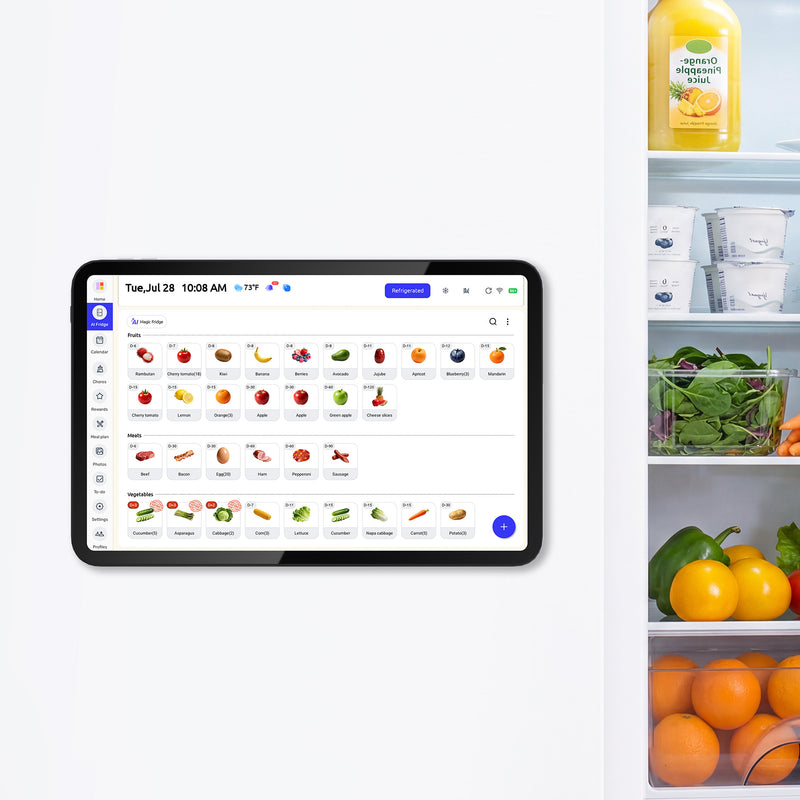
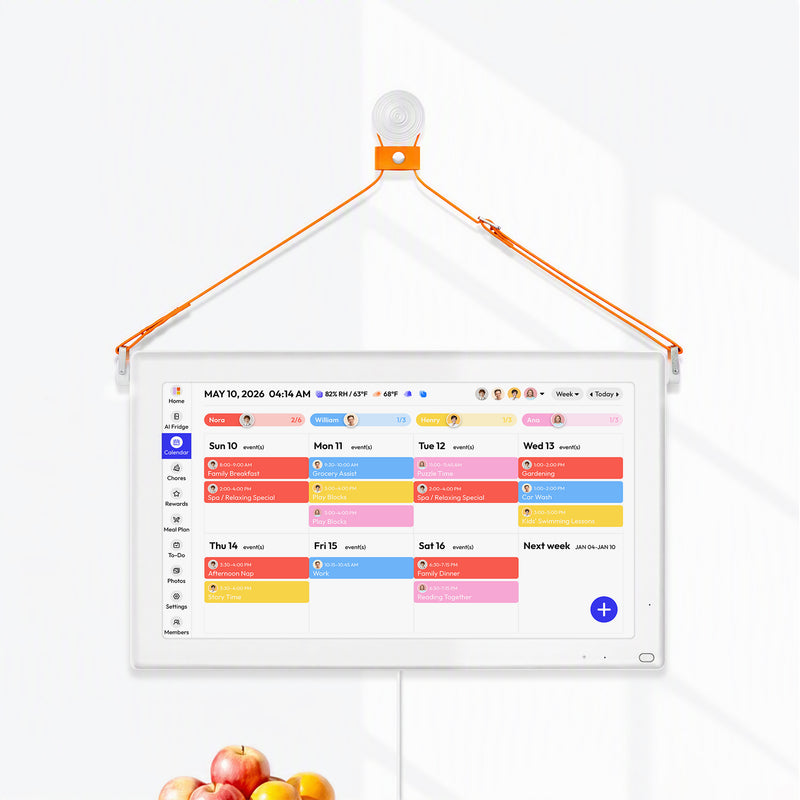
Most households do better with a hybrid setup than with one “everything” device. A good hybrid looks like this: one shared calendar app for events, one simple chore or task system for ownership, and one visible surface at home for the week’s meals, errands, and reminders. That setup lowers feature overload and keeps the plan visible even when someone ignores notifications. A wall-mounted display such as the Everblog 21.5" Digital Calendar can serve as that shared home screen by keeping plans, tasks, chores, and events visible in one place.

Quick format trade-offs
Format |
Best for |
Main strength |
Main risk |
Paper |
Younger kids, simple routines, one-home use |
Easy to see and cheap to start |
Manual updates and no reminders |
Digital |
Busy adults, split schedules, older kids |
Reminders, history, portable access |
Too many taps or too many apps |
Hybrid |
Most families |
Visibility at home plus reminders away from home |
Needs one clear “official” system |
If you are unsure, start hybrid. It gives you a visible kitchen-level plan without asking everyone to live inside an app all day.
Put the System Where Life Already Happens
High-traffic spots work best for a family command center, not the neat spare wall nobody passes. The kitchen entrance, mudroom, main entry, or the hall between the kitchen and the front or garage door usually wins because people naturally stop there to drop keys, sort papers, check the day, or grab a bag. Many useful setups fit on a 3- to 4-foot wall, so you do not need a huge makeover.
A shared planning tool works best when calendars, meals, and chores live in one place people already check. Put the calendar and meal plan at adult eye level. Keep the paper inbox within one step of the most-used door. Mount kid-facing lists low enough that children can see them without asking for help. If you use a screen, treat it as the main display, not a second system competing with the fridge.
What belongs on the wall
- One family calendar
- One meal plan for the week
- One place to capture papers, forms, and receipts
- One grocery list or fast-add method
- One launch zone for keys, bags, chargers, and grab-and-go reminders
If your wall has six different list styles and three separate calendars, it is already too crowded.
Turn Chores Into Clear Ownership
Paper chore charts often fail because they depend on parent follow-through and vague expectations. “Clean your room” sounds like an instruction, but it does not tell a child or partner what done actually means. “Make the bed, clothes in hamper, dishes out, and floor clear” works better because it is concrete, visible, and much harder to argue with.

A better chore system starts with a full task audit and balances work by time, not just by counting tasks. Include the hidden jobs too: checking school emails, noticing pantry gaps, planning dinner before a late practice, rotating outgrown clothes, and remembering that someone needs poster board by Friday. When possible, assign full ownership instead of shared hovering. One person should own the task from noticing it to finishing it.
Vague vs. clear task wording
- Vague: clean up after breakfast
- Clear: cereal bowl to sink, wipe place mat, backpack zipped by the door
- Vague: help with laundry
- Clear: move washer to dryer at 6:00 PM, fold your clothes, put them in drawers
- Vague: get ready for school
- Clear: brush teeth, shoes on, water bottle filled, library book in backpack
Clear wording reduces reminders because the chart is doing more of the teaching.
Match the System to Ages and Follow-Through
Age-appropriate chores and chart formats matter, because a system that works for a 6-year-old usually will not fit a 15-year-old. Younger children do better with simple visuals, short routines, and a small number of repeat tasks. Older kids can handle more real household work, including laundry, bathroom cleaning, simple meal prep, and shopping support. Teens usually respond better to real accountability than sticker-style praise.

Kid-friendly access matters as much as reminders. If the app needs a separate email, a separate device, or too much setup for a repeating task, many families will abandon it fast. Look for limited child access, shared-device mode, visible completion history, task rotation, and a setup flow that stays simple enough to finish in a few minutes.
A good rule for the first week is to start each child with 3 to 5 core tasks, grouped by time of day such as Morning, Anytime, and Evening. If someone struggles with working memory or transitions, keep the order stable, the wording short, and the screen or chart visually calm. That is not lowering expectations. It is making the job easier to complete without extra friction.
Link Calendar, Meals, and Chores in One Weekly Rhythm
A digital family calendar works best when school events, work meetings, sports, appointments, and meals sit in one shared view. That is what prevents the common chain reaction where practice runs late, nobody planned dinner, the groceries were never added, and the dishwasher becomes tomorrow’s problem. Your family should be able to answer three questions quickly: where does everyone need to be, what are we eating, and what must be done before bedtime?
The strongest organizer apps combine shared access, calendar sync, tasks, meal planning, and low-friction input. In plain terms, that means people can add what matters right away instead of saving it for later and forgetting. A school email, a photo of a practice schedule, a note that you need dog food, and a meal idea for Thursday should all have an easy path into the system. If you switch apps, run the old and new tools in parallel for 2 to 3 weeks so nothing gets dropped during the change.
A strong home hub is built around one shared calendar, one paper-capture system, and one meal-planning workflow. That is the part many families miss. The chart is not just for chores. It is the place where chores, meals, and schedule handoffs meet. When dinner, pickup, homework, and tomorrow’s forms are visible together, the household starts acting more like a team and less like a series of separate rescue missions.

A simple weekly rhythm
- Hold one short weekly planning session to map events, dinners, and jobs for the next seven days.
- Do one daily check-in that takes about a minute.
- Add groceries, forms, and new tasks the moment they appear.
- Review what got skipped at the end of the week and remove any step nobody is actually using.
FAQ
Q: Should one chart cover meals, schedules, and chores?
A: One source of truth is usually better than scattered tools, but that does not mean every feature must live in one app. Many families do well with one shared calendar plus one chore system, as long as everyone knows where the official plan lives and the home display matches it.
Q: Is paper ever enough?
A: Paper can work very well for younger children and visible home routines. It usually stops working when adults need reminders away from home, chores rotate often, or nobody wants to manually reset the system every day. That is why hybrid is often the easiest middle ground.
Q: What if my family ignores the chart after two weeks?
A: Most systems stick better when you start smaller and make tasks more specific. Cut the list down, keep only the highest-friction tasks, and rewrite anything vague. If needed, change the layout or rewards before you add more rules.
Practical Next Steps
Testing two possible command-center locations for a few days each is usually a smarter first move than buying more tools. Use this checklist to improve the next seven days without redesigning your whole house.
- Pick one high-traffic spot near the kitchen or main entry.
- Set up only the core pieces: calendar, meal board, grocery capture, and paper inbox.
- Start each person with a short list of clear, observable tasks.
- Decide who fully owns each recurring job, including the hidden planning parts.
- Run one weekly review and one daily check-in.
- Keep the system for two weeks, then cut anything people skip or do not understand.
The best chore chart is not the prettiest one or the most advanced one. It is the one that makes shared scheduling, meals, and chores easier to see, easier to hand off, and easier to finish.


