




A digital fridge calendar for kitchen organization often works because the kitchen concentrates recurring family decisions: what happens today, who is leaving, what is for dinner, what needs buying, and what must be prepared for tomorrow. The kitchen is not automatically the best location, however. The winning place is the one the household naturally passes at the moments when those decisions can still change action.
This guide explains why kitchens frequently perform well, when an entryway or hallway may be better, and how to run a seven-day placement test before mounting a display.
Why Does a Family Calendar Work Well in the Kitchen?
The kitchen earns attention because it is often visited at four useful moments: morning launch, after-school transition, dinner preparation, and evening reset. A calendar placed there can connect plans to physical actions without asking everyone to remember to open an app.
| Daily moment | Question the family asks | Calendar information that helps | Action beside it |
|---|---|---|---|
| Morning launch | Where are we going and what do we need? | First events, departure times, owner, weather-sensitive note | Pack lunch, collect bag, take medication |
| After-school transition | What changed and what comes next? | Practice, pickup, homework, revised times | Drop gear, start snack, message handoff owner |
| Dinner preparation | Who is home and when will we eat? | Arrival times, meal, preparation owner | Thaw, chop, cook, update grocery need |
| Evening reset | What must happen before tomorrow? | Next-day events, forms, clothes, charging | Pack bags, sign paper, move food to refrigerator |
The kitchen does not cause these habits. It shortens the distance between seeing a decision and acting on it.
Use Morning Visibility to Prepare for Departure
The calendar should show the next action, not a decorative month of event titles. A child needs “Leo, library book, leave 7:40” more than “School.” An adult needs to know who owns drop-off. Keep the morning view simple enough to read while moving.

Catch Schedule Changes After School
After school is when practice updates, missing supplies, and delayed arrivals surface. A shared screen gives the household one place to publish the revised plan. High-consequence changes still require direct confirmation from the new owner.
Dinner links schedule and food
The kitchen is unusually strong when the calendar also holds the meal plan or shopping list. Schedule context explains whether dinner must be quick, staggered, or moved. Food context reveals what needs using and which preparation step belongs earlier in the day.
Prepare for Tomorrow the Night Before
The most useful Tuesday-morning reminder may appear Monday at 7:30 p.m. Put uniform checks, signed forms, lunch preparation, and departure changes on the evening before they matter.
Why Keep a Shared Calendar Visible at Home?
A shared kitchen calendar lets family members check pickups, dinner plans, and upcoming tasks without opening their phones. Keep private details on personal devices and show only what affects the household, such as “Mom unavailable 3–5.”
Visibility alone does not divide the work. Name who handles each ride or task, share responsibility for updates, and confirm urgent changes directly. This guide to visualizing the family mental load can help families discuss responsibilities.
Can Everyone Read the Calendar Where You Put It?
The Five-Second View asks whether a person can answer one routine question from a normal path in about five seconds. It is an editorial test, not a device speed claim.
|
Question |
What should be visible |
Test position |
Failure sign |
|
What is next? |
Event, person, and time |
Kitchen entrance |
User must tap through several screens |
|
Who owns the ride? |
Named driver or caregiver |
Bag-drop area |
Event shows activity only |
|
What is dinner? |
Meal and approximate time |
Refrigerator or prep zone |
Meal plan lives in another app |
|
What must happen tonight? |
One or two next-day prep tasks |
Cleanup path |
Reminder appears too late |
|
Did the plan change? |
Revised time plus confirmed owner |
Main family path |
New time appears with no handoff status |
Use real family content during the test. A sparse demo calendar may look readable where a real week with school, work, sports, and care appointments does not.
Readability includes angle, height, and density
A calendar may be technically visible yet unusable from the table or doorway. Test adults and children at their ordinary positions. Increase text size or simplify the view before deciding that a bigger screen is necessary.
Glare changes throughout the day
Morning sun and evening pendants can make the same location behave differently. Check breakfast, midday, and evening conditions. These digital display glare and placement tips provide a structured way to evaluate reflections before mounting.
Kitchen, Entryway, or Hallway: Which Location Fits Your Family?
The kitchen wins only when its advantages match the household's movement. An entryway may be better for departures, while a central hallway may be better for bedrooms on different floors.
|
Location |
Strongest use case |
Main advantage |
Main risk |
Best test question |
|
Refrigerator |
Meals, shopping, close interaction |
Decision and action happen together |
Small view, door movement, surface limits |
Can users read and tap without blocking the kitchen? |
|
Kitchen wall |
Across-room weekly view |
More size and layout options |
Glare, heat, splash, outlet or mounting work |
Is it readable from table and prep path? |
|
Entryway |
Departures, bags, rides |
Seen immediately before leaving |
Weak meal and evening visibility |
Does everyone use the same exit? |
|
Central hallway |
Movement between rooms |
Frequent passive exposure |
Little space for interaction |
Do people stop long enough to act? |
|
Home office |
Detailed adult planning |
Privacy and focused editing |
Children and caregivers may never see it |
Is the calendar meant for one planner or the family? |
|
Counter |
Temporary or renter-friendly setup |
Easy to move and reach |
Uses workspace and can be obscured |
Will the surface stay clear? |
The entryway wins when departure is the main failure
If the household consistently forgets bags, keys, forms, or rides but handles meals well, the entryway may create more value. It works best when nearly everyone uses the same door.
A wall wins when several people read from a distance
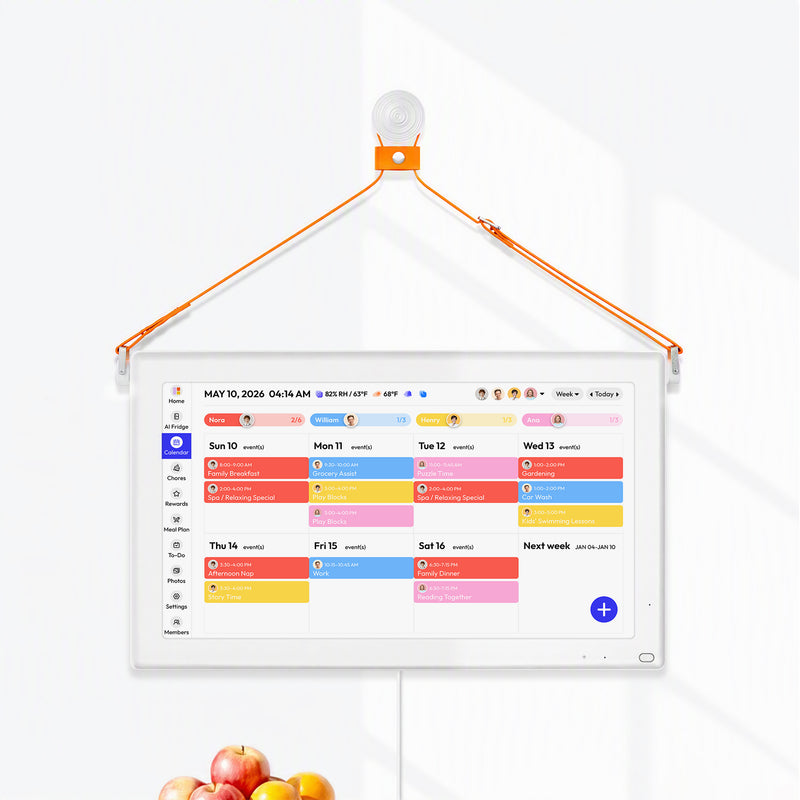
A larger kitchen or hallway wall can support an across-room week view. It may also keep the screen away from refrigerator door movement. Before choosing it, check structural mounting, outlet access, cable routing, glare, reach, and local installation requirements.
A private office wins for sensitive planning
Detailed work schedules, medical information, or custody notes may not belong in a public space. A household can keep the detailed source in an office while publishing neutral family-impact events to a shared location.

When Is the Kitchen a Poor Fit for a Family Calendar?
If your family usually leaves through a garage or gathers near an entryway, a calendar there may be more useful. Choose a spot people naturally check before leaving or making plans.
Keep the display away from heat, steam, splashes, and areas where it could block food preparation or refrigerator doors. In spaces visible to guests, use neutral event labels and keep sensitive details private.
Also check Wi-Fi and charging access. If either is inconvenient, try another location or a simple paper calendar.
Try the Location Before Mounting Your Calendar
A seven-day diary replaces assumptions with observations. Tape a full-size paper mockup in each candidate location or move a temporary board between them. Record only moments when someone genuinely needed the family plan.
|
Day or moment |
Where the question arose |
Question asked |
Could the candidate location answer it? |
Friction observed |
Change to test |
|
Monday morning |
|
|
|
|
|
|
Tuesday after school |
|
|
|
|
|
|
Wednesday dinner prep |
|
|
|
|
|
|
Thursday evening reset |
|
|
|
|
|
|
Friday departure |
|
|
|
|
|
|
Weekend activity |
|
|
|
|
|
|
Weekly planning session |
|
|
|
|
At the end of the week, score each location from one to five for visibility, readability, action proximity, privacy, installation effort, charging access, and traffic safety. Weight the dimensions that address the family's real failure. A home struggling with missed departures may weight exit visibility more heavily than meal context.
Count useful checks, not raw foot traffic
Walking past a calendar twenty times does not matter if nobody can pause or read it. Record when the location helped someone make or verify a decision.
Include non-phone users in the diary
Children, grandparents, sitters, and visitors may reveal a location problem that the main planner misses. A caregiver-friendly shared calendar should work without exposing unrelated private information.
When Should You Choose a Fridge-Mounted Calendar?
A refrigerator-mounted display fits when the diary shows that close-range kitchen decisions are the family's main need. The device should follow the winning location, not determine it.
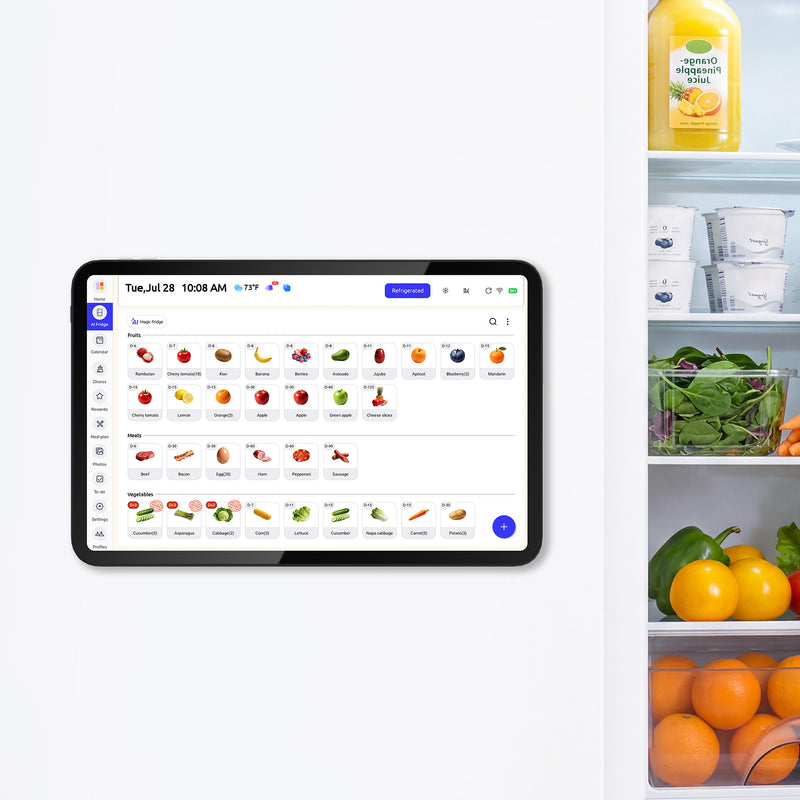
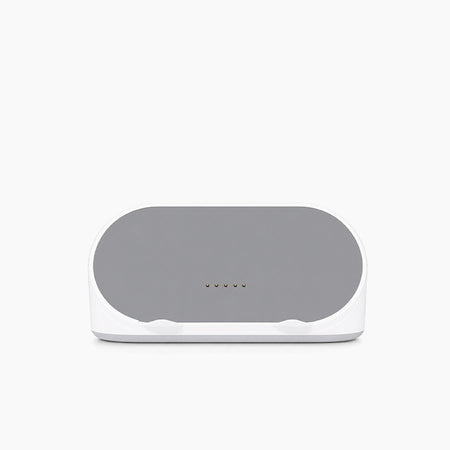
A compact calendar display for the refrigerator zone is currently described as a 13.4-inch rechargeable touchscreen with magnetic mounting, an included plate for suitable non-magnetic surfaces, calendar connections, chores, meals, lists, food tools, and mobile access. Those features can support a kitchen workflow, but buyers should verify refrigerator compatibility, clearance, viewing distance, charging access, account permissions, privacy, and Wi-Fi in the intended spot.
A compact screen may be less suitable when several people need to read the week from across a large room. A bigger wall format may be excessive in a small rental. Families can compare refrigerator and wall display formats, then reproduce the dimensions with paper before choosing.
The system still depends on household behavior. Someone must keep the plan current, name owners, confirm significant changes, and remove sensitive details. The device cannot ensure that the family will notice or act.
Set Up the Winning Location in Three Layers
Once the location passes the diary, build the view in layers.
- Essential calendar layer:today's events, owner, time, and location.
- Action layer:dinner, ride, packing task, or preparation deadline.
- Optional context layer:chores, shopping items, photos, or longer-range events.
If the display becomes difficult to scan, remove optional context before shrinking the essential information. Revisit the layout after one week and again when school or sports seasons change.
Frequently Asked Questions
Is the kitchen always the best place for a family calendar?
No. It is often strong because many daily decisions occur there, but an entryway, hallway, office, or counter may better match the household's routes, privacy needs, or available space.
Should the calendar go on the refrigerator or a nearby wall?
Choose the refrigerator for close interaction and food context. Choose a wall for larger size or across-room viewing. Test both with full-size paper mockups and real content.
How can I reduce screen glare in a kitchen?
Test morning, midday, and evening light; avoid facing bright windows; check off-angle readability; and consider placement or light control before relying on higher brightness.
What should stay off a kitchen family calendar?
Avoid door codes, detailed health information, confidential work data, and children's sensitive location details. Publish the household impact with neutral labels instead.
What if family members still do not check the display?
Confirm that it sits on a real decision path, simplify the visible information, assign ownership, and use direct communication for urgent changes. If the seven-day diary shows little useful interaction, choose another location or a simpler tool.


