






The first week of school doesn't fall apart on Monday morning. It falls apart two weeks earlier, when no one made a plan. Back to school family organization tips work best when they're already part of the routine before the first bell rings. For the parent holding the family schedule together, getting ready early makes the first school month feel calmer instead of rushed.
Why Back-to-School Week Always Starts in Chaos
Summer naturally has fewer rules and routines. The problem is that school isn't, and the gap between those two modes catches most families off guard every single year.
The Gaps That Appear When Summer Habits Meet School Schedules
Kids who stayed up until 10 p.m. all summer don't automatically shift back by the first day of school. Sleep schedules, meal timing, and after-school pickup logistics all need to shift weeks before school starts, not the night before. Families that skip this reset period spend the first two weeks grinding through low-level friction. Everyone's tired, everyone's late, and no one can pinpoint what went wrong.
What Happens When Parents' Work Calendars and School Calendars Never Meet
School events, half days, early dismissals, and parent-teacher conferences don't always land in your work calendar automatically. One parent assumes the other is covering pickup. The other assumed the first one saw the email. These are the moments that turn a Tuesday into a crisis. The fix usually is not just more texting. It's a single shared system that both parents actually check, without having to ask each other first.
Both problems come down to the same gap: no one has put the two calendars in the same place and looked at them together. That is what the two-week window is for.
What Should Families Do Two Weeks Before School Starts?

Two weeks sounds like plenty of time. It isn't, if you treat it like one big undivided task. Breaking it into two distinct phases, big-picture planning first and fine-tuning second, makes the whole process manageable.
Two Weeks Out: Systems, Schedules, and Big-Picture Planning
The goal two weeks out is to pull everything into one place. Start by placing work travel dates and recurring work commitments alongside the school calendar so both parents can immediately see the days where coverage will be thin. If kids have been staying up late all summer, start shifting bedtimes 15 to 20 minutes earlier each night now, not the week before school.
- Check for schedule conflicts now, before they become missed pickups or double-booked Saturdays that cost money to fix.
- Assign a pickup and drop-off owner for each day of the week, and make sure both parents are looking at the same version of the plan.
- Identify three or four weekly recurring tasks that need to be tracked, such as trash day, library book returns, and permission slip deadlines, and put them somewhere visible in the house, such as the kitchen that everyone passes by every day, not in a single person's phone.
This is also the right time to decide where the family schedule lives. A group text works for urgent updates. It does not work as a shared calendar. Pick one place where the full week is visible to everyone, and commit to it before the school year starts.
One Week Out: Routines, Dry Runs, and Filling the Gaps
The week before school starts is for testing what you built. Run the morning routine twice before the first day. Time it. You will find out exactly where the bottleneck is; it is usually shoes or breakfast, not the commute.
- Do a dry run of the school drive or bus stop timing on a weekday, not a weekend, because traffic is different.
- Prep the lunch station, backpack drop zone, and uniform area so they are ready to use on autopilot, not assembled fresh each morning.
- Confirm how your child's school sends schedule changes and make sure both parents are signed up to receive them.
Having the schedule built is the starting point. The harder part is making sure the daily routine actually runs it.
How to Build a Back-to-School Family Routine That Holds
Three time slots define how a school day goes: the morning out the door, the after-school handoff, and the 30 minutes before bed. Getting each one down to a repeatable sequence cuts the number of decisions the whole family has to make on the fly.
Morning Routines That Don't Depend on Everyone Being a Morning Person
The key to a functional school morning is reducing the number of decisions that happen before 8 a.m.. Anything that can be decided the night before should be: lunches, outfits, backpacks, all of it handled the previous evening.
Posting the morning sequence somewhere visible in the kitchen helps kids move through it without being directed step by step. Kids who have a clear visual reference for what comes next tend to need fewer reminders after the first few days. "Eat, brush, pack, shoes, out the door" takes less time when it is a habit than when it is a negotiation that starts fresh every day.
After-School Handoffs: Who Picks Up Who, and How Does Everyone Know
After-school logistics are where most families have their highest-stakes coordination moments. A missed pickup text, a dead phone battery, a last-minute meeting that runs long. The handoff chain breaks faster than anyone expects when the plan only exists in one person's head.
- Write down the default pickup plan for every day of the week and post it where both parents can check it independently.
- Identify a backup plan for each day and make sure everyone in the handoff chain knows it before they need it.
- If the plan changes mid-week, make sure the update reaches whoever is doing pickup, not just whoever sent the original text.
Evening Wind-Downs That Set the Next Day Up for Success
The 30 minutes before bed determine how smooth the next morning will be. A predictable wind-down sequence, homework reviewed, tomorrow's clothes set out, backpack at the door, creates continuity between days. Even five minutes of checking tomorrow's agenda and laying out what's needed can shave 10 to 15 minutes off the following morning.
Families that skip this step tend to spend the first 20 minutes of every morning recovering lost ground from the night before. That time adds up across a full school year.
A solid routine handles one child's day. When there are two kids with nothing overlapping on their schedules, the system needs one more layer.
How Do You Manage Two Kids' School Schedules at the Same Time?
One kid's schedule is manageable. Two kids with different schools, activities, and deadlines can be hard to manage without a system. Good memory and a lot of texts are usually not enough.
When Two Kids Have Two Different Schedules and Zero Overlap
A third grader and a sixth grader do not share dismissal times, lunch accounts, supply lists, or activity schedules. Managing them as one unit creates confusion. Managing them separately without a shared view creates gaps that fall through exactly when you need them not to.
A Wednesday in October: one kid has soccer at 4 p.m. across town, the other needs a library stop before a project deadline. Both parents thought the other had it handled. By the time anyone figures out the overlap, someone is already late. A schedule system that shows each child's week side by side makes that kind of conflict visible before it becomes a problem.
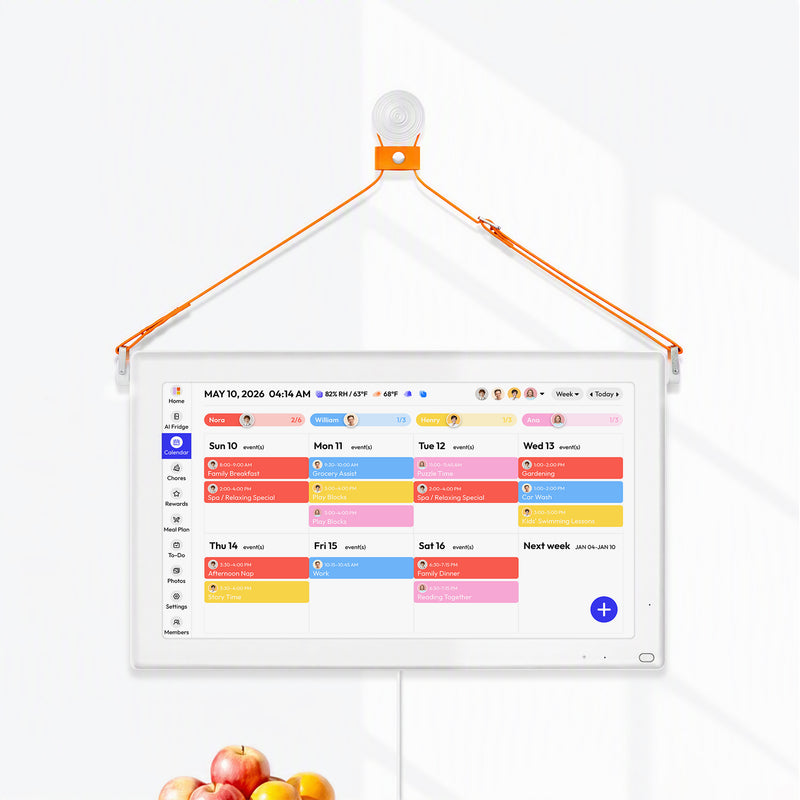
How Color-Coding by Family Member Actually Works
Color-coding is simple in principle but only useful if everyone uses the same colors consistently throughout the year. Assign one color per family member at the start of August and do not change it mid-semester.
- Each person's color covers their events, tasks, and recurring commitments.
- Overlapping days become visually obvious: two colors stacked on the same afternoon means someone needs to be in two places at once.
- Kids old enough to read can track their own color without pulling a parent into every question.
The Family "At a Glance" View That Reduces the Need for Group Texts
A weekly overview, not a daily list and not a phone notification, gives the whole family a shared reference point. When everyone can see the same week at the same time, fewer things get missed and fewer questions get asked out loud.
|
View Type |
Best For |
What It Shows |
|
Day View |
Same-day logistics |
Hour-by-hour schedule for every family member |
|
Week View |
Conflict spotting |
All events side by side across 7 days |
|
Month View |
Advance planning |
Upcoming deadlines, travel, and school events |
For families with two kids on different schedules, the week view is where double-bookings become visible before they become phone calls.
Knowing what the schedule looks like is one thing. Where it physically lives in your home determines whether anyone actually sees it.
Where Should Your Family's Back-to-School Schedule Live?
Where you put the schedule matters as much as what is in it. A plan buried in an app nobody opens is the same as no plan.
Why the Kitchen Is Where the Schedule Should Live
The kitchen is the one room everyone passes through every day. Morning cereal, after-school snacks, dinner prep. A schedule that lives there gets seen without anyone having to think about checking it. The phone requires intent. The kitchen requires nothing.
What It Looks Like When the Plan Is on the Fridge, Not Buried in a Phone
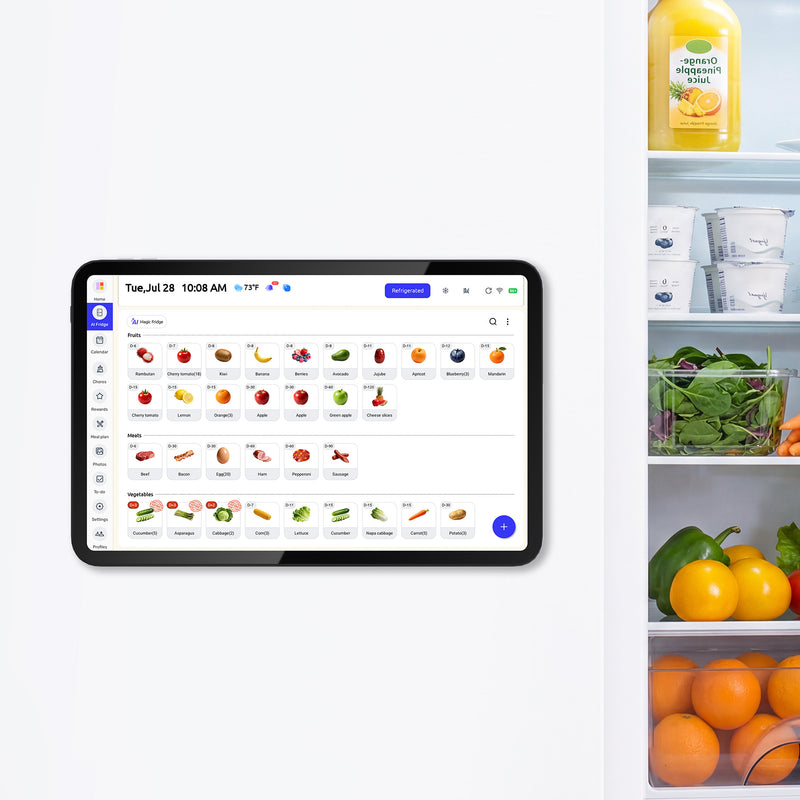
Two mornings, two different outcomes. In one, you are asking your kid if they have PE today while scrolling through your phone at the kitchen counter, trying to remember where you saved the school calendar PDF. In the other, the week is right there on the fridge door: your daughter's soccer practice in blue, your son's orthodontist appointment in green, your 9 a.m. call blocked in orange.
No app had to be opened, and fewer questions had to be asked.
That is what a visible, always-on schedule does for a family. It reduces the number of reminders, texts, and last-minute questions, which is exactly where it belongs on a Tuesday morning before school.
One Screen, Every Family Member's Week, No One Out of the Loop
When back to school season arrives and the schedule gets dense, the families who stay calm are the ones who can see the whole picture at once. Not in a thread. Not spread across three apps. On one screen, in the kitchen, where everyone walks past it at least twice a day.
The fridge door is often one of the few places most family members pass without being asked to. A calendar placed there does not require a new habit. It fits into the routine that already exists, and it keeps the whole family in the loop, including the parent who did not send the last group text.
The families that go into September without that friction are usually the ones who made one decision in August: where does the plan live, and who can see it without being asked.
Start the School Year Strong With Back-to-School Family Organization
The two weeks before school starts are one of the best windows to fix the plan before it gets tested. Build the schedule, run the routines, and put the calendar somewhere the whole family sees it. The Everblog FridgeCal™ Calendar mounts on the fridge door in seconds, no tools needed, and keeps the family schedule visible to everyone who walks through the kitchen, with no subscription required.
FAQs About Back-to-School Family Organization
Q1. How Long Does It Take to Adjust a Child's Sleep Schedule for School?
Plan on one to two weeks. Shift wake-up and bedtime earlier by 15 to 20 minutes every few nights so the change stays gradual. Trying to reset the night ahead of the first day rarely works, since the body needs time to adjust.
Q2. When Should I Start Buying School Supplies?
Mid to late summer works well. Buy the basics once the school posts its supply list, usually a few weeks out, and wait on classroom-specific items until teachers confirm them. Shopping early avoids picked-over shelves and last-minute price jumps.
Q3. Is a Paper or Digital Family Calendar Better?
For families with simple schedules, a paper calendar or phone app may be enough. However, households managing school events, extracurricular activities, work commitments, and shared pickup responsibilities often benefit from a digital family calendar that updates automatically and stays visible to everyone. A fridge-mounted digital calendar can help reduce missed information, duplicate planning, and last-minute schedule confusion by giving the entire family one shared source of truth.
Q4. How Do I Organize School Papers and Permission Slips?
Set up one folder or bin per child for active paperwork, and recycle anything you do not need to keep. Handle each paper once: sign it, log the date somewhere shared, and return it to the backpack the same evening so nothing gets lost.
Q5. How Do I Help My Child Feel Ready for the First Day of School?
Walk through what the first day will look like, from wake-up to pickup, so there are fewer unknowns. Visit the school or meet the teacher early if you can. Knowing the plan tends to settle first-day nerves better than a pep talk.


