





If your fridge is covered in abandoned chore charts, half-erased reminders, and one sticky note that just says “BACKPACK,” you’re not looking for another cute printable. You’re looking for a checklist for kids that survives real life. School mornings move fast, kids forget steps they absolutely knew yesterday, and parents end up becoming the family’s backup memory system.
The hard part isn’t writing tasks down. It’s building a system that kids will use, and that adults can maintain when work, school pickups, meals, and sibling drama all hit at once. The best checklist tools reduce nagging, make expectations visible, and give kids a clear path from “what am I supposed to do?” to “done.”
That matters even more for families navigating sensory needs, attention challenges, or routine disruptions. If that’s part of your day-to-day, this guide on understanding routine and autism is worth reading alongside the tools below.
1. Everblog

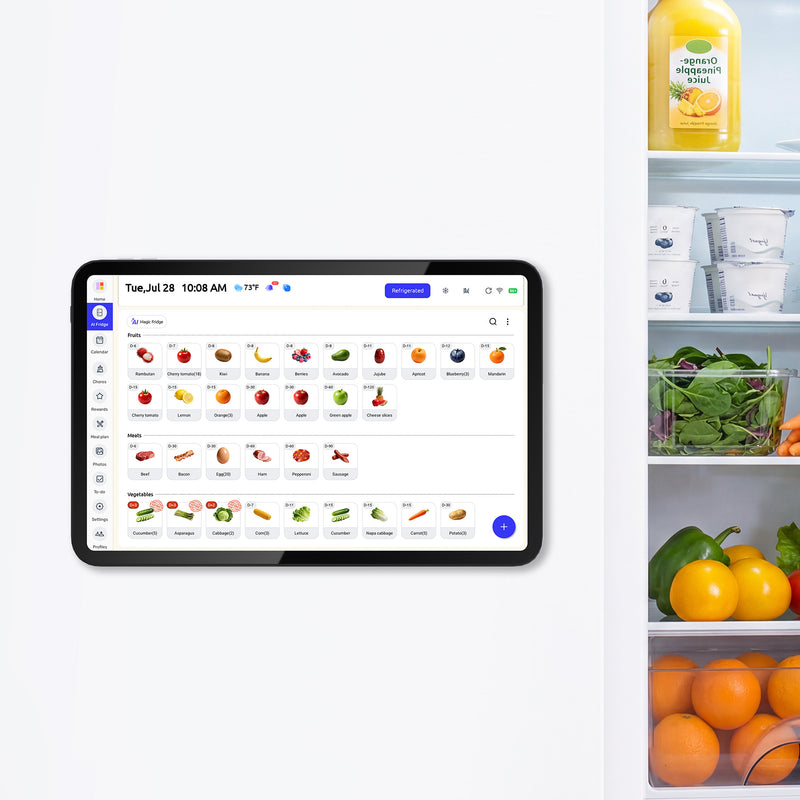
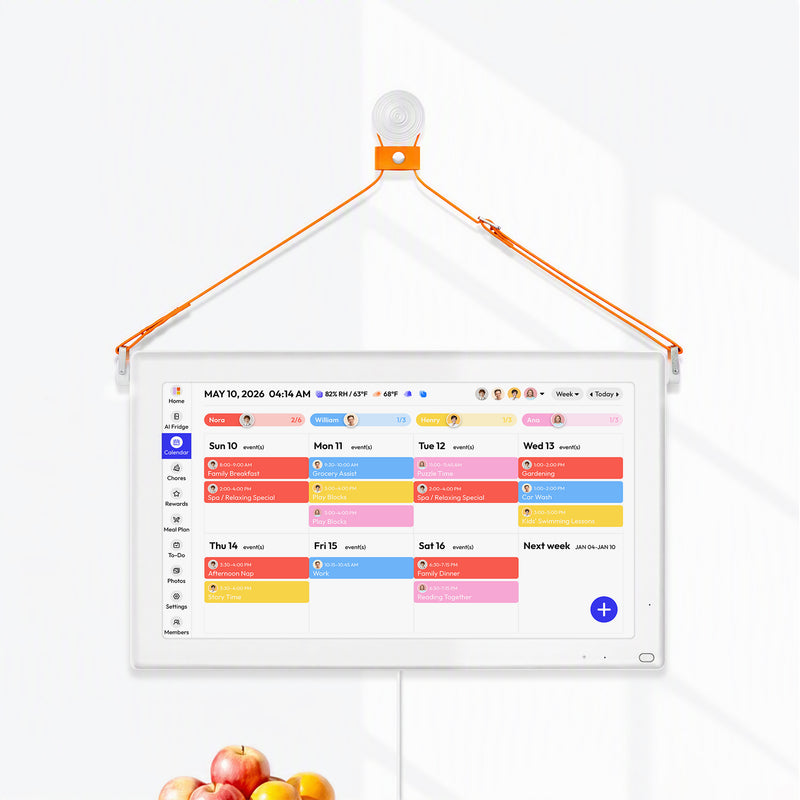
Everblog fits families who are tired of managing five separate systems just to get kids through the day. Instead of treating a checklist as a standalone chart, it puts chores, schedule, meals, and rewards on one shared screen in a fixed place at home. That setup matters for younger kids and distracted kids because the list stays visible. It does not disappear into a parent’s phone.
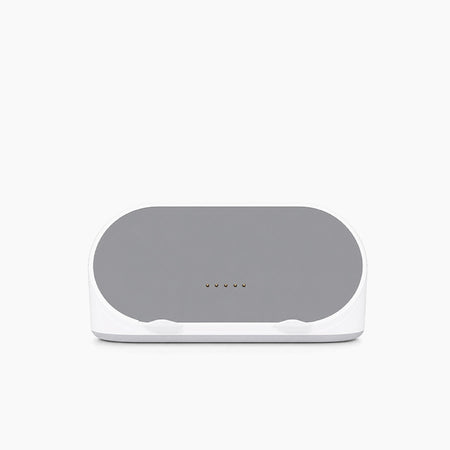
The system centers on a 21.5-inch display, sold as the magnetic FridgeCal™ or wall-mounted HomeCal™. Parents can update plans from the device, by voice, or from the companion app. Kids see the same information the adults see, which cuts down on the constant “what do I do next?” loop that wrecks mornings.
What stands out is the system design.
A lot of checklist tools solve one narrow problem. They track chores, or they show a routine, or they hold a calendar. Everblog is built for households where those things collide. If breakfast, backpacks, after-school pickup, dinner planning, and allowance all affect whether the checklist gets used, keeping them together is practical. Families comparing a shared wall display with a phone-based organizer can get a clearer sense of that trade-off in this guide to a digital family calendar for busy households.
Where Everblog fits best
Everblog works well when the core issue is household fragmentation, not just task completion. A child may know the chore list perfectly and still miss it because the reminder lives in one app, the dinner plan in another, and the school schedule in a text thread. A shared hub reduces that friction.
It also suits parents who do not want to rebuild the system every few weeks. Paper charts are cheap and tactile. They are also easy to ignore once the novelty wears off. Single-purpose apps can be convenient, but many families stop using them because they sit outside the rest of the household workflow. Everblog asks for a bigger upfront commitment, but in return it gives the checklist a permanent home.
Practical rule: If kids have to ask where the checklist is, the system is already doing extra work.
Trade-offs to know before you buy
The biggest trade-off is obvious. This is a hardware-based setup, not a free app you test for five minutes. That means higher cost at the start and a stronger bet on one system. Some families will prefer that because a shared device creates visibility and accountability. Others will want something lighter, cheaper, or easier to move in and out.
It also depends on power and internet for its full feature set. If your family wants a fully offline routine chart or something a child can carry from room to room, a tactile board or paper checklist may fit better.
Still, Everblog earns its place near the top of this list for one reason. It treats a checklist for kids as part of family operations, not as a side project. For busy households that need one visible command center, that is often the difference between a system that lasts and one that ends up under a magnet on the fridge.
2. Cozi Family Organizer

Cozi has been around long enough to earn trust with families who want a simple, shared organizer without a big learning curve. It isn’t the most kid-focused checklist tool here, but it does a solid job if your real need is keeping chores attached to the family calendar instead of treating them as a separate project.
That’s the key trade-off. Cozi is better as a family coordination app with checklist features than as a dedicated kids routine system.
Where Cozi fits best
If your household already lives by calendar blocks, school events, and shopping lists, Cozi feels natural. Parents can assign to-do items by family member, keep groceries in one place, and tie recurring responsibilities to the wider week. That works especially well for older kids who don’t need animated prompts or reward mechanics to get moving.
For many families, a checklist for kids fails because it floats outside the family's everyday schedule. Cozi fixes that by keeping tasks close to appointments, pickups, and activities. If you’re comparing this style of setup to a wall-based command center, this guide to a digital family calendar for busy households helps clarify the difference.
Cozi is easiest to recommend when the adults need organization first, and the kids’ checklist is one part of that system.
What it does well, and what it doesn’t
Cozi is quick to onboard. That matters when parents are already overloaded and don’t have time to configure complex automations. It also offers web, iPhone, and Android access, which helps in split-device households.
Its weakness is motivation. There’s no built-in kid gamification, and some advanced reminders and features sit behind the Gold tier.
- Strongest use case: Families who want one shared organizer with light chore support.
- Weakest use case: Younger kids who need visual cues, rewards, or step-by-step prompting.
- Best age fit: Older elementary and middle school kids who can read a plain list and self-start.
Cozi is dependable. It’s just not especially fun. You can explore it on Cozi’s family organizer site.
3. S'moresUp

S'moresUp is for parents who want more structure, more accountability, and more automation than a basic chore app provides. If you’ve ever thought, “I need the app to handle this so I stop negotiating every toothbrush and towel,” this is one of the better options.
It lets parents assign chores, rotate tasks, build collaboration or competition modes, request photo proof, and approve completion. That sounds like a lot, because it is. For some families, that depth is exactly the appeal.
Best for accountability-heavy households
S'moresUp shines when completion needs verification. That can help with recurring friction points like pet care, room resets, or school-prep tasks that are often marked “done” before they are finished. The built-in family wallet and reward structure also makes it easier to connect completed tasks to privileges or earnings.
Children’s statistics education often starts with collecting, organizing, analyzing, interpreting, and presenting data in real-world examples like class surveys, as explained in DIY’s statistics guide for children. S'moresUp plays nicely with that kind of concrete thinking. Kids can see completed tasks, earned rewards, and recurring patterns in a way that feels tangible.
The catch with deep feature sets
The more powerful a checklist system becomes, the more setup it usually needs. That’s the trade-off here. S'moresUp gives parents a lot of control, but families who want a low-friction, glanceable routine tool may find it heavier than necessary.
- What works: Rotating chores, reminders, proof of completion, and reward tracking.
- What doesn’t: Fast setup for families who want something simple and visible.
- What to watch: Many advanced features move behind Premium after the trial period.
If your household needs a checklist for kids with strong follow-through mechanisms, S'moresUp is one of the more capable choices. You can review its options on S'moresUp’s official site.
4. BusyKid

BusyKid takes a different angle. It treats the checklist as the front end of a money system. If your child is old enough to understand earning, saving, spending, and giving, that can be powerful.
This isn’t the best pick for preschool-style routines or highly visual prompting. It’s best when you want chores to connect to real financial habits.
Why some families love the money link
A plain checklist for kids often loses steam because “do your chores” is too abstract. BusyKid makes the outcome concrete. Parents can tie weekly task completion to allowance flows and spending controls, which gives older kids a reason to pay attention.
That makes it especially useful for children who respond more to real-world incentives than sticker charts. It also creates a natural opening for conversations about budgeting, delayed gratification, and donating.
When a child is motivated by ownership, money-based checklist tools often work better than cartoon rewards.
Where it falls short
BusyKid is less playful than some competitors, and that matters. Younger children or kids who need visual structure may not connect with it as easily. It also requires a subscription and includes card-related considerations that parents should review carefully before signing up.
- Best fit: Families using chores to teach money management.
- Less ideal: Kids who need picture-based routines or low-reading interfaces.
- Useful extra: The activity feed gives parents a clearer audit trail than many chore apps.
BusyKid works best when responsibility and financial literacy are linked on purpose, not just as a side feature. See the current setup on BusyKid’s official website.
5. Choiceworks by Bee Visual

Choiceworks is one of the most practical tools on this list for younger children, visual learners, and many neurodivergent kids. It doesn’t try to be a whole family operating system. It focuses on one thing: making routines understandable and followable.
That narrower focus is a strength. A lot of checklist systems collapse because they ask a child to mentally hold too much at once. Choiceworks reduces that load with picture-based boards, voice prompts, custom photos, and printable or shareable routines.
A strong option for visual routine support
Research highlighted in the Child Evaluation Checklist points to daily functional performance challenges related to executive functions in children ages 3 to 6 with invisible neurodevelopmental disorders, and notes a gap between those needs and mainstream family management tools, discussed in this CHECK study on executive function and daily participation. That’s exactly where Choiceworks makes sense.
It helps when the issue isn’t refusal. It’s initiation, sequencing, waiting, transitions, or emotional overload. Instead of “clean your room,” parents can build visual, concrete sequences the child can act on.
Real strengths and limitations
Choiceworks is especially good for morning routines, bedtime flows, getting ready to leave the house, and calming transition-heavy parts of the day. It also avoids the fatigue some parents feel with recurring subscriptions because it uses a one-time purchase model.
Its main limitation is scope. It’s iOS-only, and it isn’t built for complex family-wide automation.
- Excellent for: Visual schedules, routine sequencing, and emotion-related supports.
- Not ideal for: Multi-platform families or parents who want fully automated recurring chores.
- Biggest win: It meets kids where they are instead of assuming every child can follow a text list.
You can review it on Bee Visual’s Choiceworks page.
6. Happy Kids Timer

Happy Kids Timer is a lightweight routine builder, and that simplicity is the whole appeal. It turns morning, bedtime, and other daily flows into guided, timed checklist sequences with animation and rewards. Kids can often run it themselves, which is the feature that matters most.
This is one of the better tools for families who don’t need a full chore ecosystem. They need fewer repeated reminders before school.
Best for repeatable routines
Happy Kids Timer works because it adds pacing. Some kids don’t need more tasks. They need help moving from one task to the next without drifting. Timers, visual steps, and predictable order can reduce that friction.
If mornings are your worst time of day, pairing a timed app with a stronger household system can help. This morning checklist for kids guide is a useful companion if you want to structure the exact steps first and then choose the tool.
A timed checklist often works better than a static one when the problem is stalling, not forgetting.
What to expect
This app is easy for children to operate, and that lowers parent involvement during the routine itself. It’s available on iOS and Android, which makes access easier than some visual-support apps.
The downside is household scale. It’s limited for multi-child management, and deeper customization sits behind paid upgrades.
- Best use: One child, one device, one recurring routine.
- Less effective: Complex family systems with shared chores and cross-parent coordination.
- Strong practical benefit: Reduces verbal prompting during predictable daily transitions.
If you want a checklist for kids that acts like a routine coach rather than a family manager, take a look at Happy Kids Timer.
7. Melissa & Doug Magnetic Responsibility Chart

Not every family needs an app. Sometimes the best checklist for kids is the one hanging in the kitchen where a child can touch it, move it, and understand it instantly.
The Melissa & Doug Magnetic Responsibility Chart is a durable, screen-free system with two hinged dry-erase boards and 89 magnets for common tasks and rewards. It’s designed for younger children and works best when parents want simple visibility without adding another device to family life.
Why tactile still works
Physical charts have one big advantage over apps. They’re impossible to ignore when placed in a high-traffic spot. For children in the early elementary years, moving a magnet can feel more satisfying and concrete than tapping a checkbox on a screen.
That said, tactile systems ask more from the parent. You handle setup, updates, and consistency manually. If you stop moving magnets, the system stops working. For some families, that’s fine. For others, it’s exactly why paper charts keep dying on the fridge.
Families comparing old-school charts with digital systems may find this look at an electronic chore chart for modern households helpful.
The honest trade-off
A magnetic chart is excellent for simplicity and weak for scale. There’s no automation, no reminders, and no analytics. But there’s also no account setup, no battery anxiety, and no subscription to remember.
The trauma-informed gap in many checklist systems also matters here. The Trauma Screening Checklist for ages 6 to 18 highlights domains such as exposure to domestic violence and links stress context with school and behavioral difficulties, underscoring why rigid compliance systems can miss what children are dealing with, as noted in this trauma screening resource for children ages 6 to 18. A simple physical chart can sometimes feel lower-pressure than a highly monitored app, though it still depends on how adults use it.
For a screen-free, tactile option, the Melissa & Doug responsibility chart remains a practical pick.
Top 7 Kids Checklist Tools Comparison
| Product | 🔄 Implementation complexity | ⚡ Resource requirements & setup | 📊 Expected outcomes | 💡 Ideal use cases | ⭐ Key advantages |
|---|---|---|---|---|---|
| Everblog | Moderate, hardware install + app pairing and OTA updates | Requires power, Wi‑Fi and one upfront hardware purchase (magnetic or wall model) | Centralized, visible family command center; calmer mornings and predictable routines | Busy parents, blended households, caregivers wanting a shared wall hub | Large 21.5" shared display, no subscription, gamified chores, built‑in media sharing |
| Cozi Family Organizer | Low, app/web onboarding with simple sharing | Smartphones/web access; optional Cozi Gold subscription for advanced features | Better calendar/list coordination and basic chore tracking | Families wanting a lightweight cross‑platform family hub | Easy to learn, cross‑platform, printable templates |
| S'moresUp | Medium, app setup with chore workflows and approvals | Mobile devices; free trial then Premium for many advanced features | Strong chore accountability with photo proof and reward flows | Families needing deep chore automation and accountability | Advanced chore modes, approval/photo proof, unlimited family members |
| BusyKid | Medium, app plus financial setup and optional Spend Cards | Subscription and possible card/usage fees; parental account setup | Increased motivation via real money; basic financial‑literacy outcomes | Parents teaching allowances, saving/donating, basic investing | Payout buckets, Visa Spend Card support, clear earnings audit trail |
| Choiceworks by Bee Visual | Low, simple app purchase and creation of visual boards | iOS device and one‑time purchase (no subscription) | Improved routine adherence for young or neurodivergent children | Young children, classrooms, therapists needing visual supports | Picture‑based schedules, widely used in therapy/classrooms, no ongoing fees |
| Happy Kids Timer | Low, kid‑operated app with minimal setup | iOS/Android device per child; in‑app upgrades for extra features | Independent timed routines; reduced parental prompting | Morning/bedtime routines and children who benefit from timers | Animated step flows, star rewards, designed for independent use |
| Melissa & Doug Magnetic Responsibility Chart | Very low, physical product; immediate use | Physical board and magnets; no power or accounts required | Tactile engagement and visible reminders; manual tracking | Screen‑free homes and young children who prefer hands‑on tools | Durable, tactile, glanceable, no subscriptions or devices needed |
Which Checklist System Is Right for Your Family?
The right checklist for kids depends less on features than on friction. Where does your family get stuck? If kids know what to do but don’t feel motivated, a reward-linked system like BusyKid or S'moresUp may help. If the problem is sequencing, transitions, or visual processing, Choiceworks or Happy Kids Timer will usually fit better than a generic chore app.
Some families need low-tech clarity. That’s where the Melissa & Doug chart still earns its place. It’s simple, tactile, and easy for young children to understand. Cozi sits in a different lane. It works well when parents mainly need a shared organizer and want chores folded into the same system as calendars and shopping lists.
For households with multiple moving parts, Everblog is the strongest overall system because it reduces fragmentation. That matters more than parents sometimes realize. A checklist works best when it isn’t floating alone. It works when it’s tied to the meal plan, the after-school schedule, the reward system, and the family’s shared view of the day.
The broader goal isn’t perfect compliance. It’s a home where expectations are visible, routines are repeatable, and adults don’t have to carry every reminder in their own heads. When a tool does that, kids gain independence and parents get some breathing room back.
If you’re also supporting older children who need more ownership over routines and school demands, this guide on time management for teens is a helpful next read.
If you want one system that goes beyond a basic checklist for kids and brings your calendar, chores, rewards, meals, and family communication into one place, Everblog is the tool to look at first. It’s built for busy households that need less nagging, clearer routines, and a shared visual hub everyone can use.


