
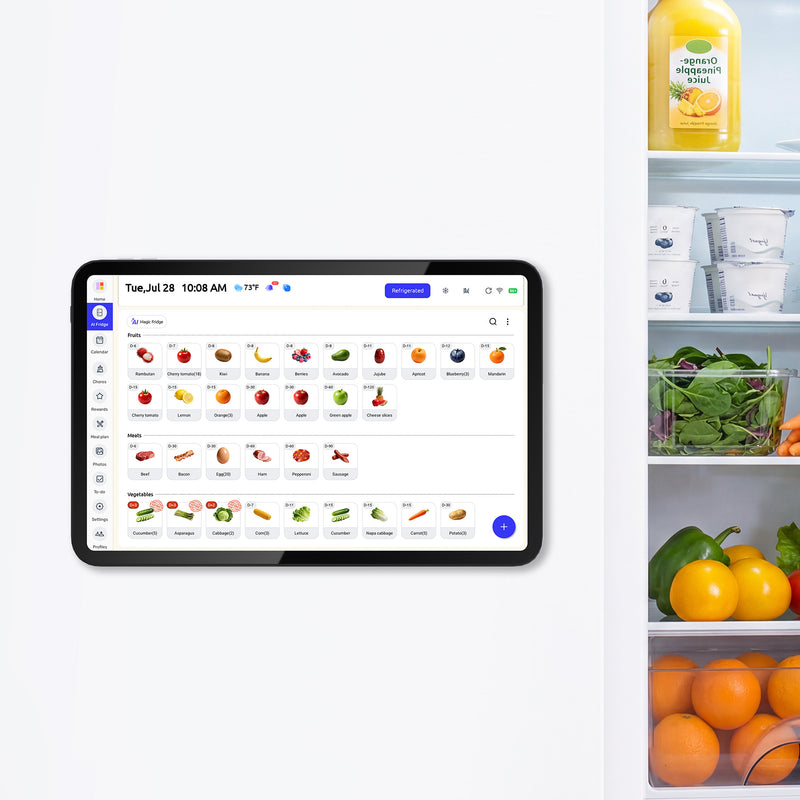



The usual family breakdown doesn't happen because nobody cares. It happens because everyone is tracking life in different places. One parent has work meetings in a phone calendar. A child has a paper school flyer crumpled in a backpack. Another reminder lives on a sticky note by the coffee maker. Dinner plans are still a question mark at 5 p.m.
By the time the morning rush hits, the same questions start flying. Who has pickup today? Did anyone sign the field trip form? What time is practice? Is there food for lunch tomorrow? A lot of home stress is really just an information problem.
A touch screen wall display can fix that in a surprisingly down-to-earth way. Think of it as one shared place where the household can see what's happening, update it quickly, and stop relying on memory. If you've been curious about a more organized setup, this guide will help you understand what this kind of screen does, where it fits in a home, and how it can make family life feel less scattered.
From Family Chaos to Calm Coordination
A busy weekday morning usually looks innocent the night before. Backpacks are near the door. Someone says they'll remember the dentist appointment. Dinner sort of has a plan. Then morning arrives, and the whole system falls apart.
One child needs a different drop-off time. A parent forgot about an early call. The paper chore chart hasn't been updated in days. Somebody asks what's for dinner while another person is looking for shin guards. Nothing is technically a disaster, but everything feels harder than it should.
That's where a touch screen wall display starts to make sense. Not as another gadget to manage, but as a family command center that replaces scattered reminders with one visible source of truth. Instead of checking four apps and two pieces of paper, everyone looks at the same screen in the same place.
A good family setup often works best when it's visible, simple, and shared. That's the appeal behind a digital family command center. It turns household coordination into something people can use in the flow of daily life, not something hidden behind passwords and tabs.
Practical rule: If a family system only works when one person remembers everything, it isn't really a family system.
The calm part doesn't come from the screen itself. It comes from fewer “I didn't know” moments. Kids can check what's next. Adults can update plans without rewriting the fridge calendar. Everyone gets a clearer picture of the day before the day starts bossing them around.
What Exactly Is a Family Command Center?
A family command center is basically a digital bulletin board for the home. It gathers the stuff families repeatedly need to see and act on, then puts it on one screen that lives in a shared space such as a kitchen, hallway, or mudroom.
That sounds simple, and it is. The useful part is that it combines visibility with interaction. You don't just glance at the schedule. You can tap a reminder, add an item to a list, check off a chore, or leave a message for someone else in the house.

More Than a Tablet on the Wall
The distinction often causes confusion. A family touch screen wall display isn't just “an iPad, but bigger.” The difference is how it's meant to be used.
A tablet is personal. It travels with one person, gets buried under notifications, and often disappears into a bedroom or bag. A wall display is shared and stationary. It's built around at-a-glance use, quick updates, and repeated family check-ins throughout the day.
The screen itself also matters. A typical 21.5-inch wall-mounted touch display is commonly specified at 1920 × 1080 Full HD, with a 16:9 aspect ratio, 24-bit color depth, and about 102 PPI, which helps dense schedules, small icons, and multi-column layouts stay legible from normal viewing distance in spaces like kitchens and hallways, according to Crestron's touch screen resolution specifications.
What Lives on the Screen
In family use, the software matters as much as the panel. Most households want a few core tools in one place, not a complicated dashboard.
Typical examples include:
- Shared calendars that show school, work, activities, and appointments together
- To-do lists for recurring tasks and one-off reminders
- Digital notes for things like “bring cupcakes Friday” or “library books due”
- Meal planning so dinner stops being a daily negotiation
- Family messaging for short updates without another text thread
- Weather visibility so everyone can see the day before they leave
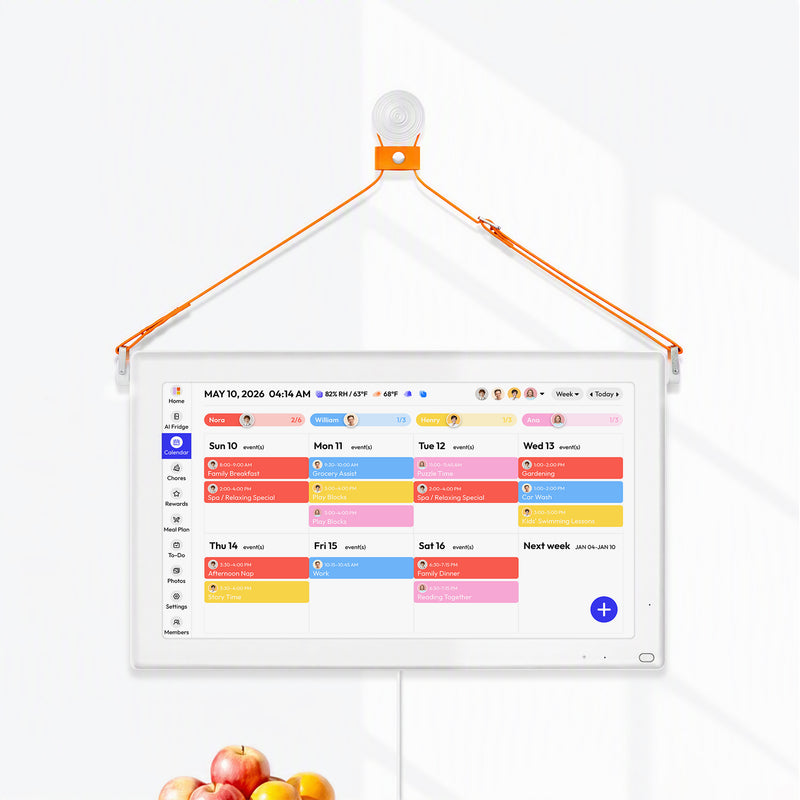
One practical example is a touchscreen calendar for home organization, which combines scheduling and household planning into one shared interface.
A family command center works best when it reduces decision-making, not when it adds another place to organize.
Why the Idea Feels Familiar
Touch interaction has been around far longer than commonly understood. The modern touchscreen lineage goes back to 1965, when E. A. Johnson published the first formal description of a finger-driven capacitive touchscreen. Other milestones followed, including Elographics in 1974, multi-touch work at the University of Toronto in 1982, and the HP-150 in 1983. A historical overview from the Touchscreen Hall of Fame timeline explains why direct interaction on the display surface became the model now used in touch walls, kiosks, and collaborative screens.
That history matters because a family wall display doesn't ask people to learn a strange new interface. You touch what you want to move, open, check, or change. For most households, that's the whole point. It feels obvious from the first tap.
Essential Features That Organize Your Home
By the middle of a busy week, a home usually doesn't fall apart because nobody cares. It falls apart because the right detail is in the wrong place. The dentist appointment is on one phone. The grocery list is on a sticky note. The chore plan lives in a conversation nobody remembers clearly.
A touch screen wall display helps by putting the household's repeat questions in one visible spot. Instead of asking, "What's for dinner?" or "Who's picking up?" five different times, everyone checks the same screen.
The Core Jobs a Family Screen Handles
The most helpful features are the ones that reduce small moments of confusion. Each one saves a minute here or prevents a misunderstanding there. Over a full week, that adds up.
| Family Command Center Features at a Glance | What It Solves |
|---|---|
| Shared calendar | Stops schedule conflicts and forgotten appointments |
| Chore tracking | Makes responsibilities visible and easier to follow through on |
| Meal planner | Reduces last-minute dinner stress |
| Grocery list | Gives everyone one running list instead of scattered notes |
| Notes and reminders | Catches school details and one-off tasks before they slip away |
| Photo or media display | Makes the screen feel like part of the home, not just a task board |
A digital calendar display for home use often becomes the anchor because it gives everything else a place to connect. Once the week is easy to read at a glance, chores, meals, reminders, and errands stop feeling like separate systems.
Features That Matter in Real Family Life
A shared calendar does more than show appointments. It gives context. A child can see that soccer practice affects pickup time. A parent can spot that a work meeting overlaps with piano lessons before the conflict turns into a scramble. The screen becomes a household map.
A chore manager helps in a different way. It makes responsibility visible without turning one parent into the family loudspeaker. Before, the same reminder gets repeated all week. After, the task is sitting there in plain view, ready to be checked off by whoever owns it.
A meal planner and grocery list solve one of the most common evening problems. Dinner often goes sideways because nobody made a decision early enough. When meals and ingredients live together on the screen, a parent can set the plan, a partner can add missing items, and older kids can answer the daily "what are we eating?" question on their own.
Parent shorthand: A useful family screen should answer five things fast. What's happening today? Who is responsible? What still needs doing? What are we eating? What did we forget?
Notes and reminders matter for the little stuff that causes outsized stress. Spirit day. Signed form. Extra snacks for practice. These details are easy to miss because they are too small for a big planning session and too important to trust to memory.
Then there is one feature people sometimes dismiss as decorative. Photo or media display helps the screen feel welcome in a shared room. That matters in a family home. If the display looks like a cold office panel, people avoid it. If it shows family photos when idle, it blends into daily life and feels like part of the house.
Why Touch Quality Affects Whether the System Gets Used
A wall display can have all the right tools and still fail if using it feels fussy. Families need taps to register quickly and scrolling to feel easy, especially when someone is rushing out the door or a child is using the screen with less patience.
This matters more in a home than many buyers expect because the users are mixed. Adults want speed. Kids need a clear, forgiving interface. Grandparents may need larger touch targets and a layout that makes sense at a glance. Good touch response is what makes the whole setup feel dependable instead of temperamental.
A simple way to judge this is to picture real use. One child checks off a chore with one tap. A parent adds milk to the shopping list while carrying a backpack. Another family member opens the calendar without hunting through menus. If those actions feel natural, the display is doing its job.
One factual example in this category is Everblog, a 21.5-inch digital family wall calendar that combines schedules, chores, meals, lists, media, and voice entry on one wall-mounted display. What makes setups like this useful is practical consolidation. Common household tasks stop being split across paper, phones, and memory.
How a Wall Display Transforms Daily Routines
The test isn't whether a touch screen wall display looks good on a spec sheet. It's whether it changes the way a day feels. In many homes, the shift is less about productivity and more about reducing friction.

Morning Stops Feeling Like a Scavenger Hunt
Before a shared display, mornings often involve piecing together the day from fragments. One person checks a phone calendar. Another asks about after-school plans. Somebody remembers a permission slip halfway out the door.
After a wall display is part of the routine, the household has a visual checkpoint. People walk past, glance up, and know the shape of the day. The weather, appointments, chores, and reminders are in one place. That changes the tone of the morning because fewer surprises arrive at the worst possible time.
If a routine depends on everyone remembering details privately, the routine will break under stress.
Chores Become Clearer and Less Personal
A paper chore chart often starts with good intentions and ends as kitchen decor. A digital version tends to work better because it's easier to update and harder to ignore.
Instead of a parent becoming the full-time reminder system, the screen becomes a neutral reference point. Kids can see what's assigned, what's done, and what's still waiting. That doesn't magically make chores fun, but it does reduce the endless debate over whether something was communicated.
A short demo can help you picture how these shared home displays fit into daily life:
Dinner Planning Gets Pulled Forward
One of the most useful changes happens later in the day. Instead of hitting 4:30 p.m. with no plan, the family can already see what's for dinner and what ingredients are needed.
That small bit of visibility affects more than meals. It reduces duplicate grocery trips, lowers the mental load on whoever usually plans food, and gives kids a way to participate. They can check the plan, add a request, or notice what's needed without asking the same question again.
The biggest difference is emotional. A touch screen wall display can make a home feel more coordinated because information is shared in the open. Less chasing. Less reminding. More moments where people can just get on with the day.
Smart Installation and Integration Tips
Buying the screen is the easy part. Putting it in the right place is what determines whether your family uses it every day or forgets it's there after a week.
Pick the Spot People Already Pass
The best location is usually not the prettiest wall. It's the wall the household naturally checks during transitions.
For many homes, that means one of these areas:
- Kitchen zone because people gather there in the morning and again around dinner
- Mudroom or entry area where backpacks, shoes, and last-minute reminders already collide
- Central hallway if that's the true traffic path between bedrooms and the rest of the house
A living room wall can look clean, but it may not be where people make real planning decisions. Choose the spot where the family already pauses.
Mount for Shared Use, Not Perfect Symmetry
Design instincts can fight usability. A display mounted at visually perfect eye level for adults may be awkward for kids or wheelchair users.
Guidance for interactive screens recommends thinking about reach, glare, and real use conditions. One installer guide notes that the screen center around 48 inches (122 cm) from the floor works well for many users, and a 5 to 8 degree downward tilt can help reduce glare in bright rooms such as kitchens, based on digital signage installation guidance.

Real-world takeaway: A slightly lower mount often works better for a family command center than a perfectly centered “designer” mount.
Another point families miss is the viewing-angle question. Many interactive LCDs are advertised with very wide viewing-angle specs, but practical use still depends on glare, tilt, panel type, and layout. A helpful explanation from IQBoard's viewing-angle guide for LCD interactive displays points out that nominal viewing-angle numbers don't always tell you what the screen will feel like in a bright home. In everyday rooms, anti-glare treatment, sensible placement, and high-contrast layouts often matter more.
Plan Power and Smart Home Connections Early
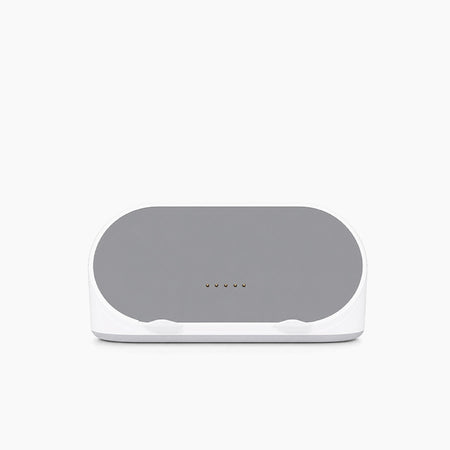
A family wall display looks and feels better when the power plan is sorted before mounting. Hidden power keeps the setup cleaner and removes the temptation to stick the screen in a less useful location just because there's an outlet nearby.
If you want the display to work with voice assistants or broader connected-home tools, it helps to think of it as part of your home infrastructure. A practical overview of smart home automation installation can help if you're planning how screens, lighting, Wi-Fi, and other devices fit together without creating cable clutter or coverage dead zones.
A good integration setup usually includes:
- Reliable Wi-Fi so calendar and list updates appear when people expect them
- Voice assistant support for quick additions while cooking or carrying kids' gear
- Clean cable management so the screen feels intentional, not temporary
- A location with low glare so people can read it quickly instead of squinting
If the screen is easy to see, easy to reach, and easy to update, the household will use it without being reminded.
Security, Maintenance, and Getting Started
The best family command center fades into the background. On a rushed Monday morning, nobody should be wondering whether the calendar synced, whether a child can accidentally delete dinner plans, or whether greasy fingerprints have turned the screen into a blur. It should work the way a good kitchen light works. You flip it on and trust it.
Security starts with a simple goal. Keep family information easy for the right people to use and hard for the wrong people to reach. That usually means choosing a reputable platform, giving adult accounts strong passwords, turning on automatic updates, and setting clear permission levels so younger kids can check chores or schedules without changing important settings. If your setup also includes cameras or other connected devices, it helps to treat them as one home system instead of a pile of separate gadgets. A practical guide to DIY security camera setup is useful for understanding the same home security habits that apply to shared screens.
What to Look For Before You Buy
Specs matter most when they affect daily use. A family wall display should respond quickly when a parent drags an appointment, a child taps a chore, or two people use it back to back before heading out the door.
As noted earlier, strong touch performance makes a real difference. Multi-touch support helps when more than one person is using the display, and fast, accurate response keeps the screen from feeling laggy or fussy. That sounds small until the screen misses taps during the dinner rush. Families stop trusting devices that need the same action twice.
One practical test is to picture the busiest moment in your house. A parent is packing lunches, one child is checking the after-school plan, and another wants to mark a task complete. If the display handles that without delay or confusion, it is much more likely to become part of the routine instead of another abandoned screen.
Keep It Simple After Installation
Maintenance should be light.
- Clean the screen gently with display-safe materials so fingerprints do not build up and make quick glances harder
- Turn on automatic updates so security patches and app fixes happen in the background
- Review the layout every so often because school terms, sports seasons, and chore systems change
- Check account access occasionally so old logins, guest access, or unused apps do not linger
The goal is not to maintain a piece of impressive tech. The goal is to keep one shared family tool reliable enough that everyone uses it. Before a wall display, reminders often live in five places and get missed anyway. After a good setup, the school pickup change, grocery note, and chore reminder all live in one spot people already walk past.
If you want one shared place for schedules, chores, meals, reminders, and family media, Everblog is one option built around that use case. It is designed as a 21.5-inch digital family wall calendar for busy households that want clearer routines and fewer missed handoffs.


