



Quick Answer
A successful weekly meal planner does not start with recipes. Start with the food you already have, match meals to your schedule, choose a small set of reliable dinners, and leave room for changes. The best meal plans connect recipes, inventory, grocery lists, and family routines.
Weekly meal planner recipes work when they match your inventory, calendar, and available cook. Start with food on hand, schedule five realistic dinners, reserve a flexible night, and make the plan visible. The pizza night isn't a failure. A plan that assumes every evening will run perfectly is. These meal planning for busy families principles help recipes survive real schedules.

Why Sunday Meal Plans Fall Apart by Midweek
Sunday planning fails when recipe selection happens separately from inventory, schedules, and household handoffs. Good recipes can't repair an incomplete system.
ReFED reported that at-home food waste increased 280% from early 2021 to early 2022, after a brief pandemic-era decline, and exceeded pre-pandemic levels in 2023. The figure measures waste, not meal-plan adherence. It shows how quickly gains can reverse when routines change.
A 2024 Resources, Conservation and Recycling study used Dutch retailer package data to model five-day dinner plans. It produced plans with zero or negligible leftover perishables when recipes and package sizes were coordinated. This wasn't a household trial, and the authors said adoption needs more research. The supported lesson is that recipes, quantities, and packages should work together.
The planning-execution gap is an information gap
The gap appears when real life catches up and the plan can't respond. “I thought we had chicken” is a familiar warning sign.
|
What breaks |
What the plan failed to include |
Practical repair |
|
An ingredient is missing |
A fridge and pantry check |
Plan from inventory first |
|
A night is overloaded |
The family schedule |
Match effort to each night |
|
Nobody starts dinner |
Shared visibility and ownership |
Post the meal and the cook |
|
Leftovers pile up |
A recovery night |
Reserve one flexible dinner |
What Makes Weekly Meal Planner Recipes Work?
A good planner connects food on hand, dependable recipes, cooking time, and a backup route. Seven unrelated recipe links don't.
Start with ingredients already at home
Open the fridge before a recipe site. Find three to five foods that need a job, especially thawed proteins, open packages, leftovers, and fragile produce. Choose recipes that combine them. Clear zones and an “eat first” area speed up the scan; this fridge organization guide explains the setup.
Use the 3-3-1 structure as a recipe bank
The 3-3-1 meal plan creates options without seven fixed dinners: three quick recipes, three planned recipes, and one flexible night. Schedule five recipes after checking the calendar; keep the sixth as a swap-in or move it to next week.
|
3-3-1 part |
Role |
Examples |
|
3 quick options |
Under about 30 minutes with little cleanup |
Tacos, eggs and toast, stir-fry |
|
3 planned options |
Need thawing, chopping, or a longer cook |
Chili, roast chicken, pasta bake |
|
1 flexible night |
Absorbs a schedule change |
Leftovers, freezer meal, takeout |
That leaves five home dinners, one flexible night, and one night out. Families cooking all week can schedule the sixth recipe.
Keep new recipes to one per week
One unfamiliar recipe is an experiment. Five become a research project at 5:30 p.m. Build a master list of 15 to 20 reliable dinners and add one new option weekly. Tag meals by time, effort, and leftover potential so “what to cook this week” becomes a filter. For cost-focused ideas, see family meal planning on a budget.
Build Your Weekly Meal Plan in Five Steps
Use this order: inventory, recipe bank, schedule, grocery gaps, then visibility.

Step 1: Find five to eight anchor ingredients
Scan the fridge, freezer, and pantry. Note foods that are close to expiring, half-used, thawed, or plentiful enough to shape dinner. Those are your recipe constraints.
Step 2: Select five dinners, not seven promises
Pick five recipes, including at least two quick options. Reserve one night for leftovers, a freezer meal, or takeout, and account for an evening spent elsewhere. Five planned dinners leave room for reality.
Step 3: Match cooking effort to the calendar
Put quick dinners on late-work, practice, or appointment nights. Schedule slow-cooker or multi-step meals where preparation can start earlier. A 45-minute recipe on your longest day is a likely cancellation.
Step 4: Shop only for the recipe gaps
Cross off ingredients already available, then combine the missing items. This is your grocery list for the week, not a pantry restock. Note quantities and shared ingredients, such as one cabbage for tacos and slaw.
Step 5: Put the plan where the family can act on it
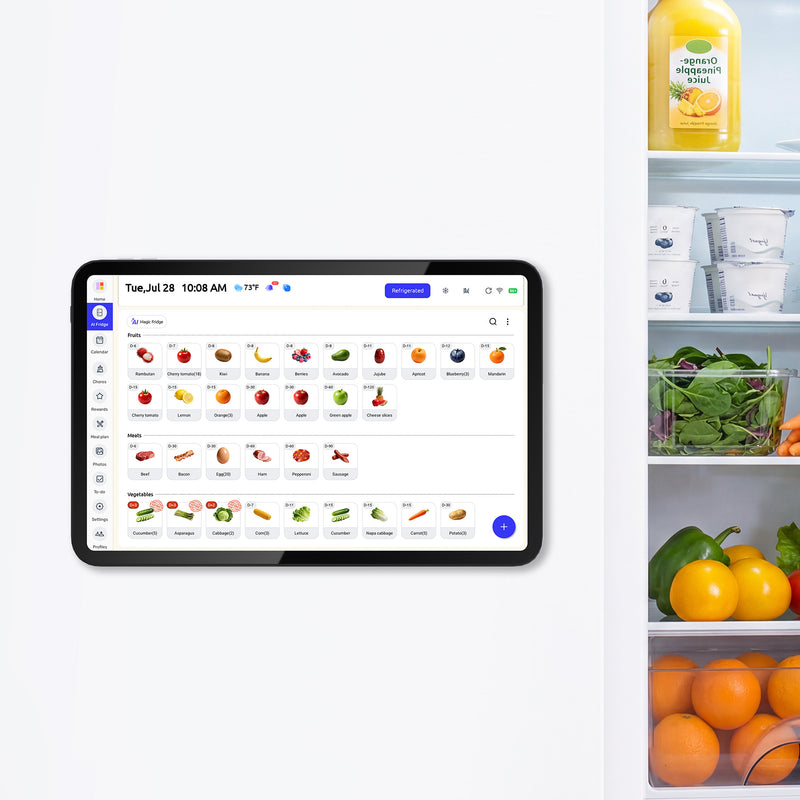
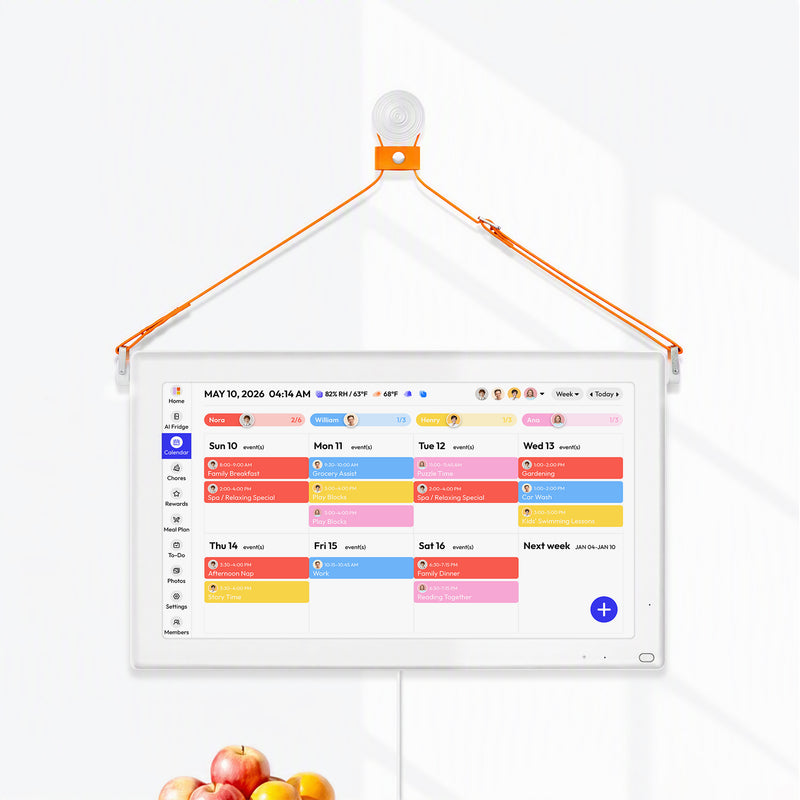
A menu in one phone leaves its owner responsible for every handoff. Post meals and ownership on paper, a shared note, or a kitchen display. If phone-based information gets missed, a fridge-mounted weekly planner is another option. FridgeCal documents a meal planner, custom grocery lists, app access, and fridge inventory tools. People must still choose meals and update the plan, so test the workflow before buying hardware.
A 7-Day Family Dinner Plan That Leaves Room for Real Life
An easy weekly meal plan shows effort, ingredient reuse, and a fallback. This sample starts with chicken, rice, carrots, and half a cabbage.
|
Day |
Dinner |
Why it fits |
Backup |
|
Monday |
Sheet-pan chicken and vegetables |
Uses fragile produce |
Eggs and toast |
|
Tuesday |
Chicken tacos and slaw |
Reuses chicken |
Bean tacos |
|
Wednesday |
Vegetable fried rice |
Quick dinner |
Freezer dumplings |
|
Thursday |
Lentil-carrot soup |
Pantry-led |
Grilled cheese |
|
Friday |
Leftovers |
Clears containers |
Takeout |
|
Saturday |
Pasta bake and salad |
More time available |
Quick pasta |
|
Sunday |
Eat out or family choice |
No grocery commitment |
Freezer soup |
Move meals when the calendar shifts. Protect perishables by refrigerating or freezing them safely, then update the shared plan.
What Recipes Work Best for a Weekly Meal Planner?
Strong weekly dinner ideas share ingredients, allow substitutions, and fit a clear effort level.
|
Meal type |
Dinner idea |
Flexible ingredient |
Useful next meal |
|
Quick |
Marinara pasta |
Beans or cooked meat |
Pasta lunch |
|
Quick |
Eggs, toast, vegetables |
Fragile greens |
Breakfast wrap |
|
Quick |
Rice stir-fry |
Frozen vegetables |
Lunch bowl |
|
Quick |
Tacos |
Beans, beef, or chicken |
Taco salad |
|
One pan |
Chicken and roasted vegetables |
Any sturdy vegetable |
Wrap filling |
|
One pot |
Lentil or bean chili |
Peppers, corn, carrots |
Potato topping |
|
One pot |
Vegetable-grain soup |
Nearly any produce |
Freezer portion |
|
Planned |
Pasta bake |
Spinach or mushrooms |
Reheated dinner |
|
Cook once |
Roast chicken |
Seasonal vegetables |
Sandwiches or soup |
Quick dinners should need fewer decisions
A quick recipe should use familiar methods, flexible components, and little cleanup. Keep two emergency meals stocked, such as eggs and toast or pasta and sauce, so a canceled recipe doesn't require another order.
Leftovers need a second job before you cook
“Cook once, eat twice” needs a named second use. Chicken can become tacos; chili can top potatoes; rice can support a stir-fry. Schedule that meal before making the larger batch, and freeze portions not needed within a few days.
Fix the Two Failure Points That Waste Food
Two broken connections cause most execution problems: menu to inventory, and plan to people.
Reconnect the menu to inventory
Choosing recipes before checking the kitchen creates duplicates while older food waits. The EPA estimates that each U.S. consumer spends $728 per year on uneaten food. Many causes contribute, so meal planning can't recover the full amount. Inventory first, then buy the gaps.
Make the plan visible without making it another job
Write the dinner, owner, and backup in one place, then let family members update changes. Use visible family meal planning to spread shopping, preparation, and cooking instead of leaving one adult as the dinner information desk.
Frequently Asked Questions
What is the 3-3-3 rule for meal prep?
The 3-3-3 rule is an informal batch-prep formula: three proteins, three vegetables, and three grains or carbohydrates to mix across the week. Versions differ, so treat it as a component bank and don't prepare more refrigerated food than you can safely use or freeze.
How far in advance should I plan meals?
Plan one week at a time. Seven days can coordinate shopping while reflecting current food and commitments. Set a 15- to 20-minute session, then update the plan when schedules change.
How do I stop wasting groceries bought for recipes?
Check inventory first, reuse ingredients, and shop only for missing quantities. Give every perishable a named meal and backup use. Freeze it if the plan moves beyond a safe storage window.
What meal-prep food lasts five days in the fridge?
Don't assume prepared food is safe for five days. The USDA says most leftovers keep for three to four days at 40°F or below; hard-cooked eggs can keep for one week. Refrigerate perishables within two hours and freeze later-week portions.
Your next planning session needs better connections, not more recipes. Check the kitchen, choose a small recipe bank, match effort to the calendar, buy the gaps, and post the plan. When Friday changes, use the flexible night and carry one recipe forward.


