
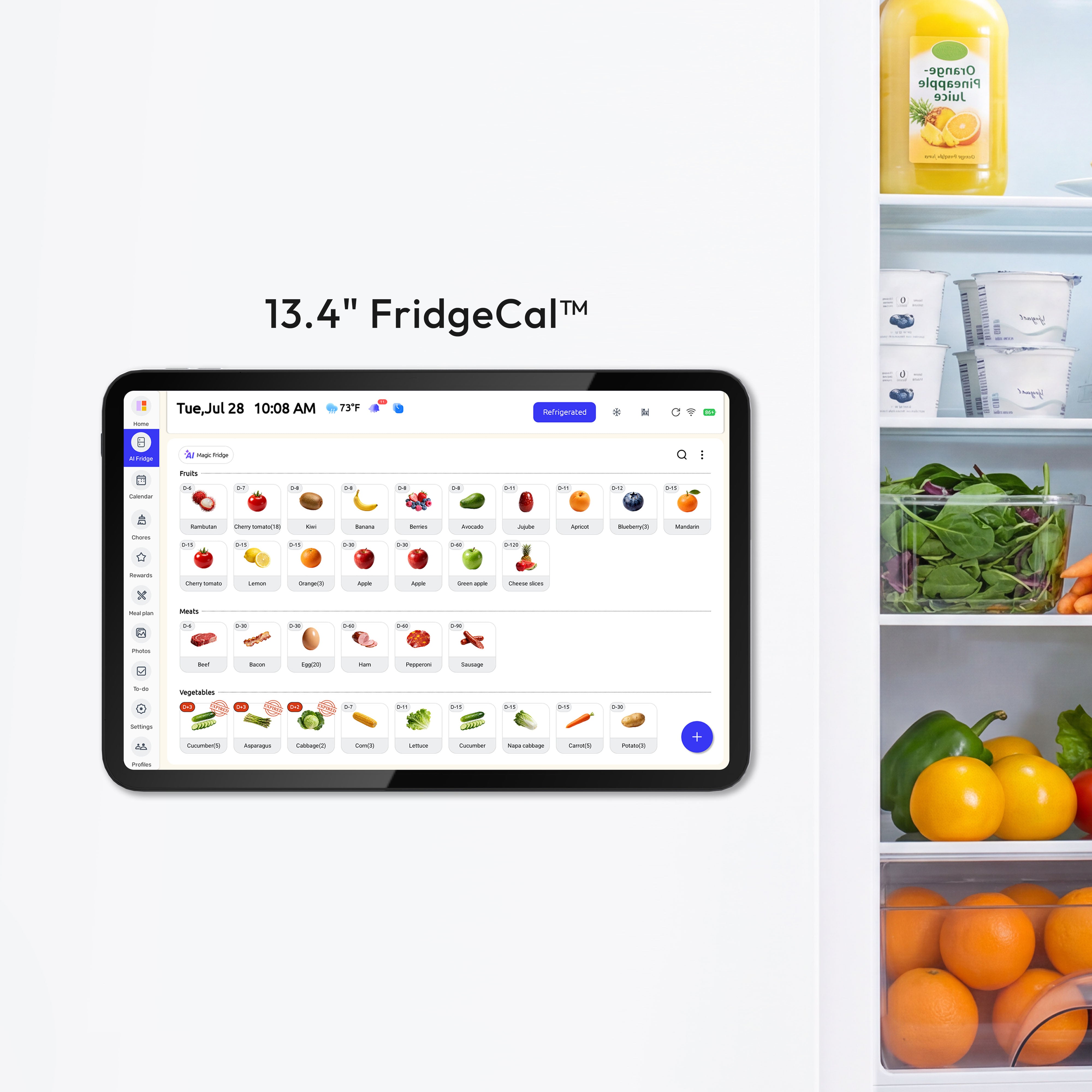
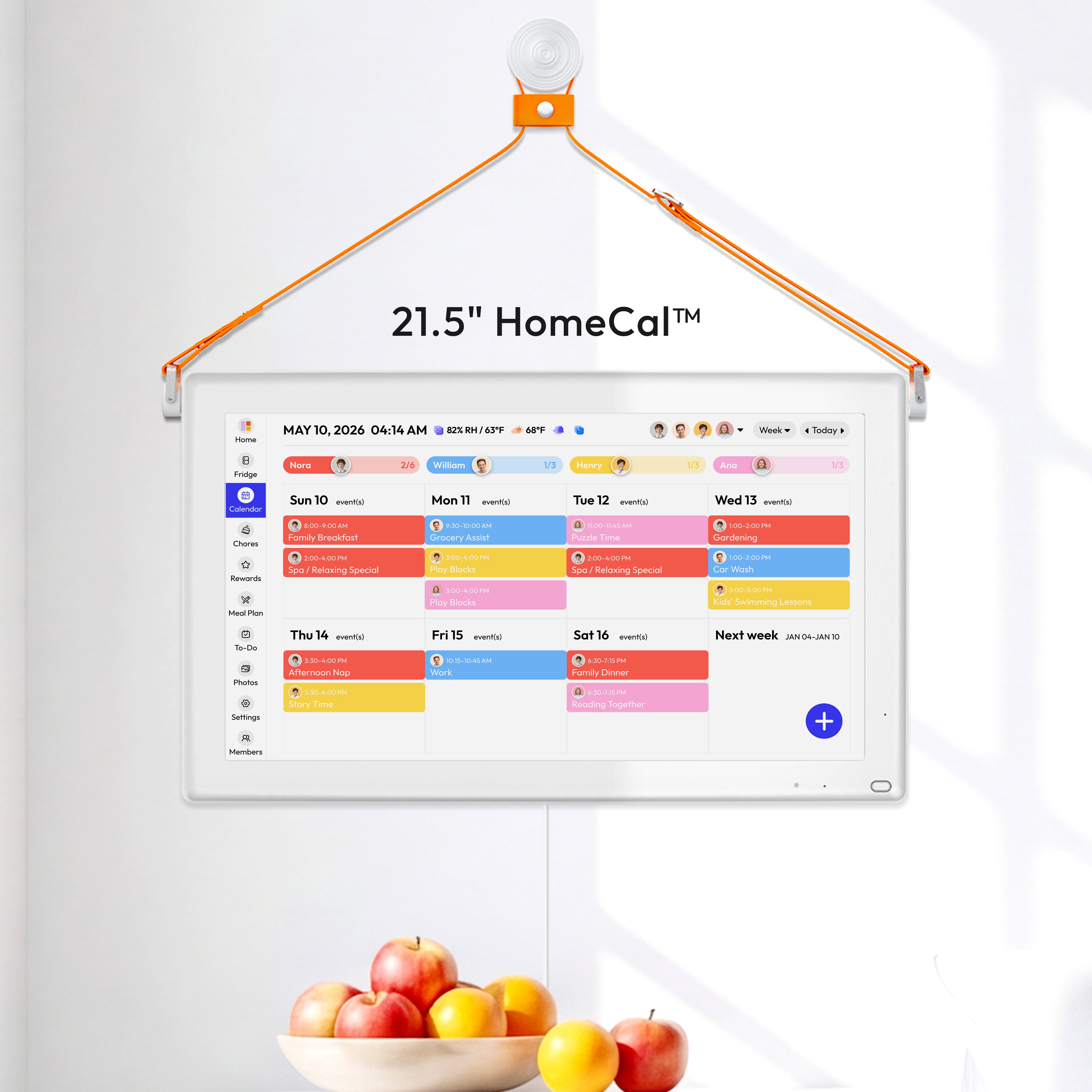


A fridge calendar gives the whole household one visible place to track schedules, meals, chores, and reminders. In a busy home, that shared view reduces confusion and makes daily coordination easier.
A fridge calendar is a shared planning system placed where the whole household naturally looks, so schedules, chores, meals, and reminders stay visible instead of living in one person’s head.
Are mornings starting with last-minute questions about rides, practice times, or what’s for dinner? When one calendar becomes the place everyone checks, family plans are easier to see, easier to update, and much harder to forget. You’ll come away knowing what a fridge calendar does, how to make it work in real life, and when a simple magnetic board is enough or a digital screen makes more sense.
What a fridge calendar actually is
A fridge calendar is a household planning tool that turns a kitchen refrigerator, or the space right around it, into a shared command center. In its simplest form, it can be a dry-erase monthly board, a paper planner with magnets, or a reusable acrylic calendar attached to the fridge door. In a more advanced setup, it can be a digital display that syncs with cell phone and computer calendars while still staying visible in the kitchen.

What matters most is not whether it is analog or digital. What matters is that it becomes the family’s single visible source of truth. That idea shows up clearly in guidance about a single, centralized source of truth for family scheduling, because scattered notes, separate apps, and half-remembered plans create most of the stress in busy homes.
In practice, a fridge calendar usually holds the details families ask about every day: school events, work shifts, sports, medical appointments, who is cooking, who is picking up, and which tasks belong to which person. If children are involved, it can also work as a visual routine tool. One example shows how even a very simple refrigerator calendar helps kids see their week, anticipate responsibilities, and build follow-through.
How it works in a busy family home
A fridge calendar works because it meets your family in a place they already pass many times a day. That matters more than most people expect. A refrigerator is naturally high-traffic, and some calendar makers cite the estimate that Americans go to the fridge 15 to 20 times per day. Whether or not your household hits that number, the underlying point is solid: visibility drives use.
The daily workflow is usually simple. One person adds or syncs appointments, another checks dinner plans before leaving work, a child looks at after-school tasks, and everyone can see conflicts before they become emergencies. That shared glanceability is the main reason physical and digital wall calendars keep showing up in family organization advice. One review found that centralized visibility is the real advantage over schedules that stay trapped on individual phones.
A typical example looks ordinary, which is exactly why it works. Picture a Wednesday in October: soccer at 5:30 PM, piano at 6:00 PM, a pediatrician appointment at 3:45 PM, and tacos planned for dinner. On a fridge calendar, those details sit in one visible place, so nobody has to text three people to reconstruct the afternoon.

The two main types: magnetic and digital
Most families choose between a traditional magnetic calendar and a digital fridge or wall calendar. Both can work well, but they solve slightly different problems.
Type |
Best for |
How it works |
Main strengths |
Main drawbacks |
Magnetic or dry-erase fridge calendar |
Families who want simplicity and instant visibility |
Write events, chores, meals, and reminders directly on the board |
No app, no login, low cost, easy for kids and grandparents to read |
Manual updates, limited space, no automatic reminders |
Digital fridge or wall calendar |
Families juggling many schedules across devices |
Syncs with shared calendars and often adds chores, meals, and lists |
Remote updates, reminders, color-coding, multiple views |
Higher cost, power and Wi-Fi dependence, possible subscription fees |
The case for a magnetic calendar is straightforward: it is always on, always visible, and does not depend on someone opening an app. Families who need a calm, low-tech system often do best here. Guidance on family calendars that actually work repeatedly comes back to visibility, consistency, and choosing a tool the household will really use.
The case for digital is different. A digital family calendar keeps the kitchen view while adding sync, remote updates, reminders, chores, and sometimes meal planning. One discussion of updating the schedule from anywhere makes the strongest benefit clear: one person can update the schedule from anywhere and the shared calendar changes for everyone. In some systems, that expands into chores, meal planning, lists, and household reminders, including setups built around everblog.
Why families often stick with a fridge calendar
The biggest benefit is reduced mental load. When every commitment lives in one place, the household stops depending on one person to remember everything. That matters emotionally as much as logistically, and the stress-reduction point is central in the advice on organizing your family calendar.
Another reason families stick with this system is that it helps children participate. A visible weekly layout is easier for many kids to follow than a phone notification that disappears. The refrigerator calendar example is meant to build responsibility and planning habits, which matches what many parents notice at home: children respond better when they can physically see what happens next.

Digital versions can go a step further when family logistics get dense. A shared screen with color-coded members, meal planning, and app-based updates is useful when both adults work unpredictable hours or older kids manage their own activities. One review notes that placement in a high-traffic shared area is what makes these devices succeed; if the screen is tucked into an office, much of the value disappears.
Where fridge calendars fall short
A fridge calendar is not magic, and it does have tradeoffs. A magnetic board can become cluttered fast if you try to track too much detail. If your household has five overlapping schedules, frequent time changes, and lots of location-specific notes, you may run out of writing space or patience.
Digital models solve some of that, but they introduce new friction. They cost more, usually need reliable Wi-Fi, and sometimes hide useful features behind subscriptions. Even the strongest argument for going digital still acknowledges that a hybrid approach often works better than treating the choice as all or nothing.
There is also a practical difference between “shared” and “maintained.” Any fridge calendar fails if nobody updates it. The best systems are not the fanciest ones. They are the ones people actually check before making plans.
How to set one up so it really gets used
Start by choosing one view of family life, not three competing ones. Put every school event, work shift, appointment, practice, pickup, and dinner plan in the same system. That “write down every little thing” advice from the centralized family calendar guidance is more important than it sounds, because small omissions are what usually create late scrambles.
Then place the calendar where eyes already go. The fridge door, the wall beside it, or a nearby kitchen command center works well because it captures ordinary traffic. Both centralized visibility and family calendars that actually work reinforce the same lesson: front and center beats technically better but hidden.
If your family includes children, keep the layout readable. Use one color per person rather than one color per activity. That makes it easier to answer the real daily question, which is usually “Who has what today?” rather than “Which category is this?” Some digital systems, including everblog, lean heavily on member color-coding for exactly that reason.

Finally, give the calendar a rhythm. Many families do best with a short weekly reset on Sunday evening, then quick daily check-ins during breakfast or after dinner. A five-minute review of the coming week often prevents the 7:45 AM surprise that derails the entire day.
Should you choose a basic board or a smart digital display?
If your biggest problem is visibility, a simple magnetic fridge calendar is usually enough. It is lower cost, easier to start, and often better for families who want less screen dependence.
If your biggest problem is coordination across multiple devices and locations, a digital system may be worth it. That is especially true when parents need remote updates, children have separate activities, or meals, chores, and reminders need to live alongside the calendar. The strongest digital options are designed around that all-in-one role.
For many homes, the most durable answer is a hybrid. Keep the visible kitchen calendar for family awareness, and let cell phones handle alerts and on-the-go updates. That way the household keeps the calm of a shared visual plan without losing the flexibility of sync and reminders.
A good fridge calendar does not need to be perfect to be powerful. It just needs to be visible, shared, and trusted enough that everyone knows where to look before the day gets busy.


