






Make family tasks easier to follow by putting schedules, meals, chores, papers, and reminders into one visible weekly system. Use a shared digital calendar for time-based plans, a home command center for what everyone needs to see, and a short weekly reset to keep it current.
Ever had a child ask about practice while dinner is half-started, a permission slip is still in a backpack, and nobody knows who is unloading the dishwasher? Families do not usually need a perfect system; they need one place to look and a few habits that repeat. This guide shows how to make the next seven days clearer without rebuilding your whole home routine.
Why Family Tasks Become Hard to Follow
Family planning usually breaks down when information lives in too many places. One parent has the appointment in their cell phone, another has the grocery list in a notes app, the school paper is on the counter, and the chore reminder is only in someone’s head. A shared weekly plan works better because meals, chores, and events are visible together, so everyone can see what happens, when it happens, and who owns it through one shared weekly plan.

The hidden work is often the real problem. Remembering that the soccer uniform needs washing, that there is no lunch meat left, or that the dentist appointment overlaps with pickup takes attention before anyone does the visible task. One cited US study of 3,000 parents found that mothers handled 71% of household mental-load tasks, which is why “just help more” often fails unless the system also shares noticing, planning, and follow-through.
A useful family system answers four plain questions: What is happening? What do we need? Who is handling it? When will we check again? If your setup cannot answer those questions in under a minute, it is probably too scattered or too complicated.
What Usually Breaks
The most common breakpoints are update lag, unclear ownership, and overloaded surfaces. A paper calendar can work for a low-change household, but it gets messy when the same square has school events, work travel, dinner plans, chores, appointments, and reminders; the biggest issue is that schedule changes are not visible to everyone unless someone rewrites the wall calendar, creating update lag.
Unclear ownership sounds like “Can someone take out the trash?” or “We need to remember snacks.” Clear ownership sounds like “Maya owns Tuesday snack: check supply Monday night, pack it Tuesday morning, and mark it done.” The second version is easier to follow because it includes the remembering part, not only the final action.
Put Each Kind of Information in the Right Place
A strong home planning system does not put everything everywhere. Put time-based commitments on the calendar, food decisions on the meal plan, chore details on the task list, and papers or supplies in a physical drop zone. This keeps the system readable because each piece has a clear home in the calendar, meal plan, and task list.

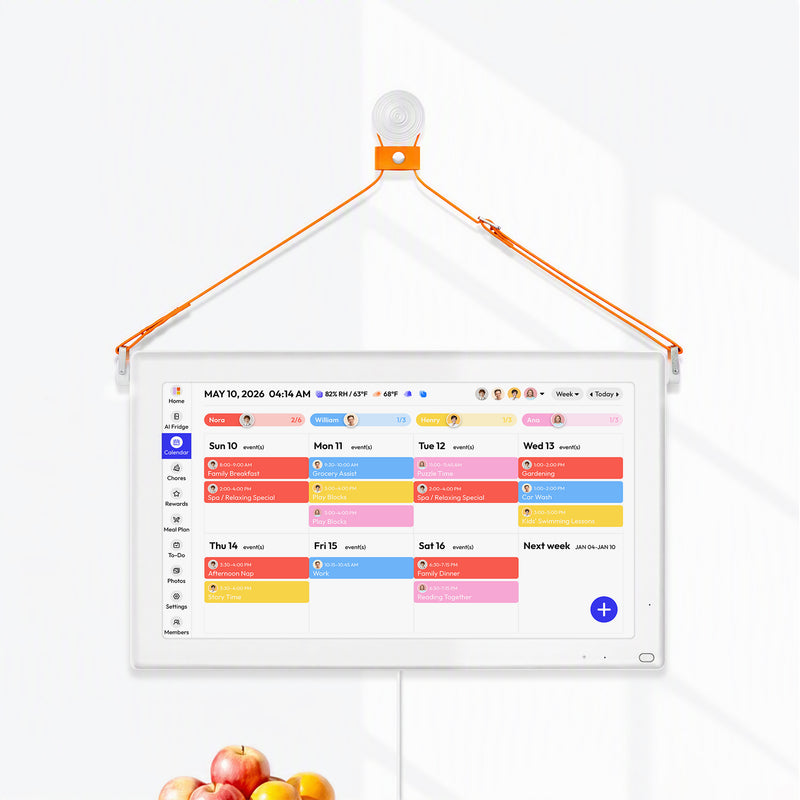
Use the digital family calendar for anything with a date, time, place, or reminder. That includes school events, work shifts, childcare changes, sports, medical visits, recurring bills, pickup changes, and “bring” reminders. A shared digital calendar is especially useful when adults are away from the wall calendar because it combines a visible home display with synced personal devices and reminders through shared digital views.
Use the visible command center for the week everyone is living right now. That can include the weekly calendar, 5 to 7 dinners, a short chore checklist, one paper inbox, and hooks or bins for daily items. The goal is not decoration; it is to give the family one obvious place to look before asking the same question three times.
A Simple Sorting Rule
If it answers “when,” put it on the calendar. If it answers “what are we eating,” put it on the meal plan. If it answers “who does what,” put it on the task list. If it must physically leave the house, put it in the drop zone.
For example, “dentist at 3:30 PM Thursday” goes on the calendar. “Slow cooker chicken before practice” goes on the meal plan. “Dad confirms insurance card and pickup plan” goes on the task list. The school form goes in the paper inbox or backpack bin, not under a pile of mail.
Build a Visible Family Command Center
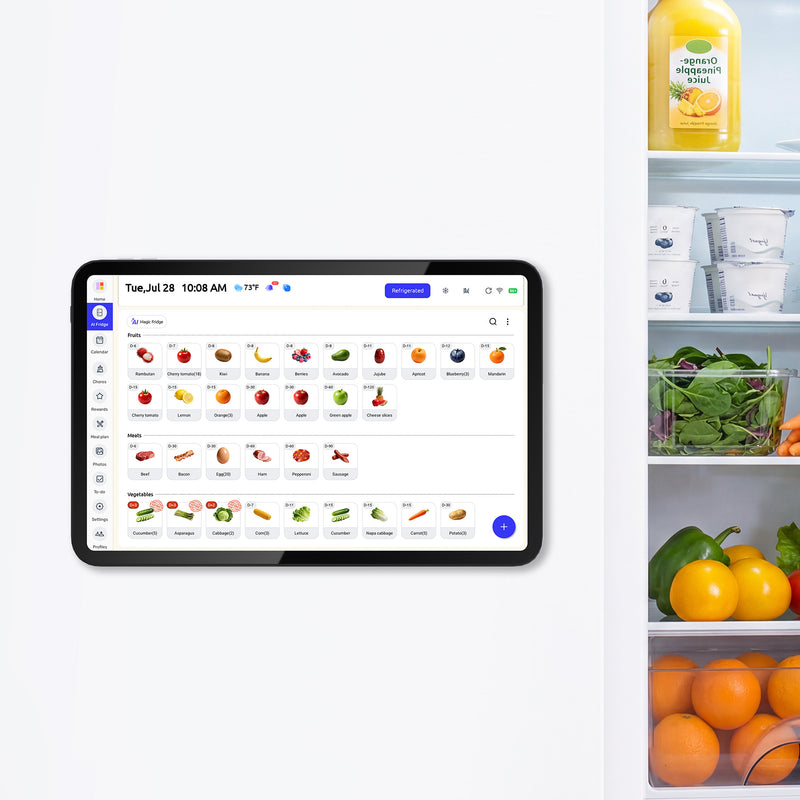
A family command center is a central place for calendars, meal plans, to-do lists, bills, papers, supplies, and daily reminders. It works best when it sits where your family already passes through, such as the kitchen, entryway, laundry room, pantry wall, cabinet interior, or a narrow hallway wall; high-traffic placement makes a family command center more likely to be used.
Start smaller than you think. A refrigerator setup with a dry erase weekly board, magnetic meal list, paper inbox, and two hooks can be better than a large wall system nobody maintains. Many working setups include a visible calendar, a drop zone for bags or mail, paper storage, and simple maintenance in an accessible location, which is why a visible calendar matters more than matching bins.

For families that want the calendar, chores, meals, and events on one shared screen, a wall-mounted display such as a digital calendar from Everblog can serve as the visible planning surface without changing the basic system.
Before mounting anything, tape printer paper to the wall where each piece might go. Use one sheet for the calendar, one for meals, one for papers, and one for chores. Testing the layout first lets you see whether people can read it while standing in the kitchen, whether backpacks block the view, and whether the youngest reader can reach their part without putting holes in the wall too soon.
What to Include First
A practical starter command center can be as simple as this:
- A weekly calendar that shows the next 7 days
- A meal plan with 5 to 7 dinners
- One paper inbox for forms, mail, and school notes
- A short chore checklist with names attached
- Hooks, bins, or a shelf for backpacks, keys, and activity gear
- A dry erase marker or pen that stays at the station
Do not add every possible tool on day one. Clocks, timers, goal boards, binders, file folders, and supply stations can help later, but too many parts make the system harder to maintain. Add one piece only when a real problem keeps showing up.
Make Chores Clear Enough to Follow
Chores are easier to follow when the family can see the full list, the work is divided fairly, and the rotation does not change every day. One family found that daily chore rotations caused complaints and constant mediation, so they moved to a weekly chart where chores rotate every Sunday and each child hands off their role to the next person through a weekly family chore chart.
Start by listing every recurring chore that needs to happen each week. Then break large areas into smaller jobs. “Clean the kitchen” may be too broad for a child or a tired adult at 7:30 PM, while “wipe counters,” “empty dishwasher,” “take out trash,” and “sweep floor” are easier to understand and check.
Fair does not always mean identical. Older kids may handle laundry rotation or bathroom cleanup, while younger children may match socks, clear napkins, put shoes in a bin, or feed a pet with supervision. Ask kids to review the chart before it starts and point out what feels uneven; the goal is not a debate every Sunday, but a system people understand before they are expected to follow it.
Assign Responsibilities, Not Just Tasks
A task is “pack lunches.” A responsibility is “check lunch supplies, add missing items to the grocery list, pack lunches after dinner, and put lunch boxes by the backpacks.” Shared household planning works better when the assigned person handles noticing, planning, remembering, doing, and checking completion, not just the final visible step.
For kids, keep the responsibility age-appropriate. A 7-year-old might own “put lunch box on the counter after school.” A 12-year-old might own “empty lunch box, rinse containers, and repack snack.” An adult might own “review lunch supplies during the Sunday reset.”
Use Meal Planning to Remove Daily Guesswork
Meal planning does not have to mean elaborate recipes. For a busy family, the first win is deciding dinner before everyone is hungry. Put 5 to 7 meals where the family can see them, then match them to the calendar so the easiest dinners land on the busiest nights.
For example, if Monday has piano at 5:30 PM and a late meeting, do not plan a dinner that needs 45 minutes of chopping. Put breakfast-for-dinner, tacos, soup, leftovers, or a sheet-pan meal there. If Wednesday is open, that can be the night for something with more steps.
The meal plan can also hold simple food safety reminders. A family calendar setup can include reminders to keep the fridge below 41°F and use or freeze most opened or cooked foods within 4 to 7 days, with examples like ready-to-eat salads for 3 to 4 days, opened luncheon meat for 3 to 5 days, and shell eggs for 3 to 5 weeks in food planning reminders.
Connect Meals to Groceries
A meal plan only helps if it connects to shopping. During the weekly reset, pick dinners, check the fridge and pantry, and choose a grocery window. Then add one person as the owner of the grocery list, even if someone else does the shopping.
Try using labels such as “quick,” “leftovers,” “cook once,” and “freezer.” A Tuesday meal that says “quick: pasta + salad” is easier to follow than a meal board full of recipe names nobody has checked against the week.
Keep the System Alive With Short Review Habits
A family planning system should be updated often enough to stay useful, but not so often that it becomes another job. A realistic rollout can take one week to launch and about 14 days to stabilize, using 4 to 6 calendar colors, a 20- to 30-minute Sunday reset, and a 3-minute nightly check through a practical rollout.
The Sunday reset should be short and specific. Review fixed events first: school, work, childcare, appointments, practices, and activities. Then choose dinners, plan groceries, assign chore handoffs, check papers, and name the hardest day of the week so you can simplify it before it arrives.
The nightly check is not a family meeting. It is a quick scan: tomorrow’s schedule, meals, bags, clothes, rides, and one possible problem. Three minutes after dinner can prevent a 7:00 AM scramble over library books, uniforms, lunch boxes, or a missing permission slip.
What to Do When Follow-Through Is Uneven
Assume the system will slip sometimes. People get sick, work runs late, kids forget, and routines change after holidays or school breaks. The fix is usually to make the next step smaller, not to add more reminders.
If chores are missed, check whether the task was too vague, too hidden, or assigned at the wrong time. If the calendar is ignored, move the display closer to where decisions happen. If papers pile up, shrink the paper inbox or empty it twice a week. Regular clearing, refreshing calendars, adding new information, and removing old items keep the command center from becoming stale over time.
FAQ
Q: Should we use a digital family calendar or a paper wall calendar?
A: Use a digital calendar for schedules that change, reminders that need to reach cell phones, and events adults need to see away from home. Use a wall display or command center for the current week, meals, chores, and papers. Many families do best with both: the digital calendar holds the official schedule, and the visible home display helps everyone follow the day.
Q: How many colors should a family calendar use?
A: Start with 4 to 6 colors. That is usually enough for adults, kids, school, work, meals, and household tasks without turning the calendar into a code nobody remembers. If younger kids are using the system, pair color with names or icons so they do not have to rely on color alone.
Q: What if one parent still ends up managing everything?
A: Assign whole responsibilities instead of loose tasks. For example, “sports bag owner” means checking the schedule, washing the uniform, packing the water bottle, and putting the bag by the door. If one parent still has to remind everyone, move that reminder into the shared calendar, checklist, or command center so the system carries more of the remembering.
Practical Next Steps
You do not need to organize every drawer or create a perfect family dashboard. Start with the next seven days. Pick one visible place, one shared calendar, one chore list, and one weekly reset time.
Use this checklist to set up a simple version this week:
- Choose one high-traffic spot, such as the kitchen, entryway, pantry wall, or refrigerator.
- Add the next 7 days of fixed events to a shared digital calendar.
- Write 5 to 7 dinners on a visible meal plan and match easy meals to busy nights.
- Make one short chore chart with names, not vague “someone should” tasks.
- Create one paper inbox for school forms, bills, mail, and appointment notes.
- Hold a 20- to 30-minute Sunday reset to update the calendar, meals, groceries, chores, and handoffs.
- Do a 3-minute nightly check for tomorrow’s rides, bags, food, clothes, and paperwork.
The best family system is the one people can find, read, and update when life is moving. Keep it visible, keep ownership clear, and make the next step obvious enough that a tired adult or distracted child can still follow it.


