





Visual routines usually fall apart when the real plan lives in memory, text messages, or one person’s phone instead of in a shared place everyone can see. In many ADHD-friendly homes, the missing piece is not effort. It is visible, shared planning for meals, chores, and daily handoffs.
When the morning starts with a missing water bottle, a forgotten permission slip, and no clear dinner plan, the whole house can feel like it is reacting instead of moving. A visible plan often brings more calm because people can see what happens next without waiting to be reminded. What may help is not a more impressive system, but a simpler one that stays in view.
Hidden Plans Create Hidden Work
When one person becomes the system
The mental load of home life includes noticing what is running low, remembering appointments, tracking school papers, and planning what happens next. When that plan is invisible, one person often becomes the family’s unpaid reminder app. That is where resentment, defensiveness, and repeated “I already told you” conversations often start.

In homes affected by ADHD, executive function difficulties can make starting, sequencing, and finishing routine tasks much harder. That does not mean someone does not care. It means a verbal plan may disappear the minute the conversation ends, especially when the day is noisy, rushed, or full of transitions.
A visible cue works best when it is easy to notice, stays in the same place, and points to one clear action. If taco night is written on a kitchen board near the grocery list, it can shape what happens at 4:30 PM. If it is buried in a phone note one parent never opens, it cannot guide anyone.
What “Visible” Really Means at Home
Put the plan where decisions happen
A home command center works best in a high-traffic area like the kitchen, hallway, or entryway. That matters because visibility is not just about owning a planner. It is about placing information where people naturally pause, grab keys, pack lunches, sort mail, or ask what is for dinner.
Many families do better when storage and planning are easy to see and easy to use. Clear bins, labels, hooks, trays, and open baskets reduce the “black hole” effect that closed drawers can create. The same idea applies to planning: if the routine chart, lunch list, or backpack hook is out in the open, it is much easier to act on it.

A physical roadmap often helps more than a plan that stays on a laptop or in a hidden app tab. Visible does not mean covering every wall with paper. It means the next few actions are obvious enough that someone can move forward without asking, guessing, or mentally rebuilding the day.
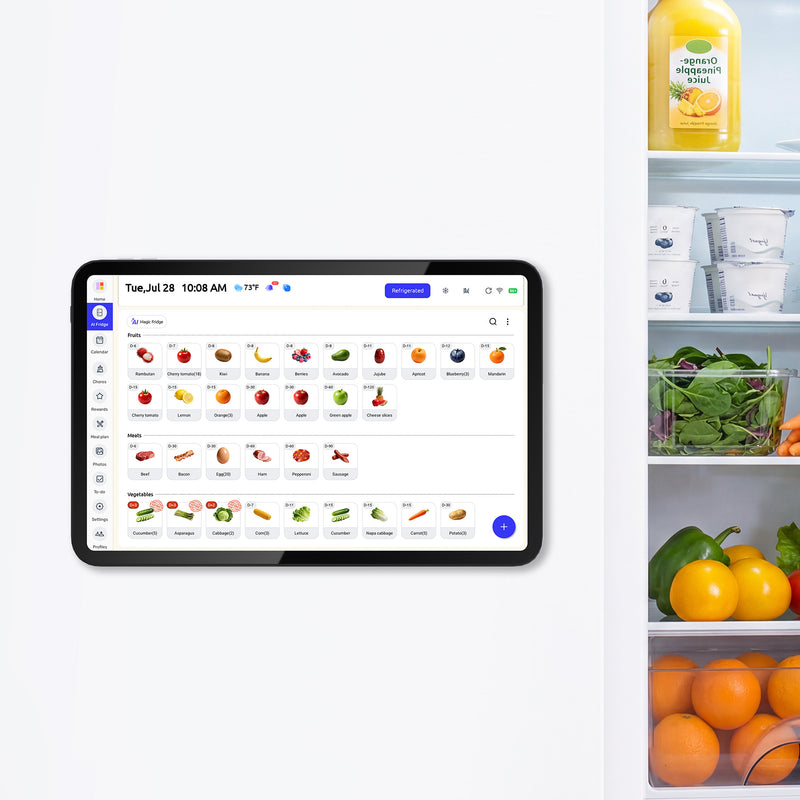
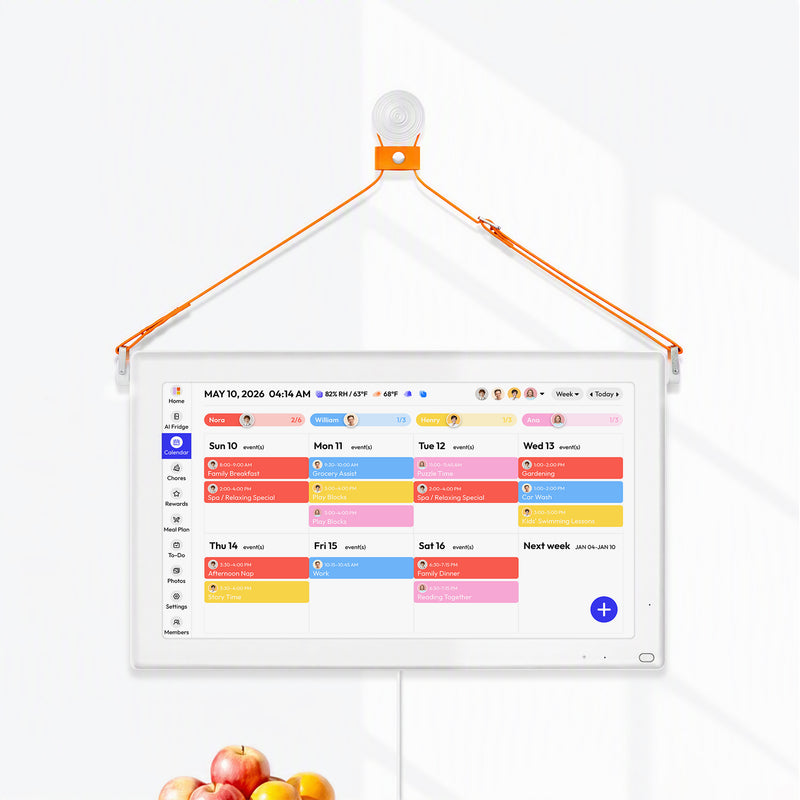
For some households, that visible roadmap may include a wall-mounted shared display such as the Everblog digital calendar, which is designed for wall mounting and can help families view plans, tasks, chores, and events on one screen.
What to Make Visible First
Start with the few things that break the day
An ADHD-friendly family system does not need to show everything. It should show the parts that tend to derail the household first: today’s schedule, tonight’s dinner, the grocery capture list, a short chore list, and a launch pad by the door for bags, shoes, forms, and water bottles.
For many couples, shared external structure works better than repeated reminders. One practical fix is domain ownership. Instead of one parent choosing meals and the other parent maybe buying groceries later, one person owns meal planning from menu to list to follow-through. The other person might own laundry from sorting to putting it away. That reduces dropped handoffs.
When both parent and child struggle with routines, visible home supports can lower friction for everyone. Morning and evening charts, a large shared wall calendar, removable picture cards, a homework station, and visual timers can turn “get ready” into a sequence the whole family can actually follow.

A simple command center often includes
- A shared weekly or monthly calendar
- A meal plan for the next few days
- A grocery capture list
- A short task board with today’s top items
- A mail or paper basket
- Hooks or trays for keys, bags, and school items
Why Chore Charts and Calendars Still Fail
Too broad, too hidden, or too hard to maintain
A visual cue system stops helping when it blends into the background. If the board is crowded, the color coding is inconsistent, or the reminders live in three different places, people stop seeing it. What often helps is fewer categories, repeat placement, and cues that connect directly to one next step.
Big jobs also break down when they stay vague. Small visible tasks are easier to start than broad instructions like “clean the house.” “Unload dishwasher,” “wipe counter,” or “put library books in the car” gives the brain something concrete to do. Many families find that 5- to 15-minute chunks work better than marathon catch-up sessions.
A functional system usually beats a beautiful one that takes too much upkeep. If updating the board feels like a separate project, the board will be abandoned. If the system only works on a perfect week, it will fail on the week your child is sick, dinner runs late, or everyone gets home at a different time.
Why Visibility Lowers Conflict Around Chores and Meals
Shared expectations reduce repeated reminders
In many relationships, chore conflict is not mainly about the dish itself. It is about the repeated cycle of promising, forgetting, reminding, and feeling blamed. A visible plan can interrupt that cycle because the task no longer depends on one partner carrying it in their head for both people.
A preference-based chore approach may help more than a strict 50/50 split. One partner may tolerate dishes but hate paperwork. Another may be fine with laundry but not meal planning. When those choices are written down and visible, the system becomes clearer and less personal. The goal is not identical tasks. It is a fair, workable load.
Meals are a good example. If dinner, needed ingredients, and who is cooking are visible by the kitchen, people can make better decisions before 5:00 PM. If that information stays private or incomplete, someone still has to notice the gap, solve it fast, and absorb the stress.

How to Combine Digital and Physical Planning Without More Clutter
Use digital for updates and physical for daily visibility
A shared family calendar can help with color coding, recurring events, lists, and reminders across phones. That is useful for schedule changes during the day, especially for school events, rides, medical appointments, and activity updates when nobody is standing in front of the kitchen board.
A visible home hub still matters because people make household decisions in physical spaces. The digital system is strong at syncing and editing. The physical system is strong at being seen at the exact moment someone needs to pack a lunch, thaw dinner, sign a form, or remember that Tuesday is laundry day.
Many families do best with a hybrid setup: a shared digital calendar for remote updates, plus a printed or displayed snapshot in a shared room. A visual planning style can also include lock-screen widgets, timers, or location reminders, but those work better when they support the same household system instead of competing with it.
Practical Next Steps
What may help most is testing one visible system in the area that breaks first. For many homes, that is the morning exit, the after-school handoff, or the 4:00 PM to 7:00 PM dinner window.
Action checklist
- Pick one high-traffic spot for a command center, such as the fridge, hallway, or entryway.
- Add only the essentials: calendar, meal plan, grocery list, short task board, and a paper basket or hooks.
- Assign ownership by domain, not by scattered reminders. Examples: meals, laundry, school paperwork, or home supplies.
- Break routine jobs into visible micro-steps that fit on one line.
- Set one weekly reset, such as a 10-minute Sunday review, and one short daily reset, such as 10 minutes after dinner.
- Keep the plan in the same place every day so the cue stays reliable.
- Remove anything nobody uses after two weeks.
A good test is simple: if a family member can walk up, look once, and know what happens next, the system is doing its job. If the plan still depends on asking one person, it is not visible enough yet.
FAQ
Q: Should we use a wall planner or a digital calendar?
A: Many households do best with both. Digital tools are better for reminders, edits away from home, and shared updates. A wall planner or home display is better for at-a-glance visibility during real-life transitions.
Q: What if one parent still ends up managing everything?
A: Start with one domain and make ownership visible. For example, one person owns dinner from planning to follow-through, while the other owns laundry. That reduces the pattern where one parent remembers and the other reacts.
Q: Are visual routines a treatment for ADHD?
A: No. They are household supports, not treatment. They can reduce missed handoffs, lower stress, and make expectations clearer, but they do not diagnose or treat ADHD.
Disclaimer
This article is for household planning education only. It is not a substitute for mental health care, medical advice, legal advice, or crisis support. If safety, custody orders, or a diagnosed condition are involved, work with the appropriate licensed professional.
References


