


A family calendar is a shared schedule for the household. It works by putting school events, work hours, appointments, chores, meals, and reminders in one place so everyone can see the plan and act on it.
In a busy home, that matters because the problem is usually not a lack of information. It is that the information lives in too many places: one parent’s phone, another parent’s work calendar, a school email, a sticky note on the counter, and a mental reminder about dinner.
What a family calendar actually is
In plain English, a family calendar is the home’s shared timeline. It shows what is happening, who is responsible, and when something needs attention.
That timeline can be simple or more advanced. For some families, it is a paper wall calendar in the kitchen. For others, it is a shared digital calendar on phones. In many homes, it becomes a visible command center on a wall, counter, or fridge so the schedule is not trapped inside one person’s app.

The key idea is shared visibility. If only one person can see the calendar easily, it is not really functioning as a family calendar. It is just one person managing everyone else.
How a digital family calendar works
A digital family calendar usually runs on a few basic ideas:
- One or more people add events, tasks, or reminders.
- The calendar syncs those updates across devices or screens.
- Family members get a shared view, often with colors, permissions, or separate categories.
- The household checks that view during normal routines, like breakfast, after school, or dinner prep.
“Sync” is the technical word that matters most. It simply means that when a person updates the calendar on one device, the change shows up on the others too.
Most major calendar systems already support shared use. Google’s built-in Family calendar is automatically created for a Google family group. Apple’s iCloud calendar sharing lets the owner choose read-only or editing access, and shared changes can appear in real time. Outlook also supports shared calendars with view or edit permissions, and its desktop app can layer a shared calendar over a personal one.
That combined view is what makes a family calendar practical. One parent can keep a work calendar, another can keep personal appointments, and the household can still have a shared layer for pickups, sports, dinners, and chores.

What usually goes on a family calendar
A useful family calendar does not need to hold everything. It needs to hold the things that affect other people or change the flow of the day.
Common examples include:
- School drop-off and pickup times
- Practices, games, lessons, and club meetings
- Doctor, dentist, and therapy appointments
- Work shifts, travel, or late meetings that affect childcare
- Dinner plans and grocery reminders
- Recurring chores like trash night, laundry, or pet care
- Birthdays, holidays, and family visits
A good test is simple: if forgetting the item would create stress, a missed handoff, or a last-minute scramble, it belongs on the family calendar.
Why visibility matters more than fancy features
The biggest difference between a calendar that helps and a calendar that gets ignored is usually visibility.
A phone-based calendar is flexible, but it only works when people remember to open it. A wall calendar or smart display works differently. It stays in view, so the schedule shows up during normal life instead of waiting to be checked.
That is why families often use the term “family command center.” It does not have to be elaborate. It just means there is one visible place in the home where schedules, reminders, meals, and chores come together.
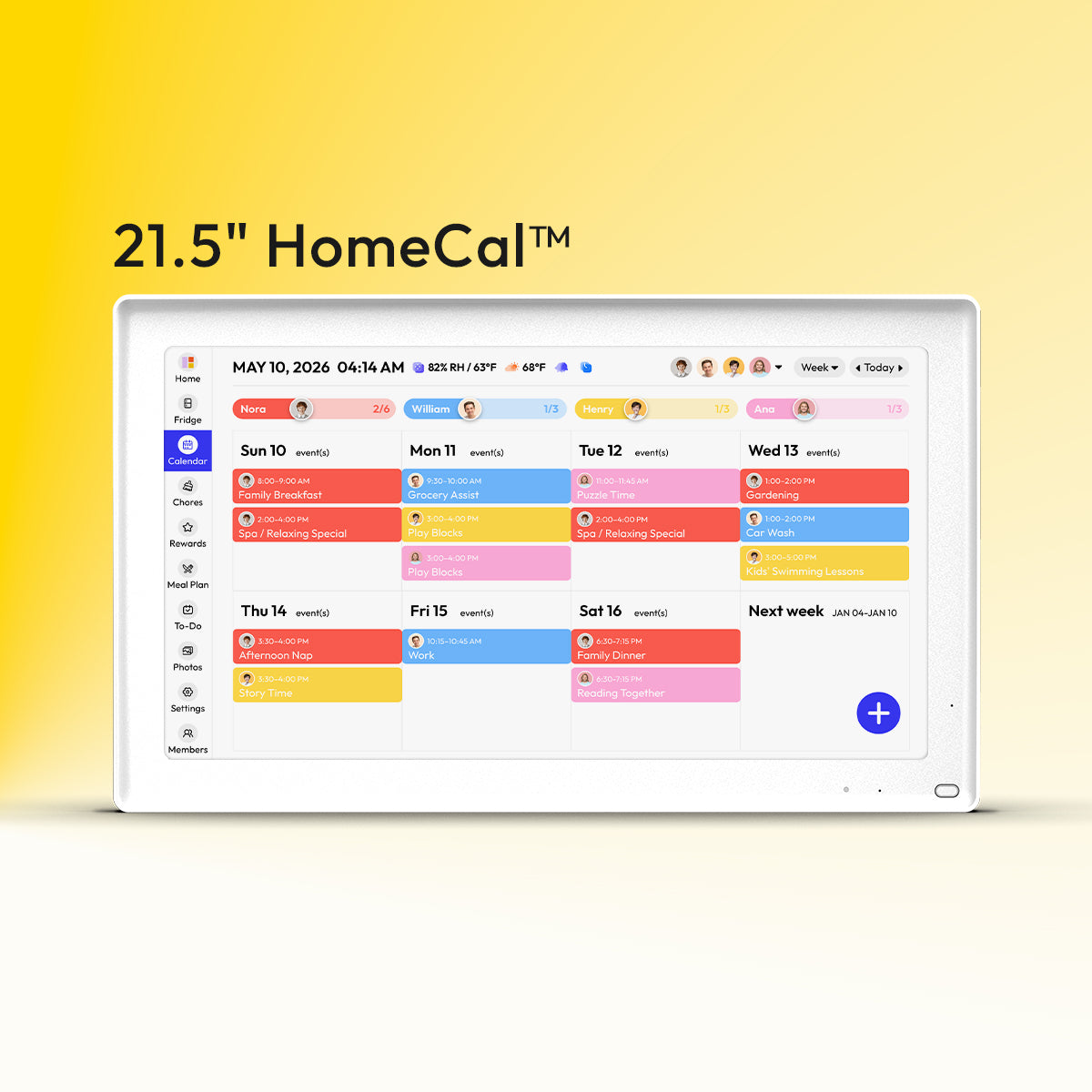
For households that already keep plans in separate digital systems, a large shared screen can bridge the gap between “the calendar exists” and “everyone actually sees it.” A wall-mounted option such as the a company is built around that idea: one large touch display for family schedules, tasks, and chores in a shared room.

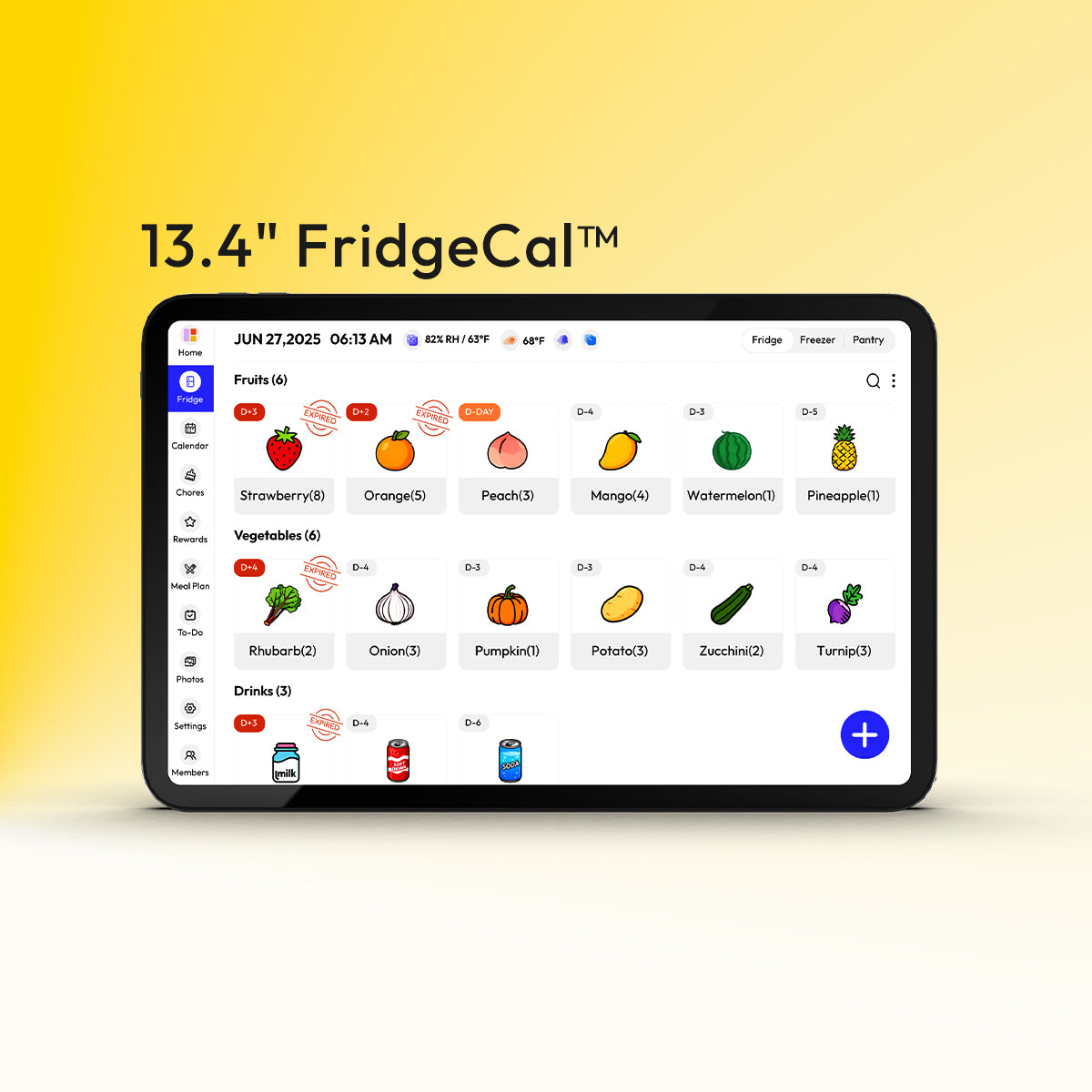
If the kitchen is the real decision point, the setup may look different. A fridge-mounted option such as the a company leans more toward meal planning, shopping reminders, and food-freshness tracking, which can matter just as much as school events in a busy home.
Features that matter in real life
Some family calendar features sound impressive but do not change much day to day. Others make a real difference fast.
Here is what tends to matter most:
- Shared editing and permissions. One person should not have to own every update.
- Clear categories or colors. When calendars use separate colors, it is much easier to scan who is going where. Apple’s calendar tools, for example, let you assign a different color to each calendar.
- Reminders that fit the task. A pickup reminder needs a time alert. A grocery note may only need to be visible on shopping day.
- A visible home display. This matters most for kids, partners, and caregivers who are not constantly checking the same app.
- Task and chore support. Families often need more than appointments. They need “take out trash,” “sign field trip form,” or “clean out backpack.”
- Meal planning support. In many homes, dinner planning creates as much friction as scheduling. A calendar that connects meals, groceries, and timing can reduce that load.
What matters less is feature volume by itself. More menus, more widgets, or more entertainment options do not help if the schedule is still unclear.
Digital app, paper wall calendar, or touchscreen hub?
Each format solves a different problem.
A shared app works well when all adults already live on their phones and mainly need synced appointments.
A paper wall calendar works well when the household needs a visible weekly snapshot and does not care much about automatic updates.
A touchscreen planning hub sits in the middle. It keeps the visibility of a wall calendar but adds sync, updates, and sometimes tasks, meals, or chore tracking.

The right choice depends on where your family gets stuck. If the issue is “we already have calendars, but no one sees the whole picture,” a synced wall display makes sense. If the issue is “we need a simple place to write down soccer and dentist visits,” paper may still be enough.
Common mistakes that make a family calendar fail
A family calendar can be simple and still work very well. It usually breaks down for a few predictable reasons.
One common problem is overloading it. If the calendar contains every idea, wish, and note, it becomes noisy. The shared calendar should mostly hold commitments, deadlines, and reminders that affect the household.
Another problem is single-person ownership. If one parent becomes the unpaid calendar administrator, the system may organize the home, but it does not reduce that person’s mental load much.
A third problem is weak routine. Even a good calendar needs a repeatable moment when people look at it. Many families do best with a quick check in the morning and a short reset in the evening.
A simple way to set one up
If you want a family calendar to work, start smaller than you think.
Pick one shared place. Decide who can add or edit items. Use only a few categories, such as school, work, home, and meals. Add only the next two to four weeks first. Then build a habit of checking it at the same time every day.
That approach works better than importing every possible detail on day one. A family calendar should reduce friction, not create a new admin job.
FAQ
Q: Is a family calendar the same thing as a shared Google Calendar?
A: Not exactly. A shared Google Calendar can be a family calendar, but the term is broader. Any shared system that helps a household see and manage time together can count as a family calendar.
Q: Do kids need their own phones to use a digital family calendar?
A: No. Many families use a shared wall or fridge display so kids can see what is happening without logging into anything. Even with phone-based calendars, younger kids often only need a visible household view.
Q: What should stay off the family calendar?
A: Private notes, rough ideas, and details that do not affect anyone else usually do not belong there. The shared calendar works best when it holds commitments, responsibilities, and reminders the household actually needs to coordinate.
References
- Google For Families Help: Use a family calendar on Google
- Apple Support: Share a calendar on iCloud.com
- Apple Support: What you can do with iCloud and Calendar
- Apple Support: Create and edit a calendar on iCloud.com
- Microsoft Support: Share your calendar in Outlook.com
- Microsoft Support: Share your calendar in Outlook
- Everblog: 21.5" Digital Calendar
- Everblog: 13.4" FridgeCal Calendar


